
Monthly Archives: October 2012

recrudesce, recrudescence

To become raw again. To have lain inert, latent, remissive, seemingly spent, curtailed, erased, and then to be refreshed, to resurge in vigor. At the risk of being crude: to regain virginity, to be renewed in nubility.

Is it possible? In fact, it is a perennial occurrence. After the raw, cold winter, the cracked ground is refreshed and the radices regrow. Green buds sprout once more. In the fullness of time they ripen, are picked. Last year this time: grapes grappled, crushed, then fermented, and from that comes wine. This year: again the grapes are raw, again they are ready for recruitment to the barriques. Then the first fresh wine, as always at that time of the year. And then the weather takes a turn for the raw. Meanwhile, the grapes of a million years ago, rotted into a potent liquor, are drawn from the ground in crude form, then refined to become fuel for the next crest of activity and the following long eons of decay.

Words recrudesce too. Old English ealriht, long gone from the lexis, reemerged as alright. An Old English man of the soil, a ploughman, was an eorðling, an earthling: bound to the ground of the planet. When, centuries later, we became aware how bound we were to our planet, and how unbounded the space around us, this word appeared, fresh again. Those words that are perpetually raw, never refined, manage always to maintain their freshness; others have their peaks and subsidences, and sometimes their peaks again.

And we, too, we recrudesce. After five or a dozen or a score of years gone to ground, seeming as though we wake up with six feet of dirt on our faces each morning, we may start to send out new shoots, grow new blossoms. Some who have seen their love etiolated or desiccated find it again, and, knowing now that both parties like piña colada and getting caught in the rain, sip again their cups and create an escape together. Others escape a suffocating sameness by choosing one of fifty ways to leave their lover.

It is neutral, recrudescence. Oh, that word, recrudescence, it has its flavours, its crude essence, its seventeen letters, its fourteen phonemes, its four e’s and three c’s and two r’s and handful of remainders. Its verb, recrudesce, lacks but the last of each. Each has a particular lexical crispness, accentuated by the liquid /r/ sounds and sharpened by the /s/ voiceless fricatives. We see the ec reemerge as the ce – even twice: thematically apposite. But we get that taste of crude – legitimately come by: the source is crudus, Latin for “raw”. These little crudités carry crudity. How can that be good?

It can be good or bad. A longstanding and technical sense is the return of a latent disease, as when the virus that gave you chickenpox as a child wakes up and gives you shingles as an adult. But another use is the reawakening of something valuable, a green blade rising from the buried grain. On the one hand we find Bertrand Russell speaking of the recrudescence of Puritanism and Baha’u’llah decrying “the recrudescence of religious intolerance, of racial animosity, and of patriotic arrogance”; on the other hand we have this much-quoted conclusion from Douglas MacArthur at the surrender of the Japanese in 1945:

We have had our last chance. If we do not now devise some greater and more equitable system, Armageddon will be at our door. The problem basically is theological and involves a spiritual recrudescence and improvement of human character that will synchronize with our almost matchless advances in science, art, literature and all material and cultural development of the past two thousand years. It must be of the spirit if we are to save the flesh.

In the one kind, until someone or something decrees cure, we are cursed to random risk of outbreaks afresh; in the other, it is just such a resurrection that may rescue decency and ensure a renascence of creation. Something has been buried; many things have been buried; whether they are good or bad, we know only when they return, if they return – and we see what we bring to them too.

Thanks to Christina Vasilevski for suggesting recrudesce, which she spied in an article by David Quammen on popsci.com.
binder, bind, bound

Ash nazg durbatulûk, Ash nazg gimbatul, Ash nazg thrakatulûk Agh burzum-ishi krimpatul. One ring to rule them all, One ring to find them, One ring to bring them all And in the darkness bind them. A three-ring binder. But what – or who – is bound?

Oh, yes, if you know your Tolkien you know his answer. But there are other binders, rely on it. We are in word country here now, and there is something I think you are ready to see.

You think the world is full of things, and then there are words that we attach to them. We see a thing, a creature, a person, and we turn to a book and we see a word there that we can use to bind it to the page, an ink tattoo on the paper. But we will now expand our awareness out of bounds, by leaps and bounds; where we were blind, we will now see. Take this pill. It is binding – yes, it can cause constipation, but I mean that it is a binding contract. Once you have bound yourself to it, we will be bound for a new world – without moving. We simply turn our perspective. It is a rebirth, and you’re going through the contractions.

And now you see in this view that it is words that are real. They grow freely, roam freely; the signifiers have no minders or blinders. But they cannot signify until they choose something to signify, or until something is chosen for them (but by who? everyone who chould choose is also a potential signified). And to find the object, we go to the binders. There are binders full of women, binders full of men, binders full of beasties and veggies and things, binders perhaps of brindled bandersnatches. They have been chosen to be bound, and now they are bound to be chosen.

The association is arbitrary: the objects are fungible. But when the words are bound to their objects, even though someone is bound to object, they are bound and tied, like Prometheus in binder twine: the rock his world, the eagle to de-liver him until Hercules delivers him. Bound for glory, bound for destruction, bound to set an example, bound in leather (deluxe edition).

Adam lay ybounden, too, ybounden to the Eve of destruction. Before they ate the fruit, did they know their names? Was it really Prometheus who gave them the fruit, the gift of words, the ability to bind a thing to a sign, to know where one thing stops and another starts by the semantic repulsion of their signs, Derrida’s différance? Be careful of that fruit; it’s binding. The only way to release the bonds is to prune. Unbind them and let them go free – but beware of verbal diarrhea. If the words detach from their binders, glossary becomes glossolalia.

But again you have been misled, led into bondage by what you have seen. Words are other words; in other words, you are out of bounds. This binder, it is a pigment of your imagination; it is the binder that causes the pigment to set, so that the colour stays together in the painting as you use your thousand words colourfully. This binder is the machine that harvests the words and binds them into sheaves or bales: the grim reaper, baleful but necessary in the circle of life.

The circle? The ring. The three rings: life is a three-ring circus, but when you snap the rings together you are back in the sheets… foolscap? Or night cap? Have you been dreaming? Are you homeward bound? When you awaken, when you rebound to awareness from sleep, are you re-bound to your body, bound hand and foot?

Are you awake? Look around you now, unbind your eyes from the screen. Yes, you. (Is there a you reading this?) You have been swimming in words. Where are their signifieds? Objects on the screen may appear closer than they are. These words you see, they are shaped by nothing other than absence: absence of their objects and absence of light – the letters are black. The darkness is the words, and everything is bound in them.

You are caught as in a web that spans the world wide. The web knows no bounds. But it knows no bonds either. Memes whirl like rubbed pennies, making three or four out of two; but when you stop the oscillation of species do you see there was nothing at all, not even two, and then you are left rubbing your eyes. Every thing is back in its binder. You too.

ketchup, catsup

My beautiful, cultured wife, Aina, has a thing for ketchup. She really loves it. That’s not such a bad thing; I like it too. Unlike her, though, I don’t put it cold on a cheese soufflé hot out of the oven. (I have taken measures to prevent a recurrence of that. Mainly, I don’t make cheese soufflés anymore.)

But let me tell you just how much she loves it. Once, while we were waiting at an airport for a flight, we stopped at a Harvey’s and got a small fries, and she used that little ketchup delivery system to deliver 13 packets of Heinz ketchup to her innards. That’s 13 as in a dozen plus one. I think that was about a half a packet per fry.

I think that might even beat Dennis the Menace. He loves ketchup. You know, Hank Ketcham’s cowlicked cartoon brat. (Yes, Ketcham. Coincidence? Hm.) I loved reading Dennis the Menace when I was a young menace. And I loved ketchup. One of the greatest inventions of my youth was the ketchup-flavoured potato chip. (Even today, nobody beats Old Dutch, which is very hard to get in Toronto.)

It’s such a sturdy, friendly word, ketchup. It has that k like a cowlick or an opening kick; it sails ahead like a ketch, so it can catch up with the food it adorns; it licks its chops with that chup (know Spanish? heard of the chupacabra?). It catches up in your mouth, too, moving in three steps – two stops and an affricate – from back of tongue up to the lips. But should it really be catsup?

Certainly, when I was a kid and first saw the rendition catsup, I assumed, since it was less common and was seen in a reasonably educated context, that it must be somehow better, more correct, classier, what have you. We tend to make those assumptions in English about unexpected spellings and usages. Its novelty appealed to me, that’s for sure. So did the cat part. I love cats (but I’m allergic so I can’t live with them). And of course the sup – which I knew best as a consumption-related word from Andy Capp comic strips (that football-mad alcoholic British runty tough). And now I have my beautiful Aina, who has been known to some of her fellow ice-show skaters as Ainacat, so catsup seems perfectly right. Even if the actual sauce has such a vinegar-and-sugar edge that the k and the ch might seem somehow more in line.

But any bottle of ketchup you buy that calls itself catsup is unlikely to be quite as good as what you’re used to. Let’s be honest: just as there is one brand of Worcestershire sauce and the rest are just wasters, there is one brand of ketchup and the rest are just playing catch-up. And that one brand says ketchup. True, there is a vogue now for house-made ketchups in restaurants, and some of them are quite pleasing in their way. But they also mostly spell it ketchup.

But could they all be wrong? Ha ha ha ha ha. Once the poll of popular usage is in, “right” is generally whatever it has elected. This is why we have an apron and an orange and some peas rather than a napron and a norange and some pease. And only in America, and not much there, do you still see catsup at all. But is catsup more original? If by “original” you mean “someone’s own invention,” perhaps…

Actually, catsup is just a different attempt at transliterating the same thing that ketchup transliterates. Evidence indicates that ketchup is more successful. The source seems to be Malay kecap (sounds kinda like “kay-chop”). In Indonesian cuisine you may see the Dutch-style rendering, ketjap, as in ketjap manis, which is a very nice dark sauce, sweet and viscous and salty, in the neighbourhood of hoisin sauce and soy sauce.

Oh, yes. What we’re used to as ketchup is not the same as what kecap refers to, which is in turn not exactly what its original source referred to – though there is some debate as to what that source was. Something Chinese, most likely; most say an Amoy word for “pickled fish brine”, though it might have been a Cantonese or Hokkien word for “eggplant sauce” or “tomato sauce”.

But even in English there has been non-tomato ketchup. That’s why those bottles of the stuff you buy specify that it’s tomato ketchup – there’s also mushroom ketchup, still made by Geo. Watkins and home-made by anyone with a recipe and the inclination. (There’s also banana ketchup, mainly in the Philippines; it’s like tomato ketchup but made with bananas instead of tomatoes.)

But that Watkins stuff looks kind of runny. And there’s one thing ketchup is famous for: its pseudoplasticity – that is to say, its considerable viscosity that lets up some if you can get it running. It holds together until it avalanches – or spurts. The traditional glass bottles have accentuated this feature for years; change seems not even to have been sought out until quite recently, perhaps because everyone has so loved the humour available from its near-thixotropic spurtling – and the displays of skill required to get it out of the bottle reasonably (so many different techniques, each proudly promulgated as the best). Only squirt bottles, which have their own great potential for redecoration of clothing and environs, have managed to compete.

Surely the lurid red, which makes it extra dangerous in accidents, is part of the appeal. Heinz tried marketing different colours for a few years. It never did catch on. When you whack that bottle and it splats ka-chup on your burger, you expect a tomato massacre.

I think I see a link now… my sweet wife also likes gory crime shows… hmm…

Credit for inspiring me to tackle this topic today goes to Wil Wheaton, @wilw, who undoubtedly did not know he would trigger this sudden flow of information with a brief tweeted question.

ocelot

What marplot Lancelot might plot to allot a shallot to an ocelot? Certainly not a polyglot zealot!

Well, yes, that’s just silliness. But I do love the slicing and slotting sound of this word, ocelot, that seems to pad through the language with such occult subtlety. It susurrates like a rustling of foliage as the slick, lissome feline slides through – you may glimpse it through the leaves of other words once you look for it. It can cross a lot closer to you than you might think in the forest of your text, by letter or by sound.

O, is this a tyger burning bright? No, subtler, smaller. A panther? Still slighter. A leopard. Yes, Leopardus pardalis, also called the dwarf leopard. But though it may be gnomic in character or dimension, it looks like no gnome. It is rather the lean spotted lizard of cats: the patterns on its skin seem more made for an amphibian (though not an axolotl; those are generally spotless). I have known house cats that approached the size of an ocelot; adult ocelots are two and a half to three feet long (plus tail) and weigh not so much more than a large Thanksgiving turkey. But they are the largest of their genus; the related margay and oncilla are smaller still. Do you want to see ocelots slipping through leaves and streams, and an adolescent ocelot splashing for a fish or salamander? Watch this: Ocelot kitten learns to fish.

I just can’t get over how much I like this word, ocelot. It has a razor-sharp liquidity like Ucluelet, but softer. The claw of the c slices smoothly. The word suggests multiplicity to me, but only because I am aware of Finnish and Hebrew words that end in ot in the plural. I think, too, of Acela, that fast train that slips up the eastern seaboard of the US. I may think of ocellus, a simple light-sensing organ found in invertebrates. Perhaps I see an ocelot sitting as a scribe inserting forgery with utmost economy, a cross between Occam and Ossian.

But how do you locate an ocelot? Look in Central America and in most of South America (except Chile and most of Argentina) – not in the cities, of course, except where they may be kept as pets (some do; Salvador Dalí had a pet ocelot that he called Babou). Could you collate them? Not a lot; they are generally solitary.

And where does this shiny metal word ocelot come from? A gold star to you if you guessed Nahuatl. That language of the Aztecs had a word ocelotl that generally referred to a jaguar but could be used for an ocelot as well (the c in ocelotl stands for a /s/ sound and the tl is a voiceless lateral affricate as in the Tibetan word Lhasa). The Spaniards took it (they knew gold when they saw it) and made it ocelote. In English we allow the loss of the e, allowing us to elocute it with a crisp last stop.

martini

Where to start? The martini is perhaps the ultimate high-society cocktail. It is strongly associated with suaveness and James Bondage (in his case a vodka martini, shaken, not stirred). It is also likely the most legendary cocktail of the entertainment world. It has managed to work its way into more wit than just about any other drink. I think of Dorothy Parker:

I love to drink Martinis,
Two at the very most
After three I’m under the table,
After four I’m under my host.

George Burns said, “I never go jogging, it makes me spill my Martini.” Someone or other famous from the ’20s or ’30s (there are different attributions) said “I must get out of these wet clothes and into a dry Martini.” And then there’s the story of the man who walks into a bar and says, “I’ll have a martinus.” The bartender says, “You mean martini.” The man says, “If I’d wanted two, I would have said so.” (Ever wonder why we keep plural forms with borrowings but no other inflections, not even the possessive, and certainly not conjugations of verbs?)

But ordinary people drink martinis too. Salesmen used to go for “three-martini lunches.” Even Jack Torrance, who is taking care of a mountain resort hotel over the winter in The Shining by Stephen King, thirsts for martinis (which he calls “Martians”).

So why all this attention? The image of the conical glass helps give it good branding. The fact that it’s usually stronger than the average cocktail helps too (it’s the pale counterpart to a Manhattan: lotsa liquor plus vermouth). No doubt the fact that martinis are delicious can’t hurt.

But there’s certainly something about martinis that turns otherwise sensible adults in geeks having the kind of hair-splitting prescriptivist and categorizing arguments usually reserved for YouTube comment threads on heavy metal videos – or, of course, inane grammar assertions. Either shaking or stirring (depending on your source) is supposed to “bruise” the gin (really). There is an amazing amount of pretentiousness regarding the amount of vermouth to use: some people famously used to set a bottle of vermouth nearby, or whispered “vermouth” to their gin, or nodded in the direction of France or Italy (countries where vermouth is made). Arrant silliness: if you want a straight gin, just call it a straight gin.

And for some reason many people seem to assume vodka when one talks of martinis. James Bond drank vodka martinis, true. (And in one episode of WKRP in Cincinnati, Johnny Fever, sober, is said to have the reaction time of someone who has had “nine vodka martinis” – I would like to point out that gin martinis are the same strength.) Mind you, that’s still reasonably close to the standard form. There are many drinks called “martinis” in various bars now that are fruit juice with some liquor in a spilly glass – things we used to call highballs when they were served in non-spilly glasses. Of course they’re “built” by mixologists… It’s as though the word martini is a licence to be pretentious.

Not that I can make a reasonable plea for people to stick to the original. I don’t do that with words, after all. And, as it happens, nobody drinks the original now. Actually, nobody’s 100% sure what the original was, because there are different accounts, but it was made with sweet vermouth for sure, and perhaps maraschino cherry juice. My friend Reid has an old cocktail shaker with measures on it for different cocktails, one of which is a martini – and it gives half-and-half proportions of sweet and dry vermouth, and about three or four times as much gin as the total vermouth. But of course that’s why the dry-vermouth-only kind is specifically a dry martini.

Even the place of invention is up for dispute, though there are several stories putting it in or near San Franscisco around the time of the gold rush. One thing seems reasonably agreed on: the cocktail was first named Martínez, and the name was later modified probably under the influence of the Martini brand name of vermouth (now Martini & Rossi). Imagine its cultural position if it were still called Martínez. It would be thought of as Spanish, and you might be expected to have corn chips with it or to put a jalapeño in it.

Anyway, if you want as much martini geekery as you have time for – facts, opinions, recipes, all responsibly reported – I recommend The Martini FAQ by Brad Gadberry. (He doesn’t say so, but I think I can assert confidently that the name has no direct connection to the Latvian holiday of Mārtiņi on November 10, which marks the transition from the warm season to the cold one – yet another of the million good excuses for having a martini.)

And the name martini? It certainly is fluid, though it has that nice crisp edge with the /t/ in the middle – and since it’s on the stressed syllable, it has an extra puff of air on it. The mar doesn’t much seem to call to mind marring; rather, it has a purr as in Margarita, Marmaduke, marmalade, Martinique, marvellous… And the tini gives it a coy diminutiveness, like a “teehee” from a teeny-bopper in a bikini, perhaps. The high front sound of the /i/ vowels aids in the impression. As to echoes of other words – well, the cocktail has come to dominate the name, so that any other instance of the name (and it is a reasonably common Italian family name) will likely make you think of the drink.

By the way, I’m a bit of a weirdo when it comes to martinis: I keep my gin in the freezer and my vermouth in the fridge and simply pour vermouth, then gin, into a glass and swirl – no stir, no shake, no ice. Sometimes I add a drop of Cointreau or Chartreuse. And I usually use a wine glass. They spill less.

xyst

This is an eye-catching word, a word you probably didn’t know to exist. It has a certain zest – one might even think it sexy. Some people might think it has no vowels, but of course you can hear the vowel when you say it: /zɪst/. The y is used to spell the vowel sound. And the x is used to spell /z/ for no other reason than that English does not currently permit a /ks/ onset (or a /gz/ one).

Does its form give any clue as to its meaning? Perhaps it got mixed up trying to cross the Styx? Or is it a particularly male (xy) street (st) (or does that seem sexyst)? The latter might seem closer to what it is. The source is ultimately Greek ξυστός xustos “polished”, which in this case refers to a polished marble floor in a porch or portico of a gymnasium, and thus to the porch or portico itself, where exercises (such as wrestling) would take place during poor weather. By extension it also came to refer to the whole gymnasium building.

The Romans took up the word as xystus, but used it to refer to a promenade in front of a portico, or an open colonnade or a walk flanked by trees. But they also took the Greek word for “polished” as a name – however, finding the /ks/ onset lacking in polish, they metathesized it to Sixtus, which was used as a name for six popes, the first of which was the sixth pope after Peter… and yet there is no link to the word six. (On the other hand, while John Paul II may have been the first Polish pope, there were six “polished” popes before him.)

This polished root has produced other words too: xyston, straight from the Greek, which, by reference to the polished shaft of a spear, referred to the spear itself; and xystum, an architectural term that can refer to any of several different things: a wall, a promenade, an alley, a path… seems kinda mixtup.

We brought the word xystus into English in the 1600s, and it’s still available as such; however, word collectors and Scrabble players will delight in having this clipped version available as well, just one of the little extra things English does for its players. If you’re going to wrestle with words, you might as well have good equipment to use – and a nice, polished place to do it, of course.

Do you have a vague feeling that there’s another word for “porch” or something similar that also has an x? There is: narthex, a vestibule in a church where (at least formerly) catechumens would stand. Perhaps if you put the two together, you would have a narthexyst. Oh dear, that rather looks like it’s had a collapse at the end, doesn’t it? Perhaps it’s what you get from wrestlers taking down the catechumens.

biannual

To the eyes, this word brings a repeated duality expressed in multiple ways: there are two each of two letters; it is bookended by two vertical lines coming from two different characters; the u is a rotation of the n before it; and the one letter not part of any other duality is made of two detached parts: i, with its stroke and its dot – a point and an extent.

In saying the word, you make four syllables; the middle two are attached to their preceders with a high front glide, while the first and last start with the lips – as a stop or as releasing from rounding. The vowels are low and forward first, but then in the back half of the word move to high back and then to a neutral step into a held “dark” /l/ with the tongue high at back. The word starts towards the front of the mouth but ends pulled back.

The central consonant is written with two letters but is at most a quick touch with an off-glide, and for many speakers in many instances is really just a nasalization of the glide it releases – the tongue may or may not fully touch. And yet it is heard as the same sound whether it is made with the tip of the tongue curling up and touching or with the blade of the tongue simply pressing up and forward while the tip stays down.

That curvy, contorting /bajænjuwəl/ pronunciation has come about because of how English vowels have shifted over the centuries and how we’ve come to pronounce Latin words generally. Were the word said the Latin way, it would be /biannual/ – just as it’s spelled, but to English ears more like “be on new wall.”

Except that the Latin word wouldn’t be biannual at all. This word may be made from Latin parts, but it wasn’t assembled from them until the later 1800s. The Latin word for a period of two years was (is) biennium, which lends to the word biennial, “every two years”. One might imagine that something that happens every half a year is semiennial (and every year and a half sesquiennial), but those words aren’t to be found.

The sense of this word is, as we all know too well, also dual. Its use to mean “every two years” dates from 1884 or earlier. Its used to mean “half-yearly” (every six months) dates from 1870 or earlier. Dictionaries list the two senses next to each other. So which is the correct meaning? It seems that there is no reliable verdict, and the court of common usage is divided. It’s just the same with other words, such as bimonthly and the perhaps even more bothersome biweeklyall these bi- usages appear to have come forth in the latter half of the 1800s. I recommend avoiding using these words, preferring clearer phrases such as every two years and every six months – unless you want to be ambiguous.

*ckle

A slick trick for quick locution:

Will a quick phonetic tickle make you chuckle, quickly cackle,
or electrify your hackles so you heckle like a grackle?
Is your prickle frankly fickle – first you truckle, slackly buckle,
then in instant trick you stickle and commence to crack your knuckle?
We expect you not to suckle at a freckle on the deckle,
but we’d like to lightly tickle you till you elect to keckle,
so we’ll tackle you and rackle you and fix your cracks with spackle
so you’d crick your neck to ruckle with a sickle at your shackle,
then we’ll peckle like a puckle, first a trickle, next it’s mickle,
knocking like some ickle cockle: click and crackle, crickle, rickle.
And just when the focal vocal’s quackled you until you huckle,
we project you will effect a yucking racket like a yuckle.

These -ckle words don’t all have a common morpheme. Many of them have the -le frequentative suffix, but others share the ending just by coincidence. There is no -ckle morpheme. Some of the words may be less familiar, so here are some quick definitions: a grackle is an annoying noisy bird; to truckle is to submit; a deckle edge is a rough edge to a page (a deckle is actually a frame for making paper); to keckle is to chuckle; a rackle is a chain; to ruckle is to rattle; to peckle is to make a lot of little pecks; a puckle is a bogeyman; ickle is a play-childish way to say “little”; to crickle is to make a series of thin, sharp sounds, and to rickle is to make a rattling sound; to quackle is to choke; to huckle is to bend the body; a yuckle is a kind of woodpecker.

sphagnum

This word has the flash of a phosphorus charge and the soft, deep, resonant rumble of a mine blast in a cavern far below, shaking the foundations as it flares the windows. But its sense is something so much softer. Step aside from the world of Magnum guns and gum; let it go in a soft fog, leave riddles for the Sphinx and the slow figuring of the ages, and fall back on the sphere, the surface of the ground, on a bed of soft moss, where all hard things dissolve and all soft things persist, and watch as the numbers on the sphygmomanometer go down.

Sphagnum moss. Such a deep and soft thing to say. And wet. It can hold up to two dozen times its weight in water, this moss. Even on a rock, it is like the softest, lushest fur you can imagine, green pelt of the planet. In some places it is deep, deep, many metres deep, growing new on decay, a history of millennia. Bury a person most places on earth and what remains will be nothing but the bones, the hard bits, the structure, none of the skin and tissue that made what we knew of them, what they felt, their weaknesses and loves and vanities. Bury them in sphagnum moss, deep, decaying sphagnum moss, a peat bog, and the opposite happens: the acidity of the moss dissolves the bones but the skin and tissue are preserved. When we find people from past eras in bogs we put them under glass in museums, squished, distorted, leathery, but still all there as though they had just slipped out to the bog and gotten lost – and only the bones cannot be picked.

Sphagnum sequesters water and carbon. Dry out its decayed bits and you have peat that can be burned. Lose too much of the moss cover and you damage the planet, give it mange, take away its soft, absorbent places. The moors of the English heart are losing their memory – but projects are underway to regenerate them. Much of Europe and North America, and parts of the southern hemisphere, was once covered by this intricate beauty, microscopic forests that still exist here and there in the soft places between the asphalt and concrete borders of us bony kind with our explosions.

Greece has sphagnum, of course. The home of our older honoured Western classics had a word σϕάγνος sphagnos which was converted in modern times (a mere quarter of a millennium ago) to the Latinate sphagnum. What did we call it before? Moss, certainly; specifically, peat moss. When it has petered out and gone the way of all decay, it is simply peated out as peat. It, and what it preserves, is repeated.

That does sound like the name of a drummer for some ’60s group, doesn’t it? Pete Moss. Or perhaps a football (soccer) player.

Sphagnum has some lovely properties. It makes a good surgical dressing: it can absorb much more than cotton can, and it has antiseptic properties. Microbes simply don’t thrive in it – another reason the bog bodies are there to be found. It can preserve food too, for very long times. It insulates well. It helps other plants to grow – the peat from its decay especially does. And babies can rest in it and it will absorb their messes. First Nations people of North America, the Sami of northern Scandinavia, and who knows who else in times past, have used moss for this. When I was a baby, we lived with the Nakoda (Stoney) people in Alberta, and my parents sensibly followed their lead: they put me in a moss-lined leather bag. Comfortable. Absorbent. Antiseptic. Lie in the moss and stop worrying.

A word like sphagnum is, to my ears, an invitation to artistry. There are fewer artworks than I would have expected involving this word, at least that I can find. But there are two contrasting bits of music.

One is “The Sphagnum Bog” by Eustachian, a group clearly enticed by savorous words; the genre is listed as experimental grindcore, though it sounds long on the experimental (in a late-20th-century electronic approach) and not so long on the grindcore.

The other is a soft, ethereal, reflective song, “Sphagnum Esplande” by The Shins. This is a song I was destined to find, I who lay as a baby in sphagnum and lie as an adult in my bed on The Esplanade. As you listen to the song (you will listen to it, I hope), you may want to refer to the lyrics, which include these things to think of as you lie in the moss:

We’ll make a new ship
Christen it for the trip
With a toddler at the helm this time

and

You’re not expected to know why
in such a short time

Don’t suffocate, asphyxiate, choke on a Sphinx in your esophageal sphincter. The answers will come. When the hard parts have dissolved, the soft parts will endure. Go figure? Go sphagnum.

foliage

What word goes with foliage?

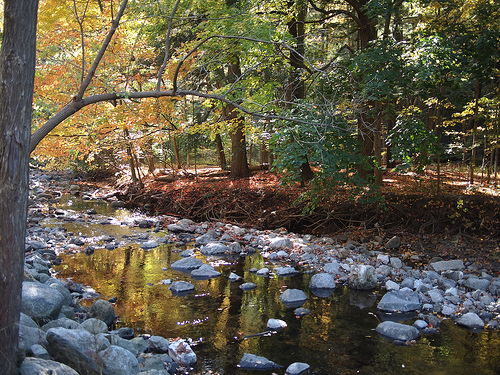
There are a few that it’s seen near. You’ll often see references to flowers and foliage or foliage and flowers. You will also see references to green foliage, dense green foliage, lush green foliage, dark green foliage, and so on, and to dense foliage too. But especially around this time of year, and especially in eastern North America, the collocation to go with is fall foliage.

I grew up in Alberta. In the fall there, the leaves turn yellow and then fall off. That’s pretty much it. It’s a sort of interesting little change from the green, but it’s really just a step towards the enveloping buff and brown. When I moved to Massachusetts for grad school, my parents kept asking me, in our weekly phone calls, “Have the leaves changed colour yet?” I could not for the life of me understand this overweening interest they had in the deciduous decadence of forest foliage. And then the leaves started changing colour.

Where I work in Toronto I have a view of the Don Valley. Lots of lush greenery – that turns to reddery and yellowery in stages this time of year. It’s a glorious sight. People always love a chance to see the eastern fall foliage in full follies. Hotels in Vermont are very expensive this time of year. If you go for a stroll on a weekend day in the Don Valley parks in Toronto you’ll see an incredible quantity and variety of cameras. The paths are full of photographers filling their portfolios.

Yes, the folio in portfolio is related to foliage. So, incidentally, is foil as in aluminum foil. It all has to do with leaves. Do you feel that’s it’s a failure to say “foilage” instead of “foliage”? Well, here’s a fun bit of history for you: Latin folium “leaf” became French feuille (earlier foille), from which was derived feuillage (earlier foillage); this came into English as foillage. Then, in the 1600s, when we were rediscovering the classical roots of some of our words, this word was “corrected” to foliage to match the Latin. It turned over an old leaf, as it were.

Is foliage a suitable word for its sense, phonaesthetically? Do you find the soft /f/ and floppy /l/, and the shapes of their letters, to be leaf-like enough? Is it somehow a bushier word than leaves? And what else – does it taste of agile redistribution of letters? Do you see it going with golf or declaring I age? How close it is to fragile? Does a leaf, reflecting, see in it the green days a whole life ago – before it turns a glorious colour and leaves us?

