
Monthly Archives: June 2016

muesli

I don’t always eat cereal for breakfast, but when I do, I prefer muesli.

It was not always thus. I grew up eating sugarsplosions like most North American spawn do. “Healthy” meant corn flakes. But at some point we noticed a cereal our mother had bought called Alpen. It had an explanation on it that it had so much nutrition in it you didn’t need to eat as much. What that really meant was that it wasn’t fluffy flakes; it was rolled oats, nuts, dried fruit, and powdered milk, and it was dense and heavy. We liked it and came to eat it on occasion.

The box also told us it was a kind of thing called muesli. So when I next encountered muesli in other circumstances, I knew what it was. And when was that? When staying in a house of acquaintances in England, wherein the man of the house showed me the breakfast options and referred to their cereal as a “kind of moozly.” I know he knew how to spell it, but the point is that he didn’t say it /mɪwzli/ or /mjuzli/. I have yet to hear anyone else say it like that, but I suspect that’s because I don’t discuss breakfast with starchy Brits too much (they eat their toast cold, for heaven’s sake!).

I have subsequently encountered some version of it on the breakfast buffet in pretty much every European hotel I have ever stayed in (they usually don’t contain powdered milk, but they are served with milk and yogurt). I am sure to have some alongside the cold cuts and cheese. I can also buy quite a few brands of it in the grocery store now. I can also buy granola, but that has lots of extra sugar in it usually. I get enough sugar, thanks. Dried fruit has loads already.

You may look at muesli and think a couple of things: First, that it comes from German and that the ue is ü in the original; second, that it’s Swiss German, as evidenced by the li on the end (many Swiss German words end in i, and li is a suffix). And you’d be right about the second thing. But you’d be off about the first: the original is Müesli. It comes from Mus, ‘stewed fruit’. But its inventor originally just called the thing d’Spys, the Swiss German equivalent of High German die Speise, ‘the dish’.

Its inventor? Maximilian Bircher-Benner, a Swiss physician who believed in dietary treatments. He came up with this cereal around the year 1900, when was was around 33 years old. You may have seen the term Bircher muesli. This comes from Birchermüesli, which is the name it was given to succeed d’Spys – which they didn’t necessarily despise, but it was a bit general.

Bircher-Benner’s version had the oats soaked overnight. If you eat muesli now, you probably don’t soak it in advance. It also contained fresh fruit, as opposed to the dried fruit that fills it now. And he served it at the beginning of every meal, rather than as a breakfast.

But so what. I don’t care so much about when he served it, or how he served it, or what it was made with. I am not part of a Bircher-Benner worship cult. He had his ideas about nutrition and health, and they remain – as scientists put it – controversial. I like what his muesli has become; I eat it for what I get now, not what it was in some time past. Anyway, he didn’t invent it out of thin air; he and his wife were served something like it on a hike one time, so he “discovered” it… and of course took the credit for it from his own version.

Are you now expecting this to be be the part where I point out how much like language muesli is? How it’s made of various heterogeneous bits, not always the same from one to another? How what we have now may not be what it once was, but there’s no real reason to hew to the origins if we prefer what we have now? How even those origins are not the real origins, and the real origins are lost in decayed history? How we can’t even entirely agree what to call it and what the rules are? How we may enjoy it more when we travel?

Nah. I don’t need to say all that. You already figured it out. I was just going to mention that every single time I’ve typed muesli in writing this article, I’ve accidentally typed museli first. Which is because of typing habits, yes, of course. But also, I’d like to think, because language is my muse. Or one of them, anyway.
lanai, liana

Lana is out on the lanai with a nail to align the liana – she’s an anal one about keeping her lianas in line. Liane and Ilana, please enjoin her to be lenient lest she annihilate it!

A liana on a lanai? Such soft, tropical sounds, more vowels than consonants: a liquid l, a nasal n, a pair of a’s, and that mobile i. There is something almost Polynesian about it. Well, not almost: lanai is a word from Hawai‘ian. We use it for what they use it for: an open-sided roofed structure near a house. Somehow it seems more self-conscious than verandah and ever so much more elegant than porch.

Liana also has a warm-weather sound to it, something Italian or Spanish perhaps. In fact, it has been speculated (in the OED among other places) that its form in English may have come from a belief that it was a loan from Spanish. But we got it from French, in which it was (and is) liane, coming from lier ‘bind, tie’. And what is it? A climbing vine, a plant rooted in the soil but not rising on its own strength. Lianas wrap around trees and hang between them; they also climb walls and structures such as trellises, verandahs, and lanais.

Consider the kinds of names that have these sounds or similar ones in them: Lana, Ilana, Alina, Leanne, Elaine, Eileen, Ellen, Lannie, Anil, Anna Lee, Nell, Neal – all but Anil and Neal (also Neil and Niall) are names for women (though Lannie can be a man). We do tend to end women’s names with vowels, but beyond that, it seems the soft combination of /n/ and /l/ with these vowels (low central and high front – none of those dark heavy round back vowels) has something we tend to associate with femininity. We don’t go all in on it, but you can discern a leaning.

Not that lianas and lanais are leaning. A lanai should stand straight, even though it is a dependent structure; a liana depends on other things for structure, but it has different ways of clinging. They do, however, have a different feel from their associated terms verandah and vine. Those v’s are very vibrant, but they’re less loose. (They’re also less valuable: remember that V is 5 and L is 50.) The teeth bite on /v/; the tongue taps lightly on /l/ and /n/, the only difference being in how it lets air in on the sides with /l/ (like a lanai).

We don’t quite say lanai as a rearrangement of liana, but we do spell it that way. You couldn’t readily rearrange lianas to make a lanai, though: they’re not sturdy enough – in fact, unlike trees and shrubs, which have flexible younger parts and more rigid older parts, lianas are more flexible in the older parts. Which seems good to me: getting more flexible as you get older – and, in another way of looking at it, getting more open, like becoming a lanai – is a way to a happier life. It also helps you to recognize that you never truly stand alone.

ajar

When is a door not a door? When it’s a jar. Ahahahahahaha

I presume you, like me, first heard that joke in your childhood. You probably also heard “You make a better door than a window,” meaning you can’t be seen through, so get out of the line of sight. You’re a closed door; open up.

So is a door that’s ajar closed or open?

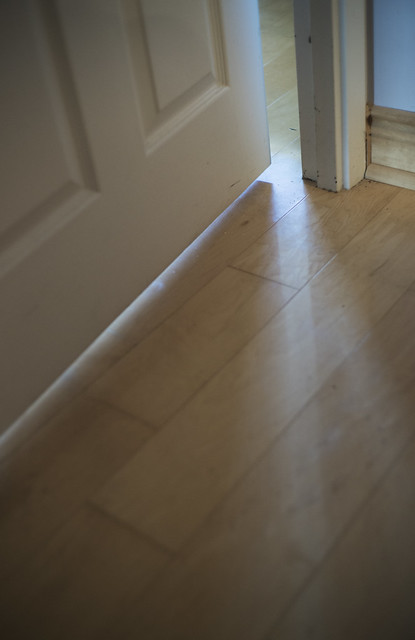
It’s a jarring question. If a door is ajar, you can’t necessarily just walk right in. But it’s not quite closing you out either. You don’t know if it’s meant to be open, or to be closed, or to be… neither. Just to leave a crack to let the light get through, or to allow a bit of fresh air. This door, this boundary, this limen, is in a liminal condition. It is not sealed, but it is not open enough for a person to pass through. It may or may not be open enough for a cat to pass through. The only way to know for sure is to ask Erwin Schrödinger to lend us his, and then observe.

But wait. Schrödinger’s cat is in a closed box, and its state becomes known when the box is opened. What if the box is ajar?

A jar, as we know, is a round container. Usually jars have lids that screw on. They turn, deturn, return. Is an incompletely screwed-on lid ajar?

Can a sliding door be ajar?

In my world, ajar is not a word for a sliding door. Ajar means the possibility of nudging and turning. Of jarring it open or closed. It is just that disturbance that would resolve it.

Is that what ajar comes from? There is a word ajar which means ‘to be in a jarring state’; it’s roughly synonymous with ‘awry’. But the ajar for doors is not that ajar. Its jar comes not from jar as in discord (“a jarring sound”); rather, it is a turn served on char, an old word which means ‘turning back, returning’. So. Returning to closed or to open?

According to the Oxford English Dictionary, on char is ‘on the turn, in the act of shutting’. Which would seem to answer the question of whether a door that is ajar is slightly open or slightly closed: by origin, it is pushed towards shut but not fully closed. Who, after all, would push a door just slightly open?

Who but a person who wanted to indicate that the door was openable, perhaps. Awaiting an arrival… or a return. Perhaps the person on the other side is listening to Steely Dan on their album Aja singing “Peg”: “It will come back to you…” (Steely Dan also sing “go back, Jack, and do it again,” but that’s on Pretzel Logic, and it seems to me that the logic of ajar is not so much of a pretzel as of a Möbius loop, the one side being in truth the same as the other.)

Or perhaps the person wants to come out but doesn’t want to. Or doesn’t want to but wants to. Or simply hasn’t gotten the momentum. Or wants to be neither in nor out. Or wants you to be neither in nor out.

Or is a cat, of course. In a perpetual state of uncertainty: in theory neither one nor the other; in reality oscillating and vacillating.

Does every door that opens eventually shut, and does every door that shuts eventually open? When you say “ajar,” your tongue swings shut onto the ridge behind your teeth, and then with a slight hesitation swings open again. Returning is the motion of the tao, and it seems to be the motion of the door. But returning to open or to closed? What is the destiny of the door, what is its assigned role? Open, shut, both, neither? Would Arjuna counsel it to be unajar? Is a door that is barely open or barely closed a real door? Or is it the only real door, the only door that, when you come to it, frames the decision as yours?

