Monthly Archives: August 2023

vista

This land is your land, this land is my land
From Bonavista to Vancouver Island
From the Arctic Circle to the Great Lake Waters
This land was made for you and me

If you’re not from Canada, you’re probably thinking those words aren’t quite right. But not only are they the words I learned as a kid, I was well into adulthood before I learned that there were American words that were different.

Huh.

The other thing that took me a long time to learn was exactly where Bonavista was. I mean, I could figure out it was on the opposite side of the country from Vancouver Island, but specifically where I wasn’t sure, and for some reason – mainly because the place just never came up outside of that song – I didn’t look it up.

Well, it’s in Newfoundland, on a peninsula about halfway between Twillingate and St. John’s. I still haven’t been to Bonavista. But I have seen many a good vista in Newfoundland. And I feel like doing one more word tasting on Newfoundland.
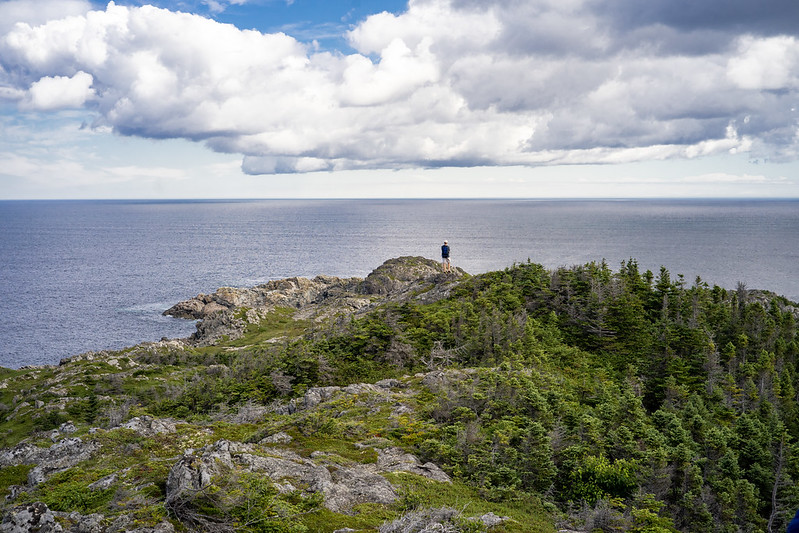
I’ll assume you can see that Bonavista means ‘good vista’ or ‘good view’ or ‘good sight’ – though, perhaps ironically, Bonavista is not named for the beautiful vistas you can see from it; it is named for being a beautiful sight itself, when seen from sea by an Italian explorer on an English ship in 1497. The story is that Giovanni Caboto (John Cabot, for Anglophiles), on at long last sighting land there, exclaimed “O buon vista!”

Yes, “buon”; bona is not standard Italian or Spanish or Portuguese – it’s Latin (and some regional varieties of Italian). But vista is not Latin; it’s Italian, and Spanish, and Portuguese, in all of which it means ‘sight’ or ‘view’, and in Italian it is also the feminine singular past participle of vedere, ‘see’. The Latin equivalent is visa, the feminine singular past participle of video, ‘I see’ (from which is also derived viso, ‘I behold’, which in turn gave the frequentative visito, which became English visit).
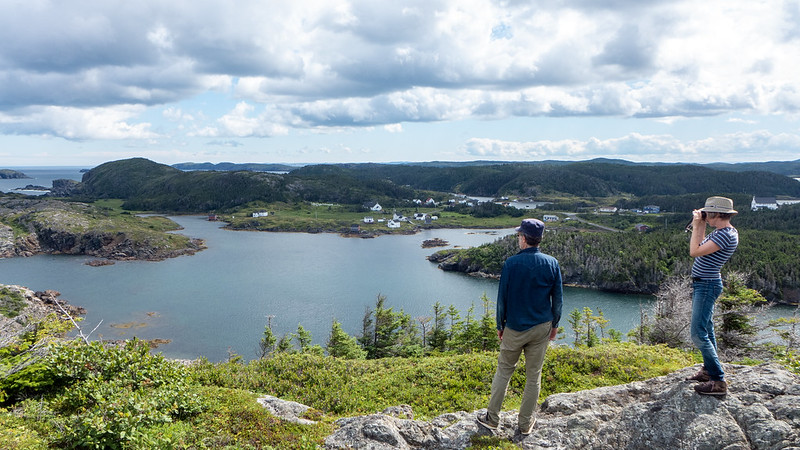
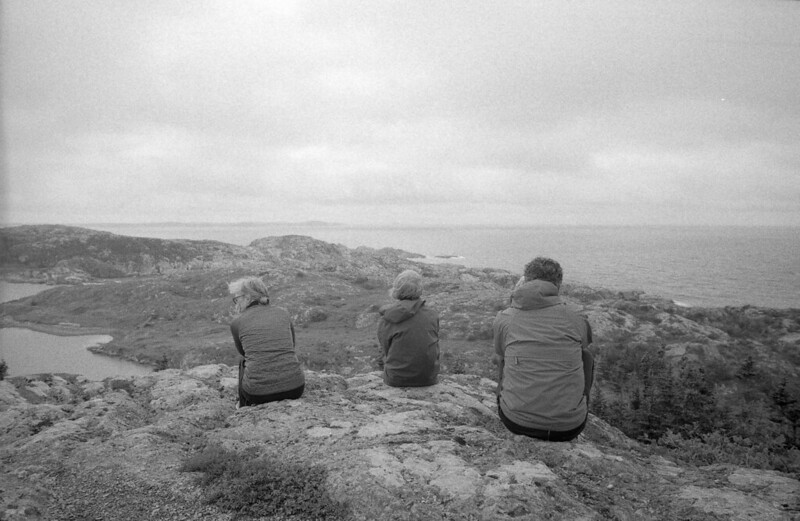
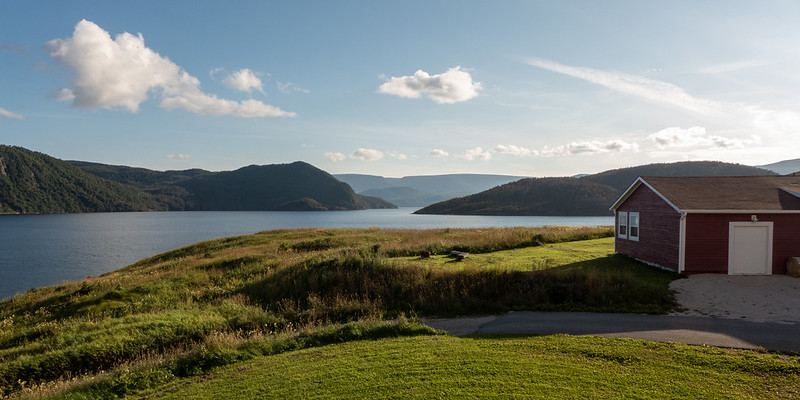
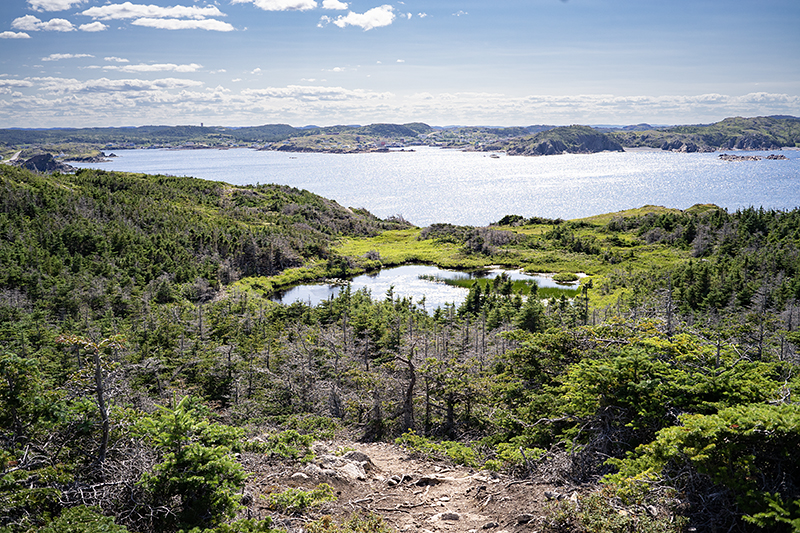
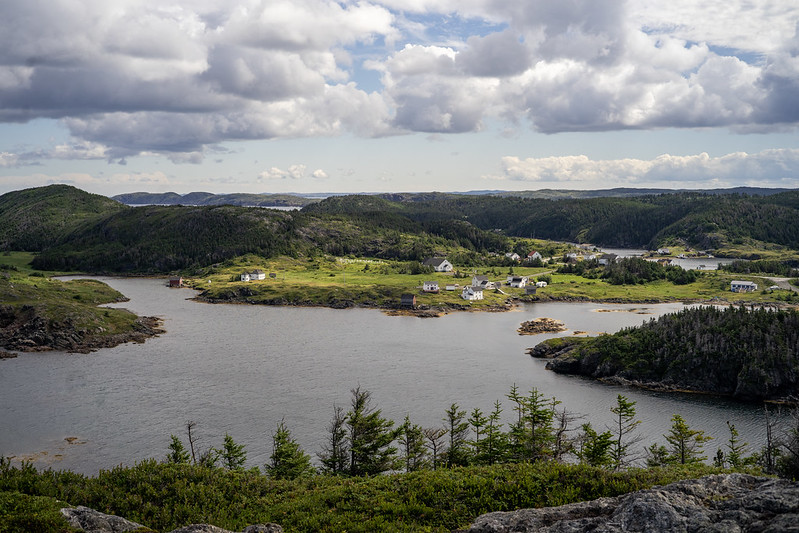
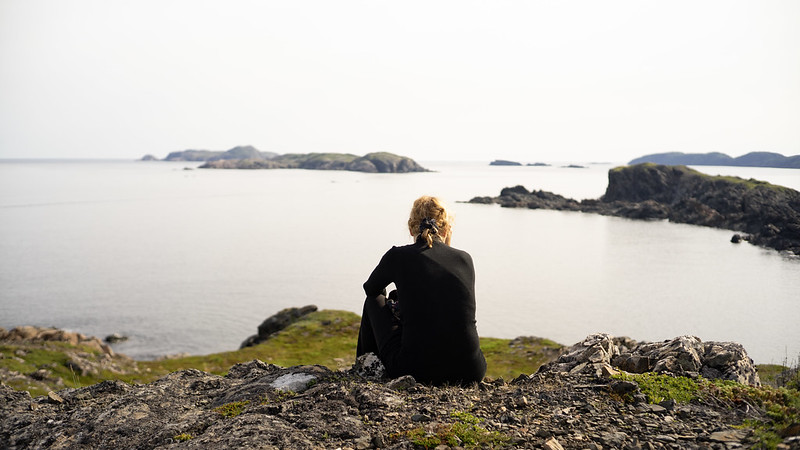
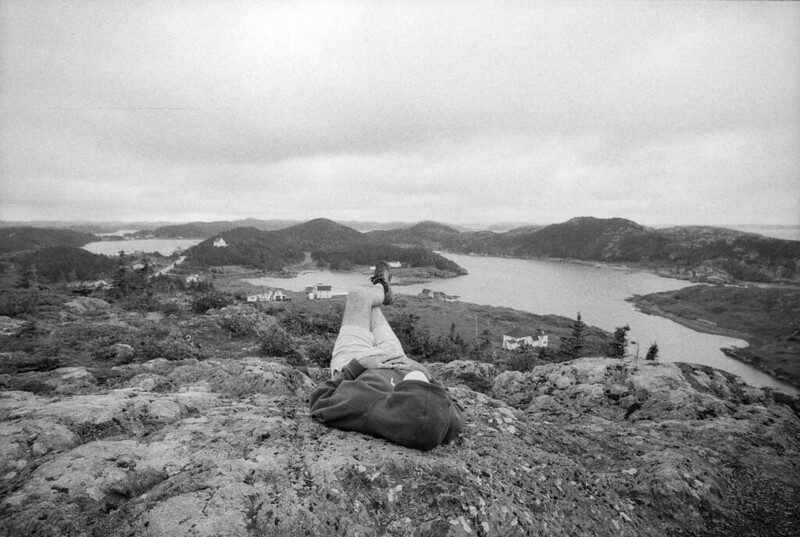
Well, in visiting Newfoundland, my wife and I (and our friends) have seen many sights and views, and good ones at that. There really is no substitute for climbing up on a rocky, mossy, juniper-covered hill and seeing the scene in person, in 360-degree Sensurround. You can watch all the video you want, but seeing just what others have recorded having seen is no substitute. 
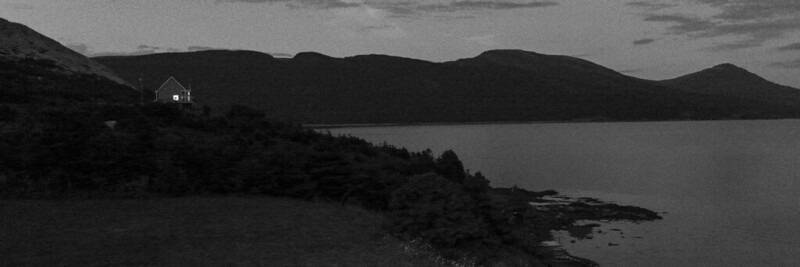
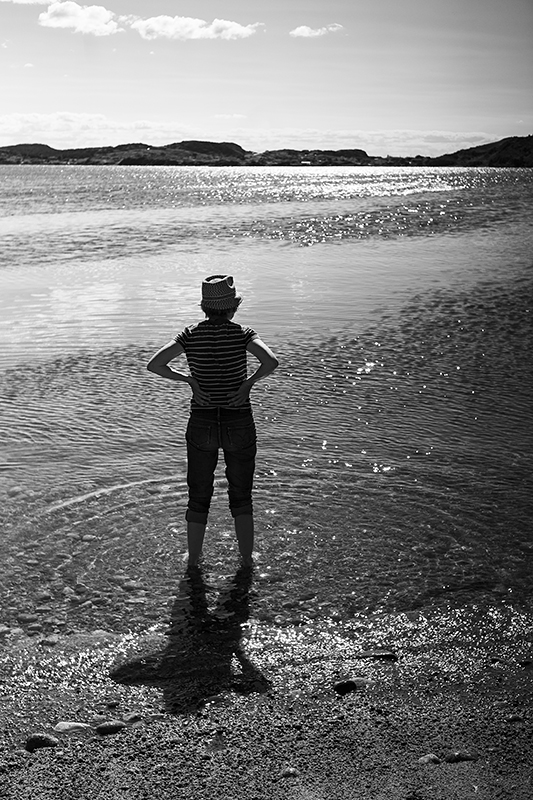
And of course my photos don’t do it all justice either – but you can take the inspiration and go see it yourself when you have the chance, and if you’re in Canada (or any of several other countries) you won’t even need a visa (though you might want some kind of credit card). And once you have visited and seen these good vistas, they will stay with you as memories, and if you have taken pictures you can revisit them wistfully, at least by sight. The Newfoundland coast really is a good looking place.
capelin

Sea life is simple; it may be lived from first to last without benefit of doctor, cook, or chaplain. If you are a fish, you hatch and grow with no sense of parents, family, or obligations; you eat when you have the chance, you may be eaten when a larger sea-dweller has the chance, and, if you are allowed the fullness of time, you follow your instincts like a hormonal twenty-one-year-old heading to Woodstock or Coachella where, after a period of frenzy and (if fish can experience it) ecstasy, you are done and another generation is started. But mostly you eat and are eaten.

It’s a fish-eat-fish world in the briny ocean, and, off the shredded-rock coast of Newfoundland, the fish that is the foundation of this big blue Ponzi food pyramid is the capelin. The capelin is a silver spear-tip of a fish, a species of smelt no bigger than a basketball player’s finger, and it eats plankton, and everything else eats it: herring, cod, whales, and your friends who live on the Newfoundland shore.

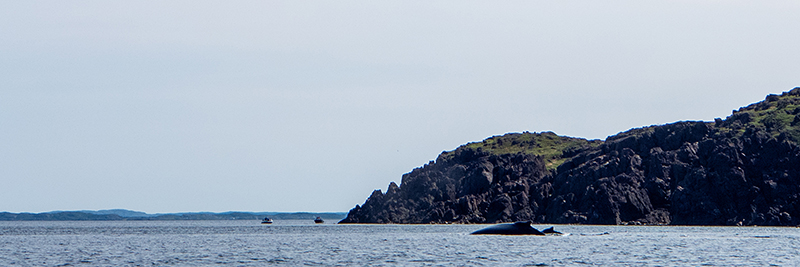
Your friends who live on the Newfoundland shore rely on the capelin, and not just or even mainly for frying and filleting and eating. The capelin feed the other food fish, after all, and fishers will use them as bait, but they are also where the entertainment happens. If you should go to the headland of some small local cape, or take a boat out along the coast, and look for whales, you will most readily find them where there are masses of capelin, because whales like to dine too. You won’t see much of the whales – the quick white plumes of their blowing, sometimes their fins, occasionally a tail – and you won’t see any of the capelin they eat, but you’ll know they’re there.

And if you visit a rocky beach, you may know even more directly that the capelin are there. If you go at the right time, in the height of summer, they will be rolling: the females will be laying their eggs and the males will be squeezing out clouds of milt (that’s what it’s called in this case, milt, but we both know what it is, come on) and they will all be hurling themselves up on the sandy pebbly shore like the front line at a pop music festival. 

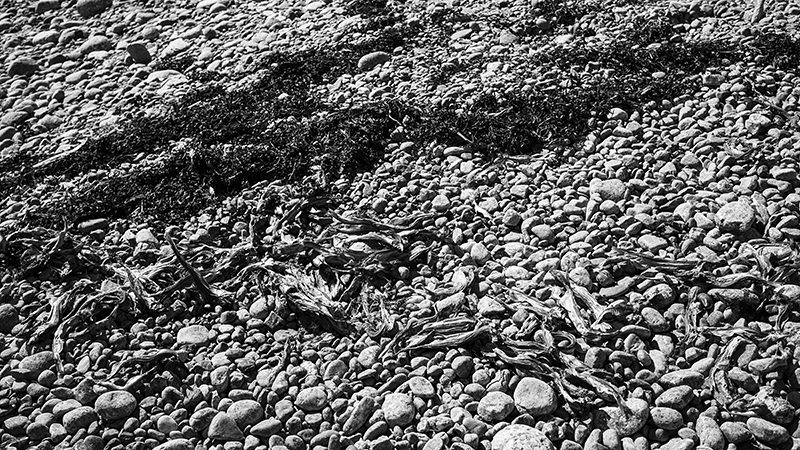
There is a distinctive aroma coming from this occasion – I’m told; I haven’t smelt that smelt milt smell. People may arrive with nets and scoop up all the capelins they can to take back to their kitchens. Then the tide will draw back and the spawn will be incubating safely and the capelins, most of them, will lapse exhausted like partygoers by poolside, stranded, and simply dry and die and dry some more. And if you, a person, should come to the beach a while after this event, you ought to watch your step.

Their mating rites are their last rites, and all without benefit of chaplain. Except that’s not quite true. The littoral chaplet is their chapel and they are all their own chaplains, literally. By which I mean to say that capelin comes from French capelan, which comes from Italian cappellano, which comes from Latin cappellanus, which means – and is the origin of – chaplain. So capelin is simply chaplain with a sea-change (Littré tells me that capelan can mean both the little fish and a mean priest spoken of with contempt). And cappellanus in turn comes from cappella, ‘chapel’. (Cappella originally means ‘little cloak’ or ‘small cape’, as it happens.)

But many capelins end not in the chapel or rectory but in the refectory: via kitchen, to table. I, in Toronto, must walk two blocks to the market to get fish that has come more than a thousand kilometres, and must pay silver and gold at filet mignon prices for it, but my friend on the Newfoundland shoreline can, without walking much if any farther, bring back a bucketful of silver capelin that have been pulled directly from the sea, a grand travel distance measured in metres, and with nothing paid but effort and the usual expenses of a day.

And then she can batter and fry them in batches and we can plate and eat them a few at a time: silver and gold and free, fried hot and friable, to fillet with fork and knife – one whole fish history per serving, spawned, survived to full size, then eaten not among thousands by a whale but among dozens by a smaller mammal. The pinnacle of a capelin’s simple life. And then take another.

Twillingate

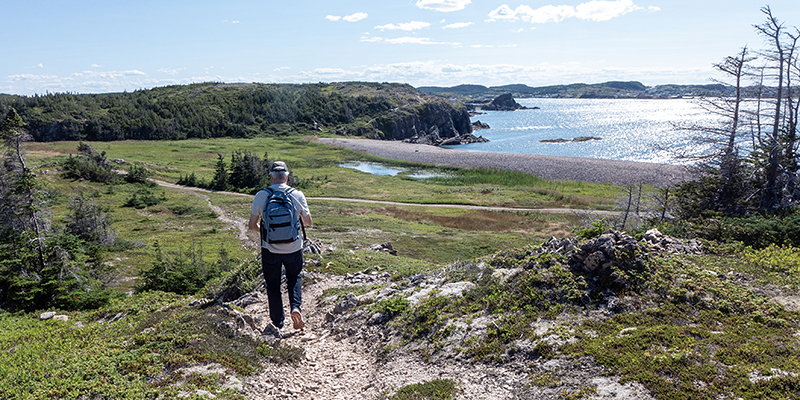
My friends and my wife and I went for an outing from Herring Neck on the rocky coastline of Newfoundland to nearby Twillingate. We walked up and around the lighthouse on North Twillingate Island. Then we took our packed lunch of runny cheese and large crackers and canned fish and hiked up and down and around and over, with a pause to eat, in the vicinity of French Beach on South Twillingate Island. 

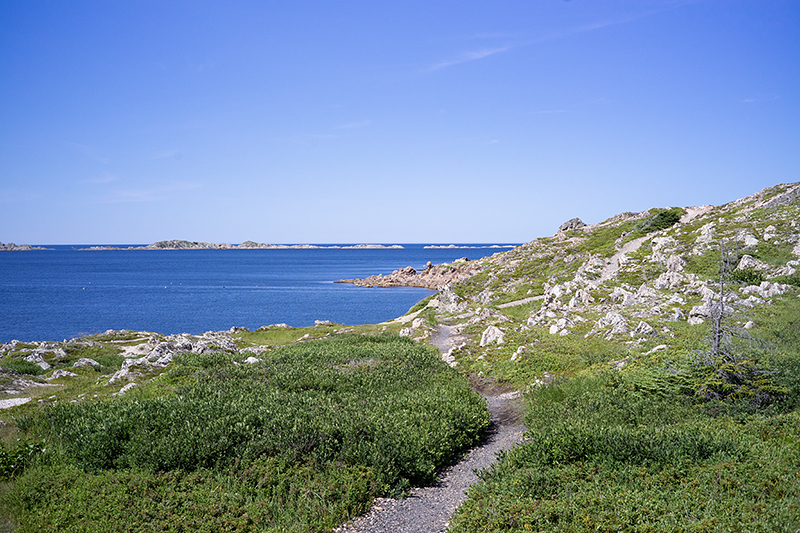
I adore hiking. I grew up hiking in the Rocky Mountains, and I happily scramble up Newfoundland’s rocky trails between evergreens and scrub brush and past little ponds and streams, and when I am high on a rocky promontory above the Atlantic it is just like being up in the Rockies, on Tunnel Mountain or Sulphur Mountain or the Little Beehive overlooking the Bow Valley, except that the valley has been filled with saltwater up to a couple hundred feet below where I stand. The ocean is a wide, deep valley, so wide I can’t see across it, but somewhere on the other side is a French beach on the mirroring coast of Brittany.

It is all strangely familiar and familiarly strange. When I look at the terrain around my feet I might be on the way to Skoki Lodge or Sentinel Pass or Lake Agnes: there is lichen on the rocks, and juniper, and spruce trees. But then we descend briskly and we are on French Beach with waves smoothing out endless pebbles, a sight seen in my life only on vacation.

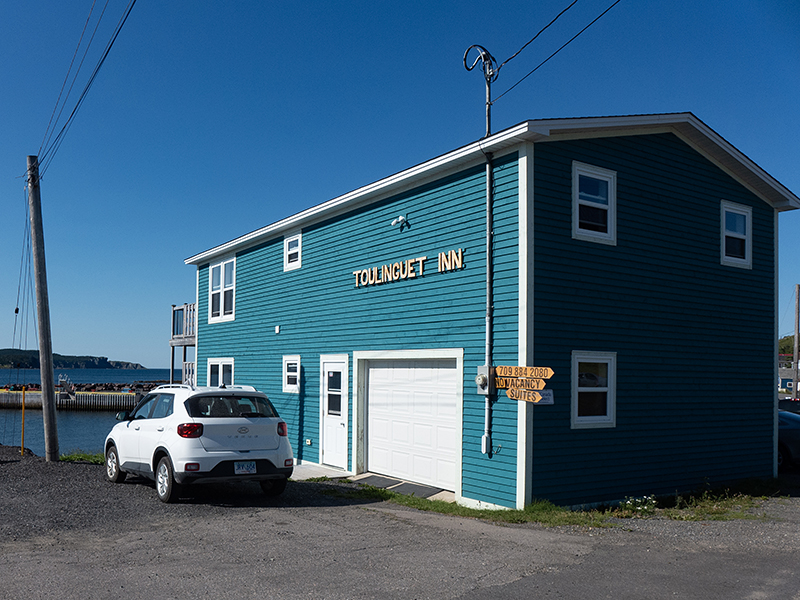
On the drive back through Twillingate we pass a two-storey box with teal siding and white doors and windows and the name TOULINGUET INN in hand-cut wooden letters. I ask Sarah what that word is. She says it’s the original name of Twillingate.

I had not, until that moment, considered that Twillingate might have come from anything but English. Yes, twilling (or twillin) is a bit mysterious, but more familiar than strange, and gate is, well, a gate. I was willing to take it at face value. But what was Toulinguet? Was it perhaps the name of a relative of Demasduwit or Shanawduthit, who were among the last of the Beothuk people, who were crowded from the coasts and squeezed to starvation by European incursions?

No, it is a word from the far coast of the Atlantic. The western tip of Brittany reaches towards America at Pointe du Toulinguet, a rocky promontory that, like North Twillingate Island, features a white lighthouse. The fishers from Europe saw this newfound headland and thought this strange land looked familiar, so they named it after what they knew – a mirror Toulinguet. And then when the area was settled by people from England, they made this slightly strange word more familiar: Twillingate.

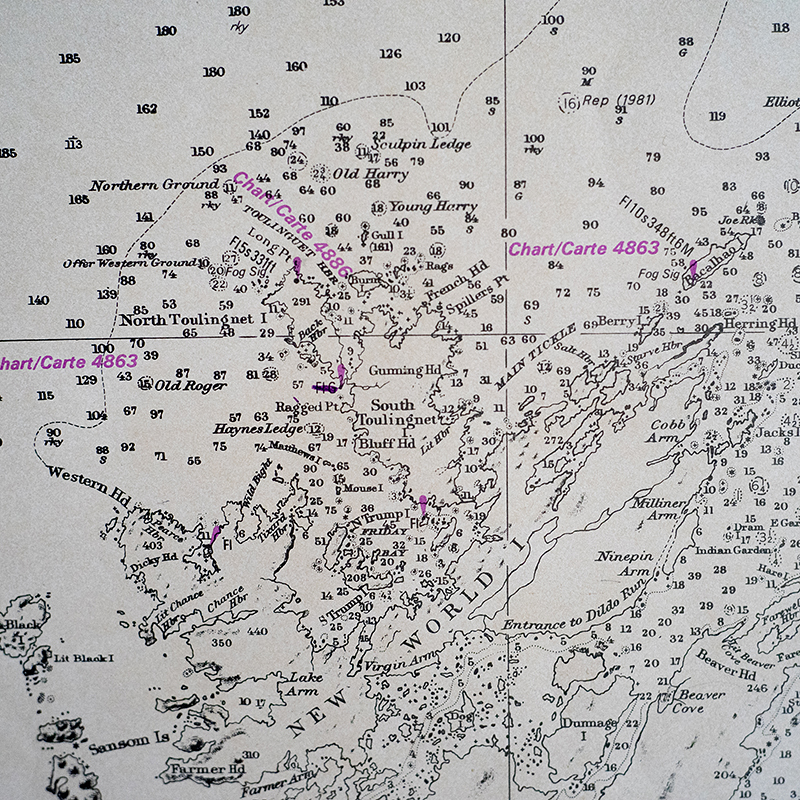
But Toulinguet survives; it has not been forgotten. Sometimes, though, it is made a bit more familiarly strange. A main road across South Twillingate Island, from the causeway from New World Island up to the town of Twillingate, is named Toulinquet Road, with a q before the u. And an old chart that is wallpapered in Sarah’s house makes the name of the islands Toulingnet, as though they went fishing for the name but netted something topsy-turvy, n for u.

But where did Toulinguet come from? It’s a French word, right? We can see that by the spelling. Well, yes, in the same way as we can see by the spelling that Twillingate is an English word. But each word is the meeting of two languages; with Toulinguet the other language is Breton, the Celtic language of Brittany. The Breton source, so I read, is toull inged, meaning ‘plover hole’, for a pierced rock there favoured by birds (though the usual Breton word for ‘plover’ is morlivid, and another source tells me inged means ‘petit chevalier’, the shorebird called lesser yellowlegs in English). 

That’s not what Pointe du Toulinguet is called in Breton now, though – it’s Beg ar Garreg Hir. I can tell you that begmeans ‘beak’ or ‘point’ or ‘promontory’ (I’m tempted to say it’s ‘cape’ in Breton and make some wordplay, but that’s a bit of a journey, like Cape Breton Island, which is the place in Nova Scotia where ferries leave for Newfoundland). I can tell you that hir means ‘long’. As best I can discover, garreg is a mutated form of karreg, which means ‘rock’; you’ll see its reflexes in Welsh carreg and Irish carraig. So it’s Long Rock Point, or Long Rocky Point. With a hole for lesser yellowlegs off its tip. And the mirroring lighthouse on North Twillingate Island is on Long Point, which is rocky.

But the trail doesn’t end in Brittany. You can keep going, north across the channel to Britain. There’s a reason that Brittany (Bretagne) seems onomastically similar to Great Britain (Grande-Bretagne), and it’s that when the Anglo-Saxons came to Britain and made much of it into England, Celtic-speaking people were crowded to the edges – Scotland, Wales, Cornwall – or all the way across the channel, where they set up a little Britain for themselves, a bit of the familiar in a strange – and at length not strange – land. 

And their strange name, toull inged, was made familiar by the local French: Toulinguet. And then that familiar name was applied to a strangely familiar place on the far side of the ocean. And then people from England – mostly from the southwest, Devon and Cornwall – came and saw that strange name and made it familiar, Twillingate. Such are the paths we take through willing gates and over the strange and familiar.

drong

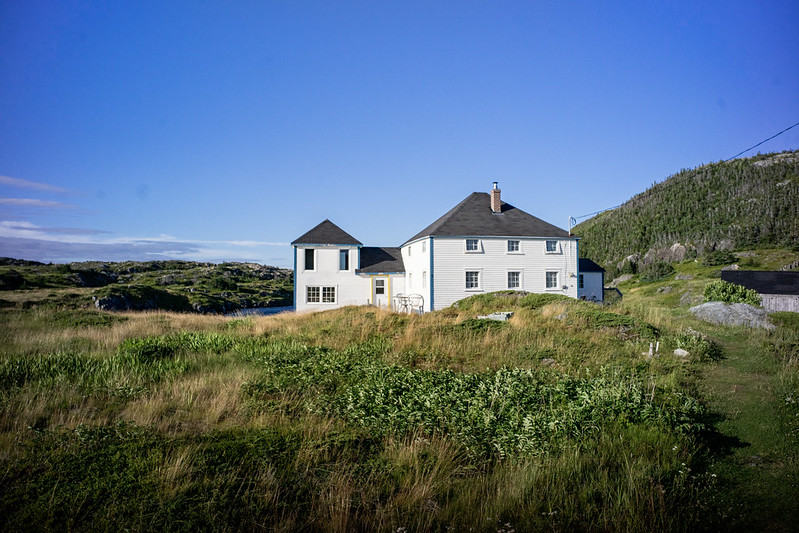
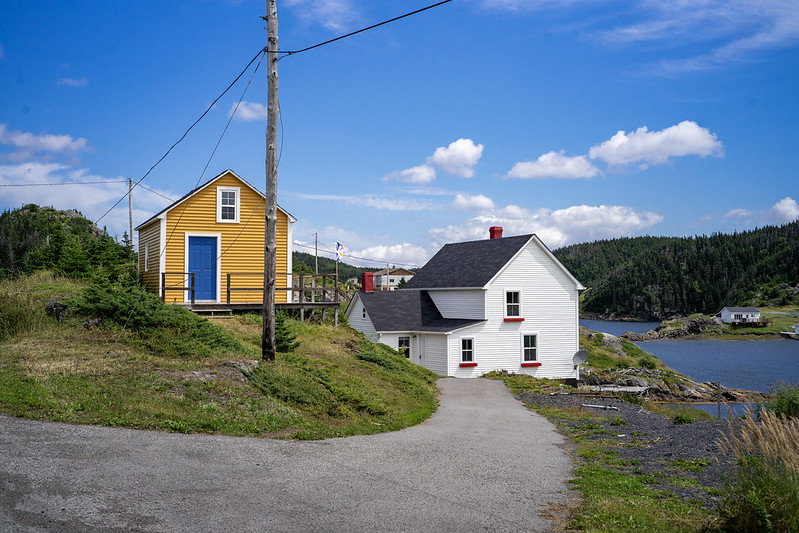
The northern edge of Newfoundland, a frayed lace of rocks and water and durable vegetation, is not a place to seek a throng or a crowded street, yet you may find yourself with little lateral room to move. In an island community such as Herring Neck or Twillingate, the houses appear to have been cast like so many dice across the bumptious land, stopping near the water; wherever a cube has halted its tumble, at whatever distance and angle from others, a roof is dropped on and windows and doors added, and there you are. So there is ample space between them. And yet.

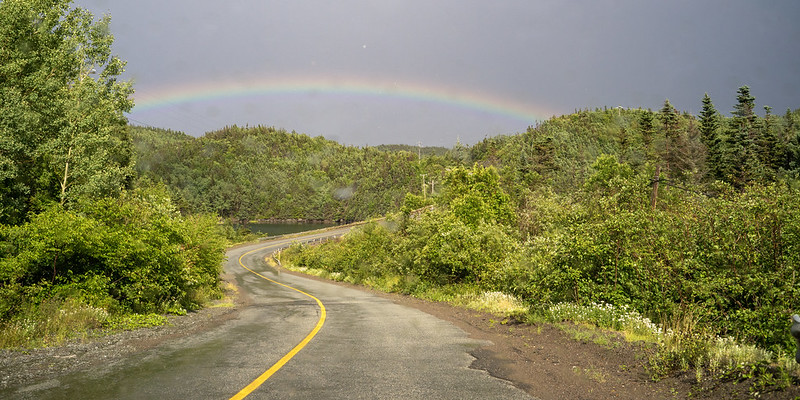
And yet a scrabbling landscape that fights every alteration except the slow erosions of plants and water is no graceful receiver of roadways. Even the roads you can actually drive on are no wider than a cod-based economy would allow for; they wind up and over and around the rocky landscape in routes that would be thrilling to drive in a Lamborghini for exactly twenty-three seconds, at which point the heaving pavement would abruptly rip its low-slung undercarriage right off. 

To reach my friend Sarah’s house at the end of a succession of ever-smaller islands connected by short causeways and bridges, we take a road that starts as two lanes, then loses its paint, then loses its width, then loses its pavement, then nearly loses its very self, so that the last few hundred metres is a one-person-wide path over rocks and grass between peat and boulders. Beyond the house it continues on, by a bog, between bushes, up over stones, less than a foot’s width at times between vegetation that will undo your laces, finally fading out where the head of the peninsula meets the sky and you can look out on the endless ways of waves and whales.

This is a place of folk ways and folkways, little paths of culture proudly maintained, traditions that have held on like lichen over the generations since they crossed the ocean, from – in the case of this particular area – Cornwall and Devon. Newfoundland does not have a distinct dialect or accent; it has many, as many varying dialects and accents as it has villages, or rather more than that, even. And along with that comes an assortment of words that dictionaries tend to think are obsolete or at least covered in library dust.

Which is how, as we drove through Twillingate on the way to its lighthouse, we passed a street with the sign PRIDE’S DRONG.

“Drong?!” I said.

Sarah explained that a drong is a narrow laneway. She referred me to the Dictionary of Newfoundland English. “I have a copy at home,” she told me.

“So do I,” I said.

“Of course,” she said.

I’m back in my home in the sky in Toronto now, and I have my copy of that essential book on the table next to me, and I can tell you that at “drong” it says “See DRUNG.”

And at “drung” it gives the definition “A narrow lane or passage between houses, fenced gardens, etc.” It notes its etymology as coming from the same Old English root as throng.

Now that I have internet access (on the sketchy margins of Newfoundland the sketchiest thing of all is cellular service, and don’t get your hopes up about wifi either), I can confirm that drong (or drung) is an ablaut form of dring, which is a Southwest England way to say thring, which means ‘squeeze’ or ‘press’ or ‘crowd’. It is from that ‘crowd’ (verb) sense that the noun throng developed.

But you won’t see a crowd on Pride’s Drong, and you won’t feel crowded there either. If you’ve been to England, you no doubt have seen many narrow passages between buildings and fences and so on, the slender walled ways that would make it a challenge to pass another person. You are crowded by humanity and its clamoring for simultaneous space and closeness in its building and dividing. But in Newfoundland, it’s not quite the same. When a way can barely let two people pass, it’s not walls but peat and granite and the threat of falling into one or off the other that keeps you in line, or it’s the thriving scrub brush that gives your bootlaces a gantlope. And when a lane is only wide enough for one car going one way, as on Pride’s Drong, well, it’s not that there’s not enough room for the road, it’s just that there’s not enough road on the room. 

I didn’t take a picture, but have a look at the Google Streetview. I won’t say that the road is narrow on a matter of principle, but it may be narrow due to lack of principle (financial) or lack of interest (not financial). Sometimes ways are tight when means are tight, and sometimes there’s just no need to insult the landscape, or to do wrong to a strong pride of place.