
Sea life is simple; it may be lived from first to last without benefit of doctor, cook, or chaplain. If you are a fish, you hatch and grow with no sense of parents, family, or obligations; you eat when you have the chance, you may be eaten when a larger sea-dweller has the chance, and, if you are allowed the fullness of time, you follow your instincts like a hormonal twenty-one-year-old heading to Woodstock or Coachella where, after a period of frenzy and (if fish can experience it) ecstasy, you are done and another generation is started. But mostly you eat and are eaten.
It’s a fish-eat-fish world in the briny ocean, and, off the shredded-rock coast of Newfoundland, the fish that is the foundation of this big blue Ponzi food pyramid is the capelin. The capelin is a silver spear-tip of a fish, a species of smelt no bigger than a basketball player’s finger, and it eats plankton, and everything else eats it: herring, cod, whales, and your friends who live on the Newfoundland shore.

Your friends who live on the Newfoundland shore rely on the capelin, and not just or even mainly for frying and filleting and eating. The capelin feed the other food fish, after all, and fishers will use them as bait, but they are also where the entertainment happens. If you should go to the headland of some small local cape, or take a boat out along the coast, and look for whales, you will most readily find them where there are masses of capelin, because whales like to dine too. You won’t see much of the whales – the quick white plumes of their blowing, sometimes their fins, occasionally a tail – and you won’t see any of the capelin they eat, but you’ll know they’re there.
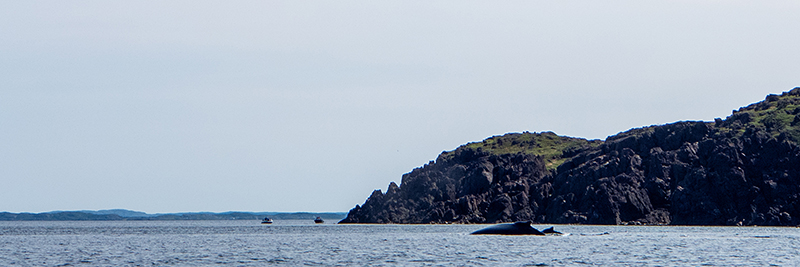
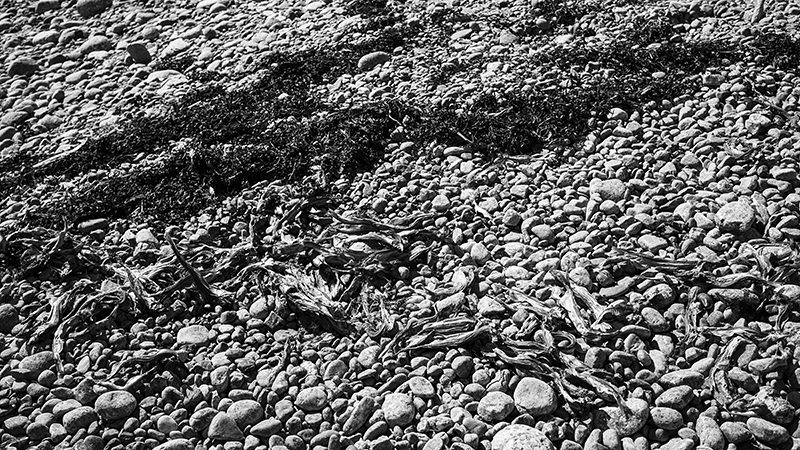
And if you visit a rocky beach, you may know even more directly that the capelin are there. If you go at the right time, in the height of summer, they will be rolling: the females will be laying their eggs and the males will be squeezing out clouds of milt (that’s what it’s called in this case, milt, but we both know what it is, come on) and they will all be hurling themselves up on the sandy pebbly shore like the front line at a pop music festival.
There is a distinctive aroma coming from this occasion – I’m told; I haven’t smelt that smelt milt smell. People may arrive with nets and scoop up all the capelins they can to take back to their kitchens. Then the tide will draw back and the spawn will be incubating safely and the capelins, most of them, will lapse exhausted like partygoers by poolside, stranded, and simply dry and die and dry some more. And if you, a person, should come to the beach a while after this event, you ought to watch your step.
Their mating rites are their last rites, and all without benefit of chaplain. Except that’s not quite true. The littoral chaplet is their chapel and they are all their own chaplains, literally. By which I mean to say that capelin comes from French capelan, which comes from Italian cappellano, which comes from Latin cappellanus, which means – and is the origin of – chaplain. So capelin is simply chaplain with a sea-change (Littré tells me that capelan can mean both the little fish and a mean priest spoken of with contempt). And cappellanus in turn comes from cappella, ‘chapel’. (Cappella originally means ‘little cloak’ or ‘small cape’, as it happens.)
But many capelins end not in the chapel or rectory but in the refectory: via kitchen, to table. I, in Toronto, must walk two blocks to the market to get fish that has come more than a thousand kilometres, and must pay silver and gold at filet mignon prices for it, but my friend on the Newfoundland shoreline can, without walking much if any farther, bring back a bucketful of silver capelin that have been pulled directly from the sea, a grand travel distance measured in metres, and with nothing paid but effort and the usual expenses of a day.
And then she can batter and fry them in batches and we can plate and eat them a few at a time: silver and gold and free, fried hot and friable, to fillet with fork and knife – one whole fish history per serving, spawned, survived to full size, then eaten not among thousands by a whale but among dozens by a smaller mammal. The pinnacle of a capelin’s simple life. And then take another.






 Sesquiotica