
This word is a matter of perspective. And of stress.
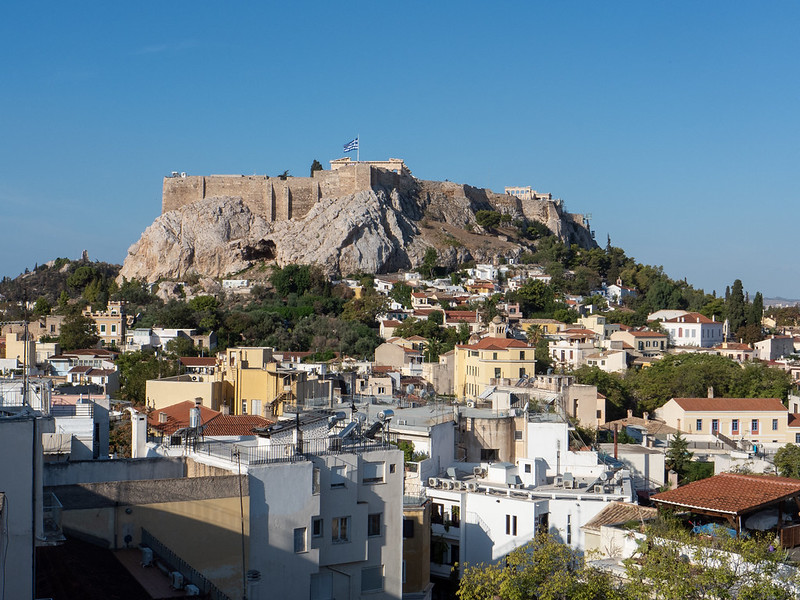
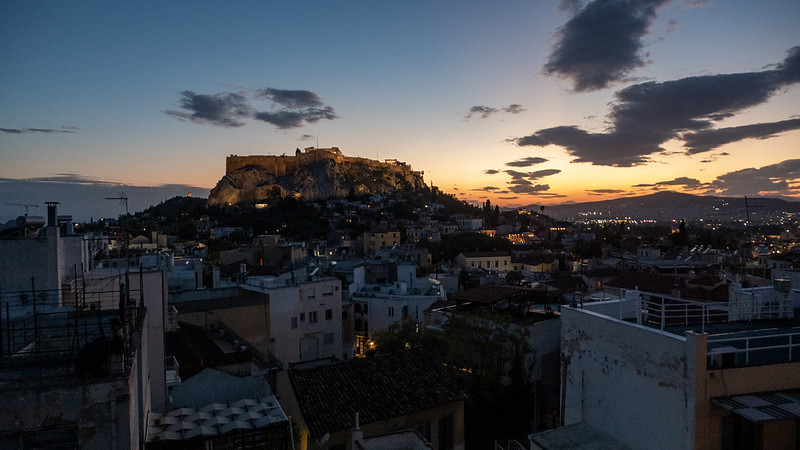
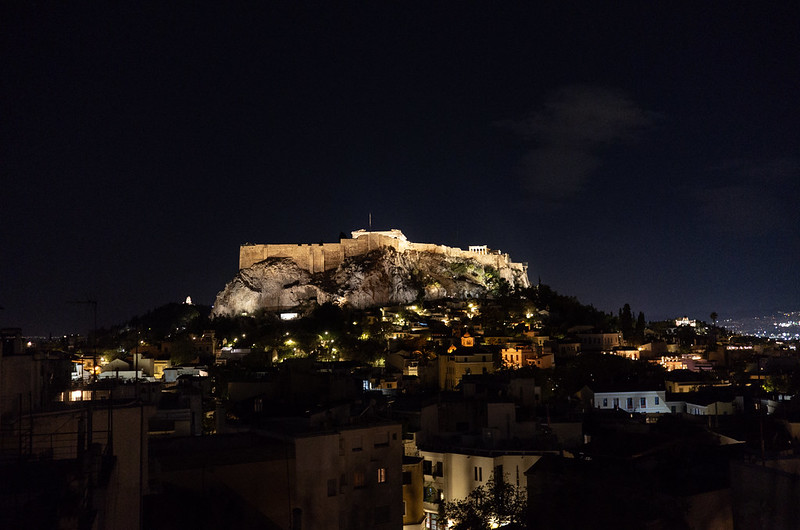
You know the Acropolis, of course. The high rock plateau that sits above Athens, layered and piled with ancient structures: most notably the Parthenon and, though less spoken of, the Erechtheion and the Propylaia, and with them the foundations of many other still older buildings, plus a flagpole and some public washrooms. It is within the city, it is surrounded by the city, but it is apart from the city.
Which might seem ironic, given that acropolis means ‘high city’. What city? It’s all temples! And they’re not in use or, for that matter, in usable shape at the moment. But on the other hand the polis is there too – the population, all the people. There are a lot of people up there anytime during open hours.
The parts of the word acropolis are as easily seen as the parts of the Acropolis: acro- as in acrophobia, acrobat, and so on, and -polis as in metropolis, necropolis, and so on. But right away we run into an interesting issue: its roots are akros ἄκρος and polis πόλις, but it’s not said acropolis, it’s said acropolis. Why the movement of stress?
The answer is not simply that we have a habit of putting the stress on the third-last syllable in borrowed Greek words, though we do do that – it’s why we put the stress on the first syllable in Socrates when it’s on the second in Greek. But even in Greek the stress in acropolis is on the second syllable, which is to say the third-last (antepenultimate): ἀκρόπολις (the accent on ό indicates the stress – which, in Classical Greek, is a pitch accent, but let’s leave that aside; if the ἀ catches your eye, that ’ is a breathing mark: it means the vowel doesn’t have a “h” sound before it). The stress has to move when the two bits are put together because it can’t be farther from the end than the third-last syllable.
Which is sort of like the shift in perspective if you go from the city of Athens up to the Acropolis. If you start where we started, you first see a cliff keeping it high above you; then you go around the side on city streets and gradually uphill, and when you are on the far side you come to the entrance, where it is an easy stair climb to the top. And then you are no longer looking up at it, the thing that dominates the view (until you get to higher peaks surrounding the city); you are looking down and across at all the surrounds. You are not in the high city; you are in the acropolis. And all the stress you brought with you? You might have left it down there. (Or perhaps not. Especially if crowds bother you.)
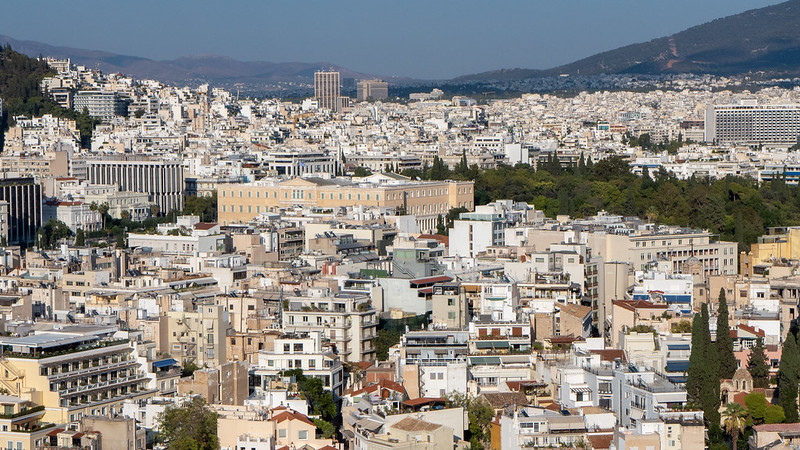
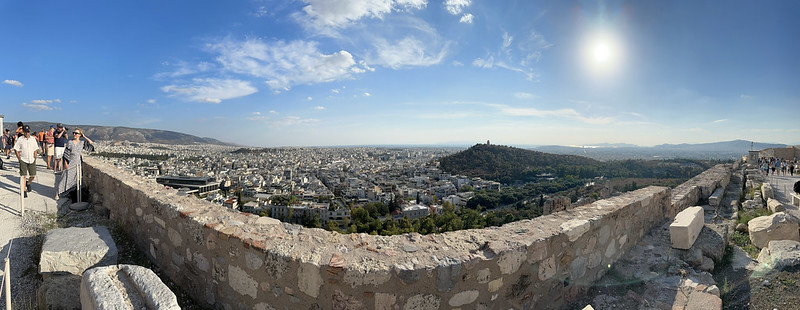
And of course it’s quite the place, iconic and historic but also scenic. Which is one reason it is by far the best known and most popular of all the acropoleis.
All the what?
I wouldn’t be surprised if you had never paused to think of what the plural of acropolis might be. If there’s only one, you don’t need to pluralize it, right? Well, yeah, but there’s not only one. An acropolis was a central feature of many ancient Greek towns. It was why they were where they were: they were built around a high, defensible place. Towns would grow around the bases (water’s easier to get down there, for one thing), but the strength and protection was in the high part. Rhodes and Corinth also have notable acropoleis.
OK, but why this freakin’ weird plural? Why not acropolises? Well, of course, you can also say acropolises if you want. But in English we have a pretentious habit of borrowing the nominative plural – and no other inflections – from loanwords, especially Greek and Latin ones. And it just happens that the nominative plural of ἀκρόπολις is ἀκροπόλεις.
But if you’re watching those accents, you’ll notice a shift: that ό is now in the second-last (penultimate) syllable. This is because the final syllable is “heavier” (it has a diphthong rather than a short vowel) and so it drags the accent towards it. So this means that the pronunciation in Classical Greek is /a.kro.ˈpo.lɛɪs/ – and in modern Greek, /a.kro.ˈpo.lis/ (but the singular in Modern Greek is ακρόπολη, with η rather than ις, just incidentally, heh heh) – and in modern English it’s… /ə.ˈkɹɒ.pə.liz/. Heh, sorry. The stress doesn’t move; we just say it the same way but with an “eez” instead of an “iss.” And in fact sometimes we spell it acropoles. Because while we like to borrow the plurals, we’re not really as sophisticated or, you know, nerdy as all that. We just like the scenic famous stuff.
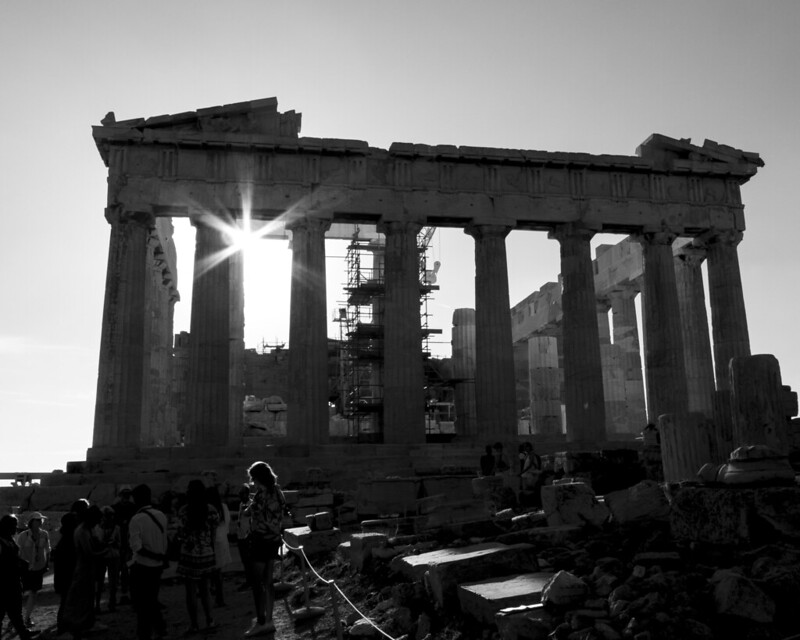
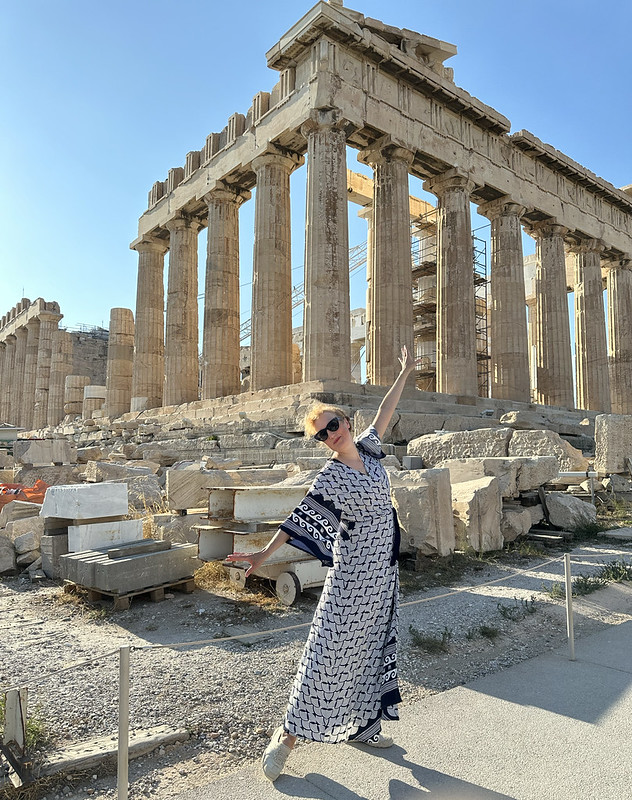
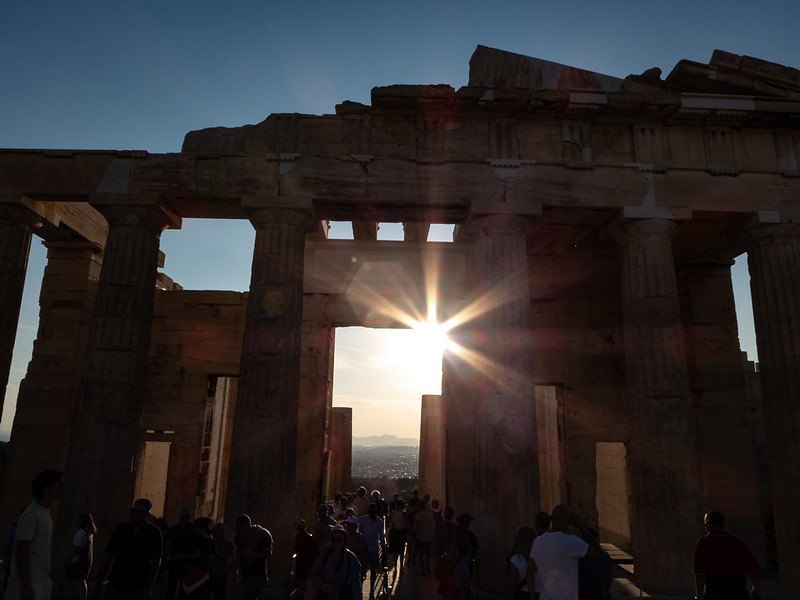
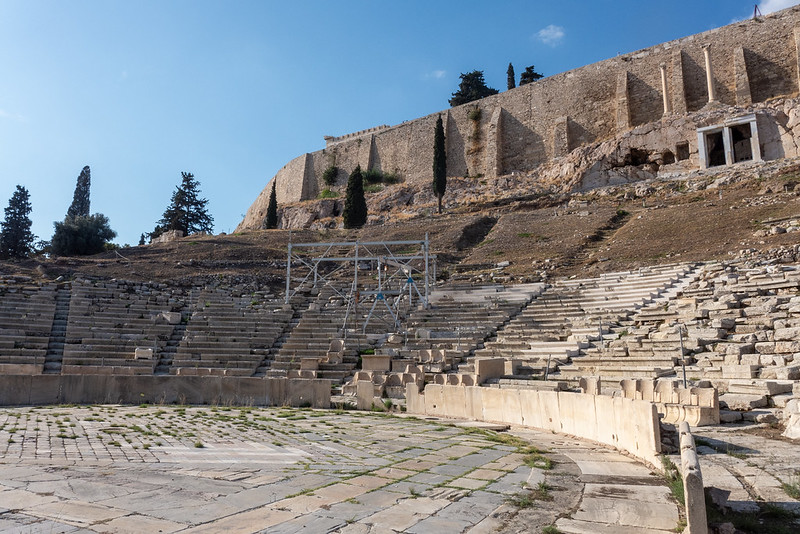
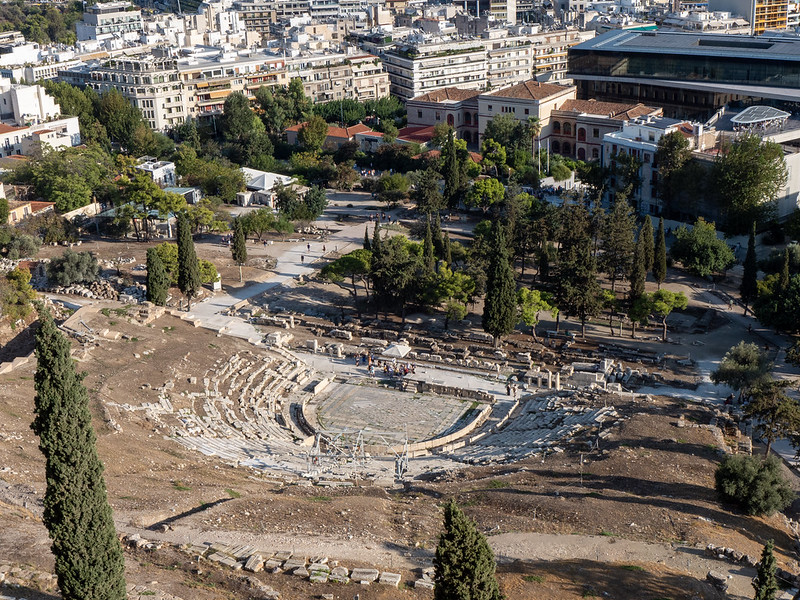
I mean, I am nerdy as all that, of course. I once performed an entire speech in Classical Greek (complete with chanting diction, and in the full costume and mask). It was in a production at the University of Calgary of Prometheus Bound by Aeschylus. And as it happens, at the foot of the Acropolis in Athens (accessible with your ticket to the Acropolis) is the very place that play, and thus that speech, was first performed: the (partially recovered ruins of the) great Theatre of Dionysus.
Of course I went there. Of course I stood in about the spot where the speech was delivered. Of course I… did not perform the speech. I’m not that kind of dork! And there were lots of other people around. But I did note that it was very similar in size to the theatre at the University of Calgary. “Great” and “grand” don’t always mean the same thing, you see…





 Sesquiotica