
It’s taken me some time to muster the words to write this, and I’m still not sure it will pass muster. It’s true, the biggest part of writing – of any kind of performing – is just showing up, but if you do show up, you don’t want to get shown up, you know? You want to demonstrate that you have it all together. You need to cut the mustard. You have to have something to show for it, lest you serve as a warning to others – or leave a trail of ruin like some kind of monster.
So. Muster. Is it musty, or is it tangy like mustard? Does it fight like a musketeer? Or does it just manifest what you must?
Etymologically, it’s none of those, if that matters – after all, most of us think of words on the basis of what they sound like they resemble rather than what they actually come from. But what a word seems to show will not always bear up under inspection; the deeper you get into a word, the more new senses and connections you make, but the more you break as well. You monster.
Let’s get deep into the roots of this word, with Latin moneo ‘I warn, I advise, I admonish’ (yes, admonish comes from moneo). From it was derived monstrum ‘omen, portent, ominous thing, monster’ (yes, monster comes from monstrum – first meaning ‘omen’, then meaning ‘what the omen was warning you about’, and then more generally ‘bad bad thing’) and also monstro ‘I show, I indicate, I advise, I denounce, I demonstrate’ (yes, demonstrate comes from monstro).
Monstro came through Middle French monstrer (whence Modern French montrer ‘show’ and montre ‘wristwatch’ – the English watch the time, the French show it) and landed in English in the later 1300s as moster (and a collection of other spellings), a word for an assembly of persons or things for showing or reviewing. In particular, in the military, it was when all the troops stood to be inspected (and, often, thereafter paid).
And from that we get all our current uses. Muster the courage, muster the energy, muster support, muster enough votes, muster the strength… all from calling together a collection of the thing in question, as you must. Pass muster comes from being deemed acceptable in the military inspection (in civilian life, if you persistently pass muster, you can become a past master). From that comes the surprisingly common pass constitutional muster, meaning ‘hold up under scrutiny on the basis of what is allowed and required by constitution’ – you also see fail constitutional muster, withstand constitutional muster, meet constitutional muster, stand up to constitutional muster… It’s all about cutting the mustard, which, however, has no traceable connection to muster (see World Wide Words on the topic).
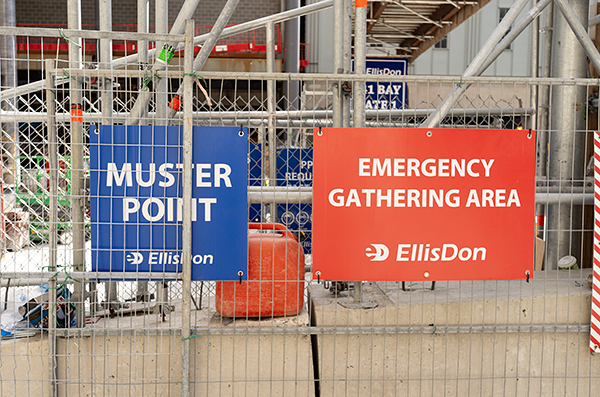
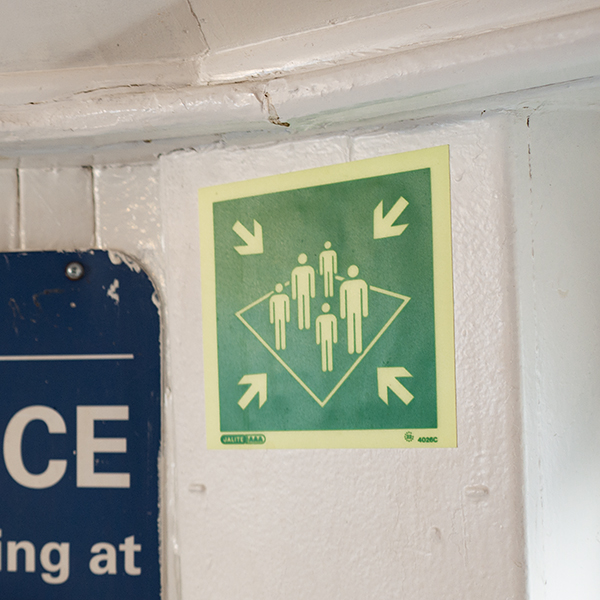
And then there’s muster point and muster station and so on, which you will see on big boats (ferries, cruise ships, etc.) and at some construction sites. When the occasion (fire, natural disaster, imminent immersion) demands that you come together, right now – show up, show yourself, stand and be counted, and perhaps also put on protective equipment – that, too, is from the military inspection parade. But sometimes, just for the sake of clarity, different words such as “emergency gathering area” may be used – or just an image, to show you.





 Sesquiotica