
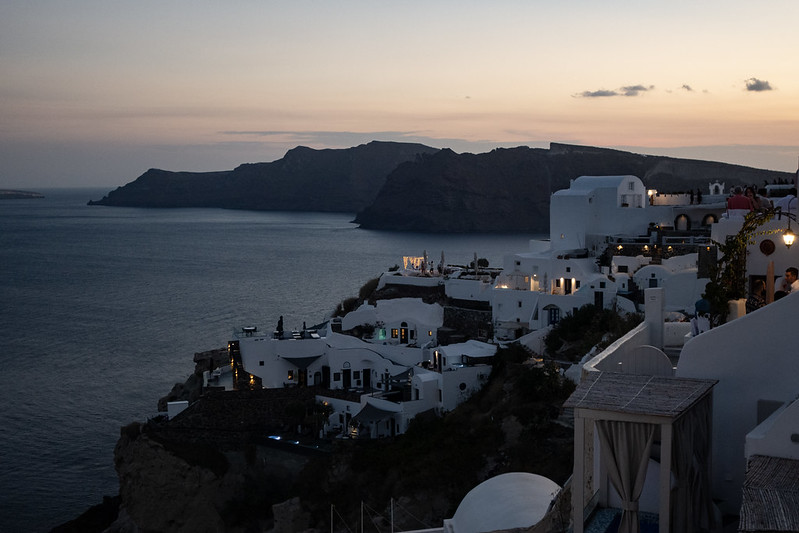
This is Santorini. And this is Thira.
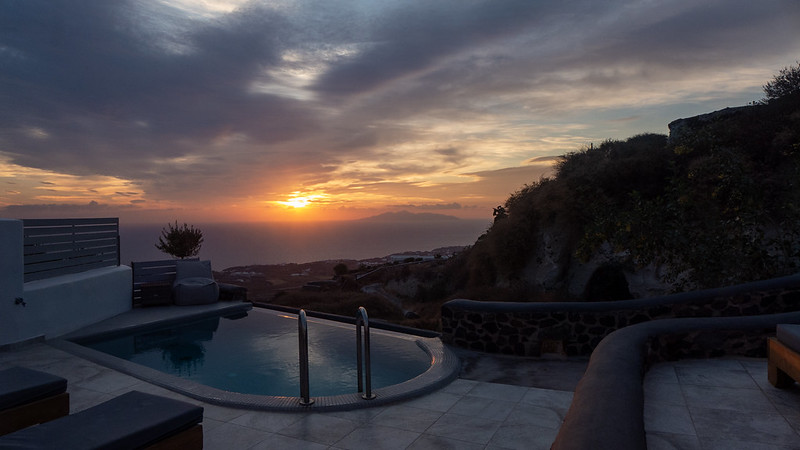
They’re not two places. Santorini is Thira, just as the sun I watched with hundreds of others setting across a caldera from a clifftop town is the sun I watched by myself rising over the open Aegean across a rural hillside.
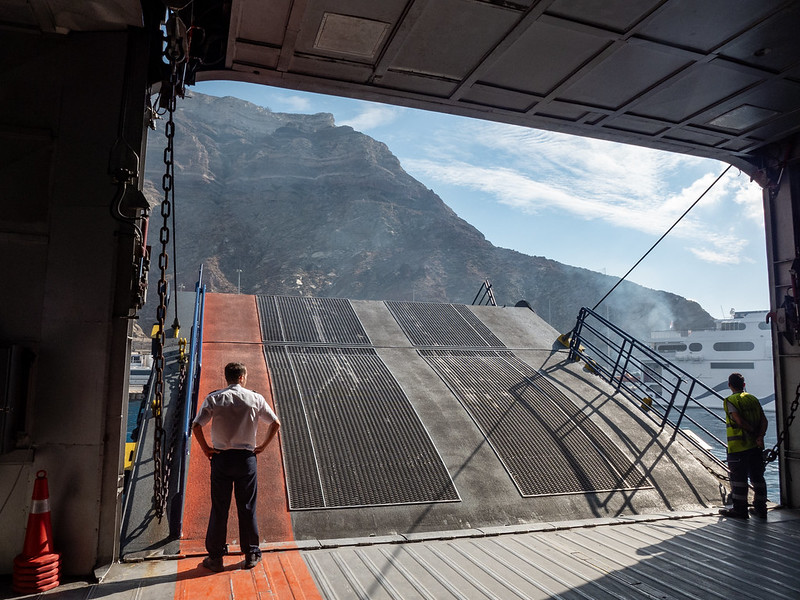
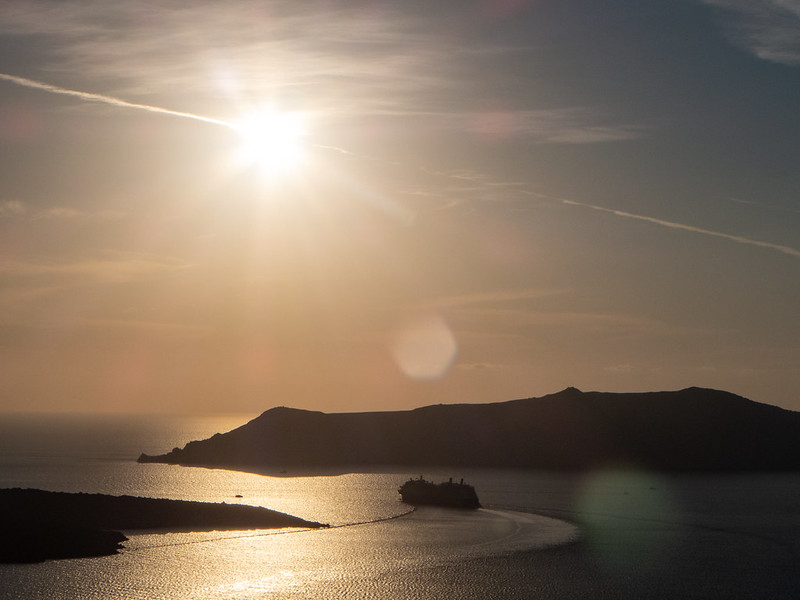
This island has a pervasive duality. If you arrive by boat, you come in on the caldera side and land at the base of a thousand-foot cliff. You are in the watery gullet of an ancient volcano, in a basin formed over the ages by multiple eruptions, the most recent of which a mere 3600 years ago – an eruption that destroyed a large part of the caldera wall and buried much of the island under many metres of ejecta, an eruption that, records tell us, affected the atmosphere in Egypt and even in China.
At the top of the cliff is a string of villages like a strand of pearls along the crest of the colossal cauldron, with the famous whitewashed blocks and blue domes and patios and pools descending towards the drop-off, and sloping less spectacularly on the other side. And all the tourists and all the photos you always see are concentrated on this elevated perspective.
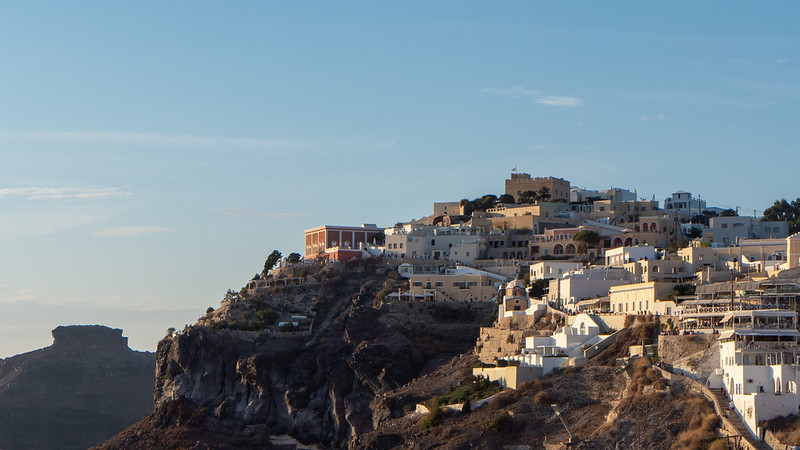
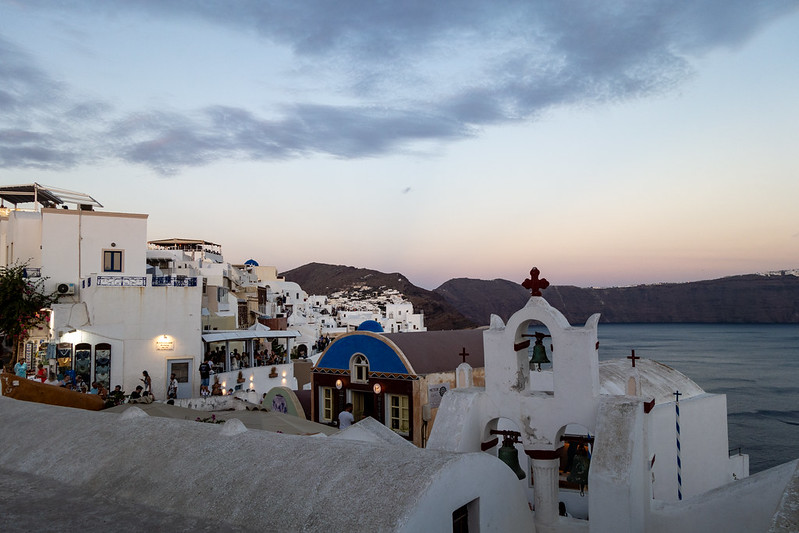
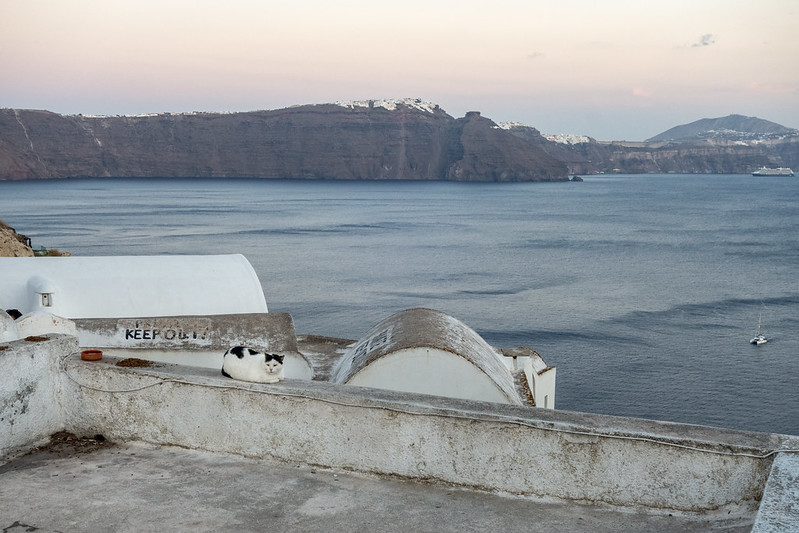
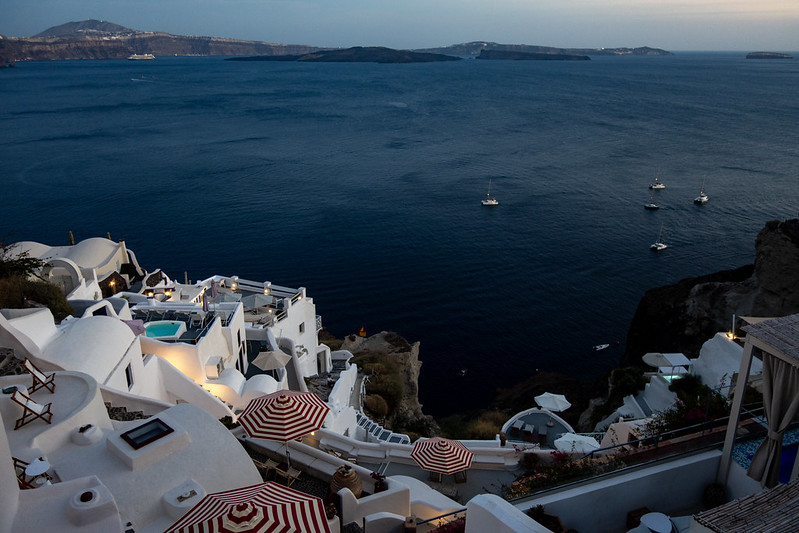
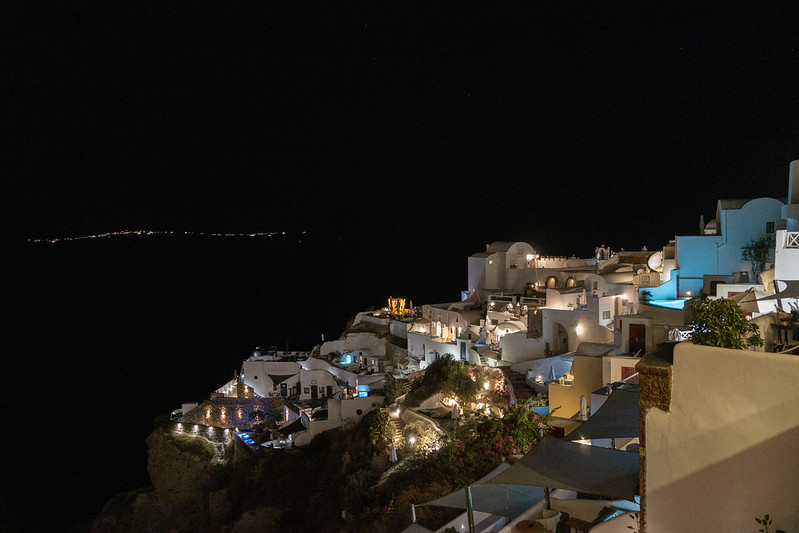
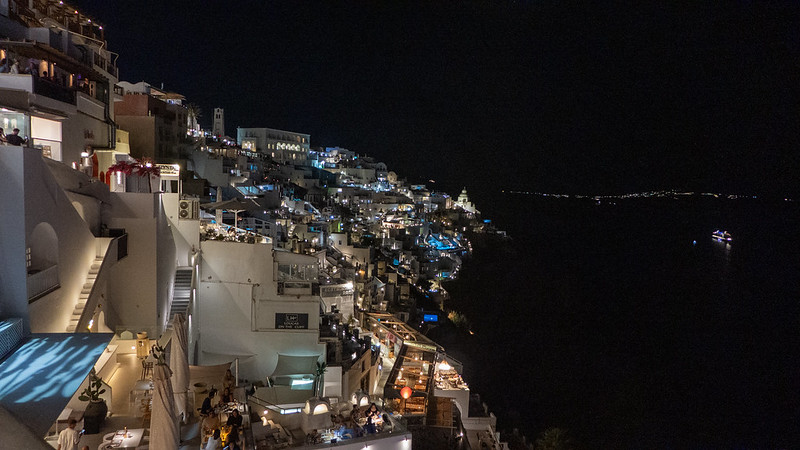
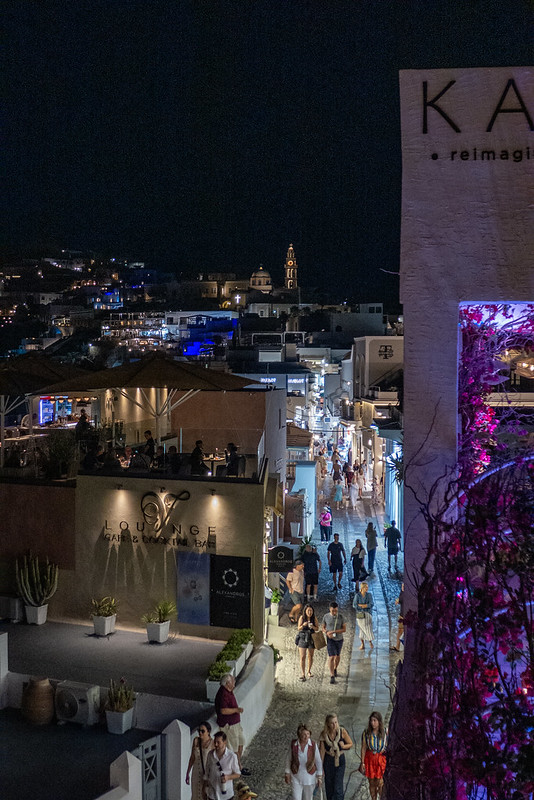
And if you arrive by airplane, you come in at the base of the gentler back side, a broad hillside with villages and fields and resorts and, just off the corner of the runway, a winery on a black sand strand that stretches into a seaside beach-bar town slouching at leisure into the water, the opposite of the busy ritzy clifftop aeries.
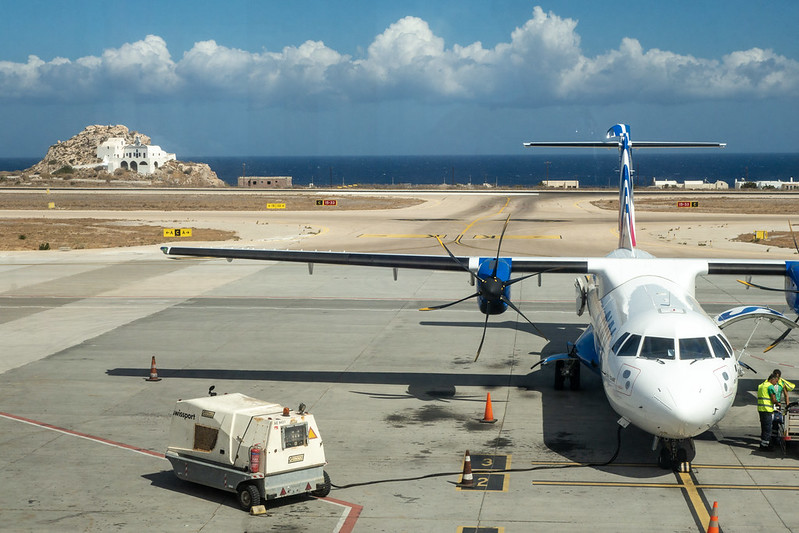
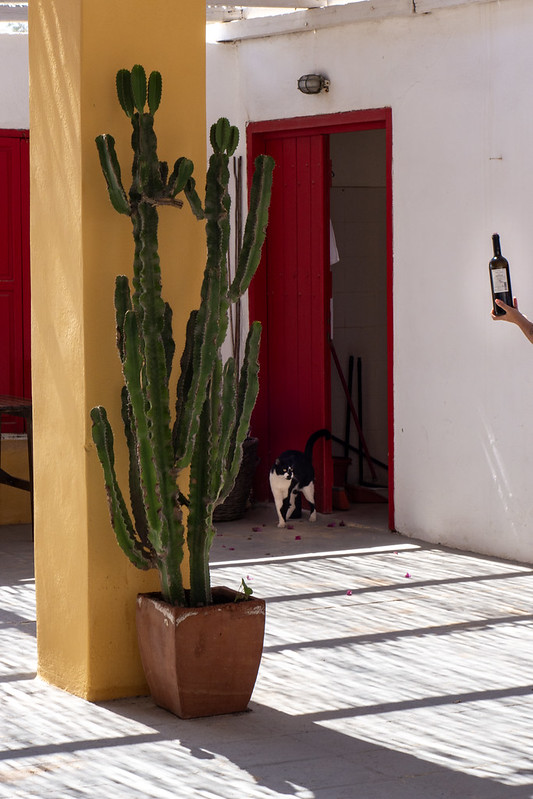
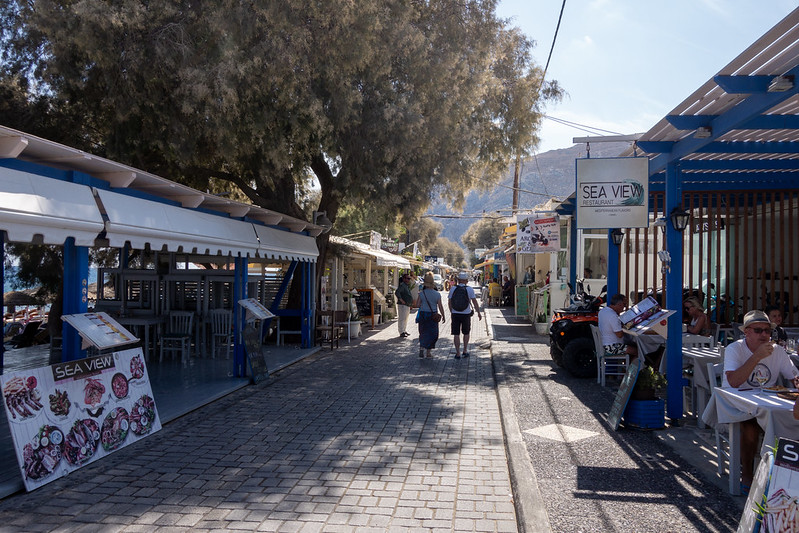
High above all of this is a monastery on a peak that dominates the back side and looks down on the caldera from a distance. At the north end of the curving caldera mouth is Oia, Οία (said “ee-a”), badly damaged by an earthquake nearly 70 years ago but you wouldn’t know now from its marble streets and moneyed shops. At the south end is Akrotiri, Ακρωτήρι, site of archaeological digs that have shown us that the people living here 3600 years ago had three-storey houses with colourful frescos – buried by that eruption, but still there if you know where to dig.
Even the name of this place is dual, and dual upon dual. The more widely known name, Santorini, may look more like Italian than Greek, and there’s a reason for that: it’s from Latin Santa Irini, ‘Saint Irene’, after a Greek saint (from Thessaloniki) to whom an old church is dedicated in the village of Perissa. (The Greek for ‘Saint Irene’ is Αγία Ειρήνη: Agia Eirini or, by sound, Ayia Irini.) The island’s ancient – and official modern – name is Thira,* Θήρα, after the leader of the Spartans who colonized the island. The capital and largest city has the same name, but with sound shifts: it’s Fira, Φηρά, with the stress moved from the first to the second syllable and the fricative moved from tongue to lip, making the letter for it 90 degrees different – Θ versus Φ.
And so it is. A simple turn and a change of perspective. But it’s all there for the looking.
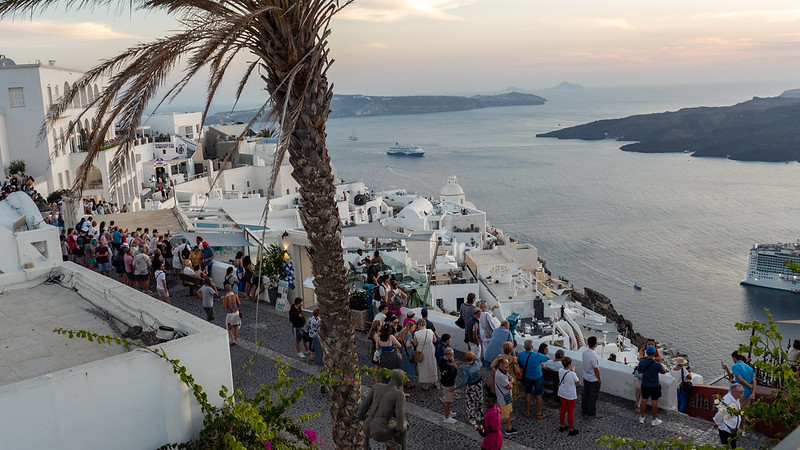
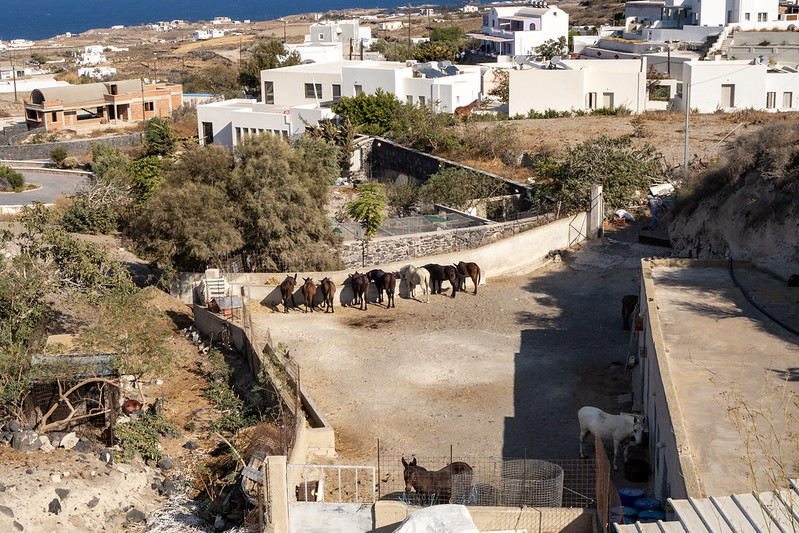
* Also transliterated Thera – the letter η is classically ē but in rendering Modern Greek is usually set as i because it, along with υ and the diphthongs οι and ει, has merged with ι to the /i/ sound.





 Sesquiotica