
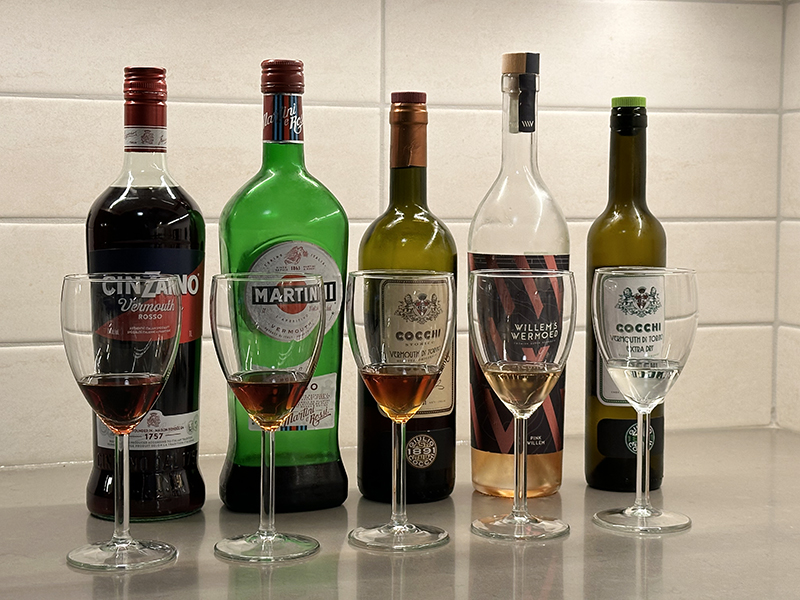
In the beginning…
…well, we’ve read that bit. Let’s flip to the back of the Bible. In the end, there was vermouth.*
Yes. Allow me to quote Revelation 8:11 in Martin Luther’s translation:
Und der Name des Sterns heißt Wermut. Und der dritte Teil der Wasser ward Wermut; und viele Menschen starben von den Wassern, weil sie waren so bitter geworden.
If you know German, you know that Wermut can be translated as vermouth. In fact, the word vermouth is what French (of its time) made of the German word Wermut. Here is a translation of the above:
And the name of the star was vermouth. And the third part of the water was vermouth; and many people died from the waters, because they were so bitter.
Hmm, that’s kind of a negative opinion of vermouth, isn’t it? I mean, I know a lot of people don’t like the stuff. There’s a famous comedy routine by Hudson and Landry in which a guy is ordering a lot of liquor from a store and says “no vermouth” because “it makes my wife sick” (“She’s out of town but I do it just in her memory”). There is also an anecdote of a famous bartender (there is such a thing?) who, when making a martini, in place of adding vermouth simply nodded in the direction of Paris. And yet, it gets used.
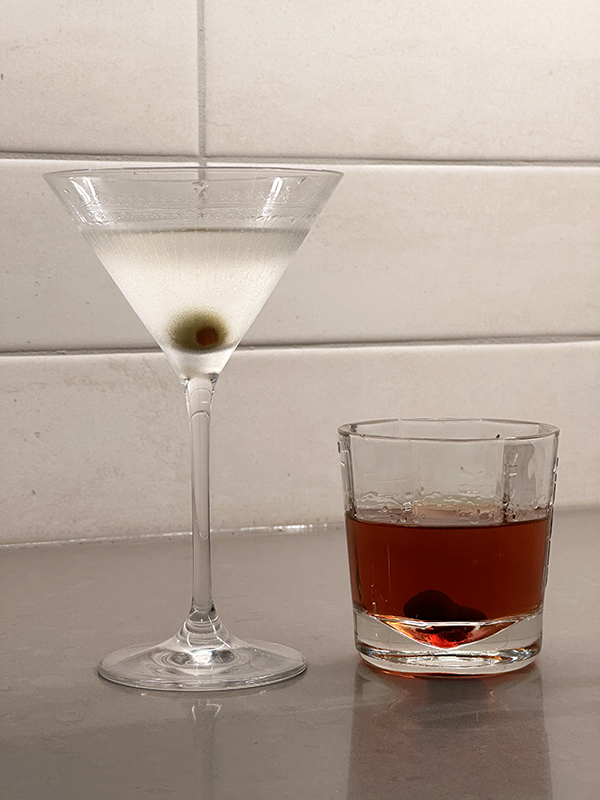
Not just the dry (“French”) kind in a martini.† The sweet kind in a Manhattan too. And a negroni. And quite a few other cocktails. People in some countries (Spain, for example) also enjoy sweet vermouth on ice, unmixed. Sweet, bitter, and strong together make a great drink.
Vermouth isn’t the only sweet and bitter beverage out there, either. There are various herbal bittersweet liqueurs, and gin and tonic also follows the same pattern – and all for the same original reason. You know the song “a spoonful of sugar helps the medicine go down”? Tonic water was created because the British invaders in India took quinine to deal with their malarial fevers, and sugar and fizz helped it go down. And, as Ogden Nash said, “Candy is dandy, but liquor is quicker”: if tonic, why not gin? On the same principle, vermouth was also created – centuries earlier – as a means of getting people to take a bitter medicine.
What medicine was that? Let me give you a hint, in the form of the King James Version translation of Revelation 8:11:
And the name of the star is called Wormwood: and the third part of the waters became wormwood; and many men died of the waters, because they were made bitter.
Yes. Wormwood. That is in fact what English translations of the Bible pretty much all say in that passage. Wermut is German for wormwood as well as for vermouth, the wine-based beverage that originally contained wormwood.‡
Let’s leave aside for the moment that these people were dying of the bitterness; there are in fact several plants called wormwood, and the species that was probably being referred to by John of Patmos, Artemisia herba-alba, was not actually the same as the one used in vermouth. To be fair, even the one named in Revelation was commonly used for medicinal purposes; I guess the thing is just that it was bitter, and, you know, some people really would rather die than have that. But the Artemisia that our vermouth was made from and named after is claimed to have, to quote Wikipedia, “antifungal, neuroprotective, insecticidal, antimicrobial, anthelmintic, acaricidal, antimalarial, antidepressant, and hepatoprotective properties.”
The Latin name of the genus is Artemisia after Artemis, the goddess of childbirth, because of its use for gynecological conditions. But you might have noticed that wormwood has “anthelmintic” properties. That means it’s good for treating parasitic worms. And that is… not why it’s called wormwood. Ha, sorry.
I had indeed long thought that vermouth was a French interpretation of English wormwood. That’s linguistically plausible, but, as I have mentioned, vermouth is in fact an older French rendition of German Wermut (the modern French is vermout without the h). And German Wermut comes not from modern English wormwood but from the source of the modern English word: Proto-West Germanic *warjamōdā, which arrived in Old English as wermode. Which, by the 1400s, had been reinterpreted as wormewode, which made modern English wormwood.
Yes, wormwood is an eggcorn, a reconstrual based on folk etymology, like sparrowgrass for asparagus. But what does *warjamōdā mean? We’re not sure, but it might be from *warjan (‘defend against’) and *mōd (‘mind’) – that is, mental defense: the “neuroprotective” and “antidepressant” properties.
Which is kinda funny if you know the reputation of wormwood for its effects on the mind. And if you don’t, let me give you a clue in the form of a French translation of Revelation 8:11 – this is from the Nouvelle Édition de Genève:
Le nom de cette étoile est Absinthe; le tiers des eaux fut changé en absinthe, et beaucoup d’hommes moururent par les eaux, parce qu’elles étaient devenues amères.
Absinthe. Yes, absinthe names the exact same plant as wormwood (and Wermut). The Latin name of the species of wormwood used in vermouth is Artemisia absinthium. Here’s Revelation 8:11 in the Tyndale version of the Koine Greek Bible:
καὶ τὸ ὄνομα τοῦ ἀστέρος λέγεται ὁ Ἄψινθος· καὶ ἐγένετο τὸ τρίτον τῶν ὑδάτων εἰς ἄψινθον, καὶ πολλοὶ τῶν ἀνθρώπων ἀπέθανον ἐκ τῶν ὑδάτων ὅτι ἐπικράνθησαν.
You see that Ἄψινθος? That’s Apsinthos, which (via Latin) is the source of the word absinthe.
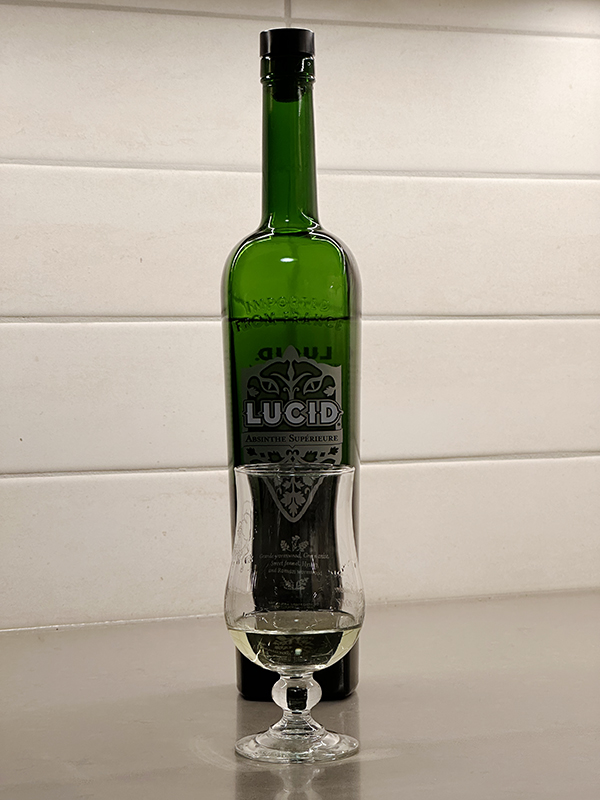
Perhaps you know about absinthe. The Green Fairy. Renowned as a mild hallucinogen; maligned (perhaps unjustly) as the cause of mental breakdowns among artists of the Belle Époque. It has the anise flavour you find also in pastis and ouzo, but with the strong bitter presence of – obviously – wormwood.
So is absinthe the same as vermouth? The same herb, yes. The words also have in common a th that in French is said “t” but has been taken in English as “th.”§ But the beverages are starkly different (though neither of them today contains any appreciable amount of thujone, the psychoactive ingredient of wormwood): vermouth is based on wine (with many other flavouring agents added as well), while absinthe is a distilled spirit (with flavouring). Vermouth is 15% to 17% alcohol; the absinthe I currently have is 62%, and I’ve had stronger. Vermouth can be used in cooking where wine is indicated; absinthe can only be used where you want absinthe! Vermouth is consumed straight and used in many cocktails; you can drink absinthe neat, but things may get messy – and when it is used in cocktails, is often just sprayed or rinsed in, as in a Sazerac.
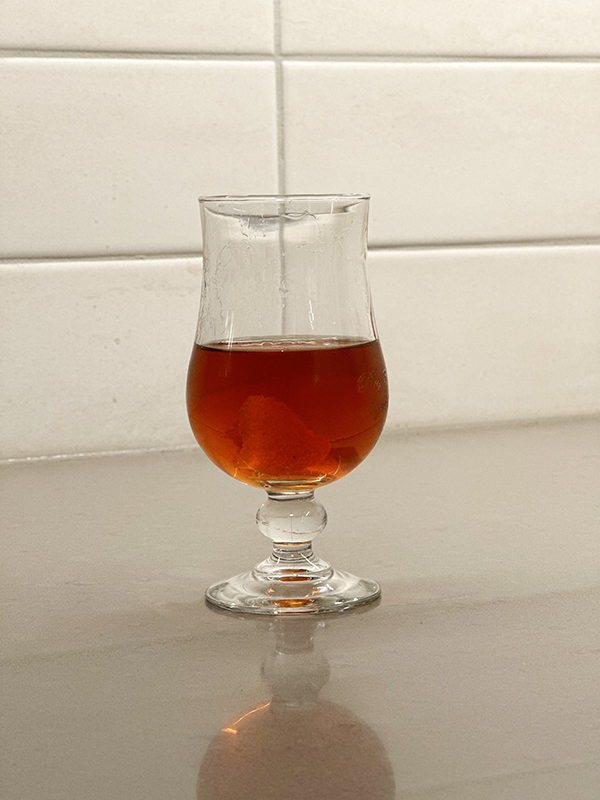
And while both beverages may (temporarily) lift the mood,¶ absinthe makes the heart grow fonder.∞
* In the beginning, too, for me; Martini & Rossi sweet vermouth was the very first alcoholic beverage I ever tasted.
† Leave it to the French to take the sweetness out. The first pale dry vermouth was made by Joseph Noilly in the early 1800s. Kinds of vermouth have proliferated in many places in recent years, but nearly all of them are sweet.
‡ Many countries prohibited the use of wormwood in beverages in the early 1900s, so your vermouth may not contain any now. And so once again a name peels away from its origin.
§ The one in absinthe does come from a “th” in the Greek original, but the one in vermouth is entirely under the influence of orthography transmogrified.
¶ Yes, mood comes from the same Old English mōd that meant ‘mind’.
∞ Even if it may end in bitterness.





 Sesquiotica