What’s the difference between covert and overt? Just what you can c.
Well, that and what you conceive on the basis of what you can see. Sometimes some added variable can convert it. But also, a difference can be hiding (covert) in plain sight (overt), and it takes a change of perspective to uncover it.
It is the antonymy of these words, and their near identity in form, that causes them to cleave and yet to cleave. Of course covert is the opposite of overt; of course they are nearly identical: the only difference in pronunciation is the /k/ sound at the start – unless, as you may, you say covert like “covert” plus “t.”
Which gives us a bit of an opening here. I don’t mean an aperture – that might be malapert for covert, though it would be perfectly apposite for overt, which traces back to Latin aperire ‘open’ (etymon of aperture), which slid into the descendants of Latin as obrir and ovrir and then, in French, ouvrir, which gained the past tense ouvert, which gave us overt. But OK, how did overt gain a c to reverse the sense?
It didn’t. The question that will uncover the truth is in fact how the a in aperire became the o in obrir and ovrir. And the answer to that is, apparently, by imitation of its antonym operire.
Well, that’s awkward. How do you deal with two words that sound identical but mean the opposite? You can get by if they’re not often used (like cleave), and perhaps if they’re colloquial the uncertainty can leave you either chuffed or chuffed, but for words in regular use that need clarity to avoid disaster, you add something distinguishing to one – in this case, a co- to make it more (or less, depending on your perspective) cooperative. And so operire ‘cover’ became cooperire ‘cover together’, i.e., ‘cover’.
And from cooperire was descended French couvrir, the source of English cover. It is tempting to say that covert is a past participle of cover as meant is a past participle of mean, and in a sense it is, but not quite in an etymology: covert comes not from English cover plus t but from the French past participle, couvert, from Latin coopertus. And so the pronunciation we would expect would be like “cover” with a “t” – but the influence of overt is, well, overt.
In other words, overt has an o because it sidled over towards its antonym, and covert has a c to look less like its antonym but is said with a “long o” because it has sidled over towards its antonym. Opposites attract; the two words look like siblings but are not really related – they have covertly converged in overt form because their opposite vectors aligned them. What a trove!
December 9, 2000, was a silver day in Toronto: snow had fallen all the previous night, and everything was blanketed in shiny white as Aina and I posed for pictures and then went to the church and said our vows.
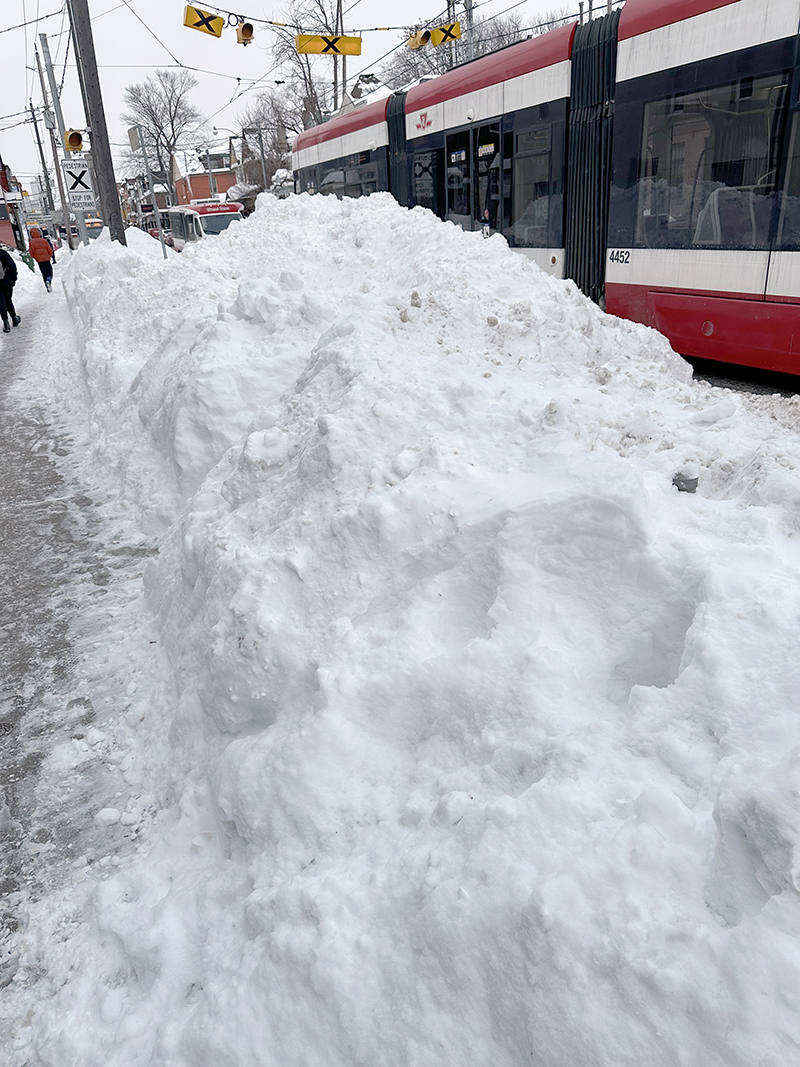
December 9, 2025, is also a silver day – well, the snow isn’t quite so fresh, but I bear a silver hue on the top of my head everywhere I go now, and today in particular is specifically silver for me and Aina. And it is high time for me to talk about Silberhochzeit.
Unless you speak German, you’re probably looking at this word Silberhochzeit as though it were a pile of snirt dumped on your dinner table. German is not famous for pretty-looking or pretty-sounding words, and not only does this word look like the speeding passage of a race-car (or a quarter of a century), /ˈzɪlbɐˌhɔxtsaɪt/ sounds more like an unfortunate bicyclist aspirating a bumblebee than it does a word for a silver wedding.
Which is what it is. It means ‘silver wedding anniverary’, but technically, literally, it just means ‘silver wedding’; ‘silver wedding anniversary’ would be Silberhochzeitstag, as ‘anniversary’ is Hochzeitstag, which is literally ‘wedding day’ – and even more literally ‘high time day’, because Hochzeit, ‘wedding’, is literally hoch ‘high’ plus Zeit ‘time’. Not necessarily as in “It’s high time you got married!” but just as in it’s an exalted occasion.
OK, but why am I plopping this German monstrosity in front of you when this is normally a blog about English words? It’s not because my surname is German, and it’s not because Aina loves sauerkraut, and it’s not even just because it’s one word whereas in English we use three. It’s because the tradition of silver (25th) and gold (50th) wedding anniversaries started in Germany. It seems to have begun around the 1500s there, and was quite well established by the time it ported over to the English-speaking world in the 1800s (the other anniversaries – a long list, including wood for the 5th, tin for the 10th, and crystal for the 15th – were mostly invented in the 20th century, by companies that sold gifts).
And while big celebrations of silver and gold anniversaries are not such a common thing in the Anglo world (the gold one moreso, because 50 years is a long time to be married), they are apparently still quite the thing in Germany, where, for the 25th, in some parts of the country friends and neighbours hang silver decorations on the couple’s door, and in other parts they come in and defenestrate the silverware.
Which will not be happening chez nous, thank you very much. Aside from the fact that I’d rather retain the wedding flatware, defenestration of objects is strictly verboten in our building – and it would be exceedingly unwise anyway, given that we’re on the 27th floor. But for that exact reason, even before we open a celebratory bottle of wine with dinner, we are guaranteed a high time.
I was in a warm place last week, visiting friends who have an outdoor pool. It has a heater that can be turned on. The first time we got into the pool, the heater hadn’t been turned on for a while, and what is a nice air temperature is not necessarily as warm when it’s water. I jumped in and proclaimed it infrigorating.
And then, a couple of days ago, I got back to Toronto, where – in my absence – autumn had seceded to winter, and I remembered what’s really infrigorating.
Infrigorating? Is that a word?
Well, it should be. When you jump into a cool pool or step out in warm-weather clothing into freezing air, you may want to declare pertly that it’s invigorating, but you may also want to shout “Frig! It’s a bit brisk!” And frigor is a Latin word meaning ‘cold’, and frigorific is a word – meaning not ‘terrifically frigging cold’, but ‘causing to chill or cool’.
But we do already have an established Latinate word for the sense to which infrigorating is a pretender: infrigidating. It’s clear, it makes sense, it provides a nice match to intepidating (which is not in use as a word but sure could be) and more loosely to infuriating, and it has overtones of going out on a frigid date. And its root frigido is (aside from sounding like a perpetually chilly hobbit or supervillain, perhaps) Latin for ‘I chill, I make cool’ – literally, not as in hanging with the gang.
But, well, heck. Might as well just say chilly as infrigidating. I think infrigorating has a feel I like better, for reasons given above. If I’m going to have to experience the cold shock, I want a word for it that sounds more like what I’m muttering under my breath as steam comes out of my mouth.
It’s no secret that wealth comes with cachet, but the catch is that you need some place to cache your cash, eh.
There’s one word in that sentence, by the way, that seems to trip up a lot of people. Did you catch it? It’s not cachet – everyone seems to know that you say that like “cash, eh.” It’s cache. Which I’ve heard a few ways – even with a long a (but still with the ch as “sh,” not “k” – which would take the cake!). Many people seem to think that it’s said like caché. But in fact that last e is… well, not caché, i.e., hidden, but silent. You should say cache just like you say cash. It’s true that cache means ‘hide’ and that a cache is a place where things are hidden and ‘hidden’ is caché, but the noun is not formed from the past participle.
Anyway. You know that a cache is a place you hide things, right? On your computer, the cache is just temporary storage, and not really hidden, but everywhere else, it’s temporary storage of a particular kind: not meant to be found. It’s where you stash your cash – or other treasure – when you have to dash. As I said, cacher means ‘hide’; it comes from a Latin word, coactus, meaning ‘compelled’ or ‘assembled’. It is not related to cash, but that’s almost surprising; cash comes from French caisse ‘money box’, from Latin capsa ‘box’, from capio ‘I take’. Cash is closely related to case and chase and catch and not much more distantly to capture. So when you chase someone and catch them and capture their case full of cash, those are all related words, but when you cache the cash in a cache, that’s just a coincidence of sound.
On the other hand, cachet is quite closely related to cache. That may seem odd, since cachet means ‘prestige’ and as such is by definition not hidden. You can’t cache cachet! The trick, though, is that cachet referred first to the royal seal on a letter – often a letter condemning someone to prison or exile (meaning they will be hidden, but that’s not the connection). The seal was called a cachet, Littré explains, “parce que le cachet cache” – it hides. But this seal, being from the king, carried significance – a letter with a cachet could have prestige (if it wasn’t tossing you out of the country or into the dungeon, of course). And in the broader sense, a cachet was a distinguishing mark. From that, we came to use it for a distinguishing mark of prestige.
But when we think of things that have cachet, it does still seem that while the signifiers are eye-catching, they’re not clashing or crashing; quiet wealth, indicated through subtle details, is more esteemed than vulgar excess. The seals of approval can open meaning to those who know, but such knowledge itself signifies status. To have cachet, we discover, you do need more than just cash, eh.
If you, as an architect, aspired to inspire, what might you do? Would you conspire to spear the air? A tower of any shape has the dominating height that looms like an adult over a small child, but mere parapets, however parental, do not quite get to the point like a spire does.
In part it’s a matter of perspective: a spire can seem to disappear into the celestial sphere rather than coming to a blunt end. From any angle, it has more to spare. And it can come in many forms – pyramidal, conical, octagonal, even spiral – but it is always poised like a stylus or quill to write in the welkin.
Well, then, what does it write? What words does this needle tattoo in the heavens, or in your mind? It is simple enough to see it in words like conspire, inspire, and so on, and to hear its similarity to spear and perhaps spare and, of course, spiral. We might well expect it’s related to some of them; at the very least, the resemblance can be a reminder, which can add incidental flavours and expectations – the sort of thing that justifies the luxury of having overlapping senses of spiral and helix, for instance: they still sound and seem different because echoes and overtones conspire to inspire, or lift like helium.
But what, really, are resemblances, and how far can they go? What things are the same thing as other things, and what merely look alike? We know it only goes to a point. What, for instance, is the essence of a spire? Let me put it this way: Do you know what the highest spire in the world is? You may think of cathedrals in Salisbury and Cologne and so on, because a spire, of course, is a thing on a church. But all the highest spires are buildings of commerce and capital and occasionally communication, rising from the street without sanctuary or nave or transept. The highest spire in the world is the Burj Khalifa. And I live near another that used to be the highest, the CN Tower. Do you get the point? A spire needs not aspire to divinity to inspire. It needs only be a… what, a spear into the sky?
Perhaps, but etymologically, no: the word is not from, or a cousin of, spear, though there may have been some cross-influence through similarity – especially since the Old English source of spire, spir, was pronounced like modern spear, which in its turn came from Old English spere, which sounded more like how we would say “spare a.” Nor, by the way, is spire related to any of the breath-related spire words such as respire and inspire. Instead, spire is a word originally for the stalk or stem of a plant. A blade of grass, perhaps, or the peak of a tree. Something growing from the earth and reaching sharply for the sky – but just to a point.
“The Art Gallery of Ontario has a marvellous spiral staircase,” I said to Jess and Arlene as we stood talking at Domus Logogustationis.
“Helical, surely,” a voice from behind me said.
My respiration caught sharply, briefly, and then I exhaled and turned. I found myself facing a fellow I hadn’t met before – evidently a guest of some other member of the Order of Logogustation.
He continued. “A helix has a constant radius, whereas a spiral has a constantly increasing radius. The staircases that are commonly but erroneously called ‘spiral’ are wrapped in a constant radius around an axis.”
I reflected briefly that he had probably never tried calling an architect “erroneous” to their face. I certainly wouldn’t – and especially not Frank Gehry, who designed the staircase I was talking about. “Have you been to the Art Gallery of Ontario?”
“That’s rather beside the point, I’d think,” he said.
“Beside the axis, perhaps. Or the axis is beside itself. The staircase in question is in fact irregular. It is called a ‘spiral staircase’ because that is the term used for the general type, but it is not a perfectly helix or spiral, though I would add that its radius does decrease toward the top.” I pulled out my phone as I was talking and found him a couple of photos I had taken of the staircase in question.
“Grotesque,” he said.
“I suppose it’s not to everyone’s taste,” I replied.
“Literally grotesque,” he said. “As in distorted like a grotto. Grottesco. But not helical and not spiral. It is important to get these things right. I was under the impression that you people here cared about the English language.”
“Oh, we certainly do,” I said, “the way naturalists care about a forest, not the way a florist cares about cut roses. English has been here long before us, it will be here long after us, and it grows through us. It is ever growing.” I moved my finger in an increasing spiral.
“Turning in the widening gyre,” our guest said. “Things fall apart and the centre cannot hold. When a word is given a precise meaning, it is an act of desecration to broaden its use wantonly. It will spiral out of control.”
Jess interjected. “If a child is a certain height when born, does that mean we should cut off its legs when it grows, so that it will never become larger?”
Arlene, who had been busily looking some things up on her phone, joined right after her. “And then there’s the question of what it was when it was born. Neither of these words – spiral and helix – was so strict in its definition when it came into the language, and their definitions for most use cases contain each other.” She had the Oxford English Dictionary definitions in hand, plus some etymology. “Spiral: ‘Forming a succession of curves arranged like the thread of a screw; coiled in a cylindrical or conical manner; helical.’ It’s from Greek σπεῖρα ‘something twisted or wound.’ Helix: ‘Anything of a spiral or coiled form’; helical: ‘Belonging to or having the form of a helix; screw-shaped; spiral.’ It’s from Greek ἕλιξ ‘something twisted or spiral.’”
The guest waved his hand. “Yes, yes, that is why I said ‘when a word is given a precise meaning.’ They may have been sloppy to begin with, but a distinction has been made, just as one has been made between persuade and convince, just as one has been made between less and fewer.” I stifled a snort; my opinion on the subject is no secret. He continued, “Precision in all things. I think you have all heard of the etymological fallacy. We can’t say these words should be sloppy just because in origin they were.”
I nearly coughed at his mention of the etymological fallacy. Was he trying to whack me with my own frying pan? If a word isn’t fixed at its origin – and it is not – how could it be fixed at some other point in time? “And who is it that gives these restricted meanings?” I said.
“Once a definition has been established and accepted in a field or expertise most directly relevant to it, it has gained scholastic authority; it is institutionalized,” he said. “This can proceed variously, but the result is the same: its acceptance grows and grows” – his finger traced a downward helix in the air – “until it is quite embedded. Screwed in, as it were.”
“Within that field, yes,” Jess said, “but specific fields have specific exigencies that more general usage does not. Consider the botanical definition of berry, which includes bananas and excludes strawberries. The term has been pressed into a special use in a way that is viable in a biology lab but not in a kitchen.”
“Kitchens are home to much messy thinking,” the guest said. “If cooks were more mathematical they would produce cleaner, more consistent results.”
More consistently boring, I thought. But I said, “Engineering is mathematical. Architecture is mathematical. And yet engineers and architects still call such staircases ‘spiral stairs.’”
“As they have since the 1600s,” Arlene added.
“They have yet to catch up, perhaps,” our guest said, “but the best use of a word is the most precise.” He traced in the air a narrowing conical spiral. “Meaning increases in acuity over time, as long as we shape it. We just need to get to the point.” He jabbed his finger to make the point.
“I gather,” Jess said, “that you have no use for metaphor or poetry?”
“Stopgaps for the primitive imagination,” he said.
Jess snickered. “Stopgaps. No metaphor there.”
“Well,” I said, returning to the initial subject, “Frank Gehry shaped the staircase in the AGO, and I think it’s a great metaphor for language development: irregular, fascinating, with various twists and turns, and at the top, the point of it all, is… art.”
The guest chortled. “There’s a reason I haven’t seen the staircase in question. Art is simply reality badly rendered.”
I inhaled and was about to form a comment on his artlessness, but I sensed that this was spiraling out of control, or at least descending in a helix to hell. I paused, circling in my mind.
But Arlene got straight to the point. Fixing him with a steady gaze, she spiraled her finger towards the door: “Screw off, you.”
I arrived at Domus Logogustationis to find an assortment of women, mostly in their thirties but some younger, arranging chairs on one side of the main room.
Philip McCarr, whose visit from Scotland was the occasion of the evening’s meeting, strode up to me. “Ye’re jus’ in time, lad! Allow me to introduce the ladies I’ve invited.” He indicated them in sequence: “This is Kayley, Caley, Kaly, K. Leigh, Kaley, Cayly, Caolaidhe, Kaylee, Cayleigh, and Keili.” He turned to them: “…Do a have thit right?”
One of the women said, “Almost! I’m Kaly and she’s Cayly. You got the rest, though.”
“Ah, well,” Philip said, “practice makes pairfict.”
“And to what do we owe the pleasure of their company?” I said.
Philip gestured at various instrument cases ranged against the wall. “It isnae hard tae see – they’re here for a ceilidh!”
One of them stepped forward to shake my hand. “We’re the Ceilidh Bunch.” Or maybe she said “the Kayley Bunch” or “the Caolidhe Bunch” – or all three at the same time, or…
“So membership is open only to homophones?” I said.
“More or less.”
“Do you ever have a Kelly, Keely, or Kylie?”
“Occasionally.” She smiled and went back to her work.
“As befits a ceilidh,” Philip said, “they take turns at solos and it’s a casual thing like.”
“Dancing?” I asked.
“It can happen.”
“So I assume,” I said, making my way over to the refreshment table, “that this is a cèilidh and not a céilí” – although they’re pronounced the same, Philip could of course hear the difference because he’s a character in a story written in text – “because you’re a Scotsman, not an Irishman.”
“Bang on,” Philip said, “but, ye ken, all are welcome. The music soonds aboot the same at any rate.”
“It’s rather amusing,” I said, “that it all only works because, by coincidence, it all sounds about the same. Since all the various spellings trace back to Caolaidhe, which means ‘slender’”—
—“Or ‘narrow,’” Philip said. “Although there’s a broad variety in spelling.”
“Yes, and the popularity came under the influence of Kelly and Kylie, which aren’t related. And of course, returning to ‘hard to c’, also of ceilidhe, which—”
Philip finished my sentence as he gestured at the assembled musicians: “—means a gathering, or a visit. Perhaps from the Auld Gaelic word for ‘companion’, céile.” (For those of you reading, it’s pronounced like “cay-lya.”)
“Old Gaelic?” I said. “I thought it was called Old Irish.”
Philip, ever the proud Scot, turned his eyes to the ceiling. “Do be companionable, man.” He turned to the refreshment table and busied himself with whisky and glasses.
I laughed. “Well, I’m glad they chose to come and keep us company.” They were now tuning up their instruments and the music was soon to start.
Philip handed me a wee dram. “Whit’s the chance ye’ll be up there dancing wi’ them, Jimmy lad?”
I eyed my little bit of liquid courage. “Slender,” I said.
Look out: That wiley big guy’ll beguile you. He may seem like a colporteur for the jubilee, but begone, you, or you’ll get a bee in your bonnet it for him; it may seem a mere crush, but it won’t be so benign… I’m begging you, don’t put the begonia in your hair in the warm Antillean air, and don’t let them begin the beguine.
Oh, dear, I’ve shaken the tree of longing and lexis, and the words have fallen out like so many needles from a memory evergreen. Let’s see if we can draw the connections.
You know the song “Begin the Beguine,” I trust. It’s by Cole Porter (whose words were full of spirit, but he was no colporteur, i.e., seller of religious publications). It first appeared in his silly regal musical Jubilee. It’s been recorded in ever so many versions; I won’t link one, just search for videos of it and choose your fancy. But do you know what a beguine is?
Let’s make a beginning by saying it’s nothing to do, etymologically, with begin. Or with begging. Or, for that matter, with benign, though you probably weren’t wondering. And not with beguile, either, though the song is about some level of guile – which is to say, wiliness (wile and guile are two versions of the same word, historically). Yes, the song is about longing and memory and what the Brazilians call saudade, but there is a turning, a denial and then surrender, or prelapse and relapse, to say nothing of paralipsis – or a pair of lips. And anyway, its heart is not in Brazil.
In fact, Cole Porter composed the song on an ocean cruise somewhere between Indonesia and Fiji. But that is not where the heart of the beguine lies either; this emotional anthill is Antillean.
The Antilles are a pearl-string of islands, greater and lesser, half-ringing the Caribbean sea. The Greater Antilles include Hispaniola, the west side of which holds Haiti, once the French colony of Saint-Domingue, which in the late 1600s had a governor named Michel Bégon who was also an avid naturalist, and for whom Charles Plumier, a patron of botany, named a plant with pretty red flowers the Begonia.
But, ah, begone, ya! That big isle and its blooming bloke are not whence comes beguine. No, it is something both more and less French than that, something both intrinsic to the Antilles and imported by colonists. If you look up béguine, you will find that it is the feminine form of béguin, which names a kind of semi-monastic layperson living in communities, apparently eponymous from Lambert le Bègue, “Lambert the Stutterer.” But there is no tongue-tying involved here. We should sooner look to the bonnets worn by the women of the order, bonnets that were also called béguines. For some reason, these bonnets became a byword for infatuation – the verb embéguiner (‘wear a bonnet’) means ‘have a crush on someone’. So, you might say, beginning the beguine is initiating the infatuation.
Except no. Well, maybe that too, but this beguine is less mooning and more boogeying: it is a dance, a sort of slow rhumba, from the lands of rhum, specifically the French Lesser Antilles islands of Martinique and Guadeloupe. It mixes Latin dance and French ballroom dance, with a hip-roll from the rhumba. It is both local and imported. And in the local creole language, begue means ‘white man’ and its feminine form is beguine.
So there it is. A dance that transports that was transported, a dance that brings to mind infatuation and flowers, in a song by a fabulous wordmonger and musicmaker from Indiana who moved to Paris and later to New York, Cole Porter, who has embiggened this tropical splendor, this music so tender, that puts the ember in remember. The beguine is always already begun, and we are beguiled.
You’ve seen capade in various places, I’m sure, often in the plural: horse-capades, lunch-capade, bike-capades, sexcapade, Borscht Capades, mice-capade, and of course Ice Capades. So it’s obviously a word. You hear it, you have the vibes of it, it’s cromulent, like classiomatic.
Only it’s not quite like classiomatic, because it’s not a mondegreen. It’s more like copter or -aholic. But not exactly like those, either, because it does have etymological morphological integrity.
Let me explain that bit. The word (or combining form) copter is shortened from helicopter, taken as being made of heli plus copter, though it’s really from helico (‘spiral’) plus pter (‘wing’). Similarly, the suffix -oholic or -aholic, as in chocoholic or workaholic, is taken from alcoholic, taken as being alco plus oholic or aholic. We know, of course, that alcoholic is from alcohol plus -ic. But alcohol traces back to Arabic al kuhl (‘stibnite powder’). So, like copter, -ohol and -oholic is a rebracketing by reanalysis. We split a word and took something as an independent part that’s not an independent part.
But with capade it’s not a rebracketing. No morpheme was broken to make this word.
Yes, the first use of capade that all these other uses are taking it from is Ice Capades, the famous touring figure skating company that started in 1940, folded in 1991, and was revived briefly by Dorothy Hamill in 1993 and very briefly by Almut Lehmann Peyper in 2000, since when it has been an ex-capade. If you’re over a certain age, you very well may have seen the Ice Capades. I remember seeing them in Calgary starring Karen Magnussen circa 1980. My wife also saw the Ice Capades when she was a kid. And in 1991, she joined the Ice Capades as a cast member (after it folded, she joined Holiday on Ice). It’s tempting to say she ran away and joined the show, but while she did escape from the ordinary life in Toronto to travel the world (not quite a holiday, but an ice time was had), she didn’t actually elope per se. (Nor did she when she married me nearly a decade later.)
OK, so where did the Ice Capades get capade? You probably know the answer, but let’s say for a moment that you don’t, so you look it up. If you look up capade in the Oxford English Dictionary, you will find it as an obsolete word (related to cap) from hat-making, referring to what is commonly called a bat, a felted mass of fur or of hair and wool. And I’m sure, what with the many headpieces worn in their glamour numbers, there were such capades involved in the Ice Capades. But no, that’s not it. And so perhaps you go to Wiktionary, where you find that it is, in Galician, the second-person imperative of the verb capar, which means ‘castrate’. In other words, if you say it in Galician, you’re ordering several people to castrate. But no, that is not where Ice Capades got it.
No, of course, Ice Capades is a pun on escapades. You know what an escapade is; Wiktionary defines it as “A daring or adventurous act; an undertaking which goes against convention.” Sort of like going off to spend your twenties travelling the world with an athletic glamorous entertainment troupe. And that does carry with it escape, of course; the word escaped to English from French, where escapade first referred to the act of escaping, sometimes figuratively and sometimes literally, and French got it via Spanish escapada, from escapar (‘escape’), ultimately from Vulgar Latin excappare, which etymologically meant ‘get out of a cape or cloak’. (So if a Romulan bird of prey cloaks to escape, that’s paradoxical.) The root in that, cappa, is also the source of cap, the same one that shows up in that obsolete hat word capade. But it is not related to that Galician word. No, it is not.
So anyway, the morpheme division in escapade is es-cap-ade, and so capade is not a rebracketing. And etymologically you could say capade refers to being caped or cloaked, or perhaps otherwise costumed. Which the performers in the Ice Capades were (not very heavily, of course, just enough that you can caper in them). But in the main, a capade is – to get to it at long last – an entertainment extravaganza, or an adventure, or some other thing that guarantees an ice time for all.
One thing that gets on my nerves is when I really gotta mosey somewhere and there are people in my way on the sidewalk or the stairs or the escalator and they’re just, you know, moseying.
OK, did both of those uses of mosey make sense to you? The one meaning get moving, motor, vamoose, and the other meaning go slowly, meander, no hurry? One like a rolling stone, and the other gathering moss? I’m sure I’ve encountered both of them – well, I know I have, because I’ve encountered both of them in every dictionary I’ve looked up mosey in, but I think I’ve also encountered both in real life – but my impression is that one of them, the one I lean to automatically, is the more common expected sense. And that impression has been reinforced by an informal poll I did on Bluesky, where respondents unanimously agreed… not so much that it means one as that anyway it doesn’t mean the other.
I asked the following:
In your own usage, if you say you are (or were, or will be) moseying, are you meaning:
1) going quickly
2) going slowly
3) either, depending on context
4) nothing so specific as all that
5) some other thing (specify)
I got 36 responses. Of those, 33 agreed that “going slowly” was either the definition or at least part of the definition. The other three, along with some of the 33 who went with “going slowly,” specified that the important detail was aimlessness, nonchalance, casualness, lack of urgency, wandering, meandering, that manner of thing. No one went with “going quickly,” although one allowed that it could be used ironically with that sense, and another allowed some contextual flexibility.
So, naturally, I’m about to tell you that “go quickly, make haste, get a move on” is the older sense. Because of course. You saw it coming, didn’t you?
The word mosey first appeared in the US in the early 1800s, with the first known published instance in 1829. The earliest senses specify not so much the speed as the motivation: fleeing, decamping, escaping, getting out of the way. The implication is also typically doing so on foot. But there are instances where the sense of speed is inescapable, such as “At last the spell were broke, and I moseyed home at an orful rate” from 1859 (thanks to Green’s Dictionary of Slang for that). So, in short, we could say that the first sense of mosey is as a synonym of vamoose.
Well, vamoose first appeared as such about a decade after mosey did, so you could say as readily that vamoose was a synonym for mosey. But you know what I mean. But say… vamoose comes from Spanish vamos, ‘let’s go’. Could mosey have come from that, too?
Well, it could have. But we’re not a hundred percent sure. It could also come from an Algonquian word for ‘walk’. Or it could come from Mosey as a nickname for Moses, either in reference to the exodus led by the biblical Moses or to someone of that name in a popular song who had to flee creditors. We’re just not entirely sure. The word didn’t announce its arrival and origins. It just… moseyed in, real casual like.
But anyway, within a couple of decades, the sense of ‘go casually, wander, meander, amble aimlessly’ et cetera also moseyed in, often bringing along an adverb such as along or off or around. And, at leisure and at length, it prevailed. And it doesn’t seem like it’s going to get out the way any time soon.
Just like those people who manage to walk in the least hurried manner possible right down the middle of the stairs or sidewalk, vaguely trending slightly right and left but never giving a clear way to get by so you can make it to the walk light or the train that’s arriving in the subway station. Come on, people! This ain’t a mo-seum!