Tag Archives: word tasting notes

sláinte

Not that St. Patrick’s Day is a huge thing in Ireland, but this isn’t really for the Irish, it’s for everyone else. They all want to celebrate the Irish, or anyway to party in honour of a culture stereotyped as bibulous, and they want to do that by wearing, eating, and drinking green things and doing so until they, too, are green. Or perhaps grey. They sing rubbishy songs that have little to do with true good Irish music, and they drink themselves sick… toasting each other’s health.

May the road rise to meet you! What that really means, of course, all motion being relative, is that you fall to meet the road. But, you know, same result. So slant your glass, and then slant yourself! Slant ya!

Sorry, that’s spelled Sláinte. That’s the Irish word for ‘health’, as in yours. It’s pronounced like “sloncha.”

Doesn’t look like that’s what it spells? It does in Irish. Irish spelling is much more consistent than English spelling; it just happens to follow quite different rules. Why not? The grammar is different too. Tá do leabhair agam, ‘I have your book’, is said like “taw doe looer a gum” and, word for word, means ‘is your book at-me’. Do bhris sé an cathaoir orm is said like “doe vrish shay a ca-heer orum,” word-for-word means ‘… broke he the chair on-me’, but doesn’t mean he broke it literally on you, just that he broke it to your detriment, the same as in casual English we use “…on me” to mean ‘to my detriment’, as in “He went and sold it on me” or “She walked out on me.”

So anyway, Irish consonants can be either narrow or broad, which means palatalized or not. English parallels would be like the difference between the two common pronunciations of news (/njuz/ or /nuz/) or of mature (/mətʃʊr/ or /mətur/). The way they indicate this in writing is by having them flanked by either “narrow” (i, e) or “broad” (a, o, u) vowel letters, as appropriate. So there are a lot of “silent vowels” in written Irish. (For other reasons, there are apparently silent consonants too – but really they’re part of digraphs, like th is in English – but I’m not going into that now.) But when there’s an e at the end of a word, it’s pronounced, but just as a reduced vowel: /ə/. And if there’s a t right before it, it’s narrow, which means it’s said like “ch” – that is to say, the same thing many of us do when we say “meet you” or “slant ya.”

This word sláinte, which means ‘health’, is – incidentally – related, way back in Proto-Indo-European, to Latin salus ‘health’ and German selig ‘blessed’. Also to Italian salute and Spanish salud, which both mean ‘health’ and both are used as toasts too. We do like to wish each other good health as we raise a glass. However green its contents may or may not be.

Incidentally, the Irish word for ‘green’ is glas. It’s also the Irish word for ‘grey’. Just as we see the sky, the sea, and many other shades and saturations as different versions of blue, Irish sees all these greens and greys – and the colour of blue-grey eyes – as different shades and saturations of glas. (Which means my wife and I have the same colour eyes in Irish, though not in English.) That kind of makes sense; a lot of the greys you’ll find in nature are easily seen as desaturated green.

So about 90% of the scenery in Ireland is glas. Also about 90% of Canadian pub-goers on their way home at 3 AM after St. Patrick’s. And 100% of the ones the road has risen to meet.

macro

In general, we know what macro means like we know what micro means. Both come from Greek, and differ from one another simply by the vowel. In English, that’s the difference between Mac and Mike, but in the Greek original it’s like the difference between hee hee and ha ha.

So now, tell me: what kind of laugh and what kind of laugher gives us hee hee? How about ha ha? Which sound is higher, ding or dong? If a bell goes ding-dong, is the second note higher, the same, or lower? Most people most of the time in most languages will say the “ee” sound is smaller and higher and the “ah” sound is larger and lower. (To go really large and low, go for “oh” and “oo.”) It’s also closer: Italian, for instance, gives us qui and for things here, and qua and for things there.

So micro (spelled μικρο in Greek) refers to small things, things you look at close up, and macro (spelled μακρο in Greek) refers to large things, things you take an overview of. Microeconomics is economics on the small scale; macroeconomics is economics on the large scale. Microscopic is teeny-tiny things looked at closely, and macroscopic is life-size or larger. And microinstructions are individual instructions, while macroinstructions are sets of microinstructions put together in a sequence to accomplish a more complex task. Macroinstructions have, since the 1950s, been called macros by computer programmers, and if you’re wondering why those little executable sequences in Word are called macros, now you know.

The exception to all of this is macro lenses and macro photography. If you have a macro lens (or a macro extender or attachment for a lens), you are using it to photograph… small things. Things like this bug.

Or this drop of water, maybe.

Why?

One reason is that microphotography, also and perhaps more properly known as photomicrography, refers to photographing really small things. Things too small to be seen with the unaided eye. So when I photograph bugs and raindrops, they’re really too big to be that.

But they’re still awfully small to be called macro. They’re smaller than most things I’d take pictures of.

But that’s actually why they’re macro… because after I take the photos of them, I present them on screen in an image that shows them larger than life. Originally, photomacrography was exactly that: any print (remember prints? posters?) that was larger than what it depicted. It made the subject larger, so it was macro. By that definition, billboards are often photomacrography. But that definition is not what has persisted.

And that definition is not the one that has transferred to the metathesized version, macro photography (also written as one word, macrophotography). In the current definition, you are taking pictures of small things and showing them larger than life. For instance, you could take piece of macaroni and make it as big as your elbow. (Sorry, I have no illustration for that, because I have no macaroni.)

If you’re interested in macro photography, I wrote a guest post about it for the blog of my friend, the photographer and fellow linguist Selena Phillips-Boyle. Read it on her blog: “Let’s Get Small.”

thesis

Set this down, put this down: this is thesis, the sister of dissertation. This is thesis and you are Theseus, setting out to prove yourself. You have beaten Periphetes, left repining disarticulated Pityokamptes, hammered the big pig, kicked Sciron off the cliff, and disconcerted Cercyon; you have turned all the tides and used their methods against them to vanquish them. Are you the master? You will be once you have mastered one more: Procrustes has made his bed and you must make him lie in it. The one who racks him with the sisal or curtails him with the scythes is the victor. Now is the time to show your chops and put him in his place as you have put them all in their places.

A thesis is, after all, something set down, put in place. The source is Greek θέσις, noun, ‘putting, placing’, from verb τιθέναι tithenai ‘put, place’. It is the object that you put down to study and the objection that you subject your readers to; it is, in the spirit of scholarship, meant to be the antithesis of the pat statement – it is an enthusiastic synthesis of learnings, an exploration, a key with which to open the golden door to the ivory tower.

Lockmakers had their masterpieces, their intricate show-works that admitted them to the highest levels of the craft, ornate locks with involuted keys that proved they were worthy of the title master; Freemasons have their third degree, the detailed examination that elevates a Fellow Craft to Master Mason; scholars have both: the intricate showpiece flourish of scholarly endeavour and the examination that certifies it. The meat of the thesis may be Greek to hoi polloi, but to those in the know it must best them at their game. They are the teachers and you must teach them something, and at the end you must be examined by them on the one thing you should know better than they. The crowning effort of your assault is your defence. You, a crusty amateur, must best Procrustes: rack your brains and stretch your logic, find the shortcuts and use Occam’s Razor. And then, after a minute or two, you may have to slay the minotaur too: thread the labyrinth so briskly you are dizzied as with labyrinthitis, but keep your labour in thesis form standing even as the man-bull falls. To produce something fitting and show you fit, you must reshape the scholarship – or anyway add a new plank to the scholars’ ship.

The ship of Theseus, which he took back to Athens after slaying the Minotaur in Crete, was preserved by the Athenians for centuries after his return, sitting in the harbour. When a plank would rot, it was replaced. Over time, all the planks had been replaced, some many times, but the ship was still there. The original shape of the thing was there, and the endeavour remained – though not venturing forth anymore – but nothing that had been there in the first place remained. Was it the same ship? This question has entertained scholars, too, but even those who say it was not the original participate in a scholarship that is built on the same model as Theseus’s ship, evolving until nothing that was once true is true now… and they argue using bodies and minds that have been entirely replaced with new bits over time, and yet have an apparent persistence (nothing you were born with remains in you). Bodies and minds that for some, locked in the ivory tower with keys of their own making, set sail no more often than the ancient and honoured ship of Theseus.

But ah, no need to be bitter. Don’t put down what has been set down; respect the effort that is a thesis. I do: I have written three (the second of which I call a dissertation). My mother has written one; my father has written three. It may be an initiation; it may be labyrinthine; it may be somewhat Procrustean; but it is a good way to show that you have the intellectual and academic fitness to claim mastery of your subject. And it is a good excuse to spend time doing an in-depth examination of something that fascinates you.

My first thesis, defended and passed in 1995, was called “Paratextual Pragmatics: A study of usages of printed paratexts in commercial and nonprofit theatre in Boston, 1993–4.” It was about how theatre posters and programs (and so on) are used by those producing them and received by those reading them. It earned me a Master’s in drama. I do not have a complete concatenated electronic version of it; it was done using a word processing program now obsolete. But I published a chapter of it (mutatis mutandis) in Semiotica, “A case study in the pragmatics of American theatrical programs.”

My second thesis was a dissertation – a term most commonly reserved for theses to qualify for the doctorate (and not used by everyone for that). It was “‘Containment Is the Enemy’: an Ideography of Richard Schechner,” an interesting extended look at the work of an experimental director and theorist. I am not normally given to focusing on persons, but I was advised that it would be a good move. I enjoyed doing it. But when I was done it I was done it – nothing further was ever made of it. I received my golden key, the PhD, in 1998.

And then I decided to study linguistics. I started from the very beginning, all the necessary undergraduate classes (and then some), and then graduate seminars again (at last – so much better than undergrad lectures), and finally, to show I know, another thesis. Only this time while working, and travelling, and generally having a life. And linguistics involves much more dull repetitive scut work than humanities and fine arts do, though the resulting material gains an added solidity as a result. It was a Thesean labour, and written to a prescribed form. How does one be so formal and still be informational? Well, that is to others to judge. I defended my thesis on March 8, 2016. It was not a battle with a Minotaur; it was a pleasant colloquy. And now it is done: “Relative Use of Phonaesthemes in the Constitution and Development of Genres.” In it, I quantitatively analyze the way words such as splash, gleam, and clump help us know what kind of thing we’re reading. If I want it to sit on my bookshelf, I will have to print off a copy; the university requires only electronic submission now. And now I – again – am the master. Of linguistics this time.

So. Three theses. Theseus three times. And now I exit the labyrinth and, as the tide turns, take my scholar ship home; the bed is made.

meeverly

Does this seem like a meek, mild, moderate, gentle word to you? Results may vary. On the one hand it may meet you ever so gently like the Everly Brothers and their youthful but proper romantic laments, the sound of nice boys for whom things just don’t seem to work out but you know they’ll come even eventually and all will be loverly. But on the other hand it has that sound of peeve and evilly perhaps vermin and measly. That ee gives it the high wheedling /i/ sound, with a sense of diminution (and maybe even not merely that) and perhaps the buzz of an insect.

But that’s just how it seems to me. It’s not a word from my own dialect, so why should I expect to have a well developed taste for it? Just as you’re used to the foods and flavour profiles you grew up with, you’re used to the words and sounds you grew up with. I grew up eating cereal for breakfast, and a modest and unseemly morning repast might be corn flakes or oatmeal or – in my current years – a croissant. Those who grew up in Japan are more likely to have fish and other things that hardly seem fitting for breakfast to a whitebread Canadian. Even Anglophones from another place might expect different things. Bacon and eggs is almost extravagant to me, but those plus baked beans and fried tomato might go quite moderately, even modestly, in northern England, perhaps more so in earlier times.

And so too with words. I would not likely say or write “A’ wor goin’ up nice an’ meverly like,” let alone “Un aw thowt awd nare sin hur lookin more meeverly,” but those are two of the quotations for meeverly in the Oxford English Dictionary. It’s nearly universal that /i/ sounds smaller than /a/ or /ɛ/, and so either more endearing or more contemptible, when it comes down to matters of sound symbolism, but that doesn’t always play out equally everywhere, and not nearly all words are sound symbolic; there’s an immoderate amount of other influence. Words just don’t always mean what the naïve ear would expect them to mean, and what the naïve ear would expect them to mean varies from place to place.

So yes, this is a now-rare word, mainly from northern English dialects, meaning ‘moderately, mildly, gently, easily’. It’s not clear where it came from, but it’s much like meeterly, which in turn seems to be an altered form of meetly, which is an adverb from the adjective meet, which means ‘fitting, proper, suitable’, as in it is meet and right so to do (if that phrase sounds familiar you must be Anglican). It appears to have mutated immoderately from its origins. But it has risen to meet the need and feel of its time and place. Which may just not be here and now.

If you do wish to add this word to your usage, though, I hope you will use it meeverly.

ka

Today’s word is very useful for Scrabble players: its form fills an important function, allowing a word with a K to be played alongside a word with an A to connect two words. It can give a shot of life to an ailing rack. Scrabble players of a certain level are likely to use it as often as once every three or four games. It has a certain kinetic something to its form, too, the angularity of the K and the A, each made of a rotated V plus a cross-stroke: angular, hard, but moving.

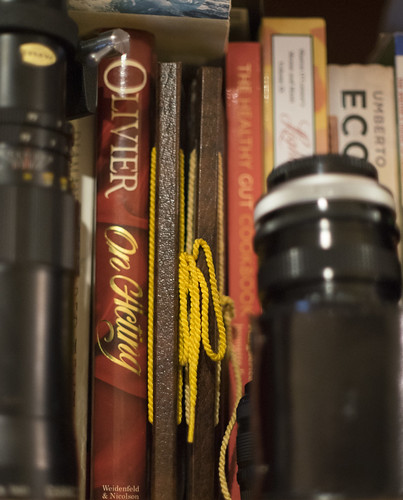
But what does it mean? Ah, well, now, I’m glad you asked. Allow me to turn to my bookshelf, to a section that has a miscellany of books not otherwise categorized.

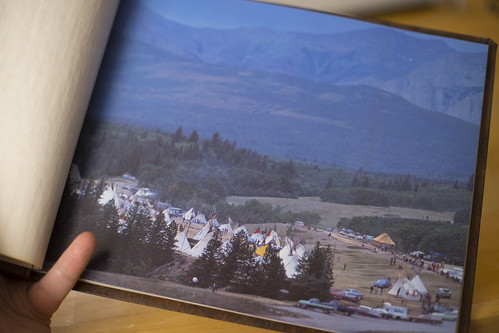
There is a book I bought when I was 11 years old. I bought it in the Banff Book and Art Den on February 11, 1979, for $8.95 (marked down from $12.50). Oh, no, my memory is not so good as all that. The book still has the receipt in it. That’s how I remember things: with persistent concrete objects.

Which book? Why, this one, of course:

The Egyptian Book of the Dead, taken from the papyrus of Ani, with translation and commentary. At that time, I had something of a fascination for Egyptology, fostered in no small part by a copy of this book that I had found in a school library.

The truth is that what I really liked was not so much the myths and practices of the Egyptians as their writing, the hieroglyphs. The book has the original hieroglyphic text, sometimes with interlinears. The library copy also had transliterations; this copy, alas, does not. But look, all those iconic representations, a code, so exotic, carrying some meaning – but what? The form has persisted, but the sense? Lost for a long time until the discovery of the Rosetta Stone, which had the same text in Greek, demotic Egyptian, and hieroglyphs. A parallel text! It came back to life, reaching out to us across the millennia. And among the Egyptian words that gained a new spark of life was ka.

The Official Scrabble Players Dictionary defines ka as “the spiritual self of a human being in Egyptian religion.” This is not quite accurate. What we would think of as the spirit or soul was the ba, the personality that went to the afterlife; it was depicted in hieroglyphs as a sort of bird. The ka was a vital spark, distinct from the body but living in it while the person lived. And after death? The ka roamed as it wished, but it could be given a statue of the person to dwell in – a persistent memorial, a concrete (stone, really) object. It had to be given food, however; if there was none, it would wander in search of it, and might even die.

Its hieroglyph was two arms extended as if to embrace someone.

In a way, then, we might say that the ka is meaning. A word, like a body, is form. While a word is in use, it has that thing that animates it, that sense. If a word passes out of common use, it can be maintained in a stiff, memorialized form, brought out and venerated as needed, as thou may be. We can still maintain an understanding of its meaning if we feed it some thought every so often. But it can also wander away to take up residence elsewhere. And if we simply run out of a need for the sense and stop thinking of it, it can die.

Does that seem like a bit of a reach? Well, so is the ka. Like meaning, it always reaches out. It is the will to connect, and it does not depart as easily as breath or birds.

omnibus notum, scilicet

Good scholars always want to add to their skill kits, obviously, but they can sometimes be a silly set too. There are times when levity is the only sensible response to the gravity of the situation – to wit, when there is something that everyone knows, or that follows easily from something everyone knows, but no one has bothered proving. It’s not that citations bring excitation, but there is an expectation that if you say it you can cite a source for it. If it’s notable, it should be footnotable; absence of a note would be ominous. So when you are making a point in a paper, and you get to something that’s important to the point, and it’s an “everybody knows” thing or a “well of course” thing, but you can’t find prior research to support it, what do you do?

What you want to do is footnote it with “Obviously” or “Everybody knows this.” But that seems rather… um… frank. Frankly English, for one thing. This is scholarship, you know! You don’t put “Smith, the same one I just cited,” you put “Smith, ibid.”; you don’t put “Smith, here and there throughout the book,” you put “Smith, passim.” So what do you put instead of “Everybody knows this” or “Obviously”? I’d be tempted to put res ipsa loquitur, a well-known phrase that means ‘the thing speaks for itself’, but it has a specific legal use – to wit: the very nature of a particular accident is evidence of negligence (i.e., that kind of accident can’t happen unless someone screws up).

So I put the question to fellow scholars on Twitter, which in such matters can be an omnibus full of notables. Various suggestions came through. One from Laura Gibbs that I especially liked was omnibus notum. This does not mean a post-it note on a transit vehicle; it’s Latin for ‘known by all’. It can easily be abbreviated to om. not. or o.n. If the reader sees you footnote “An egg will probably break if you drop it from shoulder height onto a tile floor” and says, “A footnote? Are you joking?” you can say “I om. not.

An even more cogent one could be what Gregory Stringer suggested: scilicet. It’s a term used in various Latin writings; it is actually a synthesis of scio licet, which means ‘it is permitted to know’, but the Romans used it to mean ‘obviously’ or ‘naturally’ or, in a concessive manner, ‘of course’, to be followed with a sed (‘but’) clause. It can be pronounced in the classical Latin way, “ski li ket,” or it can be said in the English way, like “silla set” or “sigh la set.”

The fact that there is an existing English-style pronunciation for it tells us that it is in use as an English word.1 So we’re all set, right? Hmm, well. There are two English usages. One, no longer current, means ‘doubtlessly’ sarcastically: “Should Trump become president, he will scilicet brush up his diplomatic skills.” The other one uses it in another sense available from its construction: ‘evidently’ or ‘to wit’. That is to say, it means ‘that is to say’ – i.e., it’s another way to say i.e. It’s like a clickable plus sign that has expanded to show the extra information. So if you set scilicet the reader may be conditioned to expect just that thing you were using it to avoid: an explanation.

Ah, drat. No rest for the learnèd. However obvious the thing, however needless an explanation seems to be, you can’t always conceal it, or skip it, or hope it’s too obvious for a note. Why not? Because, as Mark Twain wrote, “It ain’t what you don’t know that gets you in trouble. It’s what you know for sure that just ain’t so.”2 The great advances of knowledge have come from disproving the obvious.3 So you sigh and see what you can set down.

Thanks to Iva Cheung for setting this thought train in motion.


1Res ipsa loquitur.

2Actually, this can’t be found in any of Twain’s writings, though he did write “Faith is believing what you know ain’t so” in Pudd’nhead Wilson’s New Calendar. A similar quote is attributed to Twain’s contemporary Josh Billings: “It ain’t ignorance causes so much trouble; it’s folks knowing so much that ain’t so.” This likewise does not appear in Billings’s work. But Billings’s 1874 Everybody’s Friend, or Josh Billling’s Encyclopedia and Proverbial Philosophy of Wit and Humor has “I honestly believe it is better to know nothing than to know what ain’t so.” (Thanks to Bob Kalsey, http://wellnowbob.blogspot.ca/2008/07/it-aint-what-you-dont-know.html, for this.) In any case, the idea itself has an intuitive appeal and a certain… obviousness?

3If this doesn’t seem obvious to you, I can’t see why not.

ablute

The dirty things we do for money. Lucre is called filthy, but while that’s not ludicrous, it’s really the rolling in the mud we do for the loot that pollutes us. Sometimes our solutions are nothing but soil from a slough. If we wish to ablate it or even abate it, we must ablute it – and ourselves.

Ablute! Does that wash with you? If so, what does it wash you with? Ab initio it has that ab, ‘from’, but how do you play that lute? Can you be resolute? Or is it muddy?

Well. It comes from Latin lutum, ‘mud, filth’. But just as in English you can core and peel an apple, and having done so leave it with neither, in Latin you can mud things and leave them immaculate – luere, the verb from lutum, can mean ‘wash, clean, remove mud’. From it we get ablute, elute, and for that matter dilution and the better-known noun partner to our verb, ablution.

But we also get pollute. What a dirty trick. Mudding can also mean adding mud. It’s like asking someone to dust the room with a feather duster and instead they dust it with confectioner’s sugar. What is the solution then? How do we solve it? Can we dissolve it? Be careful with the dissolution into solution – there is no washing available in that; it comes from solvere, a different root. Absolution for the culprit may involve ablution. But not of the room – that would make a sticky situation; better to sweep it. Then wash your hands.

That’s nice clean work, as it were. Do an absolutely spotless job and you get a blue ribbon. It sure beats flinging lutum in hopes some loot will come your way. That’s a brutal thing to do. Best to abstract and ablute yourself.

ignorandum, ignoranda, ignorandus

Some things are best left aside. In the business of daily life, we have multiple memoranda (things to remember) and a full agenda (things to do), and so many people demanding our attention. And if you’re on a social network, some of those people might be real ignoramuses too, but somehow they still think they merit interaction; they may even provoke it. Somehow we need to need to do a triage. Never mind things to get around to. We need to make a list of things not to get around to. Things to ignore. And people to ignore.

So. A memorandum is a thing to remember; the word memorandum is a Latin singular neuter future passive participle of memoro ‘I bring to mind’; it means ‘to be remembered’, as in ‘a thing to be remembered’, i.e., ‘a thing to remember’. The plural is memoranda. Similarly, agenda is the neuter plural or feminine singular meaning ‘thing(s) to do’.

So what would be a thing to ignore?

That’s easy enough if you’re no ignoramus on Latin roots. The Latin verb ignoro means ‘I don’t know’ or ‘I don’t know about’ or ‘I ignore’. The first person plural conjugation is ignoramus ‘we don’t know; we ignore’. That word was pressed into service as the name of a lawyer in the 1615 play Ignoramus by Georges Ruggle, and from that has come to be the English noun we all know. (You can’t pluralize it as ignorami because it’s not a noun in Latin.) So if ignoro is the verb, the future passive participle will be ignorandus, ignoranda, ignorandum in masculine, feminine, and neuter, respectively. Since we normally use the neuter – memorandum, originally plural agenda – we can go with ignorandum for a single thing to ignore, and ignoranda for a list of things to ignore.

We can, if we really want to be exact, use the masculine for a single male who needs ignoring: ignorandus (plural ignorandi). This is most likely to be of use on social networking sites, where one may encounter randos – random dudes who just butt in and expect unearned attention to their obnoxious opinions. It works especially well because it is so close to ignoranus. Should that be ignoramus? No, it’s a popular wordplay: an ignoranus is a person who is both an ignoramus and an anus (you may more likely use the English equivalent for the latter). We may say with confidence that every ignoranus is an ignorandus to add to the ignoranda.

And, as an added bonus, the masculine accusative plural is ignorandos, which means that “Just ignore the ignorandos” is actually using proper Latin. The singular dative and ablative are ignorando, so “I want to get away from that ignorando” is also using proper Latin. (The whole declension is on Wiktionary.)

clarty

If you’re looking for some clarity, I’m afraid I can’t help you see clear to that this time. Today’s word is a dirty, dirty word, and a rude thing to say. Oh, it’s not crude language; your churchgoing grandmother could say it, and might if she’s Scottish or northern English. But it has a certain unpleasant clatter to it, and while it’s as plain as day, it’s also as clear as mud – and as filthy, too. Clarty means ‘dirty, muddy, sticky, nasty’; it has a related noun clart meaning ‘mud, filth’ and a related verb clart meaning ‘smear with dirty, make dirty’. If you’re in Scotland, you may well hear the word used today, but if you do, it will not be with a positive tone (see this article in The Scotsman). It has been in the language for most of a millennium, but its origins are – sorry – unclear.

If language is a window on the world, it takes only an iota to make the difference between gleam and grime, between purty and dirty, between clarity and clarty. The merest misplacement can make a mess. I’m reminded of a joke – a meta-joke, because it’s a joke about someone telling a joke. A fellow hears the joke “Did you hear the one about the dirty window? Never mind, you wouldn’t see through it.” He thinks it’s funny, so next time he’s at a church social, he tells a few people present, “Did you hear the one about the window you couldn’t see through? Never mind, it’s too dirty for you.”

Which makes me think about the time I cleaned the shower door in our last apartment. We had moved in perhaps a year earlier. I finally got around to using some CLR on the shower door and cleaning all the accumulated minerals off it. Aina came home, looked at it, said “It’s clear!” and, after the briefest of moments, pulled a face of horror and disgust: “Ewwwwwww.” She had thought it was frosted glass. She just realized she had been showering all year next to an incredibly filthy piece of glass (well, minerals, but you know). Its lack of clarity was because it was clarty. And that, ladies and gents, is how you get from pane to pain.

etaonrish, Etaoin Shrdlu

Etaonrish, dlf. Cm, ugyp! W b vkx, jqz…

That is a listing of the letters of the alphabet, in descending order of their frequency of use in English. I learned it in grade 5 from a book on cryptography. I memorized it by pronouncing it with a sound sort of like “Eat your own rice, Dolf. Come, you gyp! Will be vexed, Jacuzzi…”

It was knowledge. It was a thing I had learned, a thing I knew, a master key to special understanding. If I was faced with a long and complex cipher to decrypt, I could start by counting the frequency of the letters and starting to work out which was which from that…

In grade 6, one of our exercises in class was actually to decipher a sentence or two that had been encrypted with a simple replacement cipher. You know, something like this: Ksvl smf Koaa ermy iq yjr joaa yp gryvj s qsoa pg esyrt. So right away, I knew what to do: Count the letters! Figure it out from the frequency! Ah, ha!

What was truly vexing was that other students worked it out rather quickly while I was still stuck in the mud. How did they do that? Well, to start with, there are only so many one-letter words in the language, so that gives you an edge. Commonly used three-letter words are also a limited set, and if you see one repeating, that’s a good hint. And so on. Once you’ve gotten a sense of what is a and what is t, h, and e, it gets to be like solving Wheel of Fortune (which, however, did not exist at the time). But I hadn’t approached it like that.

So my knowledge got in the way of actually using my brain. I was using a screwdriver to pull nails.

But still… I knew this thing! It was the real order of the letters! And when, one day in grade 10, a substitute teacher mentioned about how we all knew what etoanirsh was – she wrote it on the board – I was incensed. I didn’t stand up and say something, but I knew she had it wrong. I may have muttered to the person next to me. How can everyone know it? And how can they know it wrong? It’s etaonrish, not etoanirsh! Fool.

A little learning is a dangerous thing. Drink deep, or touch not the Pierian spring.

Not just that, though. My pride in my learning had turned it into a dogma. It was the One True Way, to be used wherever it could, and I was on the right team. Those who thought otherwise were fools. Fools!

It’s just the same sort of thing you see in politics, and social issues, and religion, and grammar. We use our minds to set the world in an order that gives us mastery over it. It’s not a coincidence that comprehend can mean both ‘understand’ and ‘take in, include’. A comprehensive exam is so called not because it tests your comprehension but because it includes everything. We join this desire to comprehend with a desire to dominate, to win, to be better – basic human insecurity. Many people learn one little thing and use it as an omni-trump card, as proof that others are fools. Ha! We own their sorry butts! Lincoln was a Republican, so the Democrats are the real racists! (I’ve actually seen that argument made.) You can’t tell the difference between discreet and discrete, so you must be an uneducated idiot!

And we join this to our tribal instincts to decide who’s on the right team. Dogma, ideology, tribalism. Some people want to blame all of this on theism, but it’s evident in many spheres that have nothing to with religion: politics, sports, social mores, grammar… We decide what is good and what is bad, and from that who is right and who is wrong, and we make our lives – and the lives of others around us – needlessly worse than they could be. Using screwdrivers to remove nails.

Fortunately for me, I had just enough self-doubt and curiosity to want to find out more about this other version. Well, naturally, your frequency distribution will vary according to your sample. There are different dialects, different genres, different times.

In the 1920s, a well-known frequency listing started with etaoinshrdlu. In 1923, the playwright Elmer Rice gave a character in his play The Adding Machine the name Etaoin Shrdlu.

The Adding Machine is an expressionist play, full of the mindless small talk of repetitive unthinking existence. It’s about a man, Mr. Zero, who has been working adding up numbers in a department store for 25 years. On his 25th anniversary of working at the company, the owner calls him in to talk to him. Not to give him a raise, a promotion, or a pen – just to tell him he’s being replaced by an adding machine. He snaps and kills the owner. He surrenders, goes to jail, is executed. He finds himself in the Elysian Fields, where he meets Etaoin Shrdlu, a proofreader who always tried to live a moral existence, always did just what his kind, sweet, patient mother wanted, never disappointed her, always fought his sinful nature. He tried to run away once and join the navy but she stopped him, so he just went on working the right job and living with her and trying to overcome his sinful nature, until one day when he was going to carve a leg of lamb he slit his mother’s throat instead.

Why are these two murderers in the Elysian Fields, where everything is so nice? Shouldn’t they be in hell? Well, they won’t remain, Shrdlu explains. Only the most favoured remain. Anyone who likes may remain, but only the most favoured do. Who are these favoured people, Zero asks? Shrdlu says, despairingly (that’s the stage direction – despairingly),

I don’t know, Mr. Zero. All these people here are so strange, so unlike all the good people I’ve known. They seem to think of nothing but enjoyment or of wasting their time in profitless occupations. Some paint pictures from morning until night, or carve blocks of stone. Others write songs or put words together, day in and day out. Still others do nothing but lie under the trees and look at the sky. There are men who spend all their time reading books and women who think only of adorning themselves And forever they are telling stories and laughing and singing and drinking and dancing. There are drunkards, thieves, vagabonds, blasphemers, adulterers. There is one—

Zero cuts him off and says “That’s enough. I heard enough.” He leaves. He doesn’t want to stay there “with a lot of rummies an’ loafers an’ bums.” He goes and finds himself an adding machine and works on it until he is told his soul is to be recycled, since he’s just taking up space.

We come up with our knowledge, our ideas, our rules, to help us master the world. But if we’re not aware, they master us. Sure, we’ve put everything in order, but is it the right order? Are we putting it to good use? Or are we just using it to hurt others and ourselves? If we don’t check the basis of our rules, consider the premises and evaluate the results, we may just join the cult of etaonrish and find ourselves with – or like – Etaoin Shrdlu.