Monthly Archives: November 2024

Cochrane

There are several Cochranes.

I mean that in several ways. 

There are, as you may know, several places in the world named Cochrane (all pronounced “coc-run,” if you’re not sure). People in Ontario, where I live now, tend to think of Cochrane, Ontario, a small town with the main distinction of being way north where most people never go, between Iroquois Falls and Kapuskasing. In its Wikipedia article, the first subhead under “Attractions” is “Polar bears.” Its motto is “Wonderfully Unexpected.” 

People in Alberta, where I grew up, think of Cochrane, Alberta, just to the northwest of Calgary, a town draped over hills and a river valley, with 230 metres difference in elevation between its lowest and highest points. Its motto is “How the West Is Now,” which is, in my opinion, reasonably accurate. 

There is also a Cochrane in Wisconsin, really a suburb of Buffalo City, which is a metropolis of over a thousand people on the northern reaches of the Mississippi River. And there is a Cochrane in Chile, towards the southern end of the country, in a river valley surrounded by mountains. There are also various smaller places of the name, such as Cochrane Street, in Hong Kong, which hosts the world’s longest outdoor covered escalators, which ascend (and descend) more than 135 metres.

All of these Cochranes are named after people who had the surname Cochrane, no two the same: Frank Cochrane, former mayor of Sudbury, Ontario; Matthew Henry Cochrane, a cattle baron and senator; a railroad conductor, first name not given, who had the bad luck of being injured in a village in Wisconsin; Thomas Cochrane, 10th Earl of Dundonald, the first admiral of the Chilean navy; Rear Admiral Thomas John Cochrane, commander-in-chief of the East Indies and China Station of the Royal Navy. 

But of course there are many other Cochranes. By this I don’t just mean that there are many people named Cochrane, though there are (I have a good friend by that name; an old friend of my father’s also has that name; the lead singer and songwriter for the group Red Rider, known for such hits as “White Hot” and “The Lunatic Fringe” and “Cowboys in Hong Kong,” is Tom Cochrane; and so on). There are also many other versions of the name: Wikipedia lists Cochran, Cocrane, Cocran, Cochren, Cockram, Cockran, Cockren, Cochern, Colqueran, Coughran, and Cofran. And they all trace to the same several origins.

Yes, several: two Scottish and one Irish. The Irish origin is from Cogaráin (family names Ó Cogaráin and Mac Cogaráin), which probably comes from a root meaning ‘confident’, though I can’t be entirely sure of that. One Scottish origin is a place near Paisley. Its etymology is disputed; it may mean ‘red’ or it may mean ‘skilled’ or it may mean something else. The other Scottish origin is as a modified version of the name MacEachrain, which means (as far as I know) ‘son of a horse lord’.

Which brings me back to the largest place called Cochrane, the town of Cochrane, Alberta, population over 30,000 – it could be incorporated as a city, but it doesn’t want to. This is the town that was named after a horse lord, Matthew Henry Cochrane. There are still horses in the area, and cows too. But when you walk in the western-themed centre of town, or drive from big box parking lot to big box parking lot in the shopping sprawl across the tracks, or stroll on the paths of Bighill Creek as it winds its way through the heart of typical Alberta 1970s-era suburban neighbourhoods, or stroll through the new neighbourhoods up above the Cochrane RancheHouse (I would gratified if they could replace that excrescent e with a decent space), or ascend (or descend) the town’s most famous feature, the hill on Highway 1A with its 200 vertical metres and a frankly spectacular view of the Rocky Mountains to the west, you are more likely to see spandex than leather. It’s an outdoorsy, sporty place. Cowboy hats are seen, but less often than trucker caps. Pickup trucks, of course, but Honda Civics too.

I see Cochrane often. My parents live there. But I didn’t grow up there; when I was a kid, it was a town we’d pass through on the way to or from Calgary (but only if we didn’t take the Trans-Canada, which we usually did) or, quite infrequently, stop in for ice cream. It was a lot less prepossessing in the 1970s. It has grown quite a bit since then, and it is still growing. 

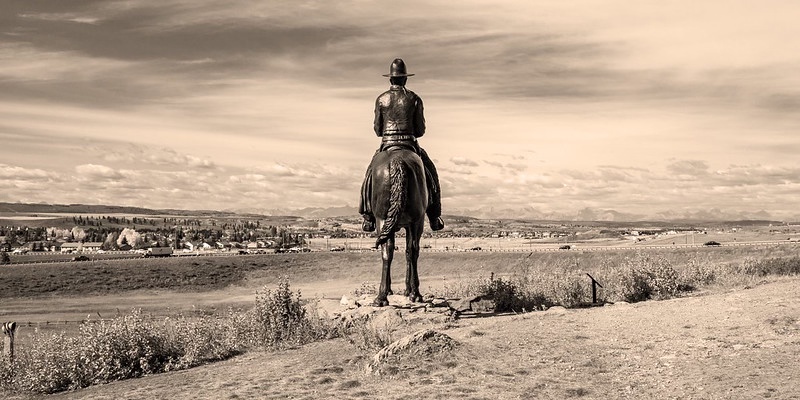
And when I say it I really mean the several Cochranes, the whole patchwork of places overseen by the Man of Vision horse-and-rider statue dominating a hill above the intersection of highways 1A and 22. My parents moved there about a quarter of a century ago and have become thoroughly embedded and well known in the town. And I enjoy my visits, especially the lengthy strolls I take around town with my camera in hand. 

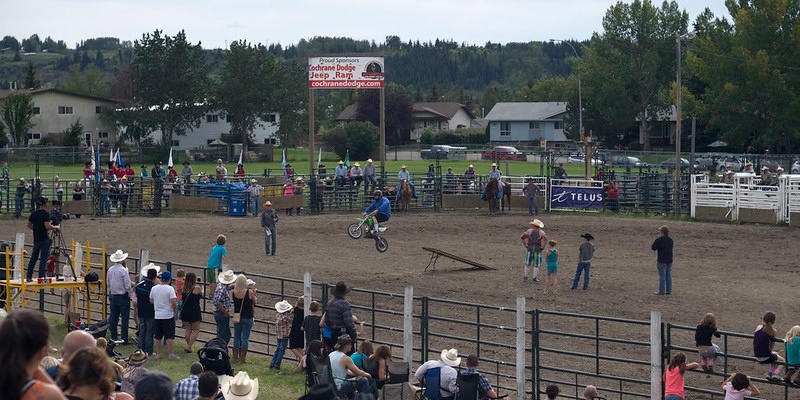
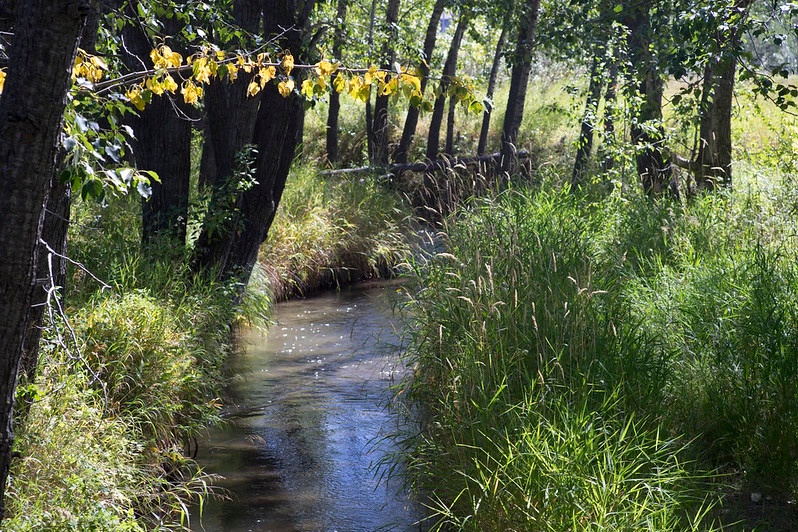
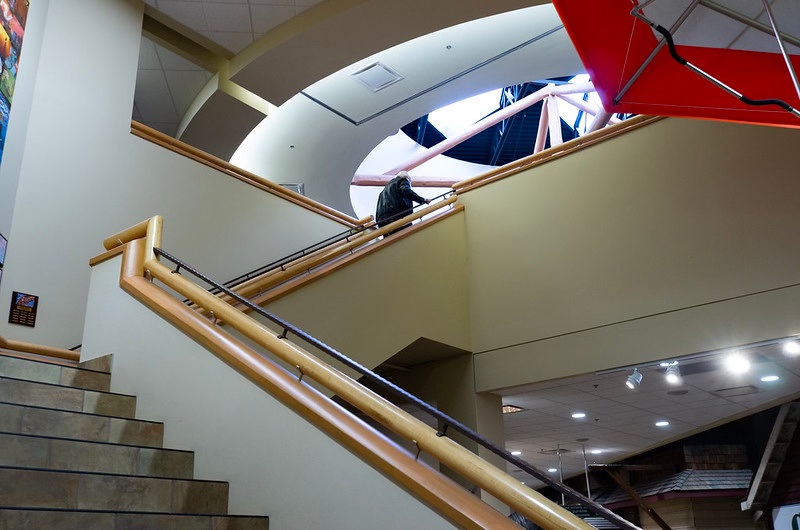
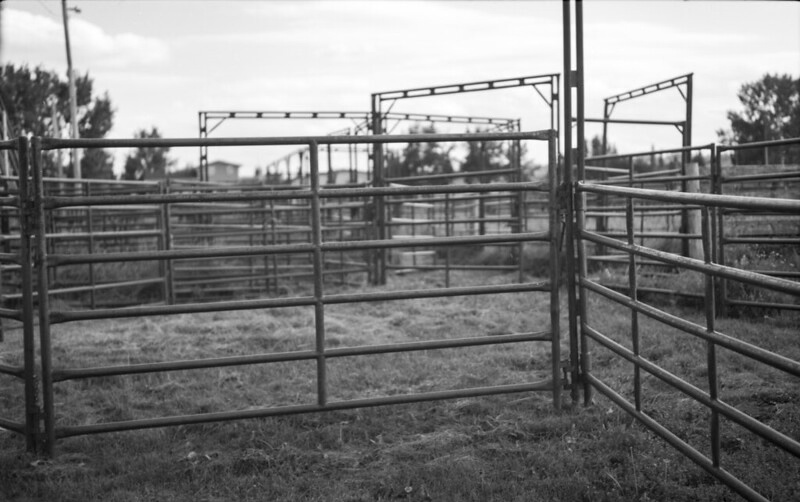
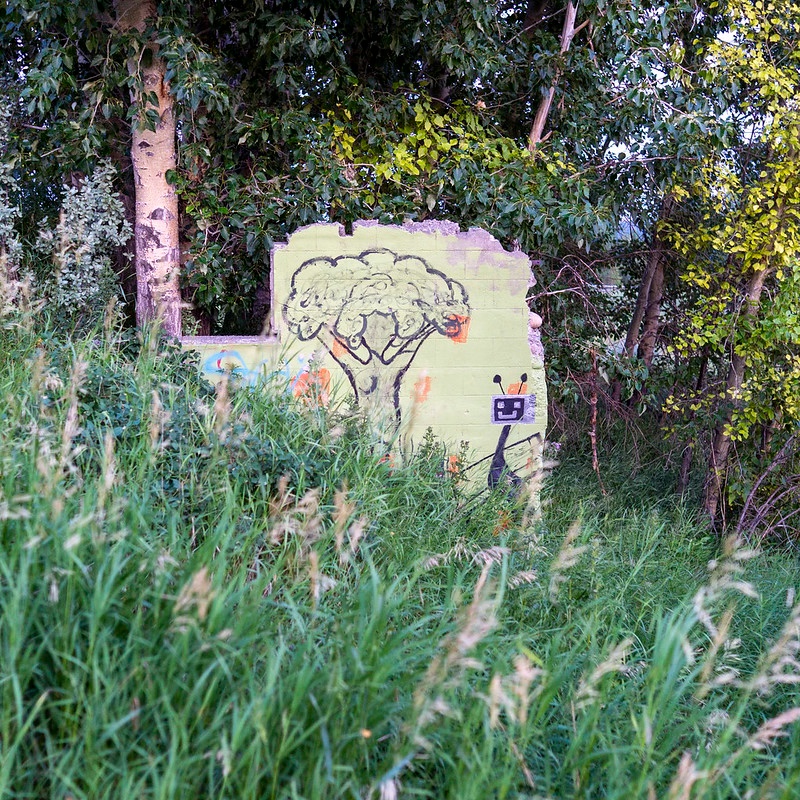
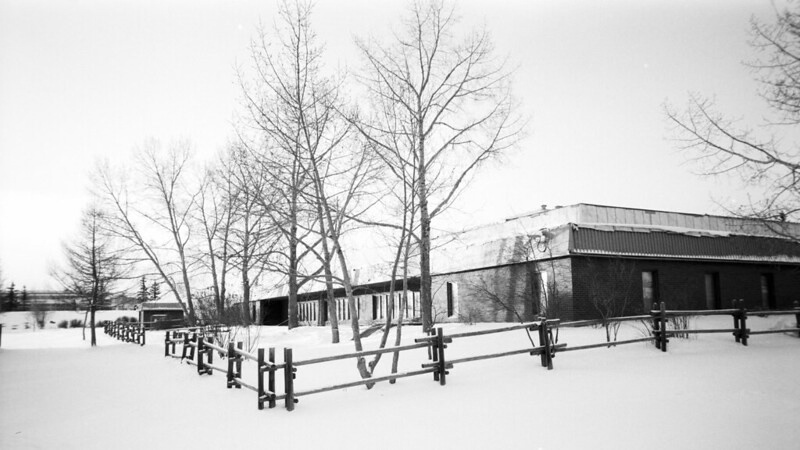
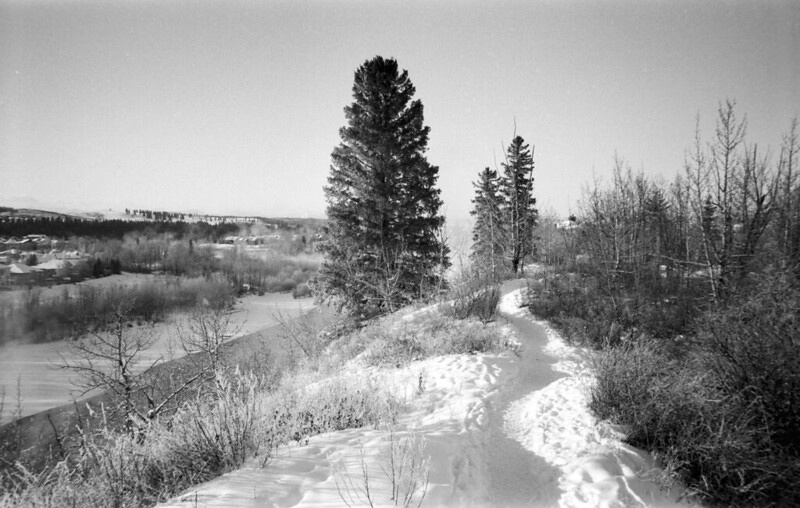
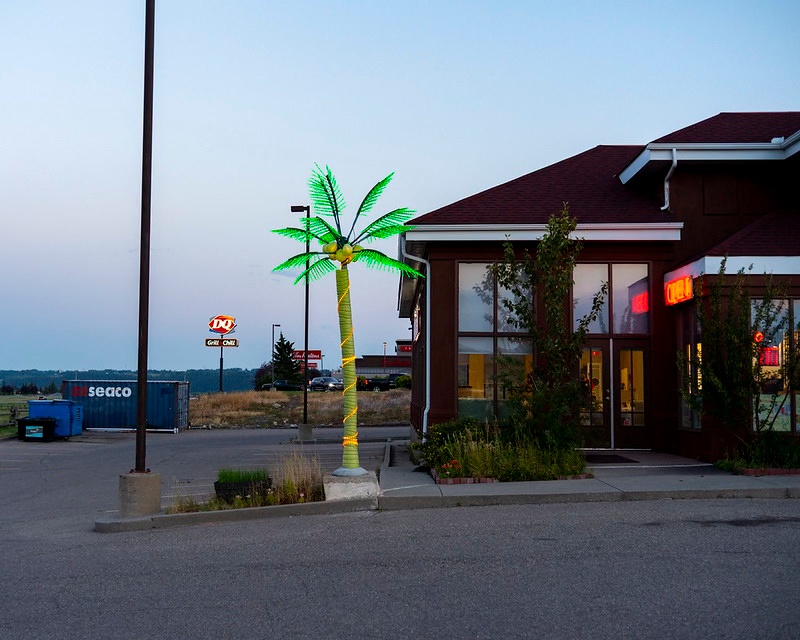
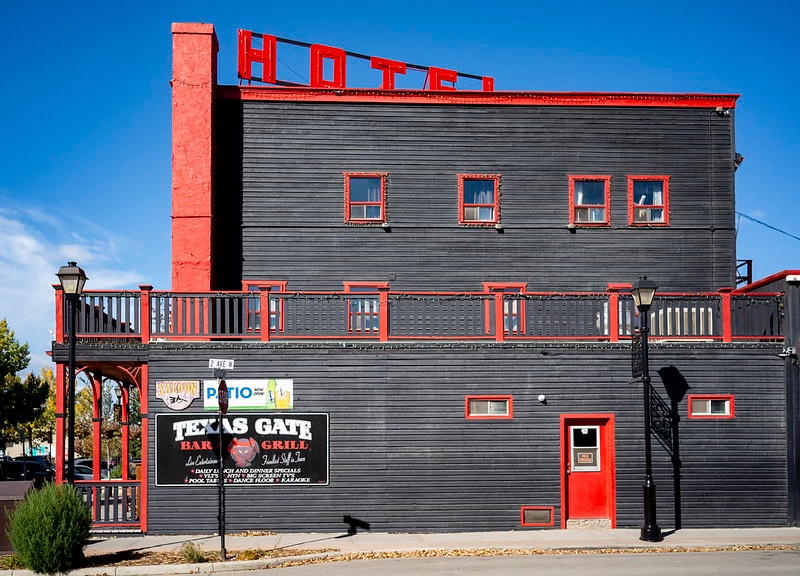
I can’t show you what every bit of Cochrane looks like, because there are some things I don’t feel like photographing (the huge parking lot in front of the Save-On-Foods, for instance). But here, by way of adding some of the particular flavour that Cochrane (the town and thus also the word) has for me, are some of the parts I have pointed my camera at.
balm, balmy, barmy, barm, balsam

It’s been a bit balmy lately, more than one might expect. 

When I say weather is balmy, I mean it is pleasant, even soothing (leaving aside worries about why it might be so warm in November). That word, balmy, is indeed balm plus the adjectival -y. A balm is a fragrant soothing resin, and something that has balm is balmy; by extension, something pleasant and soothing, such as warm sunny weather, is also balmy.

I have been thinking, though, of this passage from Jeremiah 8:20–22 (I’ll use the King James Version, since it’s so often quoted):

The harvest is past, the summer is ended, and we are not saved.

For the hurt of the daughter of my people am I hurt; I am black; astonishment hath taken hold on me.

Is there no balm in Gilead; is there no physician there? why then is not the health of the daughter of my people recovered?

That’s not quite so gentle and soothing, is it? But it gave rise to a quite graceful African America spiritual, the refrain of which goes like this:

There is a balm in Gilead,
To make the wounded whole;
There’s power enough in heaven,
To cure a sin-sick soul.

I’ll leave Gilead aside; in the Bible it refers to an area on the east side of the Jordan River, south of the Sea of Galilee, in what is now northwestern Jordan. The name has also gained another cultural currency thanks to The Handmaid’s Tale by Margaret Atwood. But I’m here to talk about balm.

The balm of Gilead is a specific balm, storax balsam, still produced in the same area. But there are other aromatic resins also called balsams. (And other pleasing extracted vegetable matter can also be balsamic – notably balsamic vinegar.) The word balsam comes from Hebrew by way of Greek and then Latin, always referring to fragrant substances. But when it got to Old French, the Latin balsamum was distilled down to basme, and that became our English word balm (the l was added back in the 1500s to display its classical origins, like the o in people and the s in isle). So, yes, balm and balsam are two versions of the same word, and balmy could have been balsamy.

However, there’s another use of balmy that is not quite so pleasant: to mean ‘insane’ or ‘foolish’ or ‘not right in the head’. It’s not quite so clear how it gained that sense, but eyes quickly turn to the British equivalent, barmy. Some people believe that balmy is the origin of barmy, with some other influence, but others believe that the “other influence” is the whole thing, and that this use of balmy is just based on a mishearing.

The other source is definitely something to do with the head – at least if you’re a barmaid or barman. It’s barm, which has in the past also been used to refer to the head on a glass of beer, but originally – and still – refers to froth that rises on the beer during fermentation. It’s an old Germanic word.

You can see how barmy comes from that, yes? Either from being light in the head, or similarly excrescent, or from foaming at the mouth. Probably not from being scum, though; barm is actually useful – it’s full of yeast and can be used in dough.

With unwanted shifts in the climate, some would say that what we have experienced this week is not balmy but barmy. But what can you do? The summer is ended, and we are not saved.

But now the sun is down, and it’s cooling off. I’ve poured myself a beer and can soothe my soul for the moment. And tomorrow, however balmy it may be, there will be work to do.

Facts follow feelings

Originally published on The Editors’ Weekly, the blog of Editors Canada

I was 14 years old when I found out what it feels like to hit a wall in a car that’s moving at 8 kilometers per hour. That might not sound very fast — it didn’t to me — but let me tell you, it felt plenty hard. If I hadn’t been wearing a seatbelt I would have catapulted right over the front of the demonstrator and into my onlooking classmates.

Yes, it wasn’t an accident. It was a thing called The Convincer that was being taken around to high schools. It cranked a car seat up a short ramp and let it go down again to an abrupt stop at the bottom. Sounds like a carnival ride, eh? You get in, buckle up, crank up, it lets go … and BAM. And when they tell you what a crash at higher speeds is like after that, you listen.

That was an early lesson for me in structural editing of general nonfiction. In fact, it taught me something about structure that my English teachers didn’t.

You remember how you’re taught in school to write an essay? Start with the thesis statement, expand the theory and reasoning, then add examples to illustrate. This is easy for teachers to grade. It’s also a generally boring way to write.

Sorry, but it is. There are times that you need to write that way, but that’s mainly when you have a captive audience who are reading impatiently to get the most information in the least time. If you’re trying to grab a reader’s attention, get them to keep reading and get them to care about and remember what you’re telling them, you need to follow the advice that I give every author I work with: Feelings first. 

Facts follow feelings. People take an interest in facts when they have strong feelings associated with them. People also remember abstract ideas better when they have clear images and examples to associate them with. 

This means start with stories, analogies and characters. If you start with the abstract and then play out examples, it’s better than not having examples at all, but the reader is having to keep a lot of abstract ideas in the air for a while until they have something concrete to attach them to. They may have forgotten some of the details by the time you give them reasons to feel things about them. If what you’re telling the reader is important, it needs to answer the questions “Why should I care about this?,” “Why should I keep reading?” and “How does this relate to my world?”

This is most important — and at the same time easiest to do — when you have a book-length manuscript. Then you can have stories that draw the reader in and give them suspense and resolution. You have enough room that you don’t have to just say “Do not put wine in your water carbonator,” you can tell the story about the guys who tried to make sparkling red wine: the moment they detached the bottle from the carbonator it fired a blood-coloured geyser that left a permanent stain on their ceiling and clothes. 

But even when you don’t have a lot of space, you can still grab readers by the feelings. I’m put in mind of warnings on transformer boxes. Some just say “Danger.” I saw one that had a cartoon on it of a bird squawking “No!” at a kid who was about to open it. But then there was another that had the text “Do not touch. Not only will this kill you, it will hurt the whole time you are dying.” You tell me which sticks with you.

impinge, expunge, impunge, expinge

We want to expunge those things that unpleasantly impinge on us, of course. But what about impunging those things that expinge?

Or why do we not even have impunge and expinge? Shouldn’t these words exist? We can make a two-by-two table with im and ex on one axis and punge and pinge on the other, and somehow only half the cells are filled with words you’ll find in an English dictionary. What’s up with that?

And, come to think of it, what are pinge and punge anyway?

I’ll start with that last one first. Punge is from Latin pungo ‘I prick, I puncture, I sting’, which gives us puncture and punch and pungent (and even poignant). So on the basis of that you might expect expunge and its Latin source expungo to mean ‘punch out’. But no, it means ‘cross out, strike out’ – or, originally, ‘mark for deletion’: the ancient Romans would mark a name in a list for deletion by pricking holes above or below it. From ‘mark for deletion’ the sense got transferred to the actual act of deletion – and now from ‘delete’ we have moved on to ‘remove’, ‘annihilate’, et cetera (we may compare obliterate, which originally referred to blotting out letters on a page, and is now also used for effacing someone or something from the ledger of existence).

It follows from that that impunge would like mean ‘punch in, puncture, prick’ or perhaps ‘thrust’ or ‘goad’. And in fact it does… if you speak Romanian. Where it’s properly spelled împunge. But in English? I guess we never saw the need for it; we have other words to the same point. The fact that expunge doesn’t obviously relate to puncturing or punching doesn’t help. It might make more sense to make impunge mean ‘enter in’ or ‘force in’ or ‘impose like some kind of prick’.

But, then, we have a word for that last one, too. It’s impinge. Which leads me to pinge. Which comes from Latin pango; strictly, impinge comes from impingo, which is in plus pango plus a change to the root vowel. Impingo means ‘I push against, I force towards, I hit’, et cetera; pango means ‘I drive into, I force into, I fasten, I fix, I set’. It comes from a Proto-Indo-European root meaning ‘fix, fasten, attach’. It is, literally, riveting.

So what about expinge? There is, in fact, a Latin word expingo. It means ‘I paint, I depict’. How does it mean that? Because it’s not ex plus pango, it’s ex plus pingo ‘I paint’. Could we allow expinge to mean ‘paint, depict’? I guess we could, but why?

So how the heck do you then expinge? Is it that you unfasten? But ex- doesn’t mean the same as un-; it means ‘out, away from’. Expel, for instance, means ‘drive out’, the opposite of impel, ‘drive in’. But ‘attach out’? ‘Fasten out’? Perhaps fix something to a point permanently outside?

Yes, maybe that’s it: if impinge is ‘get up in someone’s business’, then expinge can be ‘stay completely out of the way, out of sight, out of mind’. Which, to this point, expinge has. And there is no need to impunge it into the English language.