Announcing the 2026 Sesquiotica calendar! My Patreon patrons above a certain level receive a Sesquiotica calendar, and I like to give a calendar to family and friends as well. And I have ordered enough of them that I have a few extras that I am happy to part with for $20 each plus shipping. If you’re wondering if you would like one – or even if you don’t want an 11×14 coil-bound calendar – here is a flip-through, followed by stills of the photos (all by me!) that are featured for each month.
Cover
January
February
March
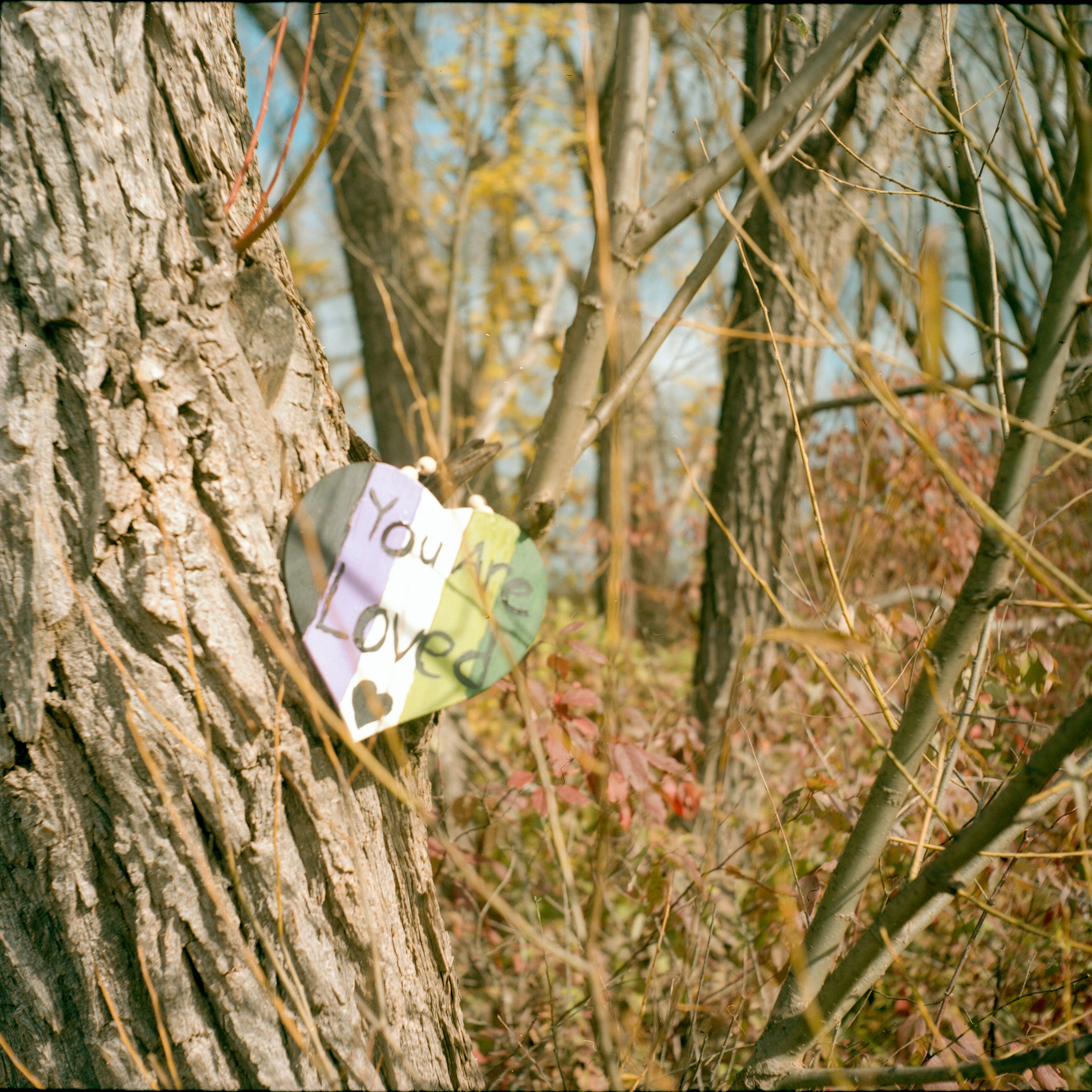
Digitized with Negative Lab Pro v2.1.2
April
OLYMPUS DIGITAL CAMERA
May
June
July
August
September
October
November
December
If you’re interested in acquiring one, email me (if you don’t have my personal email, use the form at jamesharbeck.com/contact/ – I don’t want to post my email here because spam address harvesters will pick it up). I’ll let you know how much the shipping will cost (it varies a lot depending on where to and by what method) and we can make it happen!
There are, as you may know, several places in the world named Cochrane (all pronounced “coc-run,” if you’re not sure). People in Ontario, where I live now, tend to think of Cochrane, Ontario, a small town with the main distinction of being way north where most people never go, between Iroquois Falls and Kapuskasing. In its Wikipedia article, the first subhead under “Attractions” is “Polar bears.” Its motto is “Wonderfully Unexpected.”
People in Alberta, where I grew up, think of Cochrane, Alberta, just to the northwest of Calgary, a town draped over hills and a river valley, with 230 metres difference in elevation between its lowest and highest points. Its motto is “How the West Is Now,” which is, in my opinion, reasonably accurate.
There is also a Cochrane in Wisconsin, really a suburb of Buffalo City, which is a metropolis of over a thousand people on the northern reaches of the Mississippi River. And there is a Cochrane in Chile, towards the southern end of the country, in a river valley surrounded by mountains. There are also various smaller places of the name, such as Cochrane Street, in Hong Kong, which hosts the world’s longest outdoor covered escalators, which ascend (and descend) more than 135 metres.
All of these Cochranes are named after people who had the surname Cochrane, no two the same: Frank Cochrane, former mayor of Sudbury, Ontario; Matthew Henry Cochrane, a cattle baron and senator; a railroad conductor, first name not given, who had the bad luck of being injured in a village in Wisconsin; Thomas Cochrane, 10th Earl of Dundonald, the first admiral of the Chilean navy; Rear Admiral Thomas John Cochrane, commander-in-chief of the East Indies and China Station of the Royal Navy.
But of course there are many other Cochranes. By this I don’t just mean that there are many people named Cochrane, though there are (I have a good friend by that name; an old friend of my father’s also has that name; the lead singer and songwriter for the group Red Rider, known for such hits as “White Hot” and “The Lunatic Fringe” and “Cowboys in Hong Kong,” is Tom Cochrane; and so on). There are also many other versions of the name: Wikipedia lists Cochran, Cocrane, Cocran, Cochren, Cockram, Cockran, Cockren, Cochern, Colqueran, Coughran, and Cofran. And they all trace to the same several origins.
Yes, several: two Scottish and one Irish. The Irish origin is from Cogaráin (family names Ó Cogaráin and Mac Cogaráin), which probably comes from a root meaning ‘confident’, though I can’t be entirely sure of that. One Scottish origin is a place near Paisley. Its etymology is disputed; it may mean ‘red’ or it may mean ‘skilled’ or it may mean something else. The other Scottish origin is as a modified version of the name MacEachrain, which means (as far as I know) ‘son of a horse lord’.
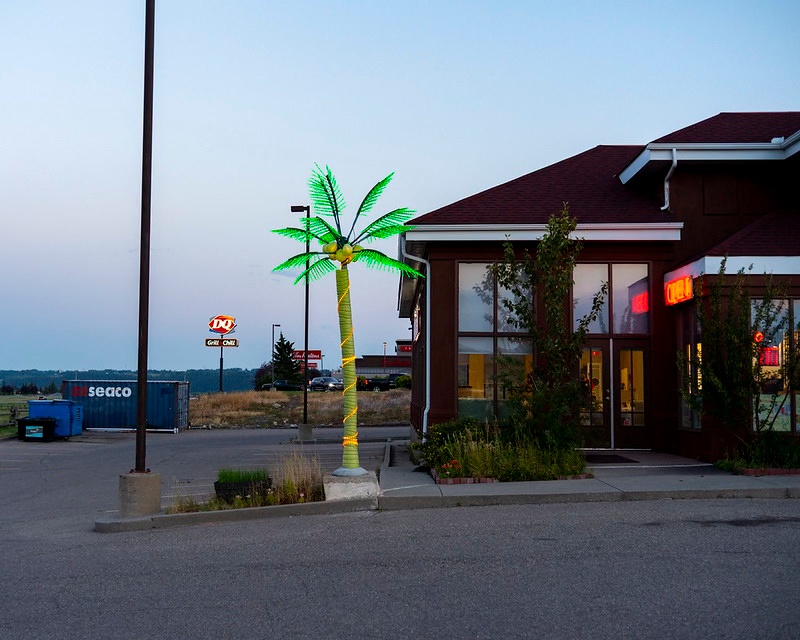
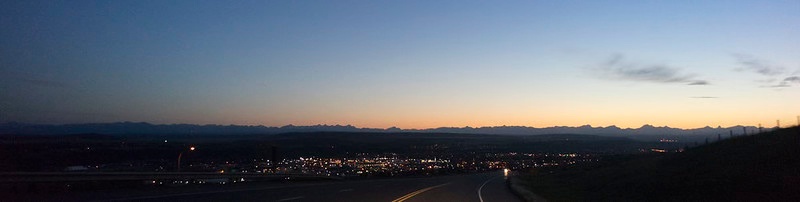
Which brings me back to the largest place called Cochrane, the town of Cochrane, Alberta, population over 30,000 – it could be incorporated as a city, but it doesn’t want to. This is the town that was named after a horse lord, Matthew Henry Cochrane. There are still horses in the area, and cows too. But when you walk in the western-themed centre of town, or drive from big box parking lot to big box parking lot in the shopping sprawl across the tracks, or stroll on the paths of Bighill Creek as it winds its way through the heart of typical Alberta 1970s-era suburban neighbourhoods, or stroll through the new neighbourhoods up above the Cochrane RancheHouse (I would gratified if they could replace that excrescent e with a decent space), or ascend (or descend) the town’s most famous feature, the hill on Highway 1A with its 200 vertical metres and a frankly spectacular view of the Rocky Mountains to the west, you are more likely to see spandex than leather. It’s an outdoorsy, sporty place. Cowboy hats are seen, but less often than trucker caps. Pickup trucks, of course, but Honda Civics too.
I see Cochrane often. My parents live there. But I didn’t grow up there; when I was a kid, it was a town we’d pass through on the way to or from Calgary (but only if we didn’t take the Trans-Canada, which we usually did) or, quite infrequently, stop in for ice cream. It was a lot less prepossessing in the 1970s. It has grown quite a bit since then, and it is still growing.
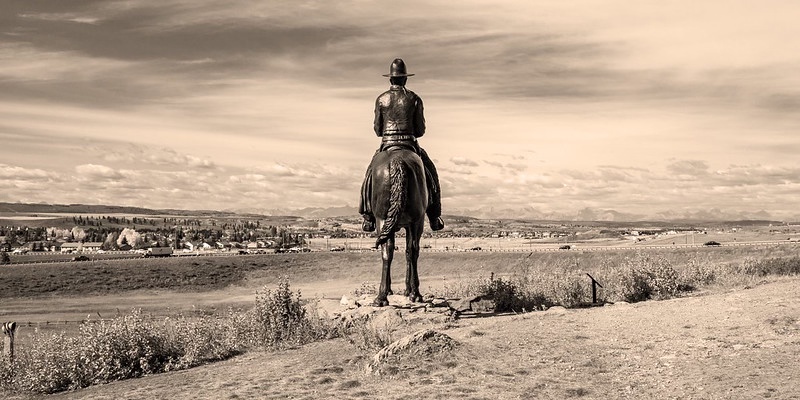
And when I say it I really mean the several Cochranes, the whole patchwork of places overseen by the Man of Vision horse-and-rider statue dominating a hill above the intersection of highways 1A and 22. My parents moved there about a quarter of a century ago and have become thoroughly embedded and well known in the town. And I enjoy my visits, especially the lengthy strolls I take around town with my camera in hand.
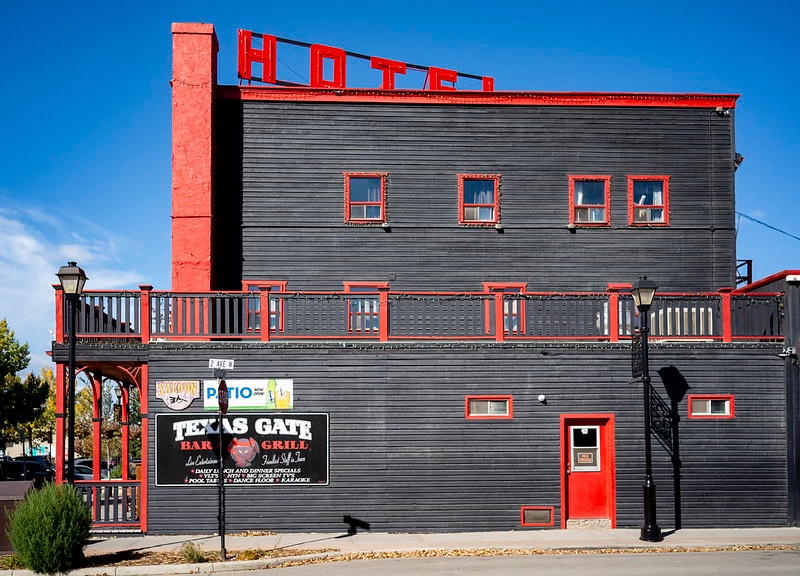
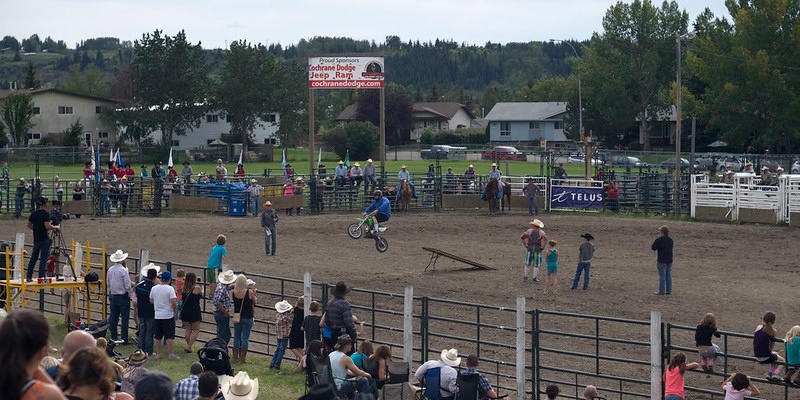
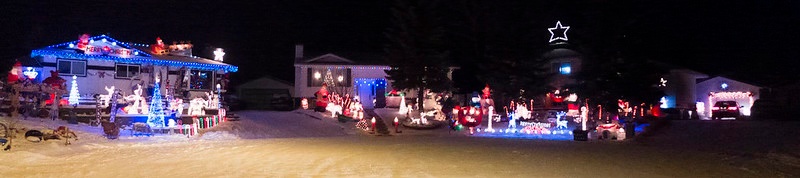
I can’t show you what every bit of Cochrane looks like, because there are some things I don’t feel like photographing (the huge parking lot in front of the Save-On-Foods, for instance). But here, by way of adding some of the particular flavour that Cochrane (the town and thus also the word) has for me, are some of the parts I have pointed my camera at.
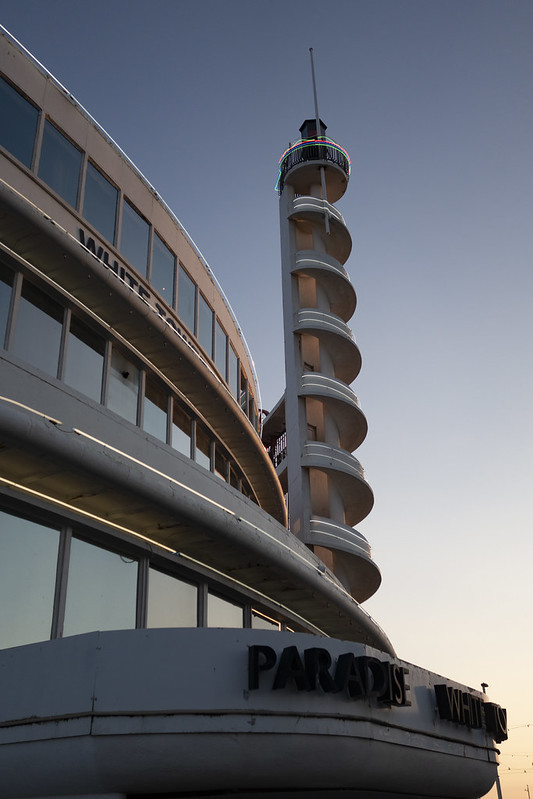
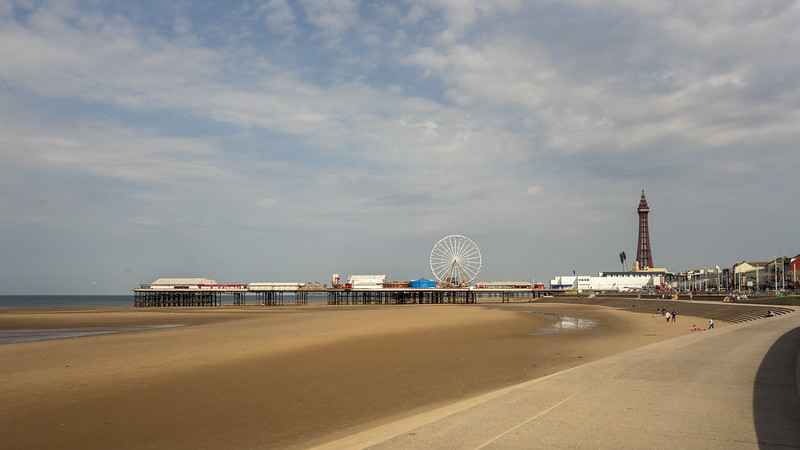
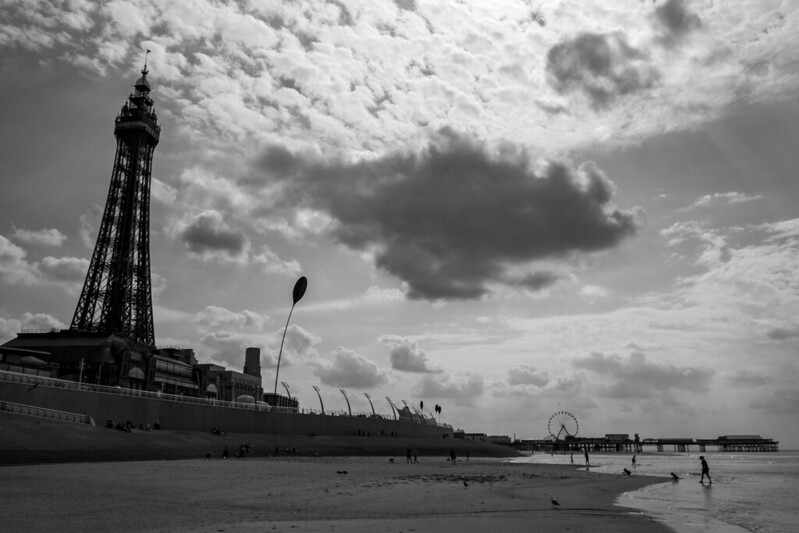
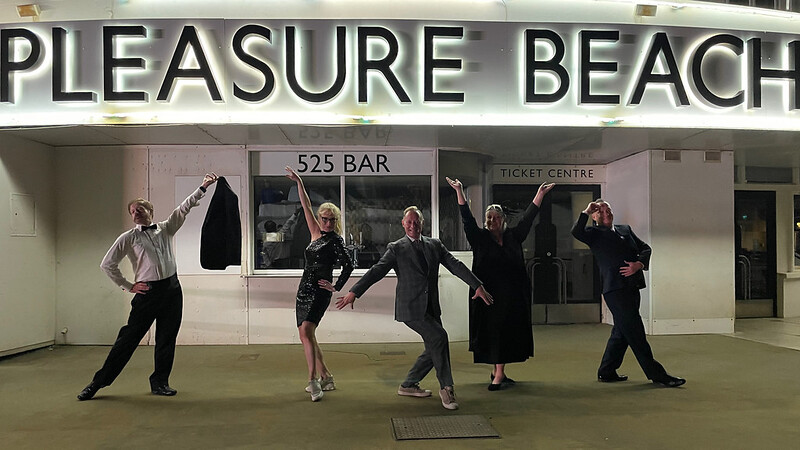
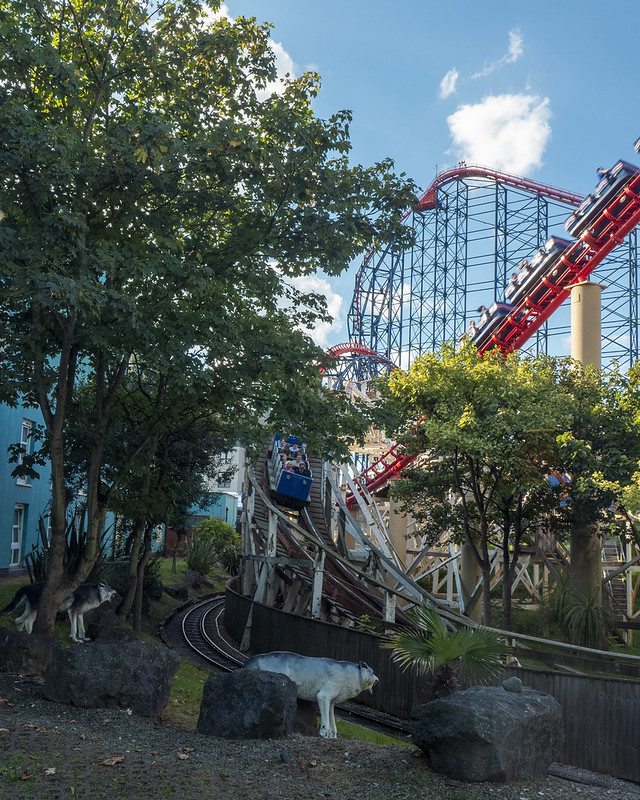
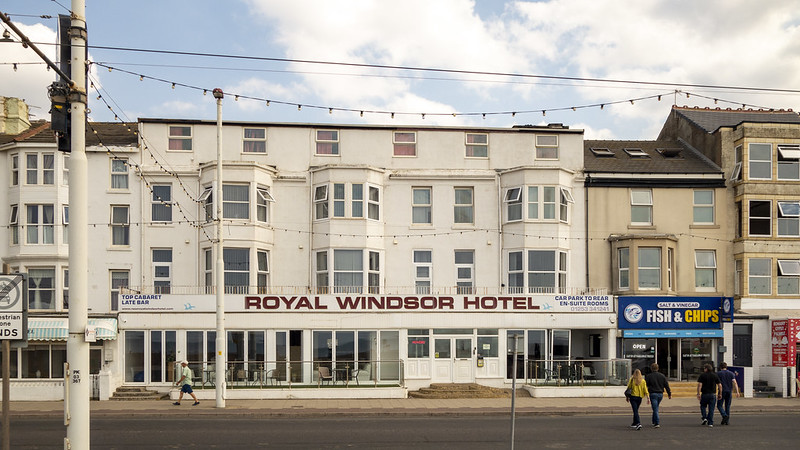
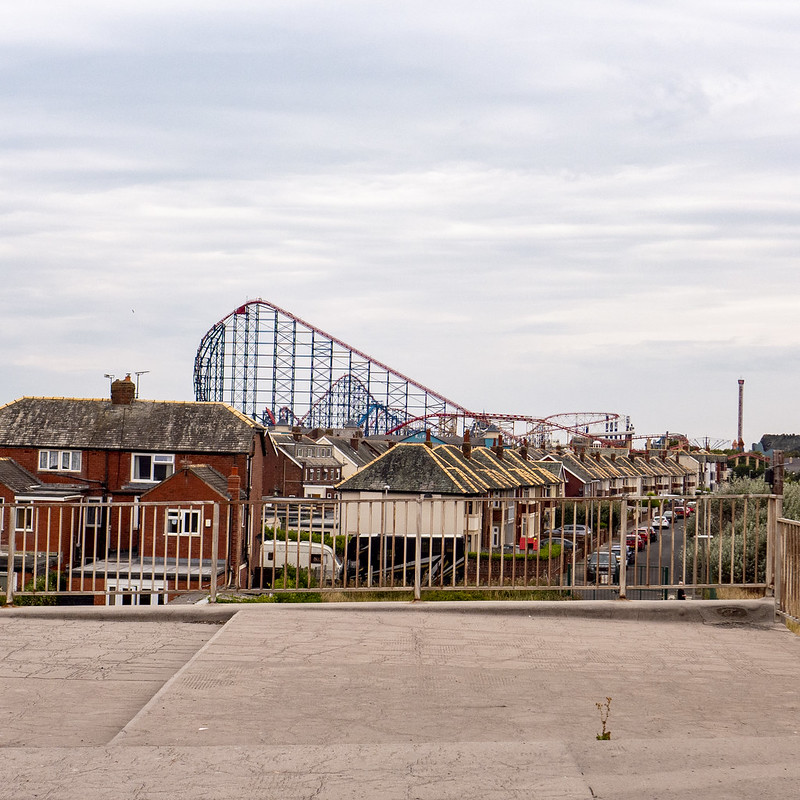
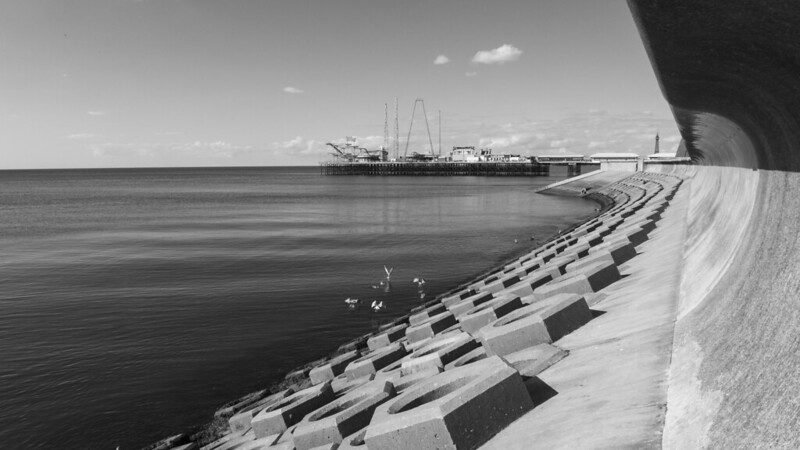
I was recently in a town that has famously been called “a famous seaside place.” In its heyday, it saw up to 17 million visitors a year. It has a lovely sandy beach seven miles long. It has a famous festival of lights, a famous amusement park called Pleasure Beach, famous entertainments…
I’d often heard of Blackpool, but this was my first time visiting.
What, you were expecting Boca Raton? Well, at least Blackpool’s name doesn’t mean ‘rat mouth’. (Things can sound so much less uncharming when not in one’s home language. Translate ‘Blackpool’ to Irish and you get Dublin – or, technically, its etymon, Dubh Linn, though the Irish name of that city is Baile Átha Cliath.) It’s named as it is because one of the local streams poured a black effluent into the sea from a peat bog it passed through. (No sign of that when we were there, but we did get told that there had been a “pollution incident” at one of the piers and we should probably not be in the water.)
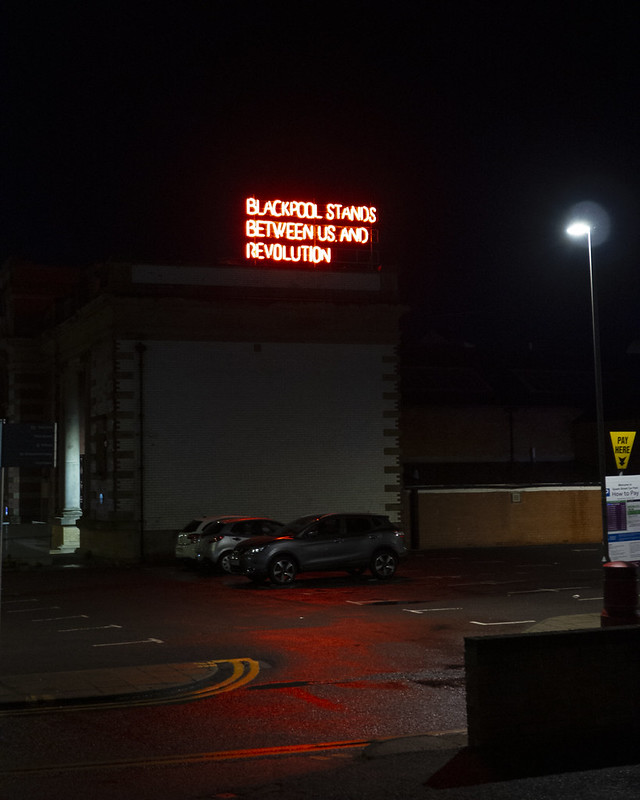
Admittedly, “Blackpool” doesn’t sound as bright as “Brighton,” but that doesn’t seem to have bothered Britons. It was the most popular holiday resort in England in the late 1800s through the middle 1900s. For factory workers in the north of England, who for a long time all got a week off every summer – each factory would close for a week, but they didn’t all close on the same week – Blackpool was a lovely place you could easily get to by train and wouldn’t blow your bank account on. The Romans had panem et circenses; the English – especially the northern English – had Blackpool, with its beach and entertainments. No wonder an anonymous businessman is quoted as having said, in the 1920s, “Blackpool stands between us and revolution.”
Blackpool was the first city in the world to have electric street lights. It has the oldest still-operating tramway in England. It’s the only town in the United Kingdom with three piers. It has what was, when it was built, the tallest structure in the British Empire. Its opera house, when opened, was the largest in Britain outside of London. And it is home to the oldest purpose-built ice theatre in the world.
Which, by the way, is why we were there: my wife, as you may know, is a former professional figure skater, and there was a reunion there for people who skated in Holiday On Ice.
Ice shows have, like Blackpool, outlived their peak days, and most of the people in attendance were somewhat older than us (and we’re over 50 these days too), but Blackpool still has an ice show, Hot Ice, that runs every summer with extremely skilled young skaters, and it was a highlight of the reunion. And I have to tell you, it was one of the most impressive ice shows I’ve ever seen. The calibre of the talent is stunning. But aside from the hundred or so there for the reunion, there didn’t seem to be more than a couple dozen people in the audience. Perhaps they were all at the beach or riding the roller coasters.
In truth, many a modern beachgoer might think Blackpool better suited to ice rinks than to summer holidays. It’s true that its average daily low never dips below freezing (though its record low is –15.7˚C), but its average daily high never gets above 20˚C for any month of the year, and it averages fewer than five days a year over 25˚C. But you take what you can get.
Everyone I talked to who knew Blackpool from the later 20th century agreed that Blackpool used to be very nice. They also all agreed that it has… gone downhill a bit.
The Blackpool economy still relies very heavily on tourism, but tourists in recent decades have been able to take quick and cheap flights to the Costa del Sol. A British co-worker of mine in Toronto was gobsmacked when she discovered how much our equivalent, a trip to the Dominican Republic, would cost. I should have suggested she try Wasaga Beach on Georgian Bay. It’s warmer on average in the summer than Blackpool (though not than the Caribbean); it’s the world’s longest freshwater beach, longer than the beach at Blackpool; and it’s only as far from Toronto as Blackpool is from Sheffield… but there’s no train from here to there anymore.
At least you can still get to Blackpool by train, as we did. The train helped make Blackpool; of that there is no doubt. And cheap airfare has helped unmake it. But other factors have also played a part: the decline of the factories, for instance, which were such an important source of annual visitors. They would go to Blackpool to feel good about life. With them gone, Blackpool itself doesn’t feel quite as good as it used to. Indicators of social well-being (such as health conditions, divorce rates, and employment) are in a bit of a… dark pool. This is not to say that the town can’t rebound. But it’s not the only place in England lately that’s seen better days. So… if Blackpool stood between businessmen and revolution, who’s standing between Blackpool and revolution?
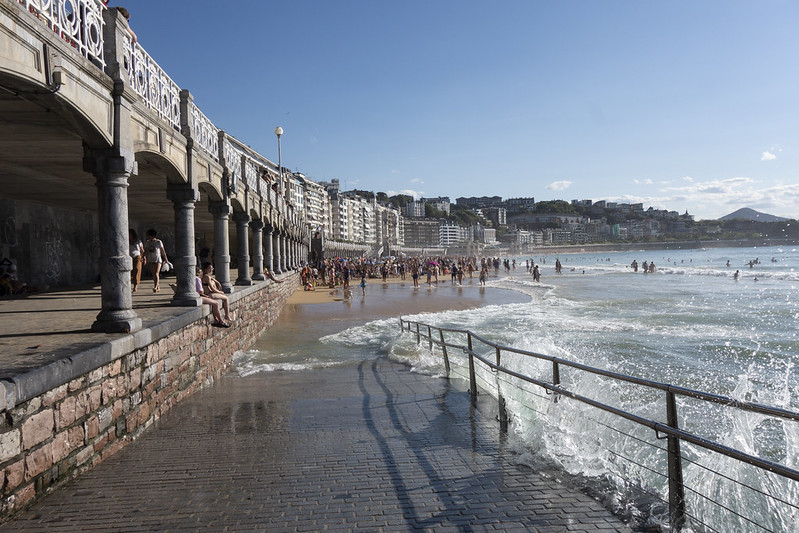
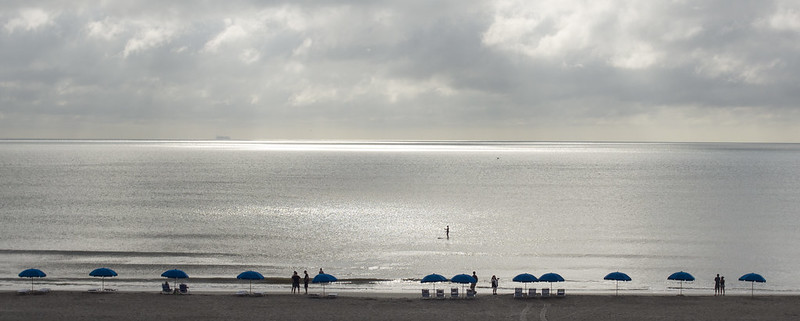
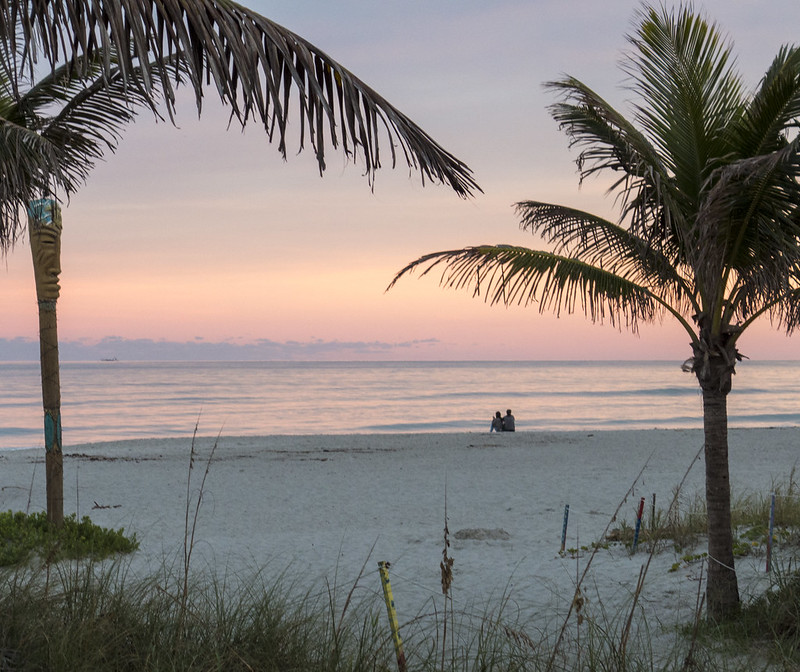
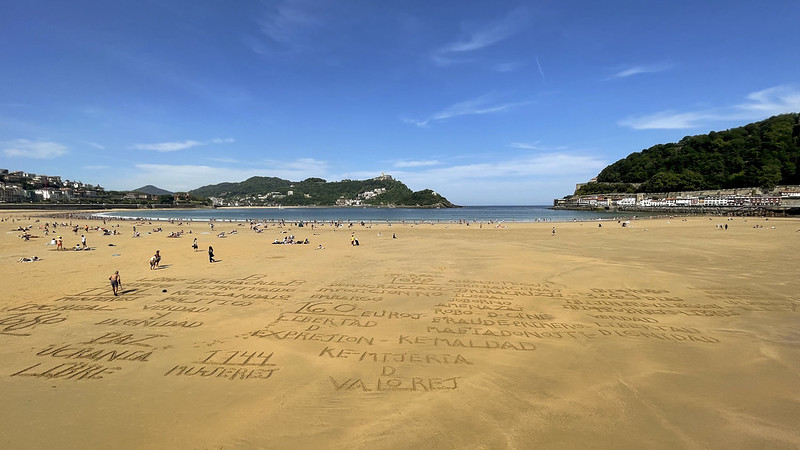
At one time or another, we all want to reach the beach.
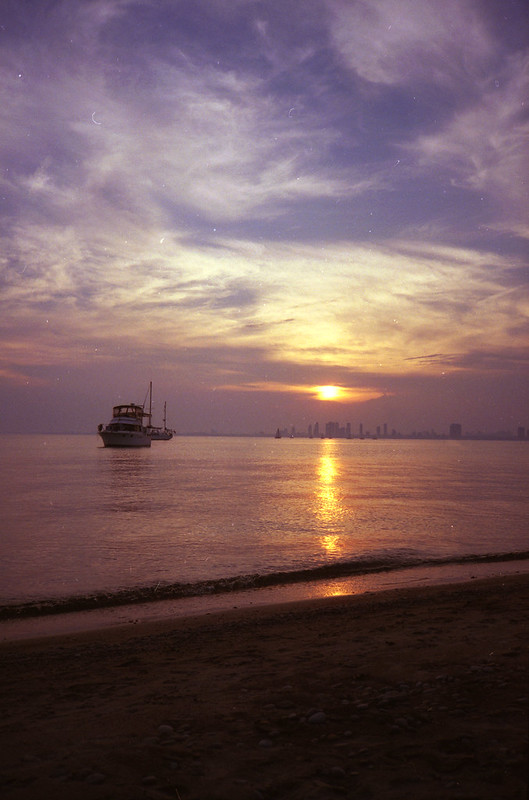
Martha and the Muffins, knowing it’s out of fashion and a trifle uncool, still want to watch the sun go down on Echo Beach.
Soldiers on D-Day, in their landing craft, wanted to land on Omaha Beach and survive crossing the beach and live to fight on.
Vacationers in Orlando take the Beach Line expressway to Cocoa Beach to get to the Shack on the Beach and frolic in the waves and enjoy margaritas and the sun.
The last lingering survivors of nuclear war in Nevil Shute’s On the Beach wanted to reach a beach of hope, and, finding it empty, found that, quoting Eliot, “In this last of meeting places / We grope together / And avoid speech / Gathered on this beach of the tumid river.” And then they faced eternity.
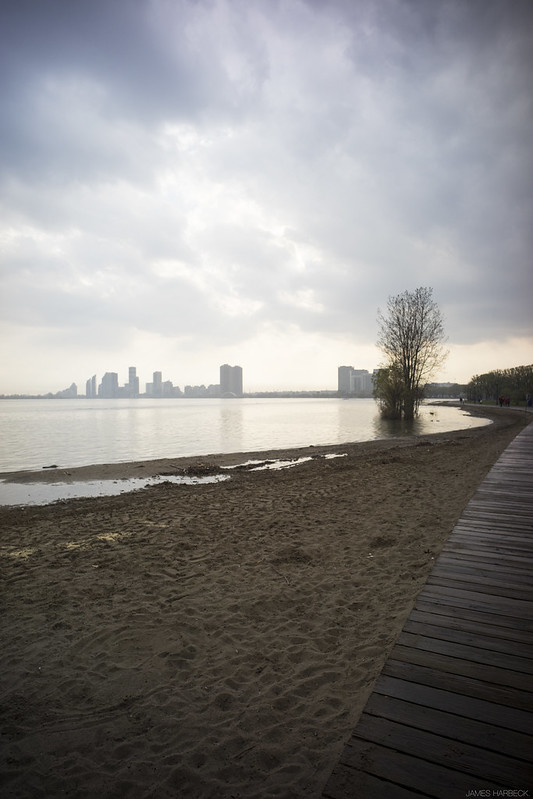
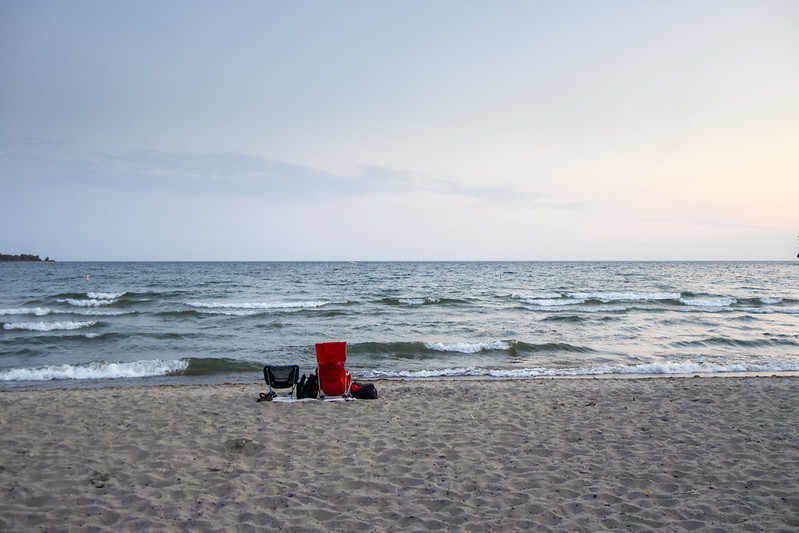
Once or twice a week all summer long, Aina and I rush to the ferry for the fifteen-minute trip to Toronto Island to set up on the beach and relax and imagine ourselves far away.
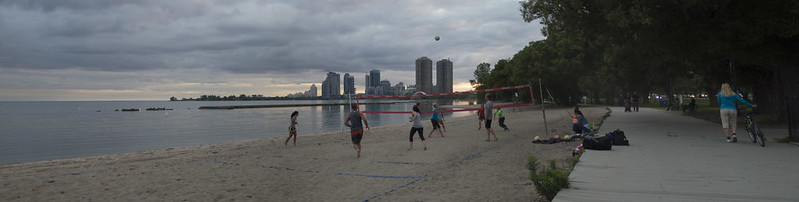
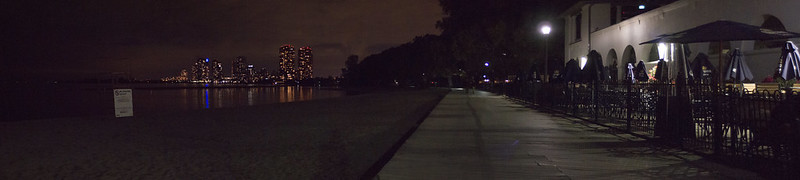
And once or twice a week all summer long, we go swim at the Sunnyside pool and then sit at the boardwalk café watching the beach volleyball players on Sunnyside Beach, the beach that inspired the song “Echo Beach.”
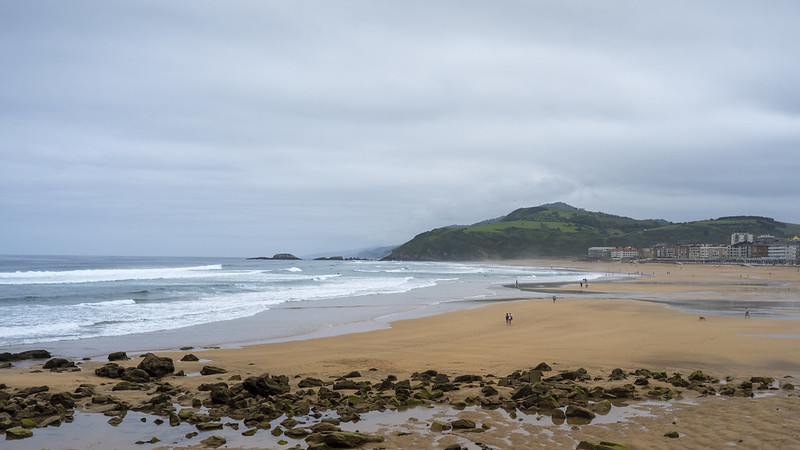
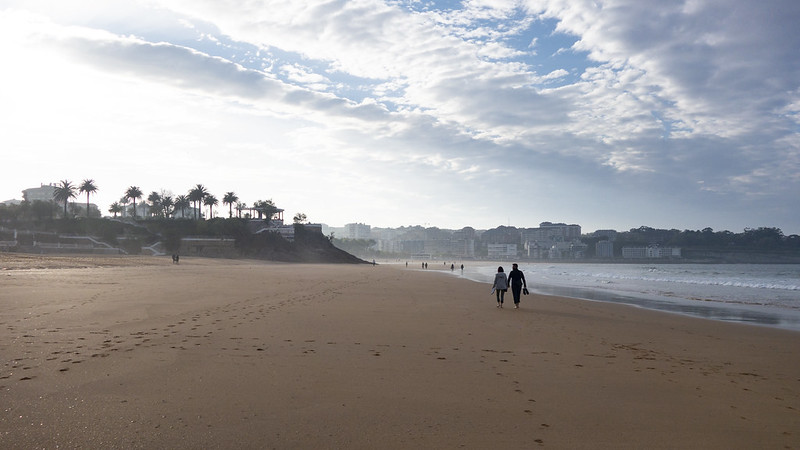
If we travel to another country where there is a beach, we try to stop by it, to see the sand and waves.
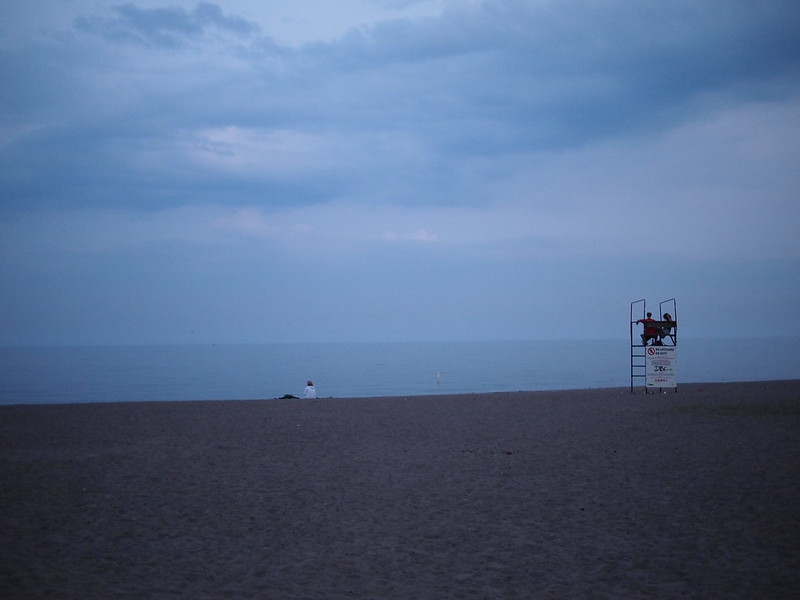
When we relax on the beach, we sit on the sand and stare out at the waves. Behind us is solidity, life, assurance. Ahead of us is the liquid stuff of life, a home for countlessly many other living things, a playground for us within limit and reason, and outside of limit and reason a place of unlimited and unreasonable danger. (For fish, the perspective is reversed.)
On the beach, we watch the waves come in. We see the expanse of the water beyond, stretching to the horizon. What we are not looking at is the firm and consistent supports of our life and identity; what we are looking at is change and danger. But, as Jenny Holzer wrote, “It is fun to walk carelessly in a death zone.” When we are in a dire condition, the beach is the place of safety or of threat, the place where we are dry or drowned; but when life is calm, it is relaxation, worries behind us, limitless potential before us.
And under our feet is sand: the ground stones and bones and shells of the ages, at last settled in a shifting mass that can take erasable traces, words and images to be washed away, but when you leave you always take some sand with you.
Your interface with daily life is like a beach. The beach is your eyes, your mouth, your skin. The waves of life lap at you. Sometimes the tide is low and you have room; sometimes the tide is high and you are restricted or already on the way to drowning.
And when the sand has not seen water in some time, it is soft but yielding and hard to walk on. And when the sand was recently under the waves, it is hard but easier to walk on.
When life is dire, you just want to reach the beach and cross the beach and survive. And when life is good, you want to set out your blanket and have your food and drink in the sun and hope you don’t eat any sand. You are there with close friends and closer strangers, and for a few hours you are officially relaxing.
Where does this word beach come from? We aren’t entirely sure, just as we aren’t sure where any given grain of sand might have started. But as likely as not, it’s from a word for ‘bank’ that came from a word for ‘brook’ or ‘stream’ – Old English bece, related to Dutch, German, and Swedish words for ‘brook’ or ‘stream’, including Old German beck, which I carry with me every moment of my life as the second syllable of my surname. My own hidden stream, my own secret beach.
And throughout my life I seek to reach the beach. Not always the place of relaxation, the place where I can look across the waves and relax on the sand, but always the moment in time and space where I have all solid things behind me, and all fluid things before me, and I am at the point of letting go, accepting the changing nature of all things and also accepting that I will always take a bit of every moment with me. Letting the waves roll, letting the sand shift. As The Fixx sang on their album Reach the Beach, “Stretched by fewer thoughts that leave me … Holding onto words that teach me … Saved by zero.”
And yes, Aina and I reached the beach today, and we relaxed on the sand, gazing at the waves and the stretching horizon. And now we are home again.
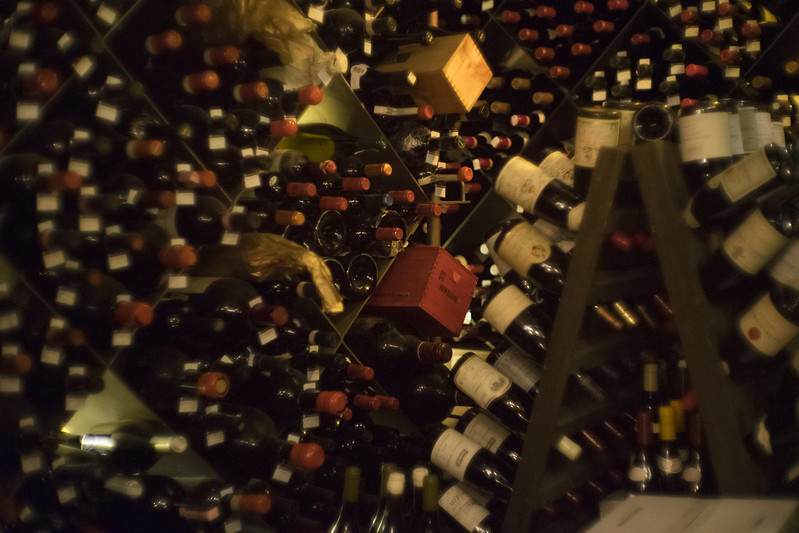
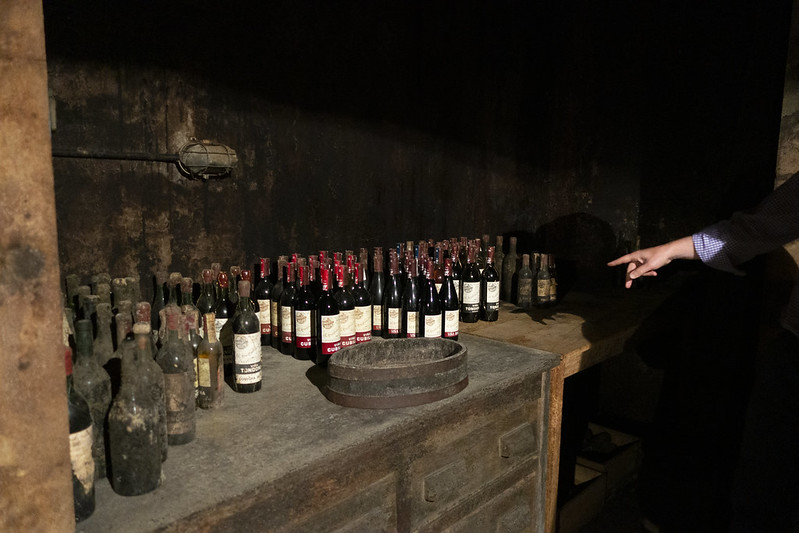
Cellars are where life happens in slow motion while we’re not looking.
What you put in a cellar changes, gradually, coolly, over time. A cellar even has the smell of slow life and slow change: earth, mold, mildew, and the various things you store in it. A cellar is a collection of cells – etymologically, because it’s from cellarium, a place with a lot of cells, as in small rooms, but also literally, because it has roots and plants and crawling things, things made of membranes and cytoplasm and mitochondria and nuclei, and it has things made from those things, processed and put in jars and cans and bottles. Things that, even if they have stopped cellular processes, have not stopped changing.
I grew up where people didn’t have cellars. We had basements. A basement is not a cellar. A basement is a dry, dusty place, full of boxes and old machinery, perhaps dark and creepy but in truth lifeless. What you put in a basement changes only in geological time: the slow flow of inert matter governed by gravity, with the occasional threat of a flood. If you have a finished basement, there is life, but it’s life at full speed, just with less light and less formality and more dust. No moss, just shag carpet.
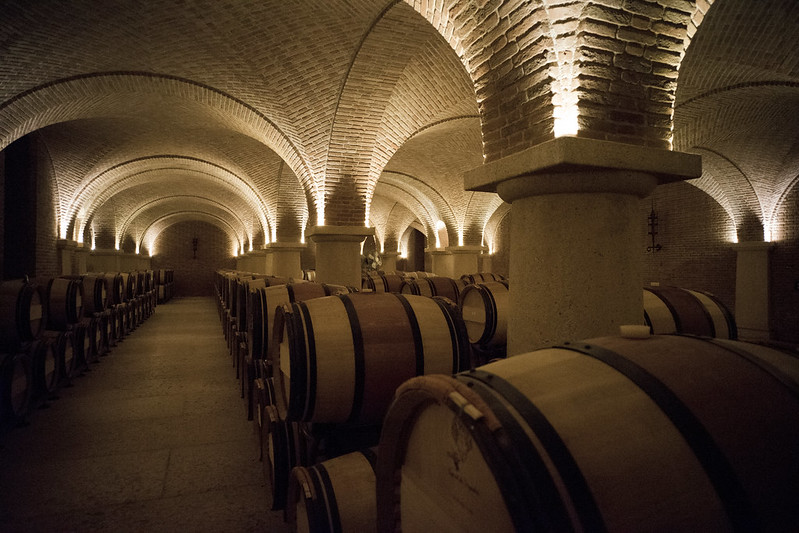
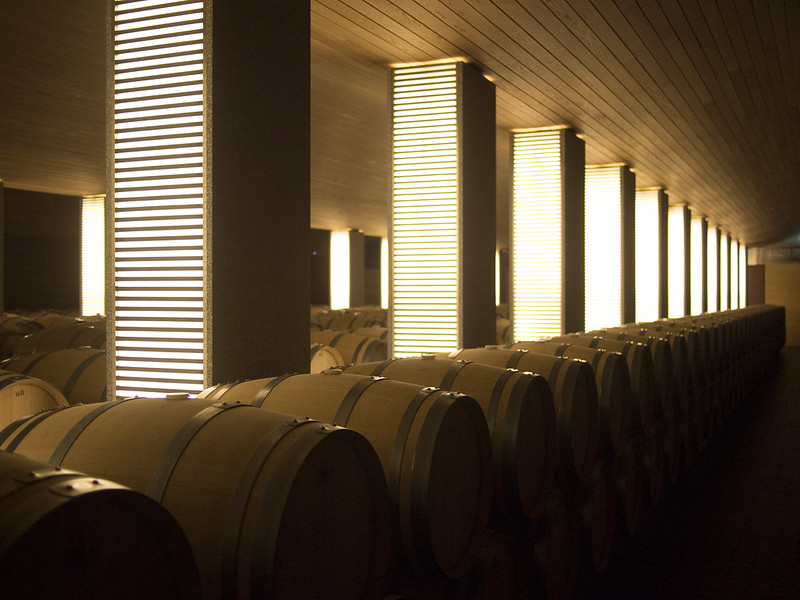
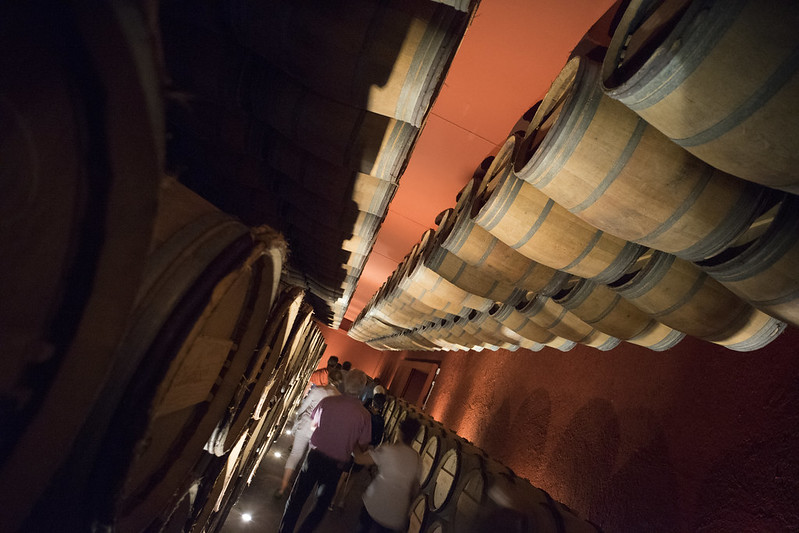
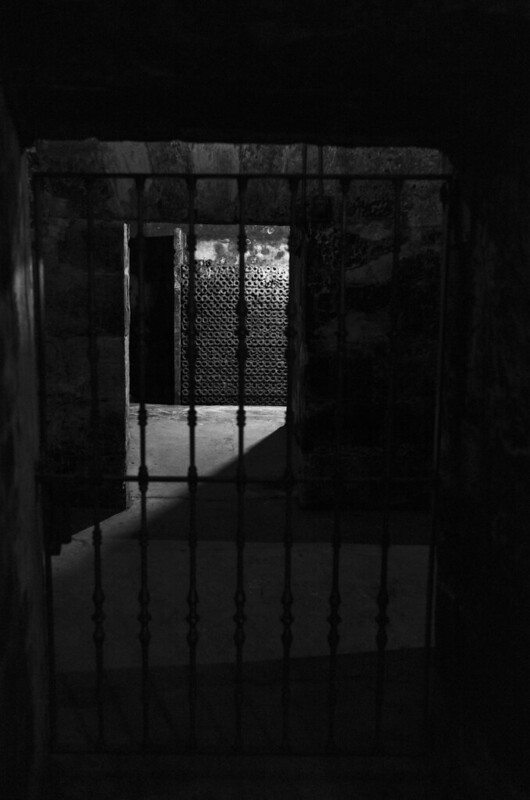
But in more recent years I’ve spent time in cellars. Not root cellars, though. Not cellars under houses. Cellars in wineries. Cellars that you walk into and instantly your nose finds a story of grapes and yeast and years. Not all of these cellars are dank and chthonic; some are astonishingly clean and modern. But even if there is no cake of mold on decades-old bottles, nor even an inscribable layer of dust, there is life. There is breathing. There is history being written in liquid, to be consumed in the fullness of time. Within the wooden casks and the corked glass bottles is a chemical process, a biological process, that develops like our own lives. And eventually we taste the ends of time.
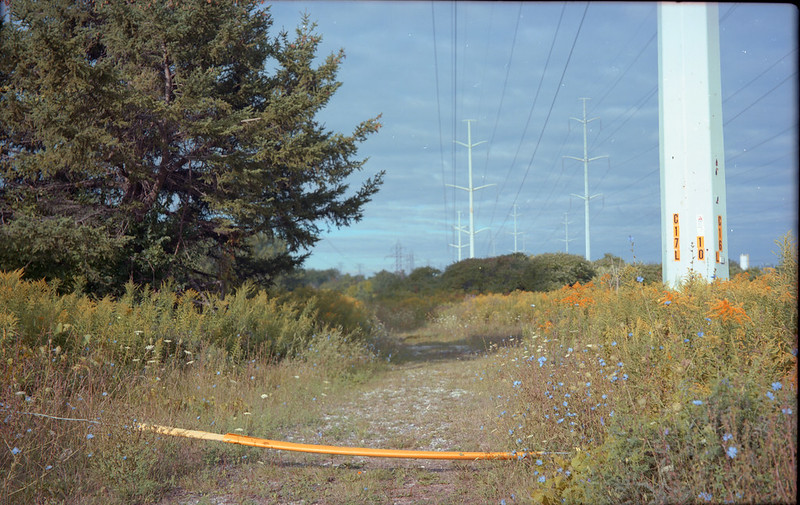
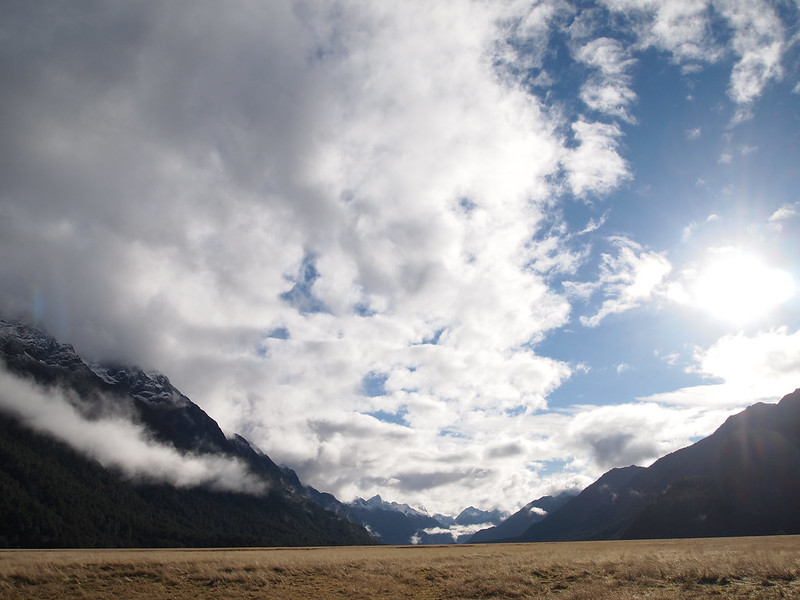
On a map of our planet there are scarcely more than half a dozen great invious patches remaining, some at the polar edges, others splotched across the middle: Amazon, Sahara, perhaps Tibet. Slightly smaller but still formidable swaths number only in the few dozen. Well less than ten percent of the land on Earth is more than six straight kilometres from the nearest road.
Think of times when you have been in roadless places. How far in have you gone? An overnight hike the Rockies, perhaps? I did a few of those in my youth. You feel you could be in the dawn of days, surrounded by nothing but mountains, trees, birds, small animals, and traces of bigger beasts. But you are on a trail, and even on foot you are just a few hours from a main highway; climb a peak and you may see it. One time, on a day hike alone to Kindersley Ridge, on windswept scree above the trees, I could not find the trail to go on and then could not find it to go back, and I was as far from human company as I can remember ever feeling. And yet, while I frantically sought traces of human passage, as the crow flies I was all of about four kilometres from where my parents’ car was parked by the highway having its hatchback broken into and its gas siphoned.
Imagine being a hundred – two hundred, three hundred – kilometres from the nearest road. Imagine being on a road and coming to the end of it, and seeing ahead of you an expanse with no roads at all: desert sand, or tundra, or glacier, or mountain, all as invious as the undriven snow. What do you feel? Daunted? Or curious? Or envious?
The invious – the roadless, the places you can’t drive to, from via ‘road’ and -ous for an adjective and in- meaning ‘not’ (as in you can’t get in) – is both a threat and an invitation. It’s not that you can’t get places without taking the road; it’s just that it’s much more difficult. I have been bushwhacking through mountainside trees, scrambling up scrubby slopes, snowshoeing across open plains and frozen ponds, and no road or trail was required, but I less quickly got anywhere and more quickly got tired. But I went because I wanted to see.
There’s a term for footworn paths in grass from pavements to doors: desire lines. They show where we want to go. Paths, and then pavements, are the expression and enablement of desire. Where we can’t take our cars, or at least walk easily, we can still want to see, and we can be envious. So we add more roads. So much of the world as we know it is the world as seen from car windows. Our viae are our positional positivism, our empirical empire, determining what we see and how.
And away from them is the via negativa. It is not empty space; it is the space that can be filled with anything other than roads. As Max A.E. Rossberg writes for the European Wilderness Society, “the Earth’s surface is shattered by roads”; they interrupt ecosystems, introduce invasive species (notable among them being you and me), make it easier to take things away, and lead to the construction of still more roads. See this map, made by the Roadless Initiative, of global roadless areas, and this map representing the actual roads on the planet. Evidence of an overriding drive – but one that still meets the end of the road.
It is not that we can’t get to these invious places, of course. It’s just harder. Most of them are occupied – by plants and animals, but also by humans, though in low concentration and travelling by means other than motor vehicle. Feet, horses, dogs, airplanes, and – at the land edges – boats, all make travel across the invious regions possible. And most of that travel follows worn paths as well.
Roads are, in their way, the vocabulary of the world. In any language we divide up concepts in different ways, somewhat as roads divide up the land, though those boundaries are not always as hard as an interstate. And words help us to establish routes into areas of thought, and determine for us what we can see and keep in mind: just what stays in perspective from the car windows. There may be – there surely are – large areas that are lexically invious, without words to make inroads on them, and if we become aware of them we will be daunted or envious or both. If we once build a road, that will become how we think of the topic, and then we may build further roads off it, and further roads off those.
But if we build these new word roads, we will have to maintain them. The word invious has not seen much use of late, for example, so I’m refreshing the pavement. And at the same time, we need to remember that there will always be the unpaved places, the unbuilt lands where even paths disappear. They’re still there. And we can still go to them. But first, to find them, we need to take the via negativa: not this, not that. You can go off road with your vehicle, at risk of damage, or you can put on your hiking boots and find what has always been there, as other people have already seen.
Cuttlefish isn’t quite snugglebunny, is it? But there’s something classy about it, you know… [touches earpiece] Wait, I’m just being told that no, there’s not.
But oh, yes, there is. You know that classic golden-brown tone of some old photographs? What’s called sepia?
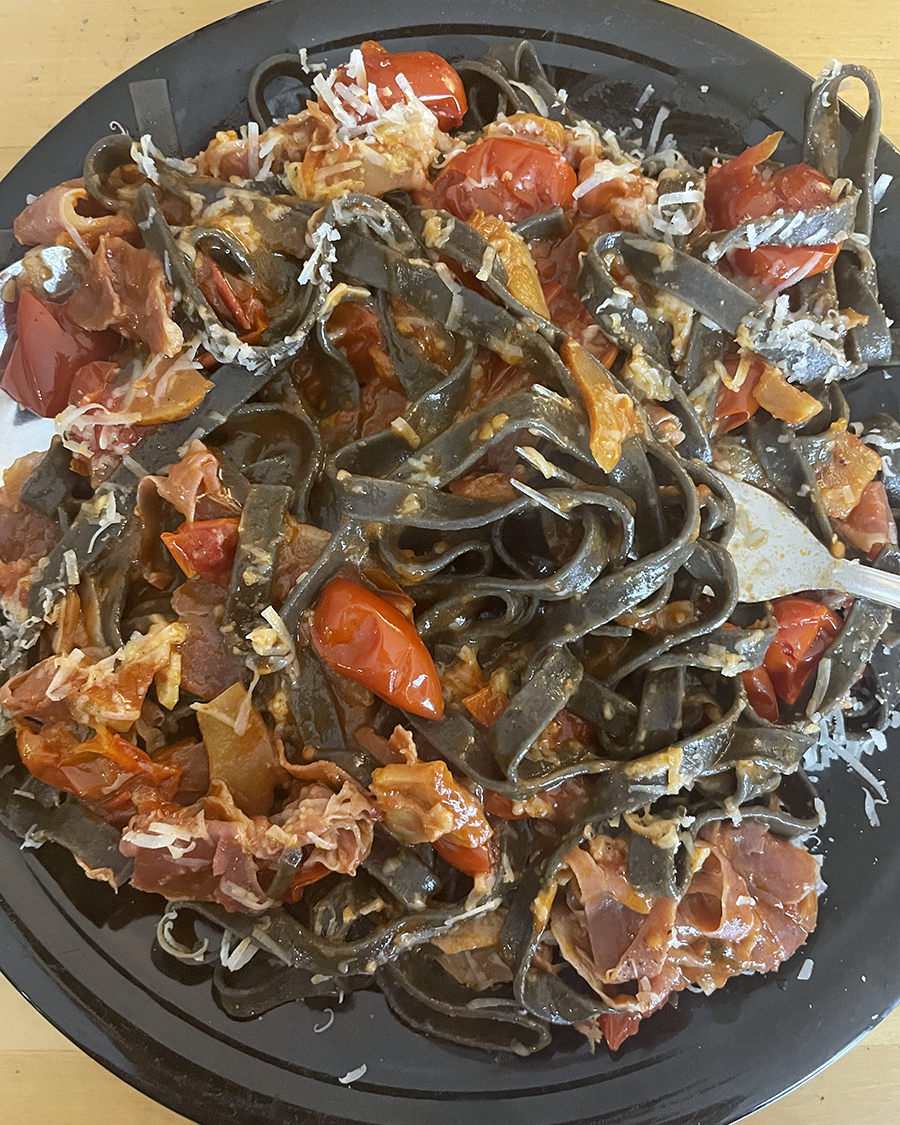
Well. I was just making supper tonight, and, as one may from time to time, I was using pasta with squid ink colouring. And on the front of the package, I noticed that, along with a photo of a tentacled sea creature on a bed of parsley, it said “tagliatelle con nero do seppia.”
Huh. Seppia.
I turned over the package. It gave the ingredients in several languages. “Durum wheat semolina with squid ink,” it said. And in German, “Hartweizengriess mit Sepia-Tinte.”
Hmm.
So I looked it up. And here’s the deal. Cephalopods – octopus, squid, cuttlefish – produce ink, as you probably know. That ink has been historically used not just for the obvious purpose of colouring pasta but also, strangely enough, for drawing and writing. Squid ink, as seen in pasta, is a blueish black, often with green tinges; cuttlefish ink, the more popular kind for art, tends towards a rich brownish black. In both cases, the original cephalopod uses the ink as a means of escaping. And in pasta as in photography, the original cephalopod has escaped.
In pasta, it has escaped because squid ink is not cuttlefish ink and yet they say it is. Sepia (or, in Italian, seppia) is cuttlefish; it comes from Latin, which got it from Greek, basically unaltered, meaning the same critter. But my pasta is evidently coloured with squid ink; you can see the bluish-green tint, rather than the brownish tint of cuttlefish ink. Yet the Italians and Germans call it sepia ink nonetheless. And if they are right, then English – which, as on my pasta package, calls it squid ink – is wrong. Either way, someone has a disconnect between ink producer and ink name.
In photography, the cephalopod has escaped because although the photographs have the same kind of brownish-black tint as you see in drawings made with actual sepia ink, they are not actually made with ink from cuttlefish. Rather, it’s called sepia just because it looks about the same as cuttlefish ink. In actuality, the silver in the print has been converted to silver sulfide, which, aside from having a warmer look, is more stable and lasts longer.
And, of course, in photos such as the ones I have here, the tint isn’t ink at all; it’s just a tinge in the image presented by your computer screen. The squid has quit town; the cuttlefish has scuttled away.
So there you have it. And there you have my lovely pasta dinner, which I cooked for my lovely wife.
As I think you know, I love words. Like many people, I also love flowers. And you may infer from various word tastings I’ve done that I love words for flowers. So it would follow, then, that I am very good at naming flowers, right?
Nah. I’m terrible at it. Odds of my successfully naming a flower on sight are very low. But what does it matter? They don’t come when you call them.
Don’t I need to know the names of flowers when buying them? I guess so. When I’m buying cut flowers, they all have the same name, and yet it always seems to work, because the name is “those ones.” And when I’m buying flowers to grow at home…
…ha ha, trick question. I have never bought flowers to grow at home. I have some plants, sure, of the kind I’m unlikely to kill while growing them inside a high-rise apartment (without a balcony). Flowers are more daunting to me.
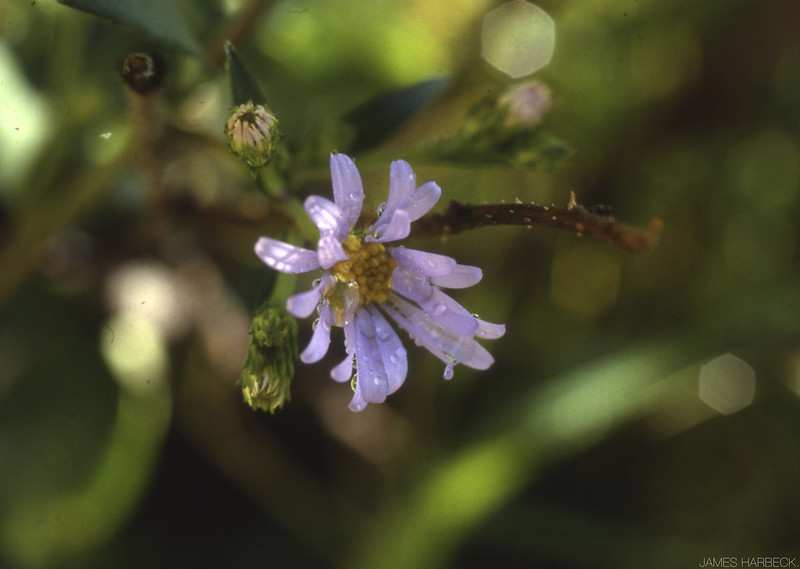
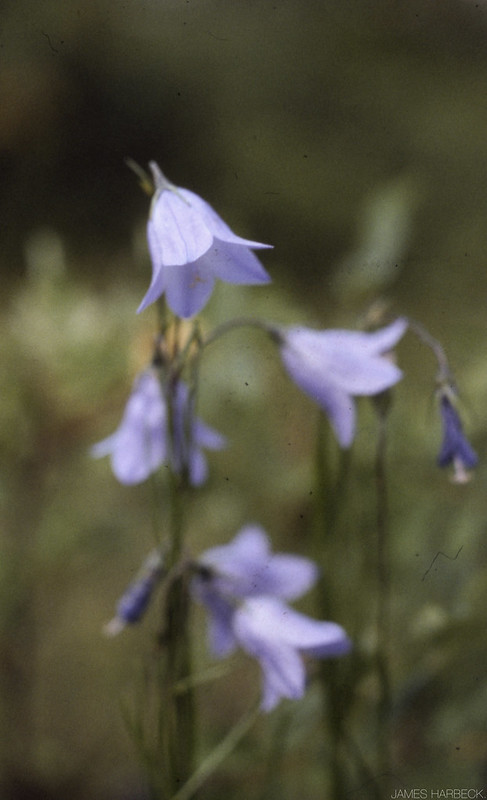
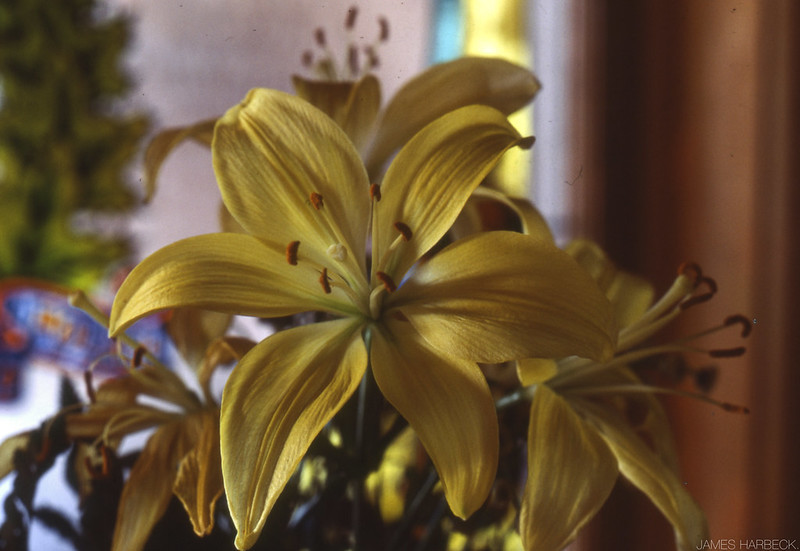
And yet, as I said above, I love flowers. I grew up in a house filled with flowers and other plants. My mother has one of the greenest thumbs you could ask for. I’m sure she knows the names of a great many flowers, since that makes it much easier to buy them and to find information on caring for them. For my part, I have taken pictures of them, such as the photos I’ve included here, all of which I took as a teenager in 1985 (with my dad’s Nikon F2 – but that’s another story). I have many more on my Flickr.
Don’t I need to know their names if I’m taking pictures of them? Nah, not unless I’m doing it for documentary purposes. A picture is not worth a thousand words, you know. A picture is not worth words and words are not worth pictures. There is no exchange rate. You may as well try to convert a novel to a symphony, or a sculpture to a perfume. One can inspire the other, yes, but one can never contain or match the other. And it’s perfectly possible to enjoy a visual experience without getting words tangled up in it. Can you imagine going up to a bellflower and saying, “OK, but what’s it about?”
But I do have a word for you, a word related to flowers. It’s a word for a gift my mother gave to me: anthophilia.
Is anthophilia a kind of flower? No. Does it have to do with ants? N— well, I suppose if they like flowers it does. You may recognize the -philia part, which denotes loving (or being attracted to, as in hydrophilia). It’s from a Classical Greek root. So is antho-, which comes from ἄνθος, ‘flower’ (and yes, you see it in chrysanthemum and anthurium).
So anthophilia means ‘love of flowers’. A person who loves flowers may be said to be anthophilous or to be an anthophile (both of which terms are, I should say, most often applied to insects, though they probably don’t know or care).
My mother, a first-rate anthophile, still has the gift of growing beautiful flowers, a gift that gives to others who get to see the results. The gift of anthophilia she gave me has flowered into a lifelong love for flowers – not for growing them or analyzing them, but just for enjoying them. (My wife also enjoys them, which makes me happy.)
But while I am not a flower gardener, I am a word gardener, so the gift I can give back to my mother is a garden or bouquet of words, and photos. And since today is her 80th birthday, I have put together today’s word tasting for her. Happy birthday, Mom!
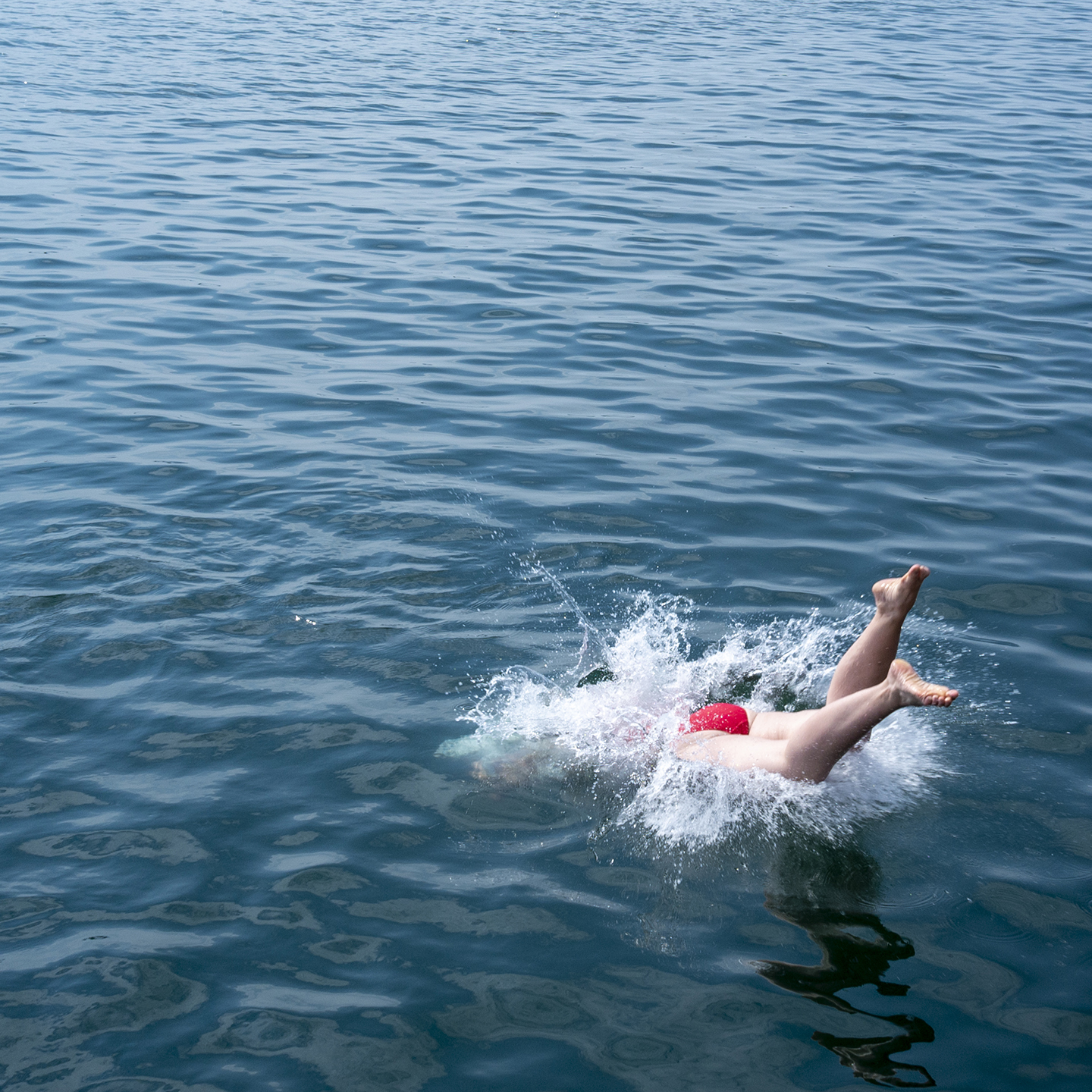
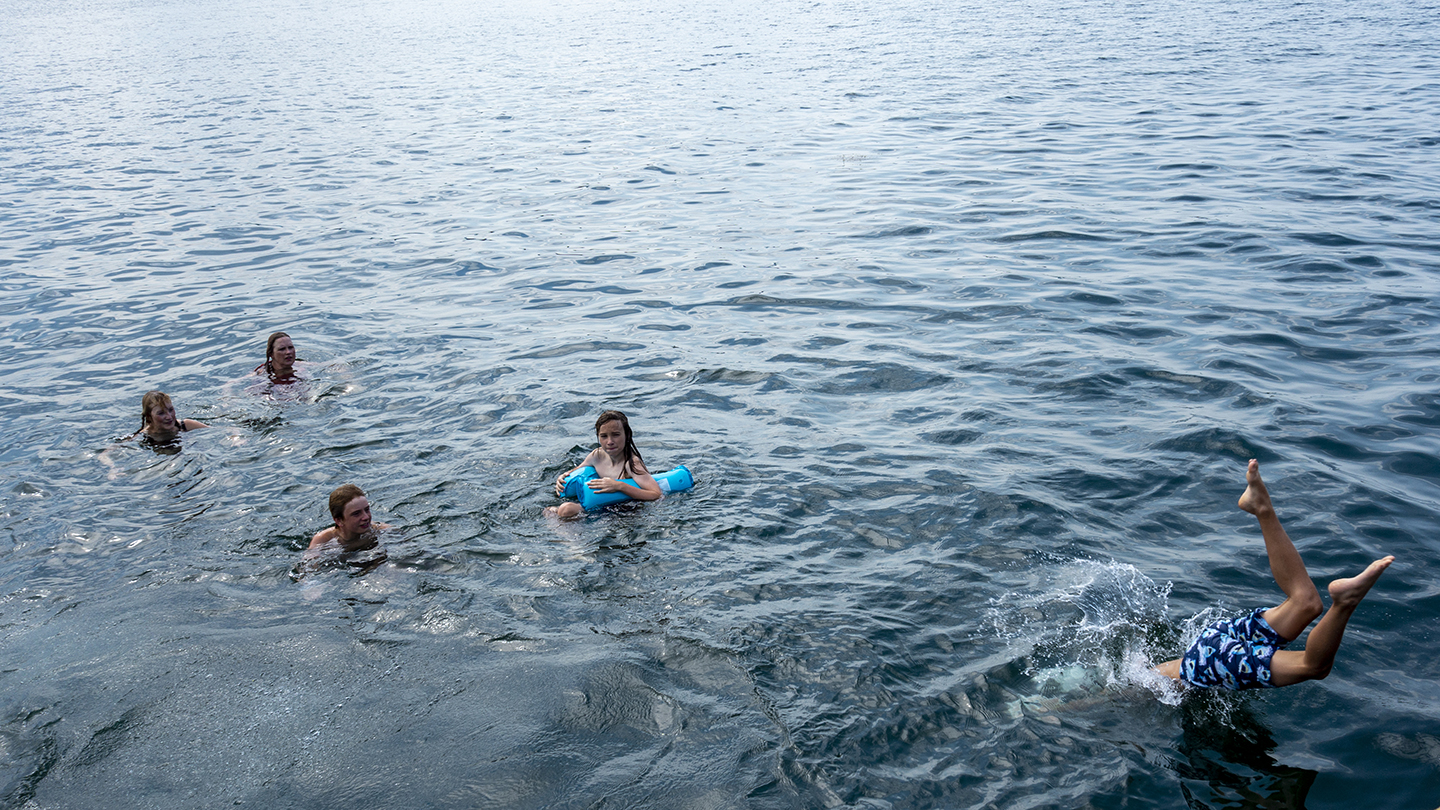
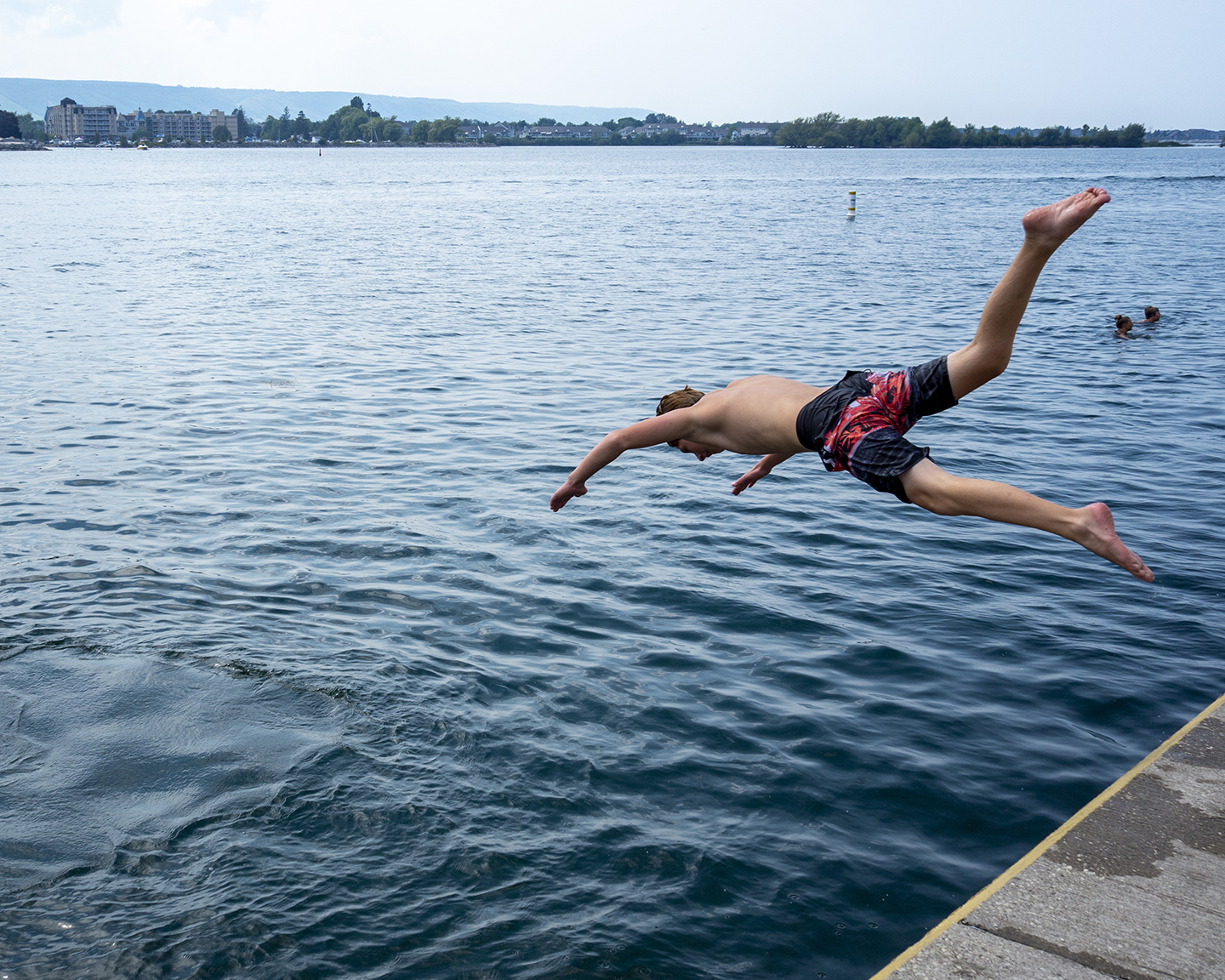
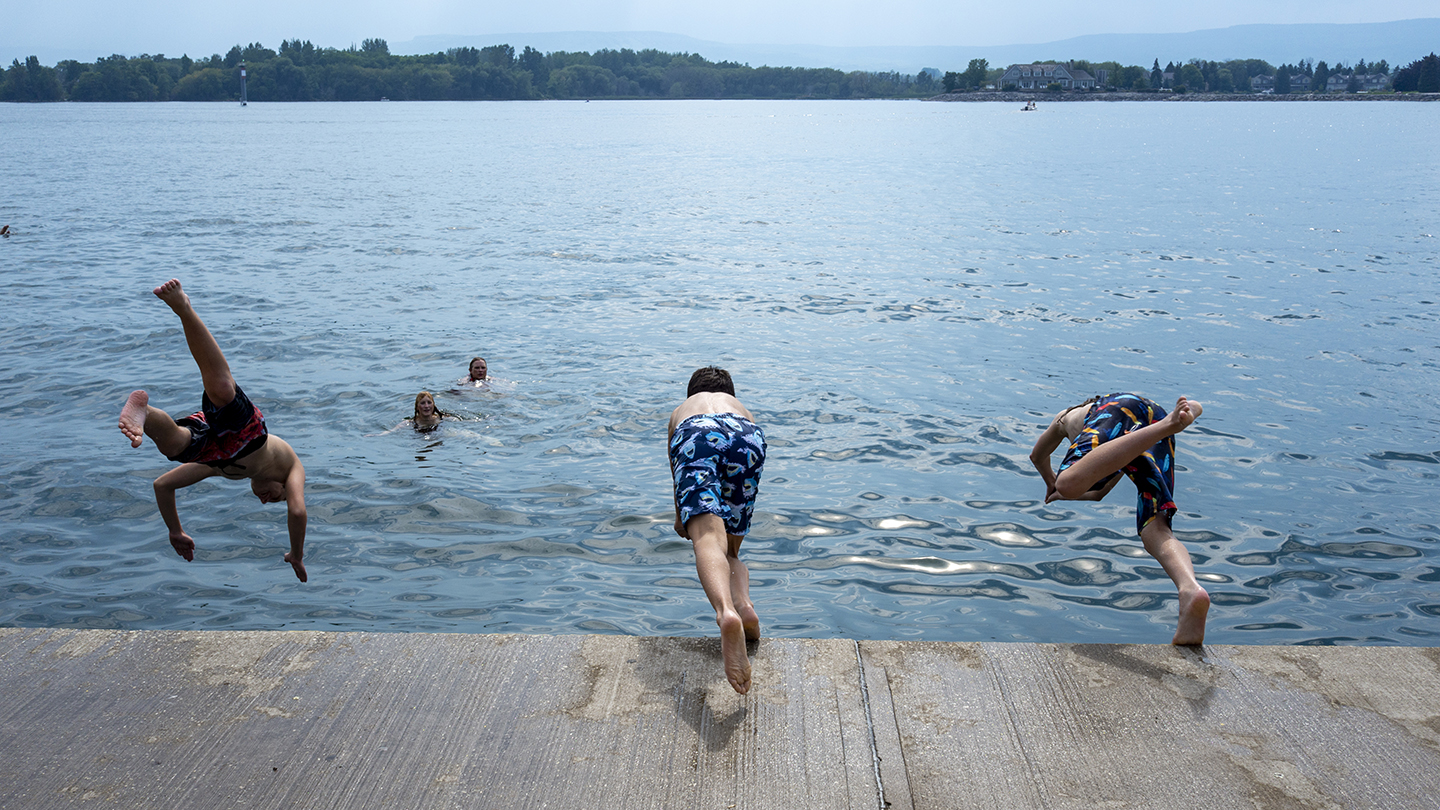
It’s hot, sticky, humid, sweaty. Time to dive, time to get wet, time to hurl yourself off a pier or quay or jetty or wharf or convenient boulder into a fresh cool lake. Lunge, take the plunge, splash: splunge.
Is that a word, splunge? It is now – but, more to the point, it has been for a couple of centuries. Oxford’s first citation is from 1839, but the quotation treats it as already existing: “Here are two real American words:—‘Sloping’—for slinking away; ‘Splunging’, like a porpoise.” Splunge shows up in various American books of the 1800s, especially works of fiction, and it always means just what it sounds like it means.
Which, by the way, is what? Oxford declares the origin to be “imitative,” but let’s be honest about what it’s imitating. Yes, you can say that splunging into water sounds like “splunge,” but you could as soon say it sounds like “plush” or “kaff” or any of quite a few other onomatopoeics. Splunge has a conventional form shaped by precedent: it imitates not just a sound, but another word – or, really, more than one word.
It draws on plunge, of course, which has been in English since at least the 1300s, and came from Norman French, which had had it at least a couple of centuries already by then; it probably traced ultimately to the same Latin root (meaning ‘lead’, as in the metal) that gives us plumb. (Lunge, incidentally, didn’t hit English until the 1700s, at first as a fencing term trimmed down from allonge.) But it got that initial s from somewhere too. Splash has been around since the late 1600s, and it was formed by adding s to plash, which has been around since at least the mid-1500s, so we already had a model to follow. Various other spl- words have hit the scene over the centuries, and roughly half of them have to do with something wet and messy; the remainder include some other words with similar expressive aspect, such as split and splendid. It only makes sense that we would take plunge and add an s; really, we were bound to take the leap sooner or later.
So, yes, diving into water – especially deep water – has a certain “splunge!” about it, but in part that’s because we’re used to such a thing being expressed by words of similar sound. Why not splunge where others have splunged before? It wouldn’t be the first time anyone had given in to pier pressure… I mean peer pressure, I’m sure. We could equally say dive or immerse (from Latin mergo, ‘I dive’), or if we wanted to imitate the act and sound we could call it weeooo-froosh or something like that. But, since splunge is available, like a body of deep cool water for leaping into on a hot day, and a suitable spot for jumping in, why not avail ourselves of it?
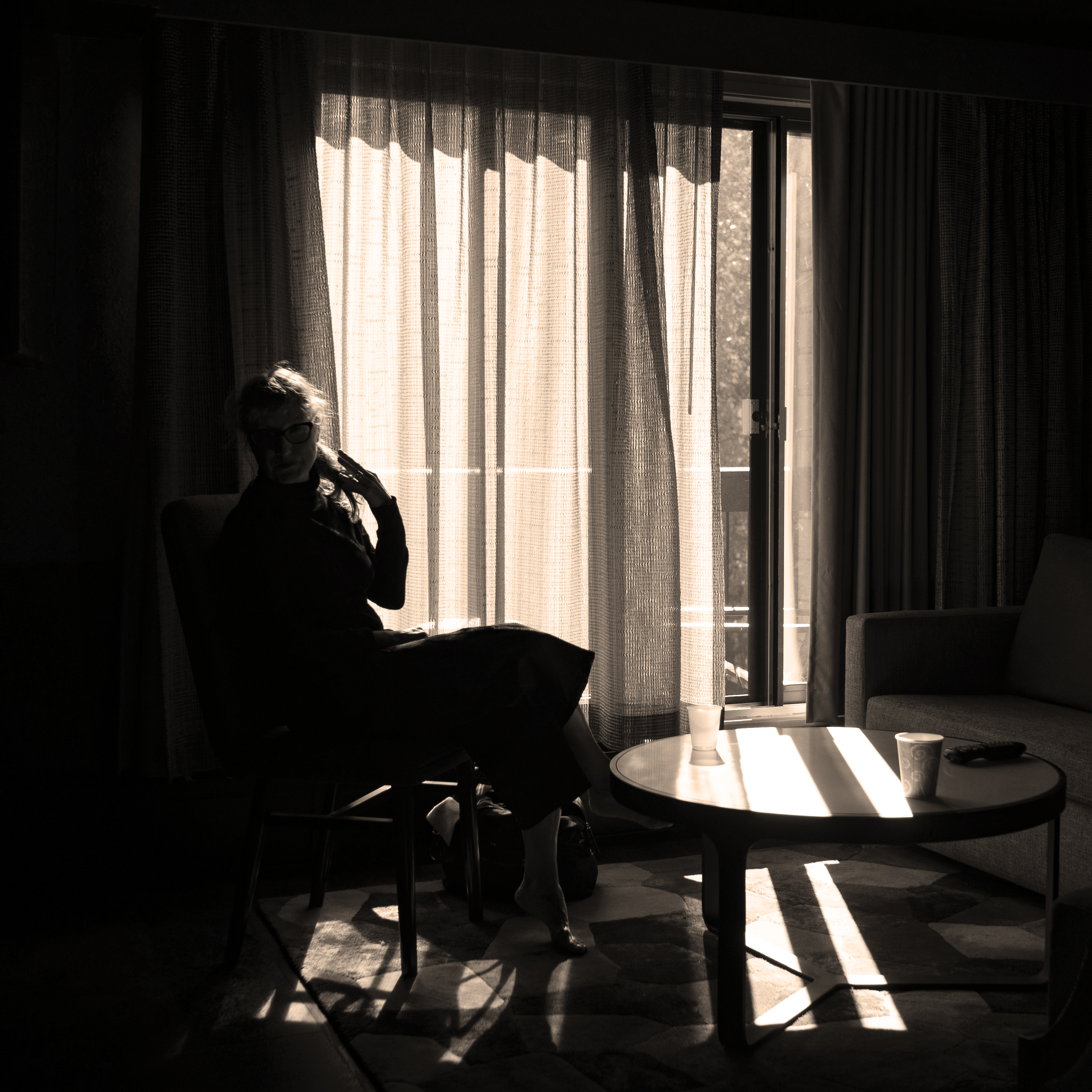
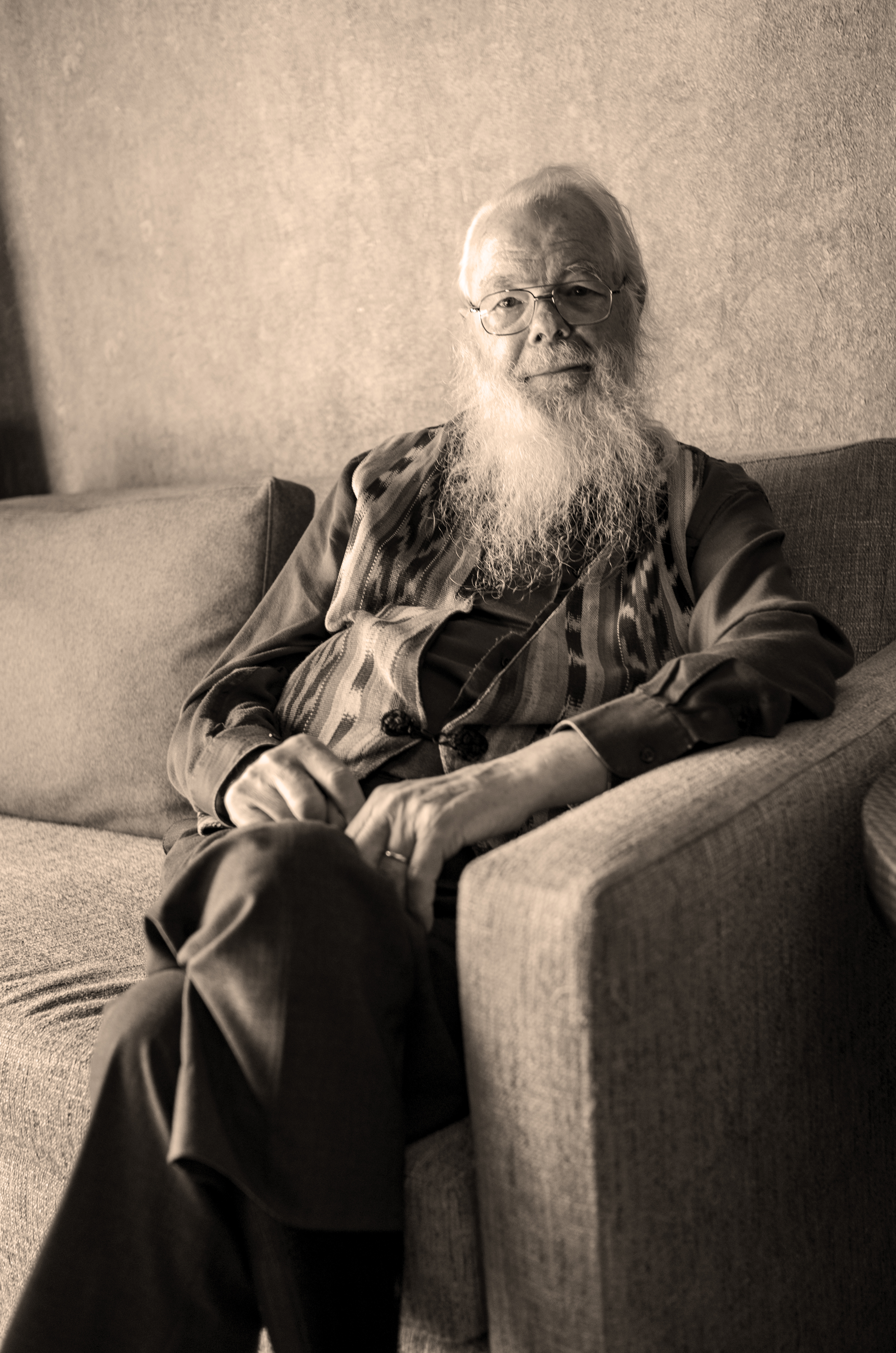
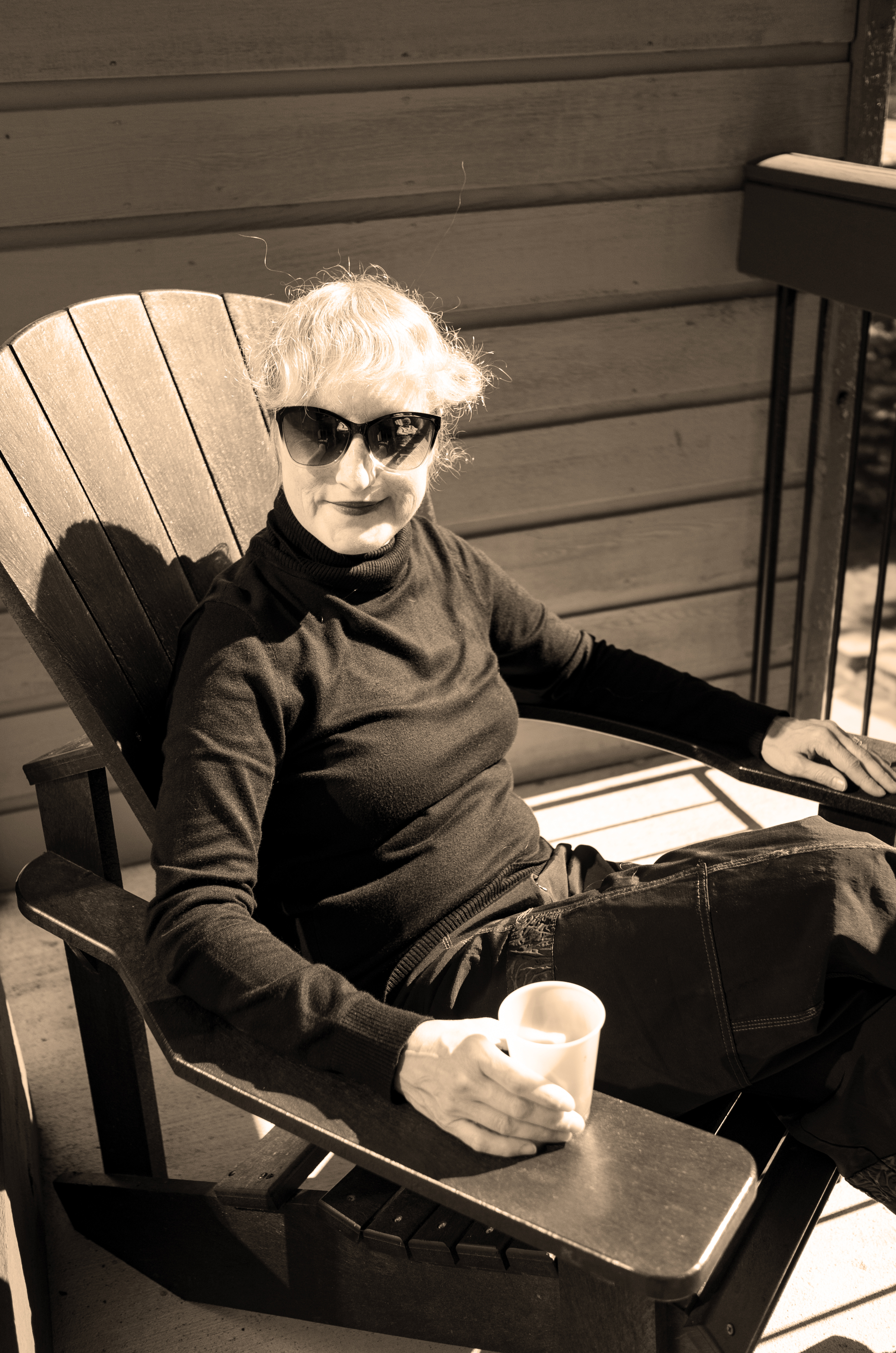
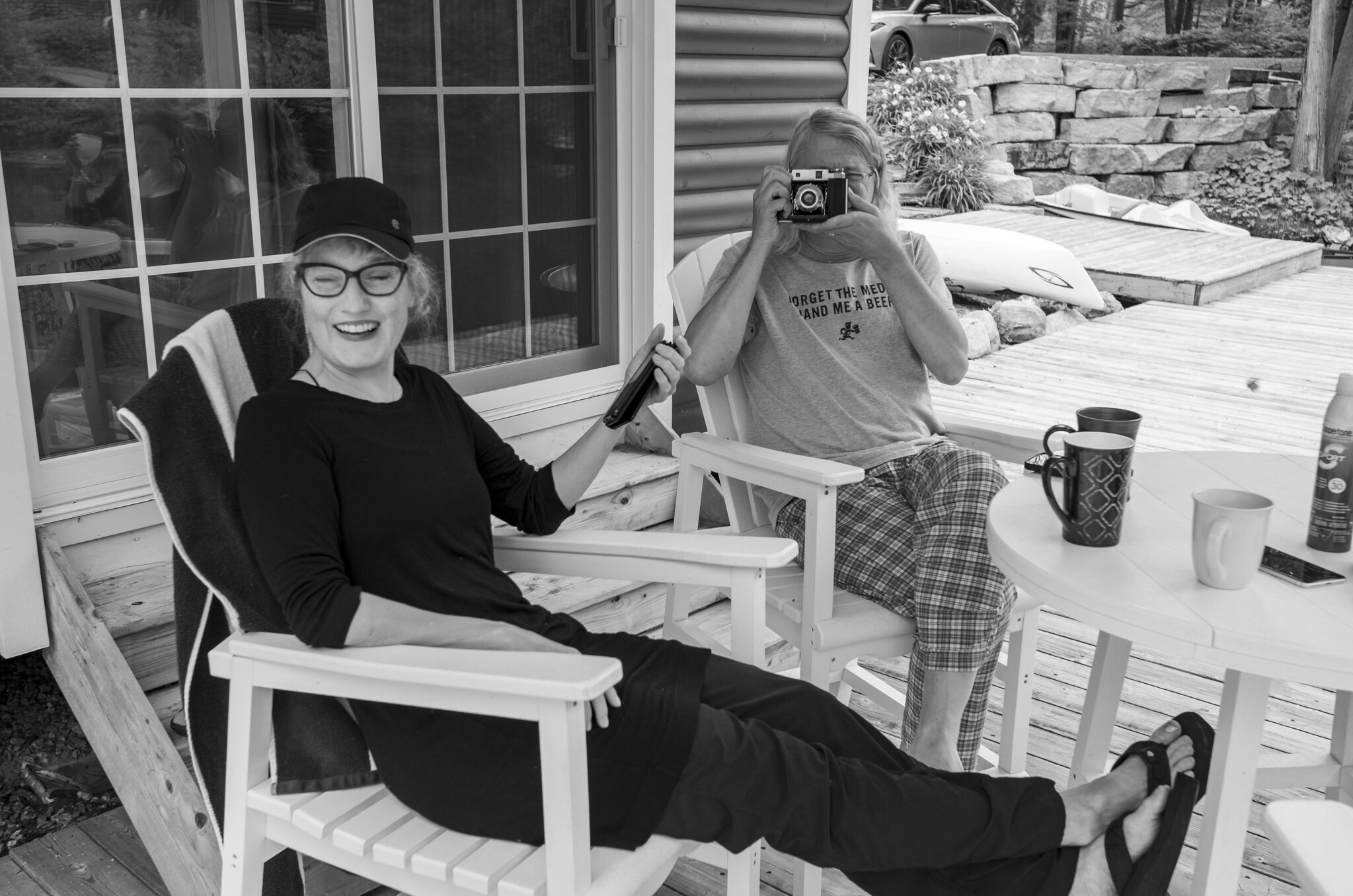
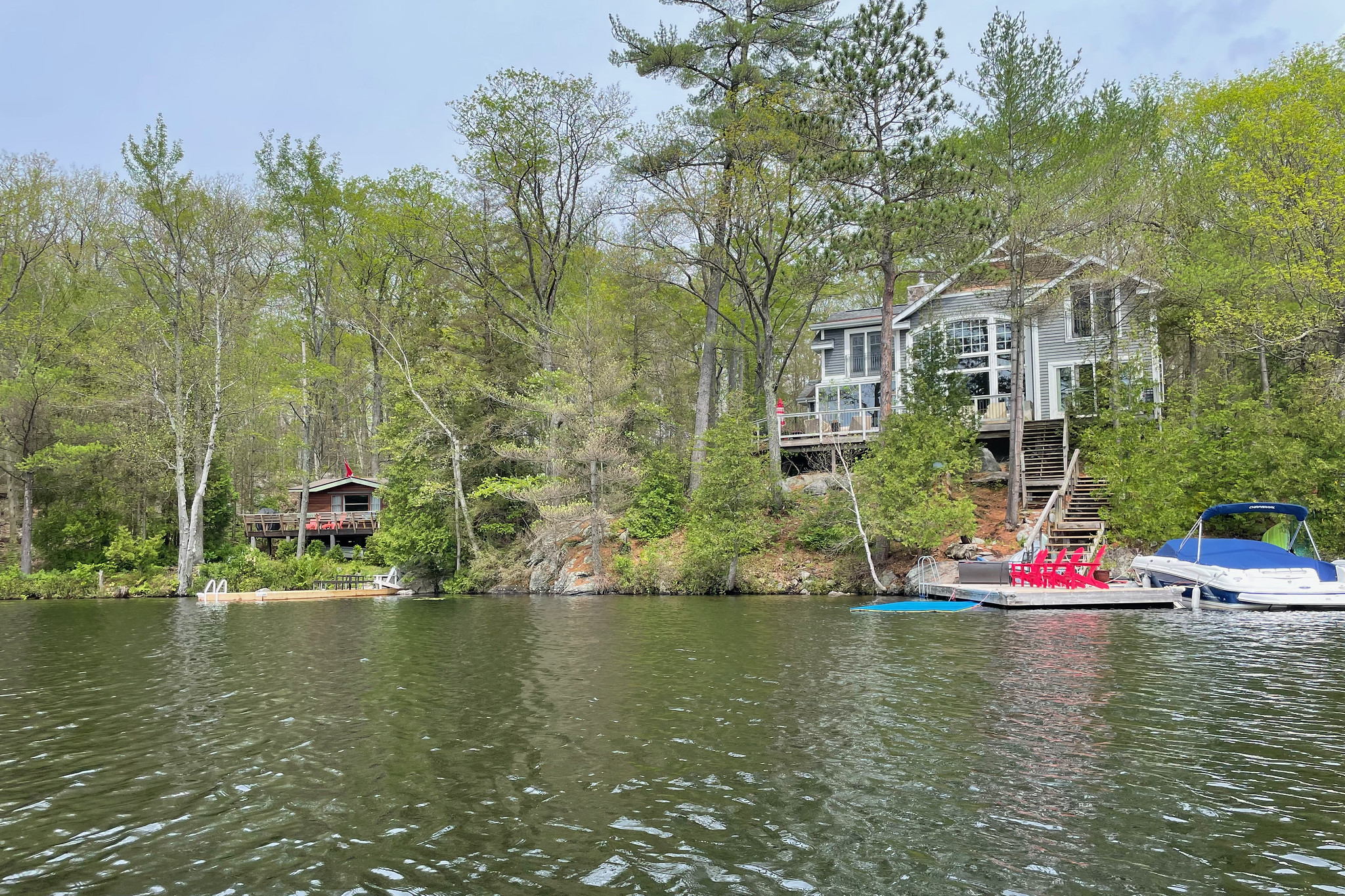
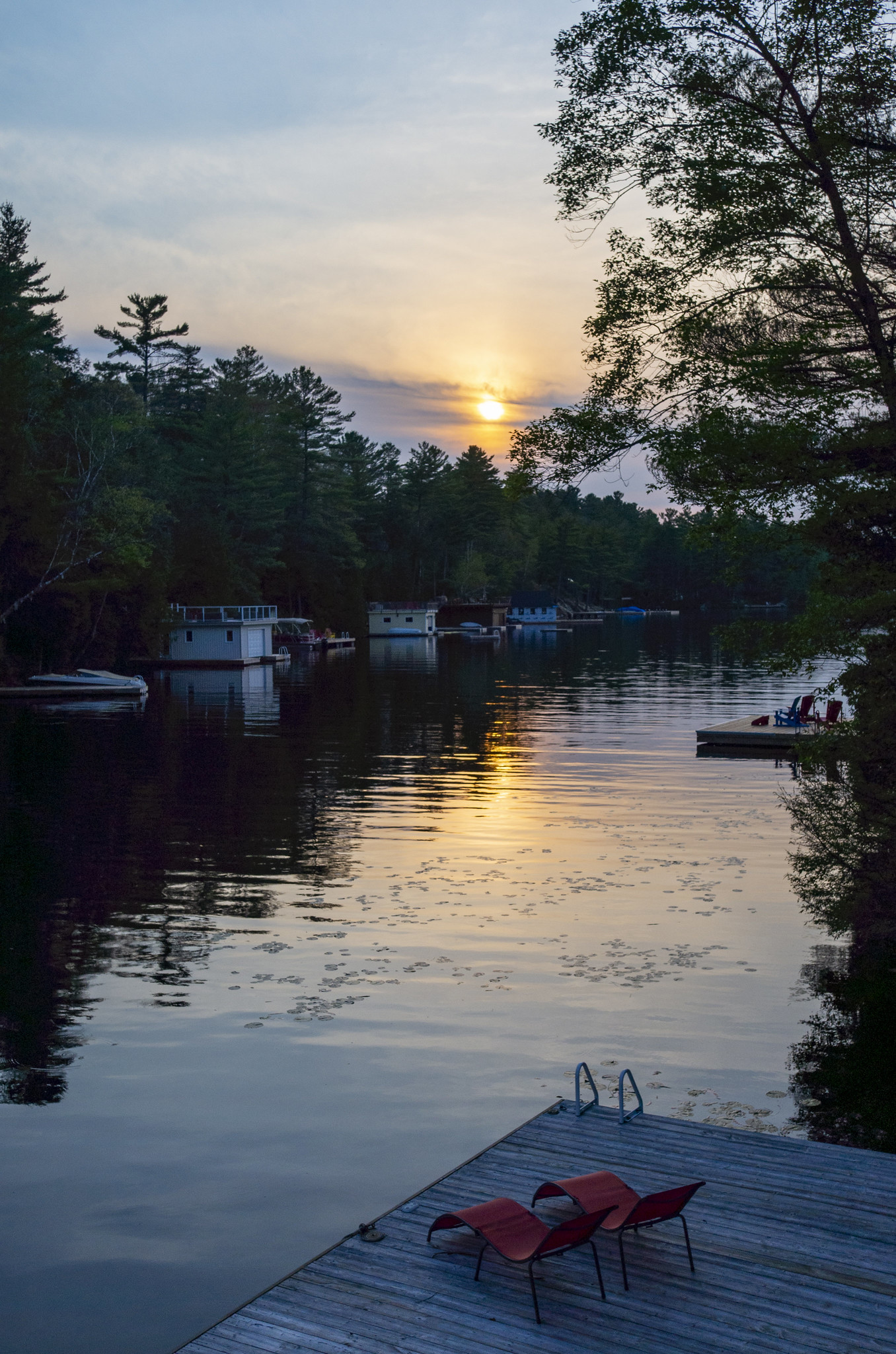
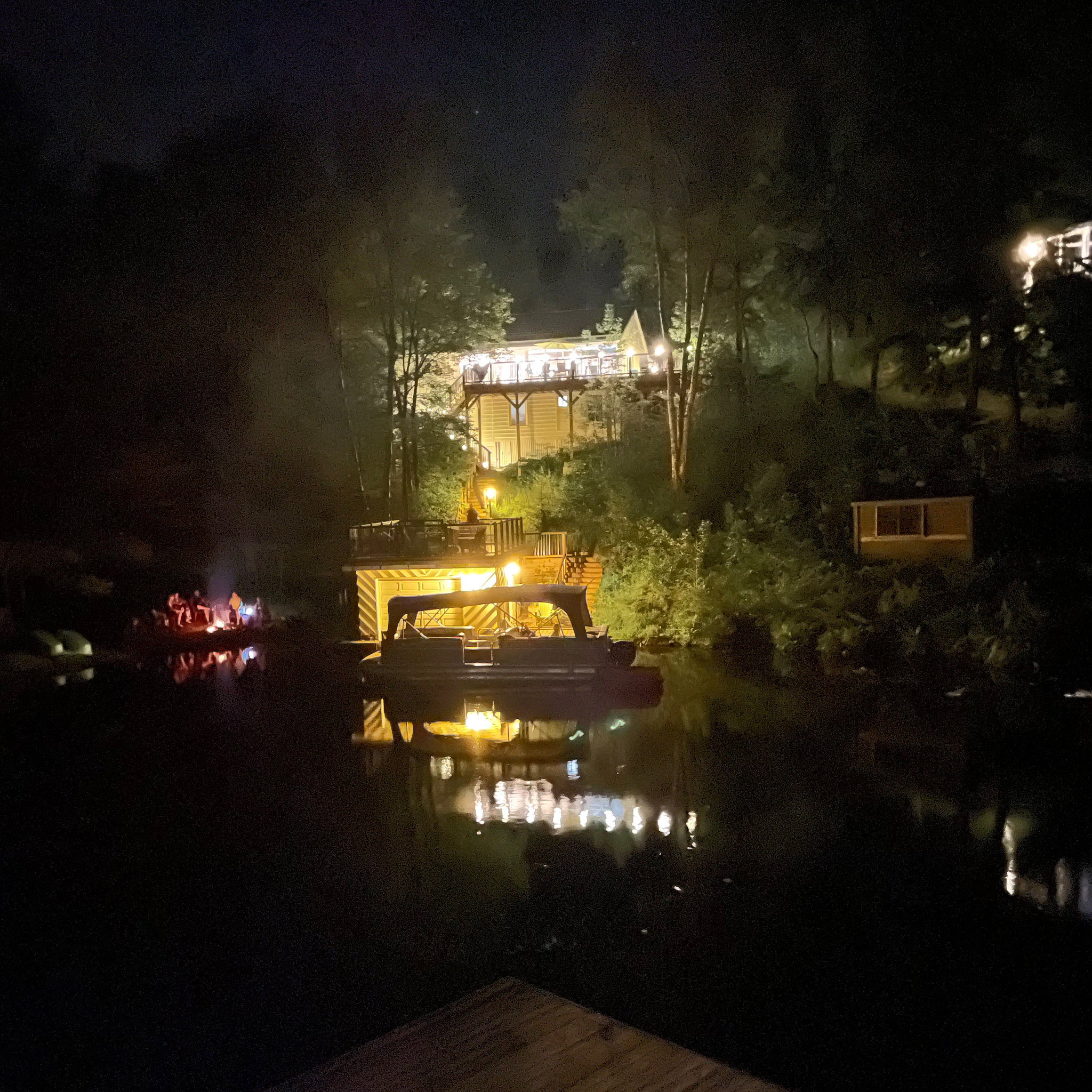
My wife and I took a little break this week: we joined a couple of friends up at a cottage they were renting.
The image you’ll have of that may vary quite a lot depending on where you’re from. In Ontario, though, and especially southern Ontario, that means we went to a country vacation house, likely on a lake (it was), with a certain rustic charm – though perhaps not all that rustic.
This is not a universal Canadian thing, though some people seem to think it is. I grew up in Alberta, and there was no idea of people having “a cottage” and “going up to the cottage” and so on (though some people might “go to the condo,” meaning a vacation property near a ski resort – or “to the chalet,” if they had even more money). No, to us in western Canada, cottage was (and I suspect still is) just a word for a little house, possibly (though not inevitably) in a rustic setting. Sure, some people might have a cottage as a second property, in the same way as some people might have a boat on some area lake or a Cessna at the local small airport. Nobody assumed it was a usual thing.
Not that having a cottage is a usual thing, even in Ontario, no matter how much some people seem to assume it is. Sure, there was a time when vacation cottages were within reach of ordinary working-class people. My wife’s family had one up near Lake Simcoe; it was a fairly simple, not-too-large place where they would spend a relaxing time doing fairly simple things not in the city. It didn’t even have a telephone. (It sounds like a couple of houses my family lived in when I was little. Only they weren’t vacation getaways. They were our homes!) But that was also a time when the standard guideline was that your car should cost a third of a year’s salary and your house should cost three years’ salary.
Anyway, cottages up in “cottage country” in Ontario almost never list for less than a million dollars now, no matter how small and basic they may be, and some are selling for more than ten million dollars. And while the standard image of a Muskoka cottage (Lake Muskoka is cottage central, though not the only place for them) is a single-storey woodsy place of less than a thousand square feet (a hundred square metres), many of them now are multi-storey showpieces, much more impressive than the average urban house.
In short, if you don’t already have a cottage in your family, and you don’t have access to several million dollars, you’re not going to own a cottage. You can still rent one if you can afford it – or you can stay in a swanky hotel somewhere nice for less. Nonetheless, especially since the pandemic hit, cottages have become very popular. Which has driven the prices even higher.
Depending on where you’re from, this all may sound familiar, or it may not. Russia famously has a cottage (dacha) culture – people who can afford it often have dachas out in some rustic location. Finland, Sweden, and Norway also something equivalent. So do some parts of the US. And, apparently, so does Hong Kong. In England, a rough equivalent would be bungalows, but there are also summer cottages. But of course there are cottages everywhere English is spoken; it’s just that in many of those places, they’re nothing more or other than little rustic houses. A poor working person might live in a cottage. But in Ontario? Nah, they’re for people with money now.
Where, by the way, does this word cottage come from? The -age gives a hint that it might be from French, and it sort of is; English got it from Anglo-Norman, which got it from Old Northern French cot or cote, also as in dovecote (you know, where you keep your doves – you do have doves, don’t you?). But that traces back to Proto-Germanic, and may be related to hut.
I know you’re wondering, so I’ll tell you: cottage cheese is so named because it’s a simple, inexpensive cheese originally made with left-over dairy. It’s curds and whey, originally for people whose incomes consign them to a humble existence. And of course now it’s often eaten by fancy people too.
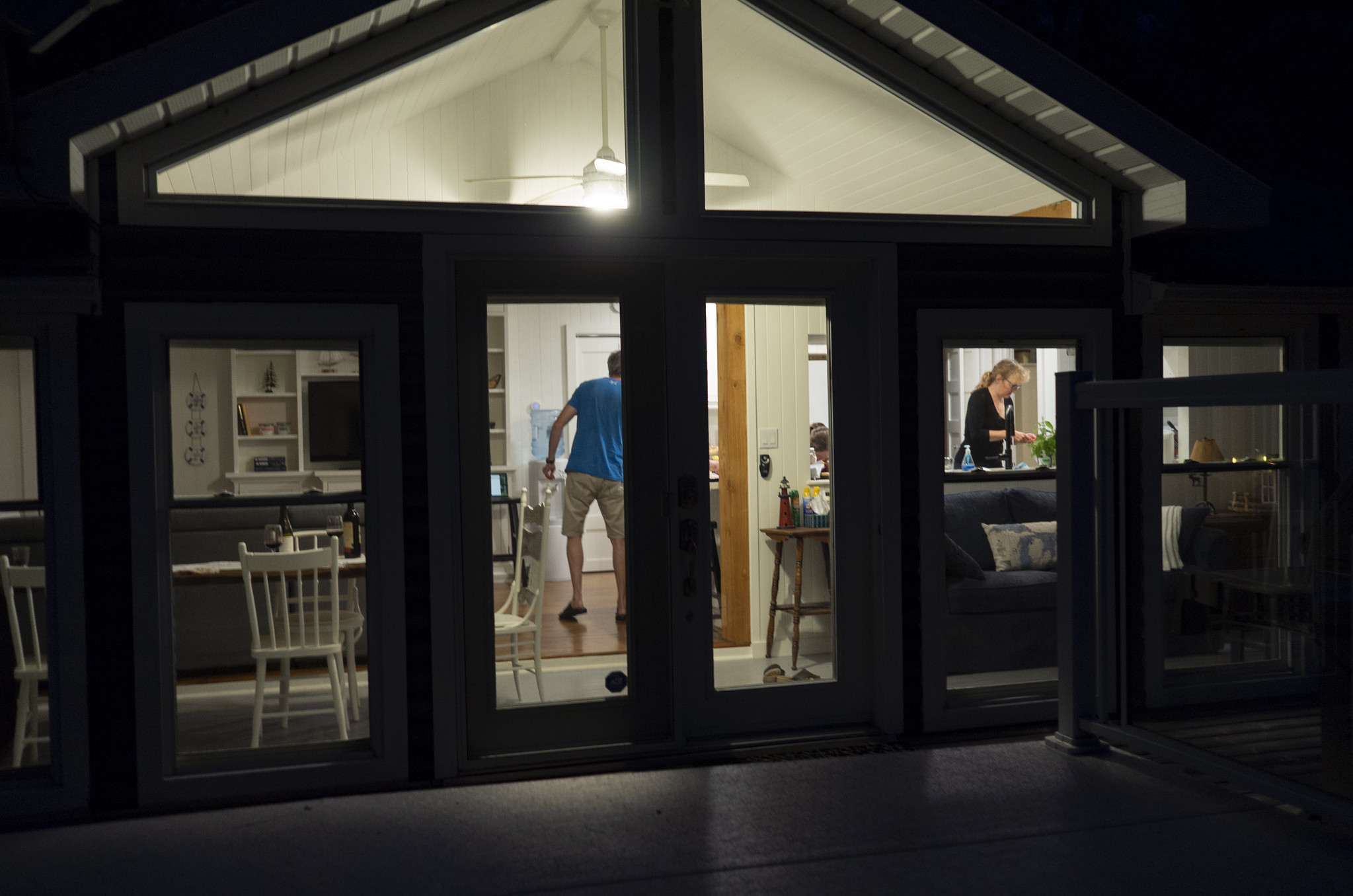
No, we did not eat any cottage cheese at the cottage we went to this week. Lots of other kinds of cheese, though. And plenty of other good food, all of which we cooked ourselves.
This cottage wasn’t all that large: its main floor area and plan was similar to that of a house my family lived in when I was eight. The resemblance stopped there, however. The house we lived in didn’t have Scandinavian modern décor, or a basement, or a bunkhouse, or a large patio, or a dock on a bay. (But on the other hand, this cottage didn’t have an outhouse. Didn’t need one, either.)
Why are vacation cottages popular? I guess people like to be able to get away to a simpler kind of life. Just as long as it’s by choice. And maybe – at least for some – not all that simple, really, either, when you come down to it. But relaxing.


























 Sesquiotica