Category Archives: word tasting notes

divers

We once again spent some time at the beach, watching divers people in the water.

Yes, that’s punctuated correctly. Yes, it’s spelled correctly too.

What, do you dislike diversity? Then the English lexicon is not for you. Many a word, over the course of the years, gets diverted one way and another, until it has some number of forms manifesting some variety of sense. We see person and parson, victuals and vittlesvermin and varmint, and carmine and crimson. We even see it in to and too (yes, that’s right, they started out as the same word). So why wouldn’t we have divers and diverse

We do have them, anyway, both coming from Old French divers, from Latin diversus, originally from roots meaning ‘turned different ways’ – the same as also gave us divert. But does there seem something particularly pervers, I mean perverse, about this doublet? 

Well, yes, there’s the issue that divers is also the plural of diver (and is pronounced the same way as this divers). There’s also the fact that if you know French, you know that the word divers is not pronounced at all the same as how we in English say divers or diverse. (On the other hand, it is said the same as French d’hiver, ‘of winter’. I’m sure that signifies something.) But mainly, it’s hard to say why we would need two forms of this word. It seems like diversity for its own sake. Is it just that, contrary to a current popular usage, we may reasonably hold that one thing (or person) cannot be diverse? So we just have to have at least two?

I’d say there are two main reasons for having both (leaving aside the basic reason that we just do because historically it just happened that way – this is true, but nothing forces us to use both if we don’t want to). The first is that – for those who have become acquainted with divers in the wild – it has a quaint and old-fashioned air to it, the sort of word you see in texts that also have the old “long s”: ſeen in ſundry ſeaſons and divers manners (note that since the only s in divers is at the end of the word, it is not a long one – perhaps ironically).

The second reason is that whereas diverse carries an implication of considerable difference between the sundry parts, divers can mean simply ‘different’ or ‘various’ without implication of how different (the Oxford English Dictionary quotes Richard Chenevix Trench’s book The Fitness of Holy Scripture for Unfolding the Spiritual Life of Men: “We have the divers statements of St. Paul and St. James—divers, but not diverse”). It can also simply mean ‘several’ or ‘sundry’ or ‘a number of’ – so when I say there were divers people in the water, I can just mean that there were a fair few splashing about, with no particular comment on how different they were one from another.

You might object that most people don’t really know or appreciate this subtlety, and that’s true. But we don’t always write for most people. People are diverse, and certain subsets have exceptional inclinations and predilections. It’s OK, from time to time, to know your audience and know that they might find divers lexical charms on the necklace of prose to be welcome diversions.

empire

L’empire empire. The empire gets worse. It’s an empirical fact. Every imperialistic imperative ends in pyres and impertinence. You may think that the empire state is building, but all empires are stricken back in the sequel.

You may object that this is all wordplay, but if you object to wordplay, why are you here reading this? Anyway, many a truth may be expressed more engagingly with a bit of verbal titillation or scintillation. It’s not that lexical coincidences reveal truth; they just give the opportunity to make truth spicier.

And one truth that is lurking in all of this is that empire, like any empire, has claimed by association some things that do not pertain to it at all. Empirical, for instance, which always strikes me as referring to things seen in the empire of the world, comes from Greek ἐμπειρία (empeiría, ‘experience’), which is from ἐν (en, ‘in’) plus πεῖρα (peira, ‘trial, experiment, attempt’). It has no relation to empire, which comes from Latin in (‘in’ or ‘on’ or an intensifier) plus parare (‘make ready’ or ‘order’ – you see it in prepare as well, among other words). How do you get from ordering to an empire? Through an imperator: an emperor, a person who delivers imperatives (yes, also related).

And then there is French empirer, which means ‘make worse’ or ‘become worse’, from en (‘in’ or related prepositions) plus pire (‘worse’, from Latin peior, which shows up in English in pejorative). Although its first- and third-person singular present indicative conjugation is empire, it also is not related to the noun empire (which is spelled the same in French as in English). And yet.

We see empire in various places, some dating to when empires were seen as good things, others dating to when they were… not so much. The Empire State Building, in New York City, which in my heedless youth I processed as [Empire] + [State Building] rather than [Empire State] + [Building], is named after the State of New York, which is nicknamed the Empire State. Why is it nicknamed that? We’re… not entirely sure; there are ideas about who first called it that and why, and how the name caught on, but there’s nothing solid. We just know that it started somewhere and expanded somehow and by the mid-1800s it had taken over. And we know that people did not view empires badly at the time. It was, after all, the height of the imperial age: the British Empire, the Spanish Empire, the French Empire, and on and on, each one a rapacious metastasis of commercial and military might – or, if you asked people at the time, a manifestation of the glorious spread of civilization.

As though civilizations were only the victors. International law of the time followed a principle that, if held to in small local matters, would mean that mugging was not only good but right and just, because clearly the person who is able to rob you of your wallet is smarter and better prepared and thus more deserving. But eventually what goes around comes around, and the colonial enterprises sclerose into bureaucratic enterprises as the active rapacity of the invader turns into the passive rapacity of the collector of unearned wealth. And by the late 1900s (that means 1980 or so – sorry), The Empire Strikes Back could be counted on to have a tinge of villainy in the very name. It’s not that we hate all things empire now; but, like an empire waist on a dress, empires seem old-fashioned, high-handed, and heading for a bust. Somehow in empire we are more likely to hear vampire than umpire now (neither of those words is related, by the way) – and perhaps also pirate (also not related, but it is related to empirical).

And yet. Humans being humans, there will always be someone somewhere wanting more and finding a way to get it. There will always be an empire building somewhere, in some state. But empirical observation of history tells us that, like the Roman Empire, they rise and fall. 

J.M. Coetzee, in Waiting for the Barbarians, wrote this:

Empire has created the time of history. Empire has located its existence not in the smooth recurrent spinning time of the cycle of the seasons but in the jagged time of rise and fall, of beginning and end, of catastrophe. Empire dooms itself to live in history and plot against history. One thought alone preoccupies the submerged mind of Empire: how not to end, how not to die, how to prolong its era.

Mais quand même, l’empire empire.

meet-cute

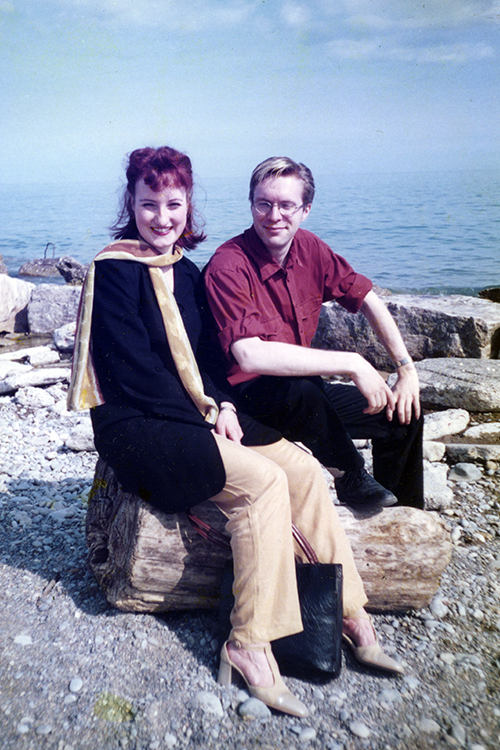
It wasn’t quite a meet-cute. Well, maybe it was. You be the judge. It went like this.

I was new to town and, to make some connections and see some performing art, I volunteered to usher at a dance festival. I knew no one. I went to the opening night party and did what I could to impersonate an extravert. This mainly meant conversing briefly with anyone who took it upon themself to converse with me. I managed to initiate a few brief conversations, but I spent the rest of the time just looking around. There was one person who caught my attention, a striking young woman with red hair who was sitting alone in the middle of the action talking to no one. I thought about going up to her and introducing myself. But she was beautiful, she wasn’t smiling, and it seemed quite possible she would chew me up and spit me out. I was a scrawny dorky guy. My nerves failed me altogether.

But wait. Two days later, I showed up for my first shift ushering. The doors weren’t open yet; we were getting things ready. I was told to go help stuff programs (put inserts into the booklets). The front of the theatre, when it wasn’t being the front of a theatre, was (and still is) a cabaret bar called Tallulah’s, and so I walked up to what was normally a bar counter by a window to join the other usher who was already there stuffing programs.

Guess who the other usher was.

Yes. The heart-stopping red-headed woman. 

I was in a situation where conversation was expected, so I immediately made some kind of joke. I can’t remember what it was (the smart money says it was a play on words), but she seemed to think it was funny. She was very sweet and not at all carnivorous. We started talking. For some reason we got onto the subject of music and I mentioned my love for Arvo Pärt. She was very impressed, as she was also fond of his music, and she – like Pärt – was Estonian (on her father’s side).

Anyway, we got along well. Or at least I had the sense that we did. We chatted as occasion permitted all shift long (not during the performances, of course). I found out a few things about her; she found out a few things about me. And, naturally, at the end of the shift, I had a complete failure of nerve and did not ask her to meet me for coffee or anything of the sort. We went our separate ways and all I knew was her name. 

And this was before social media. In fact, it was August 18, 1997.

Which was also before such things as online sign-up for dance festival ushering. So the next day I went back to see about signing up for some more shifts. Anything to increase the chance of another meeting. And as the volunteer coordinator looked at his big open schedule book, I looked at it from the other side and was grateful that I could read upside-down, because I saw an open slot on the same shift as Aina Arro. I volunteered for that day. And you can easily guess that I didn’t mess it up that time.

And that, to put it as cutely as possible, is the story of how I met my wife in a gay bar. (Technically that’s true: Tallulah’s is a gay cabaret bar.)

But was it a meet-cute?

You know what a meet-cute is, right? The noun meet-cute, which dates to the 1950s, is formed from the verb phrase meet cute, which dates to the 1940s (if not earlier). The Oxford English Dictionary defines that as “(of two characters in a film, novel, etc.) to have an amusing or charming accidental meeting which leads to, or is followed by, romantic involvement.” It illustrates it with a quote from the play Will Success Spoil Rock Hunter? by George Axelrod: “Dear boy, the beginning of a movie is childishly simple. The boy and girl meet. The only important thing to remember is that—in a movie—the boy and the girl must meet in some cute way. They cannot … meet like normal people at, perhaps, a cocktail party or some other social function. No. It is terribly important that they meet cute.”

So… was my meeting Aina cute enough? It was for us, to use the OED’s definition of the noun, “an amusing or charming first encounter between two people that leads to the development of a romantic relationship between them,” but was it amusing or charming enough for movie audiences? We didn’t bump into each other on a streetcorner, each weighed down with armloads of paper or pastries. We didn’t mistakenly take each other’s bags in an airport or train station. I didn’t go to serve her in a restaurant and accidentally pour wine or sauce all over her dress. I just saw her once, then saw her again, and it was in a thrown-together circumstance only inasmuch as we were both volunteering for a dance festival.

But what is cute, anyway? In Ireland, the word can be used to mean ‘clever, crafty, deceitful’, and in fact, cute is originally ’cute – that is to say, it was to acute as ’nuff is to enough: what is technically termed an aphetic form. So its first meaning was ‘clever’ or ‘smart’. And just as smart has gained senses relating to good appearance, cute has gained a sense of ‘attractive’ or ‘charming’ – or, increasingly, ‘pretty, in a childlike way’. Kittens are cute. But there are many people who are very good looking who you would probably not call cute.

And likewise, there are many charming circumstances that might also not be called cute. Seeing someone interesting, not having the nerve to talk to her, and then two days later being put to work right next to her? Well, mmmaybe. 

But I have the older definition of cute to fall back on. After all, reading the sign-up book upside down and picking out the next open spot with the person I wanted to “coincidentally” be put together with again was at least a little clever. Right?

It was smart, that’s for sure. We met 25 years ago, and we’ve been married for more than 20 years now. Ain’t we a cute couple?

Arisa

More than 80 years ago, in Riga, Latvia, a girl was born. Her mother wanted to call her Larissa. But her father thought too many girls had that name. So – perhaps influenced by the fact that their family name started with A – they called her Arisa. (The stress in Latvian is on the first syllable, and the name sounded the same with single or double s, so Arisa really was Larissa minus L. But in English-speaking context, Arisa is always said as you would expect, with the accent on the second syllable.)

A small digression here. You may not know where the name Larissa comes from; if you don’t, you’re in good company. In fact, you’re in a group that includes pretty much everyone. It’s a name that has been popular in some parts of Europe (especially eastern ones) for some time, since there is a Saint Larissa, who was part of a group of martyrs in a place that is now on the eastern side of Turkey. The name is Greek, and we’re not sure, but it was probably taken from the Greek city in Thessaly named Λάρισα (Lárisa, but usually rendered as Larissa). The name of that city is also of uncertain origin, but likely comes from λαρός (larós, ‘sweet, delicious, pleasing). This would all have been history unknown to the parents of little Arisa.

If you’ve done the math, you know that a war was breaking out just around when Arisa was born. That war and its sequelae led many people in the Baltic states to leave for another country. Arisa and her parents and younger sister escaped to Sweden. And then, after a few years, when Arisa was 10, they took a ship to Canada.

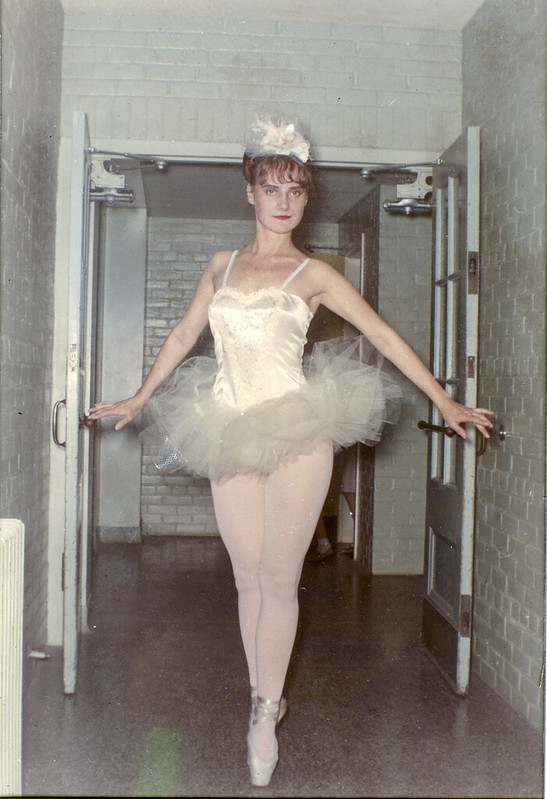
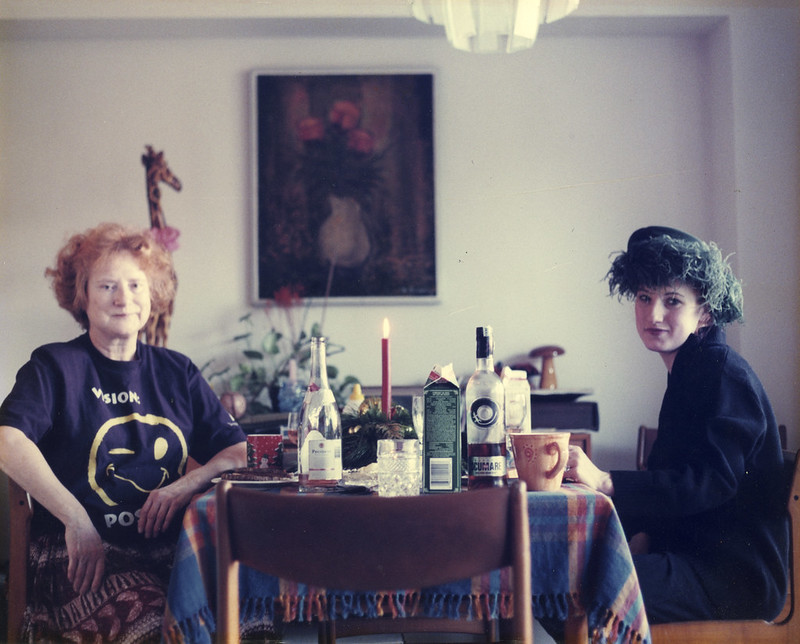
Arisa and her sister grew up in Toronto and environs. Arisa enjoyed the arts. She was excellent at drawing and painting. She loved ballet.

She danced avidly for as long as she could, even for years after she was married and had two daughters. And when she no longer could dance, she moved on, but she didn’t leave the arts behind. She designed and sewed clothing for herself and her daughters. When her older daughter became a figure skater, she made her costumes for her programs. She helped both daughters with their school art assignments. She shared her encyclopedic knowledge of dance, especially with her older daughter, who, along with becoming a professional figure skater, earned two degrees in dance studies.

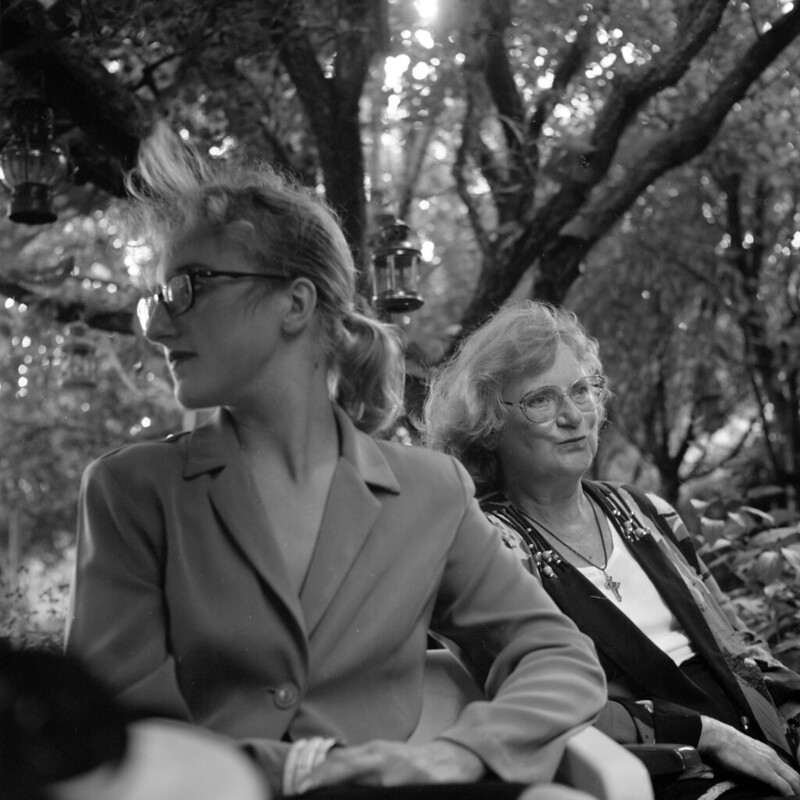
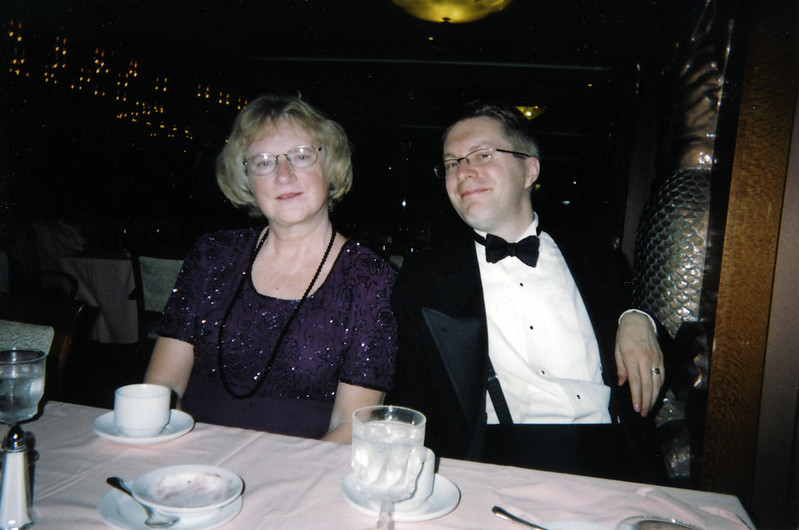
And then that older daughter – Aina – met me, volunteer ushering at a dance festival. In 2000, Arisa became my mother-in-law. And with me as with everyone, she was unfailingly kind, conscientious, and giving.

She never stopped being interested and involved in the arts. She volunteered for arts festivals (including literary and film festivals). She joined us to theatre and dance. If you met her in her later years, you might not expect she had ever been a dancer, and she would never tell you she had, and yet she loved the arts avidly… just as you would never expect that her name was altered from the name of a saint named after a Greek town, and yet it preserved the euphony that had undoubtedly helped make it so popular (a euphony that has led to the name being created in other cultures quite independently). 

And you could never miss noticing that she had a certain flair.

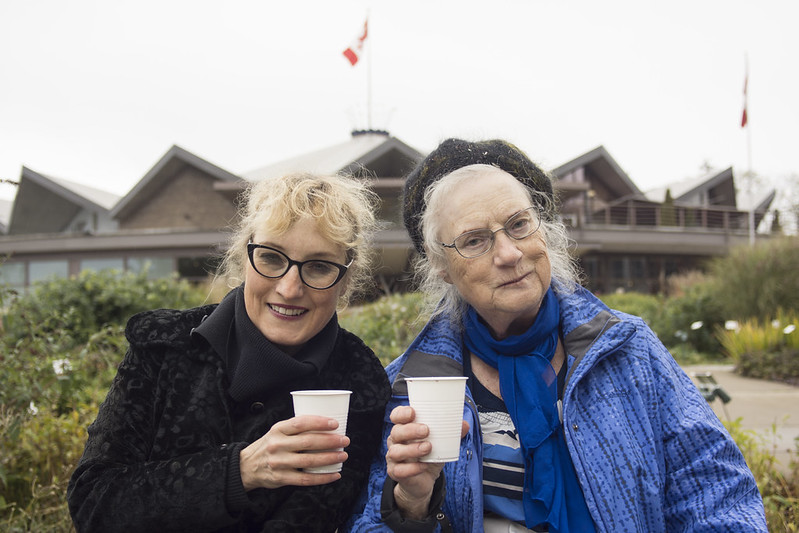
She joined Aina and me to several theatre festival performances this year, complete with picnic lunches. We were looking forward to more with her. But, on short notice, she – and we – discovered that her season was ended. But at least we had what she had given us, which was so much. Like her name, she was always sweet… and more – and other – than you might expect.

sunset

Every sunset is a sunrise somewhere else.

As the sun sets on Toronto one day in early August, it’s rising on what remains of the Aral Sea and, in another minute or three, on the whole west coast of India. As it sets on Calgary, it has just lately risen on the African coast of the Red Sea. For every sunset and sunrise, there is a whole set of places in the world that are crossing the terminator line of the sun’s shadow at that moment, turning away from or towards the sun. They are bound and set so to do, as long as the earth is moving as it is.

Poets write about sunsets, from time to time. But that’s like singing a song about a painting. There is no conversion rate between images and words; the words carry sounds and ideas the images never could, but the images bring things words have no hope of tattooing in black on white with their abstract little lines.

We like the sunset because we are there for it (how much less often are most of us awake to see the sunrise!), and because it is there for us, at eye level, the sun’s rays passing at a flat angle through the atmosphere, skimming across clouds. At the last, as it is cut by the horizon, you can look at it for more than a moment. And you want to look at it, because it has contrast and colour: all the things that your eye seeks as a treat but that are too harsh during the day are there on a dessert tray at sunset, completed by the contrast between the daylight before and the nightdark after. During the day we take the sun for granted, we seek the shade, we don’t look straight at it, but when we have turned far enough away from it we pause and appreciate it just before we can’t see it, and then it is gone.

But of course it’s still there. It’s all just our perspective, on our spinning ride. Every second of every day, from the beginning of the earth through now to the very end of our planet, there is a shadow line, a set of sunrise and sunset. When it is our time at the line, we can enjoy it if we want. When I visit my parents in Alberta I like to go for walks and see the sun go down. Back in Toronto, though that’s where my favourite song about watching the sunset was written, I much less often see it – there are buildings in the way. So be it.

You know the word sunset, of course, and you can see its parts. Sun is a grand old Germanic word, not related to son though it sounds the same in English now. Set is not so much one word as a set of words, or rather two sets. One of those sets is related to sect and refers to groups and such things. The other is related to sit and refers to going down, putting down, being in place. You can easily enough tell in which set to set sunset. (There is a third Set, the Egyptian god of war, chaos, and storms. Sometimes that Set unsettles the sunset. But we can set him aside.)

It is tempting to use sunset as a metaphor. But if you must, remember this, set this down: on the earth it is always sunset and always sunrise and always neither, and what we experience at any time just depends on where we are… and we will come around to each again and again.

trespass

Forgive us our trespasses. I mean… it’s not a sin, right? I won’t die from it or anything…

I took a little trip up a hill above Cochrane this evening to get a good view of the descending sun. I drove on a not-too-wide paved country road that goes past a few expensive houses and ends at a short gravel stub surrounded by fences. And on the fences, a notice: private property. No trespassing. 

And parked there, just on the lawful side, was a minivan with four assorted teenagers, sitting and chatting with a view to the west: a view of foothills, distant mountains, clouds, the sun, and, much closer, an antenna with a couple of small buildings.

But there was a little bit of hillside off one side of the road that didn’t seem to be included in the prohibition. So I wandered down it, parallel to the fence. And then the fence just… subsided. So, since the view I wanted was more in that direction, I easily passed over where the fence might have been had it been there. I walked through damp prairie grasses with a healthy assortment of small flowers. And then, over the curve of the hill through these Elysian fields, past the guy wires for the antenna, the view I was there for.

I wasn’t the only one there. A couple had set up collapsible chairs and were taking in the view. I did not think it was their land, or their antenna, and they did not object to my transgression – or perhaps even notice it. I paused. The sun, previously obnubilated, broke through the clouds and beamed our way. I took a few more photos.

And then I turned and came back to the car, by a more direct route. The fence, I observed, had a gap in it between posts at the end of the road, just by where the teens continued talking (about things such as a guy who was banned from a restaurant for an egregious bathroom accident – such crimes!) and looking sunsetward and altogether ignoring me. I walked on by. Trespasses? What trespasses? It’s très passé! (That’s an infraction in French grammar, by the way – “C’est très bien passé” would mean it happened very well, which it did, but that’s not what the English loanword confection intends.)

Of course English got the word trespass from French – Old French, which had it from Latin. The modern French reflex is trépasser, which means – as we would say in English – ‘pass away’ or ‘pass on’: in other words, ‘die’ (but politely). But in Old French the verb trespasser still had the basic Latin sense, which was simply ‘go through’, ‘traverse’, ‘go across’. It’s from Latin trans ‘across’ and passare ‘pass’ (well, ‘step’, ‘go’, et cetera).

But in English it came to mean specifically a transgression (transgress also comes from Latin meaning ‘go across’); it most often now means a violation of private property rights, but for many people its most frequent spoken use is in a sense also often rendered as debt (financial violation) or sin (moral violation): “forgive us our trespasses, as we forgive those who trespass against us.” (The Latin for this phrase, from Matthew 6:12, uses inflected forms of debitum, ‘debt, obligation, rent’, while the Greek uses inflected forms of οφείλω opheilō ‘owe, be obliged to’. And yes, that Greek word is related – not quite directly – to the name Ophelia, which traces to the ‘profit’ side of the deal.)

But there are trespasses and there are trespasses. As those few of us on the hillcrest profited intangibly from the view the sun’s trespass over the horizon, some on the public side of the fence and some on the private, there was no great harm or injury, nor any financial or moral deficit incurred. Though some of us might overtake a fence, no one seemed to overly take offence.

westerly

Today I travelled in a westerly direction for a few hours, and now I’m back in the area where I grew up, where the westerly winds prevail. And, of course, that means that I travelled against the wind.

That always confused me when I was growing up (and, honestly, I still haven’t entirely gotten over it): my understanding was that westerly meant ‘generally westward’, just as southerly means ‘generally southward’, easterly means ‘generally eastward’, and northerly means ‘generally northward’. Any time you read about someone travelling in a westerly direction, you know that they’re going towards where the sun sets. And yet every time a Chinook was blowing in, which is about once a month all winter long, the TV weather guys would talk about “warm westerly winds” (it seems obligatory: just as news people have to use the word pontiff when talking of the pope, the TV weather people in Calgary have to say “warm westerly winds” when talking about a Chinook). But if you’ve ever been outside when a Chinook is blowing in, you know very well what direction they’re blowing in: they’re blowing from the west (over the mountains), towards the east. Just like most wind in Alberta.

So what’s the deal? If you look in any decent dictionary, you will see all of that confirmed as true: westerly means ‘in the west’ or ‘towards the west’ … or, especially when talking about winds, ‘from the west’. Somehow this word is blowing hot and cold at the same time (or at least alternately, just like the winds in southern Alberta).

The trick is just that the -ly suffix comes from the same root as like and just means ‘-ish’ – in other words, ‘having some general relation to’. I kind of wish that Chinooks blew through every two weeks all winter long just so I could make a play on biweekly, but I’ll make the connection even though they don’t: just like westerly means simply ‘westish’, whatever that intends, biweekly can mean ‘twice a week’ or ‘every two weeks’ because it just has roots meaning ‘two’ and ‘week’ without further specification. It’s so confusing, there are many people who feel that only one of the two senses should be sanctioned, and the other should be, uh, sanctioned.

And just as sanction has a Janus face due to its origin with formal (typically religious) decrees, which can either enjoin or enjoin, I mean which can either require or prohibit, which way westerly trends depends on the particular association the thing in question has with the west. And while if you’re travelling and you name a direction, it’s the direction you’re headed towards, when it comes to winds, we think of them in terms of where they’re coming from. After all, they’re blowing (which envisions a motive force where they’re coming from), not sucking (which would envision a motive force where they’re going to), right? (Though, frankly, the wind in southern Alberta can really suck sometimes. Come here in late October and you’ll agree, I’m sure. But that’s a different usage of suck.)

So. Since I am originally from the west (in the grand scheme of Canada), I am in that sense a westerly person. And when I fly from Toronto to Calgary, I am heading westerly (don’t bother quibbling about Calgary also being farther north; westerly is not so precise as that). But when I fly from Calgary to Toronto, and the flight is quicker because of tailwinds, those winds that help it fly easterly are westerly winds.

cheeseparing, cheesepare

“You seem to have made an error.”

A lady somewhere between half and twice my age, dressed in pastel blue business attire and a floppy bow, with carefully edited hair, strode up to me and Maury, presumably because we were closest to the door of Domus Logogustationis (the clubhouse of the Order of Logogustation). She was evidently one of the new members who had joined during the extended lockdown due to (cough, cough) you-know-what. She was holding a print-out of our invitation to the event; she set it on the small high table before us and gestured to the heading: “Wine and Cheeseparing.”

I couldn’t tell if she was being serious or just making an extra-dry conversational gambit.

“Surely you jest,” Maury said.

“How did you know my name?” she said.

“Your name is Shirley?” Maury said, his eyebrows arching ever so slightly.

“No,” she said, still inscrutably. “It’s Geste. G-E-S-T-E.”

Maury, ever unflappable, was flapped. He stood frozen for a moment like a deer in the headlights.

“Well,” I said, leaping into the breach, “I’m glad you could make it. It is a pity that we have had to be, as it were, cheap and sparing – supply chain issues and all that. Inflation can be rather deflating. And so we made the theme cheeseparing.” I gestured at the nearby cheese board, which was covered with parings of cheese, each about the size and shape of a toenail clipping. “It’s not cheap, cheese; we are trying to evince the virtue of frugality.”

“That cheese has died the death of a thousand cuts,” Geste said, gnomically.

“As shall we all, at this rate,” Maury said, equally drily.

“Well, I was quite pleased with the existence of the word cheeseparing,” I said, continuing to paddle up the conversational stream. “Such a vivid and flexible lexical item. It started by naming a literal paring of cheese – a shaving from the rind, and we decided not to be quite so literal about that” – I nodded towards the cheese board again, where the parings included no rind pieces – “and then it extended to mean something meagre, and from that came to refer to an attitude of cheapness. And then it was backformed into a verb, cheesepare. So cheeseparing may be taken for a participle of the verb cheesepare, which actually came from it, while it’s in fact an adjective formed from a noun, and the noun was in turn a compound of a noun plus a gerund.”

“And to cheesepare means to trim budgets by making numerous small cuts,” Maury added. “As we are having to do here lately.”

“Well,” Geste said, “I’m glad someone is being economical.” (She might have glanced in my direction ever so briefly.) “I’ve always favoured editing a document down by removing excrescences passim rather than excising whole passages.”

I was about to say “You’re an editor?” but decided that I might just be opening myself up to further whittling down. Instead I fell back on “Would you like some wine, such as it is?”

She smiled, slightly but perceptibly. “I would, thank you. I parch easily.”

I picked up a glass from the sideboard and was about to ask which kind she preferred – we had a few bottles open – but Maury spoke first. He had stepped over to another table and picked up a game box. “Parcheesi, perchance? Our entertainment budget is down to hardscrabble.”

Geste raised one eyebrow. She turned to the sideboard and picked up a glass for herself, and as she filled it precisely half full with pinot noir, she said, “I see the entertainment is also on theme.” She pulled out a pen and made a quick small emendation to the printout she had put on the table. Then she nodded at Maury and at me and, with a pause to pick up a cheese paring, headed off in the direction of others in attendance.

Maury and I leaned in to see what her pen had wrought. With a small caret of insertion and a superscript h, she had indicated a correction of the first word of the title to “Whine.”

cahoots

Look, you kin have yer fancy collusion. Where I come from, we ain’t doin no contracts n legal stuff, we ain’t meetin in no dim rooms with expensive wine, we jes go in cahoots. It’s like an ol owl who’s wise to what’s up an is hootin in another owl’s ear. It’s like you meet someone at a hootenanny an you jis start talkin, an nobody else even hears what yer sayin cuz it’s so noisy there anyways. Or you don’t talk, you jes understand.

Also, it’s French.

Y’see, that makes sense. Cuz if yer in cahoots, it’s something nefarious. Sure, used to be you cud jus say yer goin in cahoots with someone on some business thing, or before that, in the early 1800s, goin in a cahoot or jes goin in cahoot. Those were simpler, more economical times, where you only needed one cahoot. Now you got enough for a caboose. And it’s cahoots with the devil, or government, or the CIA, or some other bad guy. So of course it’s French.

Don’t ask me how it got to the southern and western United States, but it did. Maybe by way of Lousiana. But how it got into French, well, now, that’s another thing again. Seems like someone jes plotted to git it in. A friend or cohort, and they got together in some dirty little cabin an said, “Arright, let’s git this word into the language.” Why? Why knows why. It’s there n we use it an it works.

But yup. Some sources say cahoot comes from cohorte. I guess in the same way as vamoose comes from vámanos, you know. It mighta sounded different to start with, but we do what we do. But other sources, including some a the big ones, say nah, it was cahute, which means ‘shack’ or ‘hut’ or, as Littré says, “petite loge, mauvaise hutte.” An the best part a this is that while ca- is a prefix you could (if you was French) stick on somethin to make it worse (not sayin caboom is a bad boom but if it was it would be, an don’t ask me what a boose or a boodle would be), an while some even say it’s from cabane so a cahute is a cabane, is a hutte, is both a cabane and a hutte, it’s not rilly sure that the hute comes from hutte (you know, hut but in French). Seems like the oldest French forms are like cahue, and cahuette, an even quahute (don’t think that’s like a quahog, but at this point who knows). The thing about cahoots is you don’t know everything that gets decided an how. Someone jes got together, ya know, an maybe they didn’t even discuss it, but here we are.

Which is rilly how language works most a the time. We’re all in cahoots. It’s a shady bizness, words, full a quiet an informal agreements. Heck, we wouldn’t even understand each other if we wasn’t in cahoots. Did someone hafta tell you what cahoots meant, or did you jes see it sometime, “They were in cahoots with the bad guys,” an you jes figgered it out? An did someone ever tell you what eye dialect for some western farmer or rancher looked like, or did you jes pick it up? Cuz if you got through all this here word tastin, you’re in cahoots too.

carmine, crimson, vermilion

Chow down, bookworms, it’s time to be well red in etymology and entomology.

Yes, red, not read. I mean, both, I suppose, but the thing is, we don’t start with eating paper. We start with eating wood. Specifically, we start with eating a particular kind of evergreen oak. Don’t worry, you don’t have to eat it; little bugs will – bugs that were once called little worms. And then we crush them.

Does that bug you? Does it seem red in tooth and claw? Sorry, my friend; for a long time it was hard to get a good red without doing damage. And I don’t mean making someone bleed; blood is actually pretty bad as a coloring agent – you probably know that it gets kind of brownish. The preferred source of red dye among people around the Mediterranean for a long time (though not in recent centuries) was a little red insect that we now call Kermes vermilio. It was ultimately supplanted by two things: cinnabar, an ore of mercury, frighteningly bad for your health; and cochineal, a different bug, from the new world, which needed fewer bugs for the same amount of dye – but still, frighteningly bad for… the bugs’ health.

There are three colour names that trace back to Kermes vermilio, though none of them trace back to its taxonomic name; rather the converse, since it got its scientific name in 1864 on the basis of the reds associated with it.

Reds? Yes, there are multiple kinds of red that are based originally on this bug. Due to shifts in ideas and also to the replacement materials for the dyes from this crawler (cinnabar and cochineal), it split into three kinds of red – but that also varies from language to language, as colour definitions will. And that split matches the three words – not one, not two, but three – that came from this little critter.

First we have Kermes, the name of the whole genus of bugs that include Kermes vermilio; all of them eat oak and die red. Kermes has nothing to do with frogs (the name Kermit, by the way, comes from the Gaelic Mac Dhiarmid); it comes from Arabic qirmiz, which is the name for the insect in question, and qirmazī, the colour name derived from it. That in turn became Latin carmosinus, which, in the mortar and pestle of time, ended up in English (via Spanish and French) two ways: as carmine and as crimson

You may know Carmine as an Italian man’s name, but that’s not related; it traces back to Latin carmen ‘song, poem’. You may also know carmine as the name of a dye, in particular the dye extracted from cochineal (oh, the indignity, to be named after one bug but made from another); sometimes you’ll see it as carmine lake, which, though it’s a perfectly fine name for a lounge singer or a California suburb, is really just extract of dried bug bodies on an aluminum substrate (the lake has nothing to do with water and everything to do with the lac in shellac, the lacq in lacquer, and the Indian word lakh meaning ‘100,000’: it all goes back to a very large number of bugs). And anyway, the colour carmine – made with the dye of the same name – is a vivid red, which is officially (per Wikipedia) RGB 150/0/24. Or related shades, because humans aren’t as precise as computers.

Crimson, of course, you know very well, from pirates and crimson tide (a killing force in marine life and college football) and such like. Wikipedia tells me it’s the national colour of Nepal; I don’t need Wikipedia to tell me that it is also the theme colour of Harvard University – the student newspaper there is The Harvard Crimson. Crimson is (again per Wikipedia) RGB 220/20/60. At a glance you can see it’s brighter but also slightly less purely primary red.

The third word shows up pretty clearly in Kermes vermilio – obviously, it’s vermilion, or, for those who think a hundred thousand is not enough, vermillion – but its true origin has been crushed and bled out. Yet the truth (or the true lie) will worm its way to the surface: it’s Latin vermiculus, diminutive of vermis ‘worm’. Yes, these teeny bugs were called ‘little worms’ by the Romans. The hard carapace of the c was ground out, and it became different things in different languages, such as Italian vermiglione and French vermeil. English Wikipedia says that vermilion – the colour for a long time produced by cinnabar (mercury sulfide, sooo healthy for you) – is a vivid reddish orange, RGB 227/66/52. Which you can see, if you know what those numbers mean, is in the same neighbourhood as crimson but with more green mixed in.

But that’s English, and official colour definition English at that; you may have different ideas about what’s vermilion. Words take different paths for different people. This is especially true in different languages. If you want the most direct translation of the basic, broad, generic colour term red nto Portuguese, it’s vermelho (said like “vermelyoo”)– which, yes, is the same word evolved into Portuguese, with much broadening of sense. But wait! If you want specifically vermilion, Portuguese has a word for that too: vermelhão (the ão is like “ow” but nasalized, so it’s bringing back the n). Catalan has a similar pair: ‘red’ is vermell and ‘vermilion’ is vermiló.

And it all traces back to these little worms that are actually little bugs that eat oaks and then get crushed for colour – or I should say got crushed for colour, since they’ve been supplanted. Etymology and entomology… and chemistry and color theory and history.