It’s St. Patrick’s again, and why would I pass up a chance to do a pronunciation tip on something Irish? This time it’s the counties (and provinces) of Ireland. And although there are 32 of them (and four provinces), it’s a quick one!
No? How about the bull Bodacious, considered the most dangerous rodeo bull in the world, retired in his prime lest he maim too many riders?
No? Hmm, let’s see…
Bill and Ted, played by Alex Winters and Keanu Reeves?
Duuuude.
Some words really do acquire a strong association with one specific person, place, or work. Strong? Bold. Bold? Audacious. Bold and audacious? Bodacious.
Yes, that’s where this word is thought to come from: bold plus audacious. And its first known published uses – back in the mid-1800s – are not inevitably positive in tone: it modified words such as idjit (i.e., idiot), blurt, and (as a bare adverb) unreasonable. And bodaciously could be seen before used up or fast. Even into the middle of the 20th century you could see lines in fiction like “That’s bodacious big talk, boy.”
But it’s too, uh, bodacious a word not to shift toward being a general-purpose strong positive intensifier, a sort of pet word. Like in a story published in the Saturday Evening Post in 1935: “I’m keeping the bodacious score for the day. Got a bet I’ll hear the word a thousand times. If you want a reputation for wit in this lunatic fringe on the shirttail of society , all you’ve got to do is know how to pronounce the word.” And in a 1966 issue of The Leatherneck (the magazine of the US Marine Corps), we get “‘We climbed some ‘bodacious’ hills,’ Sgt Robert Rho puffed, using the company’s favorite expression, ‘bodacious,’ meaning huge or gigantic.”
By that time, it was also well established in use in the cartoon Barney Google and Snuffy Smith, which started in 1919, and in which it was used – is used, in fact, since the strip is still running after 104 years – as a kind of backwoodsy all-purpose term of intense approbation: “Now that thar is one bodacious full moon!” “Snuffy an’ Loweezy are still doin’ bodaciously good after all these years, too!!” And so on.
Which also gives it a kind of, um, low-falutin’ hifalutin-ness. Although its polysyllabic presentation may seem like audacious with a bow on it, its history has established it as less suited to an archduke and more suited to Bo and Luke Duke.
But most people don’t read up on the history and etymology of a word before they use it. Words are known by the company they keep. And I feel confident that Chris Matheson and Ed Solomon, when they wrote the script for Bill and Ted’s Excellent Adventure in the late 1980s, picked up the earthy associations from literature and cartoons, even if they didn’t know that the word had always been associated with rural southern Americans. Anyway, it just sounds right, you know, dude?
And then it launched into eternity, thoroughly associated (along with the word bogus as an antonym) with a certain kind of high school dude… and perhaps a bit with an actor who, in his subsequent career, has proven quite bodacious indeed.
If you want a good example of how people acquire and think of words, here’s Keanu and Alex discussing the meaning of bodacious:
“On the extreme periphery of outstanding, somewhere between excellent and savory. . . And there’s a mystical quality as well.”
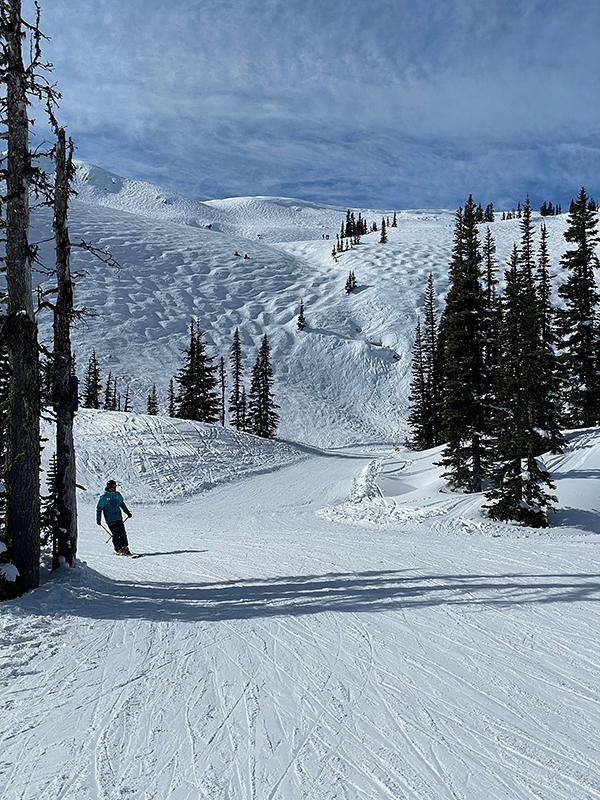
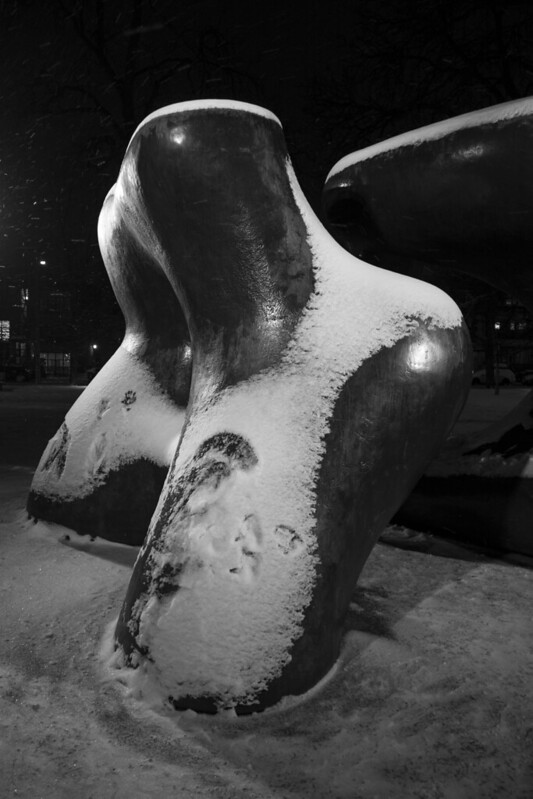
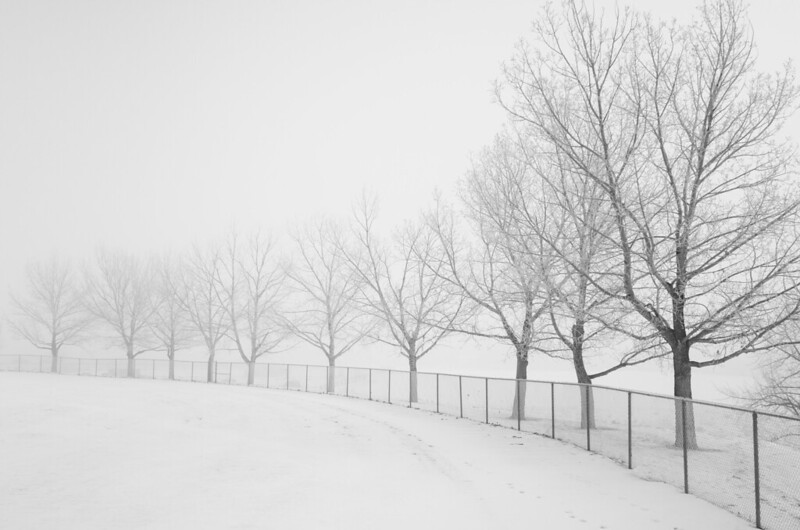
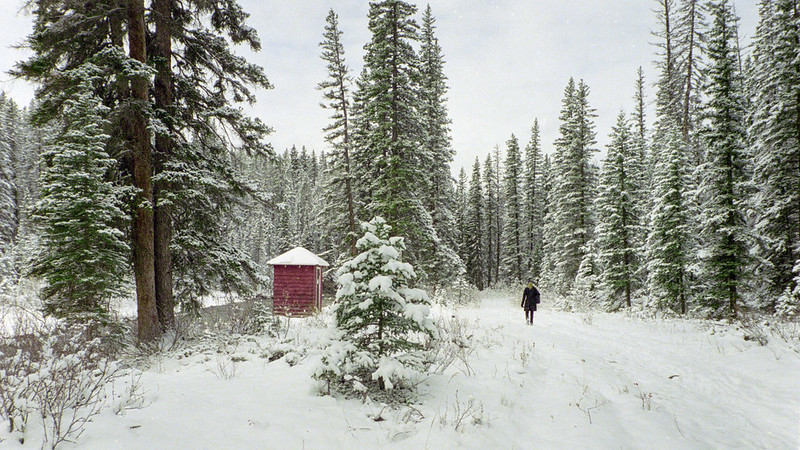
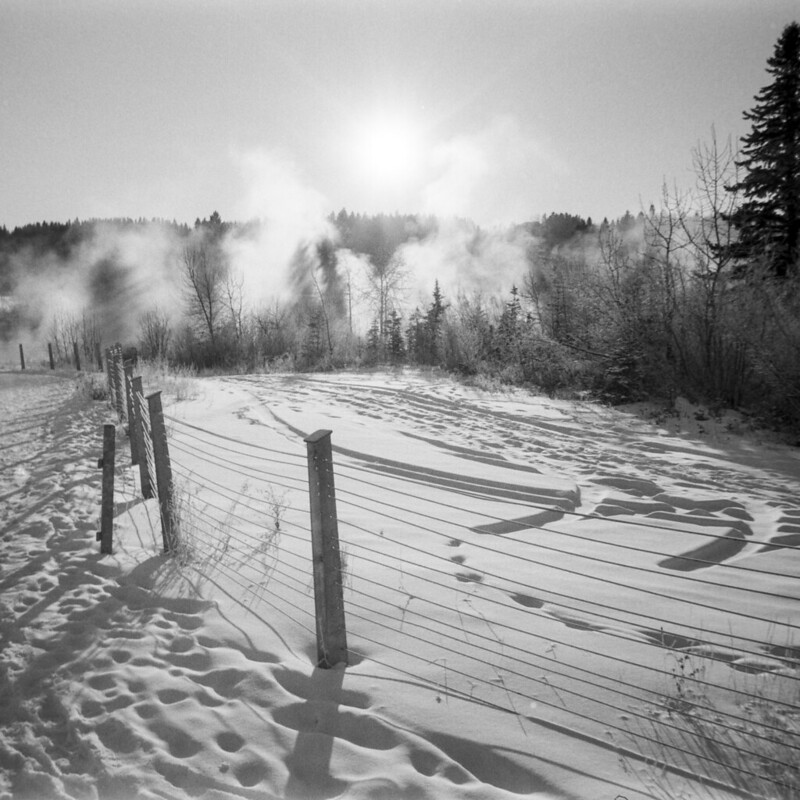
Who can rival the nival scenery of the True North Strong and Free? There’s no place like a snow place. It’s not simply that it brings the curious combination of frigid and fluffy (never mind the snirt), nor that it has the shocking smooth brightness (again, skip the snirt), nor that you can do winter sports on it, though all of these are certainly virtues.
No, it’s that it evinces the evanescence of scenery itself. I can walk down a snowy street and know not only that it will look entirely different in the warmer seasons, but that it will look at least somewhat different even the next day. Snow blows and drifts and piles up and melts away… water, the stuff of life, is become a sort of butterfly, but even less permanent.
I’m ambivalent about this word nival. It is exemplary, showing the drift from its Latin origin nivalis in both form and pronunciation, and it has its uses: it can mean ‘snowy, made of snow, made in snow’ (like niveous but a bit shorter and without the beauty lotion overtones); it can relate to a region of perpetual snow (we have some of that in Canada, but I have no photos, not having visited there); it can relate to “the falling, accumulation, or melting of snow,” to quote the OED (in other words, relating to nivation, and not only by invitation). But it rhymes with rival, and also of course revival and survival, and that “long i” just somehow doesn’t seem… on the level. At least to me.
But that doesn’t make it invalid – just alive. We do those sound changes in English, and yet you can look at a word and see the shape of what was there before. And words keep changing, and also coming and going. And we’re not out of the woods yet with this one – tell me if you’ve ever used it!
It’s fun to think, isn’t it, that the same stuff that can support naval vessels, and stretch beyond our eyes to the horizon, can blow and drift, pile up on cars and be made into balls for handy tossing? It’s all a matter of phase. In other days or other ways, it’s also steam, and clouds. And life in places that lack this version of water is somehow… incomplete. We will always have that rival season summer in its turn, but when the streets and beaches are warm and dry, I sometimes catch myself picturing what they have been – and will be again – in the nival time of the year.
At the evening’s length, as I love to do, I abscond with my laptop into my library and I sit ensconced in my comfiest chair, ready to taste another word. But first: some illumination.
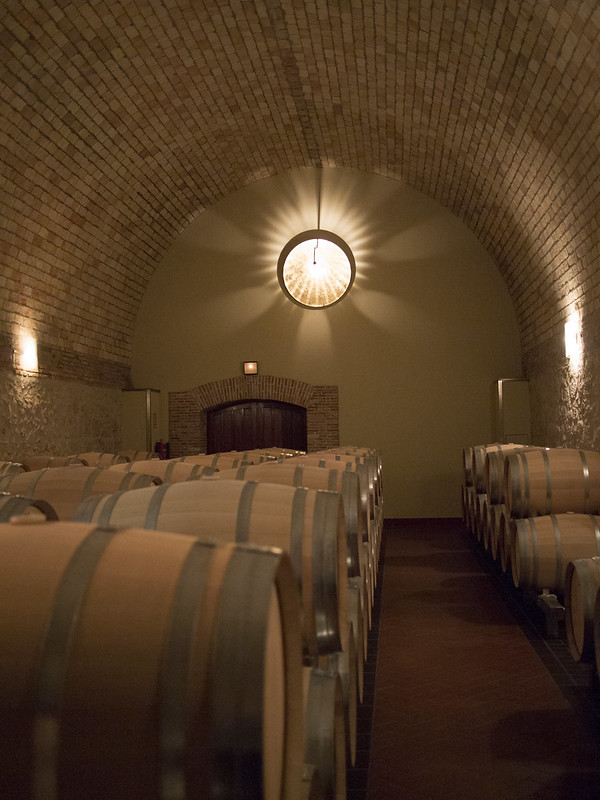
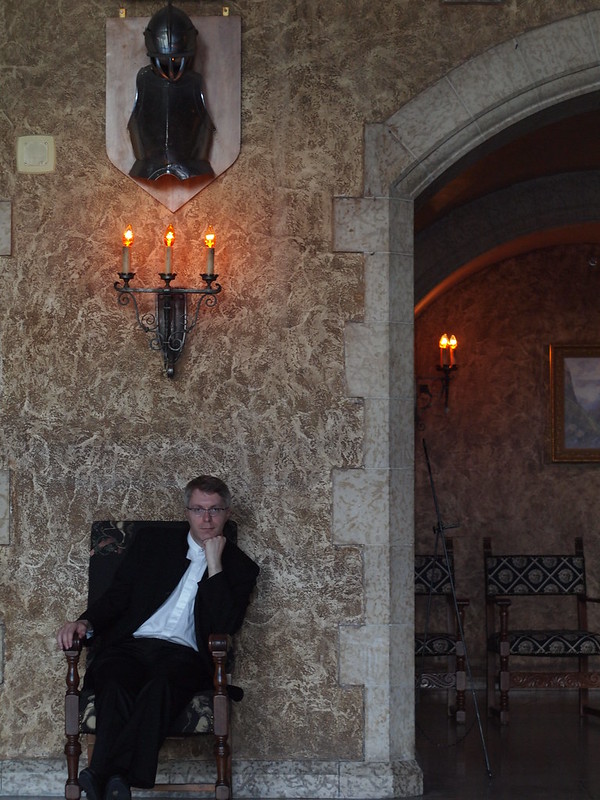
No, I don’t need to turn on a light; they’re already lit. But I need to find a light – a photo of a particular kind of one – to fortify my lexical explorations. And, as it turns out, this entails an exploration of more than a myriad of photos in my Flickr files. For some reason, good pictures of sconces are hard to spot. The sconces are always… well, not hidden, but not necessarily in focus.
But if I am tasting ensconced – and that is my aim – is it truly appropriate to put in pictures of sconces? In one way, I might as well have pictures of scones. You see, ensconced does mean ‘in a sconce’, but the kind of sconce it means I have no pictures of at all, and it has nothing to do with light – other than being a light fortification.
Though you might expect a word like sconce would come only once, there are somehow two kinds of sconce. One is the one you probably have in mind: a wall-mounted candle or lamp, typically with some kind of screen or tube or shade or similar protection (not to say fortification). This comes from Old French ensconse ‘lantern’, from Latin absconsus, past participle of abscondere, ‘hide’ (for the same sense, modern Italian uses nascondere, from inabscondere, which is just in plus abscondere). It is not the case that a sconce must hide the light it holds, however; it only needs to give it shelter.
The other sconce is borrowed from Dutch schans, from German Schanze (possibly but not necessarily deriving from a word meaning ‘basket’), and it means a kind of fortification: a small fort or earthwork for defending a pass or ford, or a castle gate, or to be a counter-fort of a castle – just a shot away, even in range of rolling stones. Also a kind of shelter, therefore, and also a snug one – protection when a storm or flood is threatening, but made for war.
Well. My armchair is not so bellicose. And just as the Dutch word schans was (after the stopping of the fricative) respelled sconce under the influence of the existing words sconce (yes, we’ve had the wall-candle word longer), and just as I’m gradually taking on the shape of this chair, our sense of ensconce – and its most common form, ensconced – has come to be a little more comfy, and the glow of Gemütlichkeit is not so often hidden under a basket. We get shelter so we do not fade away.
Not that ensconced is always so enhanced by happenstance; bad things can be ensconced too: consider “a wasps’ nest ensconced in the hedge-bank,” as Geoffrey Hill’s Mercian Hymns describes. But on the other hand, Greg Delanty, “from The Splinters,” demands,
Tell us of the rain tapping a pane while you’re ensconced by the fire cradling a pregnant brandy glass.
Where is Brahms? And Bruno Walter? Ensconced in resonant plump easy chairs covered with scuffed brown leather in a pungent autumn that blends leaf smoke (sycamore, tobacco, other), their nobility wound in a finale like this calico cat asleep, curled up in a breadbasket, on a sideboard where the sun falls.
So such things as we can afford come to pass. We need not fire cannons; we can take pot shots via the glowing screens before us. But, as we sit ensconced, we are able to look out on the world and make light of our troubles.
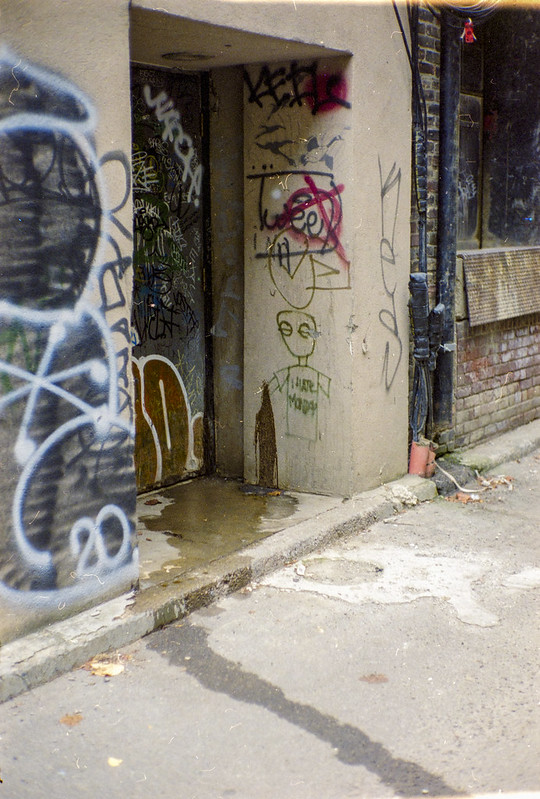
Would you rather go to a sketchy place or a scuzzy place?
What would you say is the difference between the two?
What about people – would you more likely avoid someone who was sketchy or someone who was scuzzy? What about if they were scummy? Slimy? Sleazy? Skeevy? How would you describe the differences?
Now how about a mountain – would you rather go for a climb on a mountain that was described as sketchy or one described as scuzzy?
Apparently the mountain has had that name for longer than English has had the word scuzzy in the way we know it. The mountain got its name from Scuzzy Creek, a creek that was used for gold panning by prospectors during the gold rush, but however scuzzy the prospectors probably were, its name doesn’t come from that; it may be a rendition of a word meaning ‘jump’ in Nłeʔkepmxcín, a local language, or it may be from Skuzzy, the name of a sternwheeler that was the first such boat to get through the rapids north of Yale on the Fraser. (I don’t know where the Skuzzy got its name.)
OK, so you probably wouldn’t call a mountain “scuzzy” normally, because scuzzy comes (as far as we know) from a blend of scummy and fuzzy and basically means ‘gross, shady (not in a good way), unclean, disreputable, unkempt’ and similar things. Sketchy, meanwhile, as I’ve written about before (twotimes), has an assortment of senses ranging from ‘difficult to discern’ to ‘baleful’. But how about a place – say, a bar (not necessarily a Boston bar)? A sketchy bar would be like the one on Tatooine where Luke Skywalker nearly got killed by some intergalactic dirtbag. But that bar was quite clean. A scuzzy bar might or might not be dangerous, but it wouldn’t be clean. You could expect your arms to stick to the bartop if you leaned on it.
And a scuzzy person? Unclean, to be sure, but probably also a little disreputable. But not as chancy as a sketchy one. On the other hand, you could meet someone in a bank boardroom or a capitol office who you would describe as scummy, slimy, or sleazy, or maybe even skeevy, but it would be unusual to meet someone sketchy in such a place, and almost unthinkable to meet someone scuzzy in the shiny wood-panelled corridors of wealth and power.
Now let’s try it with derivative nouns and see how it goes: scuzzbag, sketchbag, scumbag, sleazebag, slimebag (admittedly slimeball is more usual). You’ve probably met all of these kinds of people; I know I have. But I have met someone I would describe as a sleazebag, a slimebag, in fact a scumbag (really about the lowest you can go in terms of character), in a high-floor boardroom in the financial district of Toronto (not to do business with him per se; he happened to be on the board of an organization I was, coincidentally, about to end my association with). I have also met scuzzbags and sketchbags, but always at street level – sometimes in drinking establishments or similar, and sometimes more literally at street level. I think I would trust my wallet around a scuzzbag but maybe not around a sketchbag; around a scumbag slimebag sleazebag, on the other hand, my wallet would not likely be the issue – that kind of person often does crime through institutional means.
We have always had scuzzy people and scuzzy things, of course. But we have only had the word scuzzy since – would you like to guess? – the late 1960s. The noun scuzz (sometimes spelled scuz) showed up at the same time. Scuzzbag, scuzzball, and scuzzbucket appeared in the 1980s.
Oh, and also in the 1980s, we got the Small Computer System Interface connector, universally abbreviated as SCSI, which is also pronounced “scuzzy.” But while it was a standard connector two decades ago, if you find one now it might very well be scuzzy – because it’s old and dirty. Everything I used to use SCSI for I now use USB for… or wireless. And there’s nothing less scuzzy than clean, clear air.
It’s stodgy weather, chums, when all is muck and slush and sludge, like guts full stuffed with porridge till your brain and butt can’t budge.
We’re stood in mud in gumboots, chums, while buses lumber by, still wanting will to trudge alone as drool drips from the sky.
We dine on fudge and dumplings, chums, and, sausage-stuffed and drunk, we slouch on chair or couch or bed or slump in tub and dunk.
Such stuff late winter’s made of, chums, all wet and wait and weight, slide slowly, sleepy, congee-clogged, and eat, and snooze at eight,
And have a beer or two, dessert, read books or just a blog, and give in to inertia like a stodgy big old dog.
Stodgy. It’s a word that sounds like what it means, isn’t it? There’s a reason for that. It’s formed from stodge, the etymology of which is not properly known – no one has mustered the energy to trace it to its birth – but a common thought is that it’s “perhaps phonetically symbolic after words like stuff, podge,” to quote the Oxford English Dictionary. In other words, it’s likely phonaesthetic – the weight of existing words bogs down the sounds and gives them a kind of gravity that helps form new words and season existing ones.
Stodge, incidentally, was first a verb, meaning ‘stuff’ or ‘gorge’ and later ‘bog down’ or ‘trudge’; stodge the noun came along after meaning ‘mud’ or ‘porridge’ or ‘stuff that’s hard to get through’; at last, stodgy came around, first meaning ‘thick, glutinous’, and then more generally ‘heavy, hard to get through’, and then extending from that to more figurative uses: music, literature, ideas, moods, and people. And weather, chums.
I remember when I first encounteried this word, I had a sense of what it meant, generally – a liking for something, a fondness, you know – but I didn’t know exactly where it came from. I was a kid! I looked at it and I saw pen and I saw enchant and chant, and I assumed it was said like “pen chant” and referred to a sort of little enchantment – if not a petit enchantment, then anyway pen as in penultimate. Or perhaps just as in the size of something that would fit in a pen, or be connected by a pen like a pen pal.
In fact, it was some time after I learned the French word for ‘lean’ – pencher – that I put two and two together and realized that, of course, penchant was the word for ‘leaning’. And because it’s a word that one sees from time to time but hears seldom, I didn’t notice any time before that that many people say it the French way – [pɑ̃ʃɑ̃] – and that the rest say it to rhyme with trenchant, and no one (other than youne me) seems to say it in any way reminiscent of an enchanting shanty from Penzance.
That may seem funny, given my, um, taste for words and their origins and pronunciation. But we all start from somewhere, and, again, given my, shall we say, liking for language, it was inevitable that I would eventually come wise to it. The only issue for me now is that it has acquired the permanent perfume of my early sense of it – as a charming little fondness, of the type one declares oneself to have when it is in fact a low-key all-consuming obsession that only reveals itself to be so if obstructed. This idea that it’s a leaning – as Oxford says, “a strong or habitual inclination; a tendency to do something” – has me a bit off-kilter. Yes, they also allow “a taste or liking for a person or thing,” but in that context it gains an air of imbalance, and, more to the point, of acknowledged imbalance. After all, any inclination can lead to a fall, and while having a penchant for someone is often the moment before you admit you’ve fallen for them, it still to me seems to have the air of charm like a pendant, you know?
Which is not unreasonable, given that French pencher comes from late Latin pendicare, which is from pendere, ‘hang’. Yes, that’s right: the same root as gives us pendant, pendulum, suspense, depend, and so on. So if you declare that you simply have a penchant for someone, while you are in fact watching the clock pendulum in suspense as you depend on them to text about whether they want to hang out with you, well… it all just falls into place.
America has a set of matching acronyms for some of its most important people: POTUS, the President Of The United States; FLOTUS, the First Lady Of same; VPOTUS, the Vice President; SCOTUS, the Supreme Court (not the 13th-century theologian)… But how about hoi polloi, the huddled masses of America, the populace at large, the insignificant general nobodies of the United States? Is there not some matching word that may dignify one such for a glorious scintilla of history?
Certainly there is, and it’s been around longer than any of the others – as long as you don’t mind a backronym. It’s IGNOTUS (or, in the original Latin, IGNOTVS, since they didn’t have the variant rounded U form for the vowel). We may say it stands for Insignificant General Nobody Of The United States. But the ancient Romans would have just said it meant ‘unknown’ – or ‘strange, odd, weird’, or ‘ignorant’. Literally it is just the negated form of the past participle of nosco ‘I know’ (there’s a phantom g, lost from the verb, that reappears in places like this).
And because it’s a past participle, it varies according to gender. Ignotus is masculine; the feminine form would be ignota (which, as IGNOTA, can be Insignificant General Nobody Of The America, and if you protest that that’s ungrammatical, I don’t know why you have such high expectations), and the neuter form – should we have any need for it – is ignotum, which you might actually see in real life from time to time in its Latin use, as in, for instance, the musical work Magnum Ignotum (‘the great unknown’ – nothing to do with guns or ice cream bars) composed by Giya Kancheli. The plurals are also available: ignoti, ignotae, ignota. And, for the plural genitive (should you be so possessed), ignotorum and ignotarum.
There is, I should concede, an actual English word that was formed from ignotus in the way English words often have been: ignote. It can be an adjective, suitable mainly for use in poetry, meaning ‘unknown’; or it can be a noun, suitable mainly for use in the 17th century, meaning ‘unknown person’ – or, as the ignotes, the whole class of persons of no repute. Which matches pretty well Insignificant General Nobodies Of The United States (only, of course, it is not so nationally specific). But ignote does not quite convey ‘weirdo’ or ‘ignorant’ as ignotus does.
Of course we don’t need a word for someone who’s ignorant; we already use ignoramus. But before you go ahead and form ignorama, ignoramum, et cetera on the basis of that, I have something to tell you that you might not know: ignoramus is neither a noun nor an adjective in Latin. It’s a present tense plural verb. It means ‘we don’t know’. English got the word when it was used as the name of the title character in George Ruggle’s 1615 play Ignoramus. This also means that there is no plural ignorami; in fact, since it means ‘we don’t know’, in one sense it already is plural – the singular would be ignoro, ‘I don’t know’.
But we know ignoramus. It is ignotus that is, for most of us, unknown. Still, we may be forgiven. Why not? After all, ignotus also means ‘forgiven’. In that sense, it’s the past participle of ignosco, which is formed on the same nosco root, but in this case is negated and then adjectivized, rather than being adjectivized and then negated. It’s like the difference between inflammable formed from inflame and able and meaning ‘able to be inflamed’ and inflammable formed from in and flammable and meaning ‘not able to be flamed’.
Well, it’s not quite that big a difference – it’s not an opposite. It’s just that forgiveness is putting something out of mind, whereas the unknown is something that is just not put in mind. Either way, it’s something that’s let slide: as a POTUS or FLOTUS might think on encountering an IGNOTUS, “Never mind.”
Every time Aina and I drive to or from Collingwood via Airport Road, a scenic drive through rolling countryside in the part of the world in which Schitt’s Creek is set, we pass through a hamlet named Avening. It takes less than a minute to go by – it has only five named streets plus the highway, which is formally County Road 42 at that point. The most salient thing in town is a smallish town hall with an early-twentieth-century-looking hand-lettered sign that reads “Avening Community Centre” (I don’t have a photo, as I’m always driving when we pass it, but you can see it on Google Street View). And the one thing I always wonder is “How is Avening supposed to be pronounced?”
It’s a reasonable question. Small towns often manage to have names that are pronounced differently from how you might expect. And in this particular case, it’s not even obvious whether you would say it like “evening” but with an a as in “rave,” or whether the A would be as in “hat” or as in “father.” And should you say the e or just skip it? For that matter, can we even be sure about where the stress goes? Could it be “avenging” without the g after the n, or “Aveeno” with an ing in place of the o?
You might wonder why this all matters. How likely are you ever to need to say the name? Not very, I suppose – unless you’re talking about something happening at the Avening Community Centre. But what happens at the Avening Community Centre?
That turns out to be a much easier and more rewarding question to answer. The Avening Community Centre, to quote its website, “has a bowling alley in the basement, a picture of the Queen on the wall behind the stage, a main hall clad from floor to ceiling in wood and a faithful following of fans who like to see great old halls used for the reason they were built.” What reason is that? Concerts, some of which by rather well-known acts. They just had two sold-out shows by the Canadian group Sloan, for instance, and other acts that have played there include Neko Case, Sarah Harmer, Basia Bulat, Joel Plaskett, and Hawksley Workman. (If you haven’t heard of any of them, that’s fine, but they’re well known among a certain segment of the populace.)
One thing that the hall doesn’t have on its website, however, is a pronunciation guide. It does have a phone number you can call, but when I called, I got neither recorded message nor live person. Well, fine. I’ll just look on Wikipedia.
When you look up Avening, Ontario, on Wikipedia, it redirects to the article on Creemore (the town of a bit more than 1000 people just northwest, a short drive by two roads or an even shorter paddle on the Mad River), an article that does not anywhere even include mention of Avening. (Try it on Google Maps and it also takes you to Creemore, even though Avening is clearly labelled to the southeast just out of the frame.) However, you can readily find out that Creemore, a name made famous by an eponymous beer made there of exactly the kind you would expect to find at concerts by Sloan, Basia Bulat, or Hawksley Workman, is from Irish Gaelic croí mór ‘big heart’, and it was coined by the founder of the village, Edward Webster, an Irish-born entrepreneur – it is not named after a place in Ireland or anywhere else.
Well, OK, then, who founded Avening and how did it get its name? With a little poking around, we can learn that it was founded in 1860 by Frederick C. Thornbury, who was born in Avening, England. (If his surname seems oddly familiar, as it may if you have spent time in this part of Ontario, it’s because Thornbury is a village on the shore of Georgian Bay, as far northwest of Collingwood as Avening is south-southeast. But it may have been named after a different Thornbury – for one thing, it was founded 30 years before Avening was.)
Aha! So is there a Wikipedia article on that Avening? There is; it’s a town of almost exactly the same size as Creemore, but much older and more English-looking. Does the article say how to pronounce it? It does not. How about if you look at the page in any of the other languages it exists in – Cebuano, Spanish, French, Ladin, Polish, Portuguese, or Swedish? Nope, none of them say, either.
But further poking around the interwebs comes up with some other resources. The Survey of English Place-Names tells us that it is probably formed on the same old suffix as many other English place names ending in -ing, a suffix referring to people who dwelt in a given place. And what place? In this case, it has been suggested “that the nameless stream which runs through the village might formerly have been called Avon (OE Afon from Brit *abonā ‘river’).” We can see that the oldest Old English citation for it is in the dative, Æfeningum, which would be from nominative Æfeningas (confirmed in Surnames as a Science [1883] by Robert Ferguson).
This all confirms stress on the first syllable, and the Æ gives a hint that it might now be the same a as in, for instance, hat. But the only discussion of pronunciation on the site relates to a version of the name attested in 1697: “The last spelling Auning arises from the vocalisation of pre-consonantal -v – . . . but the pronunciation [ˈɔːniŋ] is not now heard.”
Oh, well, phew. That’s a relief. Because even if that were how it’s said in England, it wouldn’t be how it’s said in Ontario. (Compare the name Balliol, which as a college at Oxford is said like “bailey-all” but as a street in Toronto is said like “ball oil.”) But we keep looking. And at length we come to Lippincott’s Pronouncing Gazetteer (1856), which – once you look up how to read its pronunciation guides – gives the a in Avening as in father, not as in hat (and the e as reduced but still pronounced).
Which is not to say that’s how it’s said in Ontario. For that matter, it may well not be how it’s said in England these days either; they sometimes just up and change it. (A friend emailed me and said, “Many years ago, I visited my cousin in England. She lived in a town called Felpham (Felp-ham). Years later, I visited her again, and she then lived in Felpham (Fel-pham, yes, with an “f” sound). I asked and she shrugged. Just the way things happen, I surmised.”) So, in spite of concerted effort, we still don’t have a solid answer. But we’ve at least had a scenic and informative trip, haven’t we?
Speaking of which, though I’ve told you where Avening, Ontario, is – by the Mad River, just southeast of Creemore, on Airport Road about a 20 minutes out of Collingwood towards Toronto – I haven’t mentioned where Avening, England, is. It’s on a little stream which – as mentioned above – doesn’t have a name. (Oh, come on. I’m sure the people who live there call the stream something. British History Online calls it “the Avening stream.”) It is in that cute stretch of hills northeast of Bristol called the Cotswolds. It is in Gloucestershire, which is pronounced “glostersher” (or “glostasha” to Canadian ears when said in usual British English). And the nearest town of note, a bit under 20 km east, is Cirencester, which Lippincott tells us is to be said “sisseter,” although in our alternately literalist and obscurantist modern times it is typically pronounced either “siren sester” or “sister.” Which makes Avening seem like an easy walk.
And speaking of an easy walk, there’s one more thing I typically do when researching pronunciation: check YouTube videos. And guess what. Here is a resident of Avening, Gloucestershire, going for a walk, and you can hear how he says it:
Yes, he says like like “evening” but with the a as in “rave.” And he calls the stream “the mill stream.”
OK, but how about the one in Ontario? The first video I found is a guy driving through who says the a as in “hat,” but he also says some other place names differently from how I know people around there say them. So I kept going. And I found a recording of a Zoom meeting (embedding is disabled, so click the link) of the board for the Avening Community Centre. Just about the first thing the convener says is “Avening Hall Board.” And he says it… exactly the same way.
I did something this morning that I seldom enjoy – and didn’t enjoy today either: I went on a Saturday morning to St. Lawrence Market.
Oh, I love St. Lawrence Market. It’s close to where I live, and I love shopping there. But not on Saturday mornings. It’s busy then, but more to the point, many of the people in it are engaging in the most dilatory and directionless obambulation. I know exactly where I want to go and how to get there, but between where I am and where I am going are a pick-and-mix of populace who are there simply to walk around and look around – to stroll hither and thither, or thither and hither, or hi–thither. To look left and walk right, and vice versa. And, at random moments, simply to stop on the spot.
Of course they have every right to go there and look around and shop around for entertainment. And I, on the other hand, who know what I want and know where to get it, can go at times when my much more purposive perambulations are pursuable with much less interference. Except, of course, when I forget to buy cheese on Friday and have to go back and get some on Saturday morning before heading out of town. (Because one simply cannot head out of town without cheese.)
I won’t say that obambulation is my very vexation. Well, I won’t won’t say it – I am one who usually chooses where to go and efficiently goes there, and when people cruise the city’s footroutes in less predictable and more leisurely ways it can momentarily frustrate my course, but I know that when I am in tourist mode I often walk likewise, and I know I live in an area popular with tourists; the things they like about it are the things I like about it. So there you have it. And there. And… over… th–here!
But I will say that obambulation, the word, is – for whatever I think of what it names – a quite enjoyable word. It has a sound of bim-bam-boom, like pinball bouncing off bumpers, which is similar to how some people navigate St. Lawrence Market. But beware of getting too close to Obama in how you say it: it’s from ob- – as in obstruct, object, obnoxious, and obnubilate – and ambulation, which is to say ‘walking’. There is also the related verb obambulate and adjective obambulatory. It doesn’t mean ‘walk obstructively’, though (let alone ‘walk obnoxiously’); it really just means wandering back and forth. A synonym of obambulatory is itinerant.
Which means that you could also say my regular itinerary in the market – first to Domino, the dry-goods store downstairs, then perhaps to The Roastery, then up the stairs to White House Meats (stopping at Olympic Cheeses and Scheffler’s Deli as needed), and ending at Urban Fresh Produce – is also obambulation, in one way of viewing the word. But it’s not really a back-and-forth wandering – there is no hither-thither looky-loo strolling. When I am in the mood for that, I go to the art gallery.