Doesn’t this word look fancy, with its little ornamental roof on the â? And yet doesn’t it also look a bit, um, well, are you sure you want it?
Let’s start with how to say it. The chât is “shat” as in château – in fact, that’s why the circumflex, because that’s where it comes from, and while you could write it without it, chathole doesn’t suggest its origin and sense as clearly. And the hole is “hole” as in hole – or, to be specifically frank and frankly specific, as in shithole. You know, that colloquialism meaning ‘highly undesirable place’.
So yeah. This word is a blend of château and shithole. It has two available senses: it can be one of those ghastly monster McMansions, wretched hives of kitsch and fugxury; or it can be a luxury accommodation, such as a grand hotel or a castle or château, that has, hmmm, seen better days. You know, it looked great in the ads or on the website, but when you get there the paint is peeling, the stairways are dirty, the tub has stains, and everything looks kind of faded and dingy and sad.
Well, what do you expect from a château, really. They’re all old, and that takes upkeep. And there are a lot of things that might have been functional once but are just decorative now. Just look at that cute roof, for instance: ˆ. Once upon a time, that cute roof on château was an s (as is usually the case for circumflexes in French spelling). But that’s not the only thing that changed with the fashion of the times. That water feature at the end – eau – was once a whole other ell of the edifice – in fact, an ellum, later reduced to an el. And that soft ch there, in the mists of ancient time, was a solid “k” – spelled c. Yes, this château is a faded, fashioned relic of chastel, which in turn is a modification of castellum. So this fancy-looking French château is a gussied-up old cold stone castle.
But we can agree, or at least most of us can, that the word château has been well maintained and is presentable. It is a lamentable fact that the same is not true for all actual châteaux. And it is also a shame to say that many a similarly grand and palatial accommodation – hotel or residence or whatnot – is not what it used to be: it started out inviting but has ended up as a hole – not just a shadow of its former self but a châthole of it.
But at least it once was something good. Which is more than can be said about many of the suburban disasters that have been turded onto the landscape in recent times…
In competitions for certain sports, such as rowing, there’s a kind of “second chance” round for competitors who didn’t finish at the top of their first round. Rather than being brutally and finally knocked out after one try, they go on to the… what was that called?
For years, I thought that it was called rapprochage – ‘approaching again’. (I didn’t pause and realize that the French noun from rapprocher is actually rapprochement. If I had looked it up, I would have known, but I was busy watching sports just at the moment, OK?) Finally I became aware that it’s actually repechage.
OK, but, wait… is that from French repêchage, as in re-, like ‘again’, plus pêcher, ‘to fish’? So, like, they’re being fished again, or fished back out, or…?
Yes, that’s right, hook, line, and sinker. If you drop something in the water, you fish it out; si on laisse tomber quelque chose dans l’eau, on le repêche. Ça c’est le repêchage! That doesn’t mean that it’s to give another chance to rowers who fell in the water, though – the English term draws on the common figurative sense in French of ‘rescue’ or ‘do-over’ or ‘de-oops’ or, um, ‘unfumble’. If you muff an exam and get to redo it, that is also repêchage.
But what I really like about the word is the image of fishing in the same pool again to get more fish. That’s not really how it’s used in French, but it gives the other point of view on the effort – not the contestants trying to recover what they let go, but those holding the competition going back and getting a few more.
Because there are plenty of fish in the sea, right? Isn’t that what your mom always told you?* So after every breakup there can be a repechage. Sure, sure, all the people clamoring for your attention who didn’t get it before get another shot, so it’s a repechage in that sense, but from the other perspective, you get to drop your line back into the sea and fish out another. (And perhaps another, and another, and…)**
And of course you can apply it to a wide variety of other life circumstances, too: flubbed job interviews, ruined recipes, cancelled travel plans, and, uh, quite a lot of things since Covid hit, come to think of it.
In fact, since life just keeps on going, we all just get to keep on trying. Every day brings a chance for repechage of things that had gotten out of hand and slipped away. We don’t necessarily get to redo the exact same things that didn’t work out the first time, but, you know, drop one in, fish another out…
*Actually, I’m not sure my mom ever told me that, but that would just be because I didn’t ever lament a breakup to her, which in turn is mainly because you have to be in a relationship before you can have a breakup, and my romantic life before age 30 was a pretty damn empty pond. But never mind. I’m told that normal people get that kind of insight from their mothers as appropriate.
**But let’s remember, this is from pêcher, ‘fish’, not pecher, ‘sin’; tempting as the image may be, repechage is not ‘sinning again’.
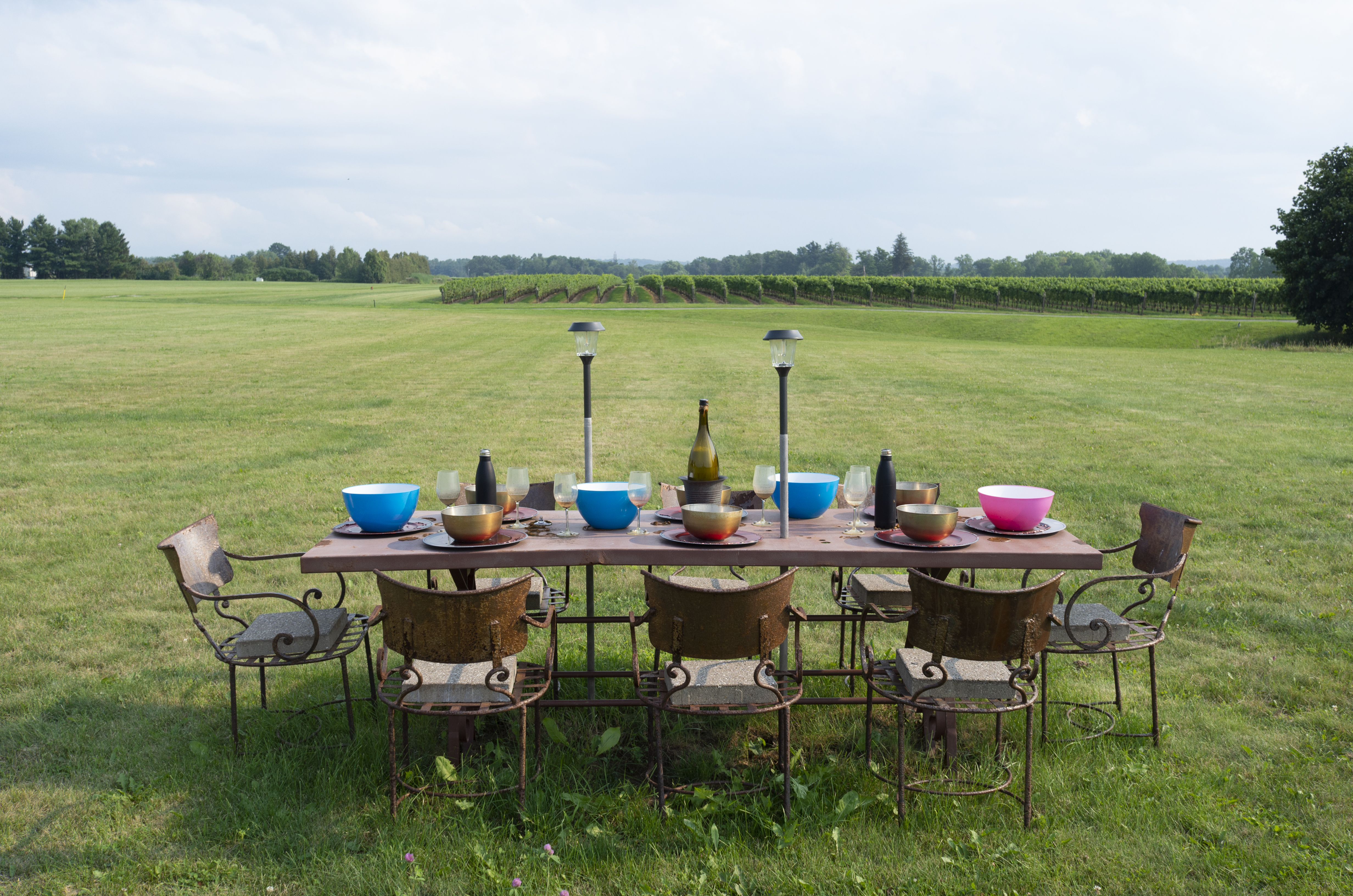
You could see it from the road: a dining table set up in the field near a winery,* with chairs, bowls, glasses, bottles… Someone’s dining al fresco!
But no one was there. So, since it was just a short walk from our destination of the hour, I went and had a look. And what did I find?
Barmecide.
Well, no, technically I didn’t find the Barmecide, though I did find a barmecidal feast of sorts.
But what does that mean? You may not be familiar with the term. Did it feature the bodies of murdered barmen? Was it, like the Mad Hatter’s tea party in Alice in Wonderland, on the barmy side? Is there some barm- root indicating some pest that it was there to kill?
No, it’s just that, well… have you heard of a Potemkin village? A village that appears in passing to be real but is just façades, like one of those Olde Weste townes at some touriste trappe (though in the case of Potemkin originally referring to a deception of a tsar)? Well, a barmecidal feast is a kind of Potemkin dinner, or, I guess, a Pot-emkin-luck (say, do people still do potlucks?): an illusory feast, or anything similarly illusory. And the person who serves it – perhaps the same person who made the king’s new clothes, but now moved from tailoring to catering – is a Barmecide.
The term comes from a story in the Thousand and One Nights. A beggar is invited into the house of a rich person, one of the Barmecides, a family noted for their prodigality, and is served a feast… but everything is imaginary. The host pretends to enjoy delicious food and wine, and the beggar, for want of a better option, plays along, savouring every imaginary bite, even though he is terribly hungry.
So what’s with this name Barmecide? Does it have anything at all to do with homicide, pesticide, fungicide, or, um, can’t decide? It has served up such a clear morpheme, ready for immediate consumption, so…
It has done so barmecidally.
The Barmecide family was actually the Barmakid family, originally a Buddhist family from Balkh, now in Afghanistan, but subsequently converted to Islam and risen to a position of wealth and influence in the area now known as the Middle East under the Abbasid caliphs of Baghdad. They’re named in a few of the tales of the Thousand and One Nights. At the time, they were a byword for wealth and generosity. Imagine a set of fantastic stories set in the United States in, say, the early 1900s – if someone mentioned Carnegies or Rockefellers or Roosevelts, you’d have an idea right away of what sort of people they were, right? Well, same with the Barmakids.
And the tale that gave them this particular fame – known to English speakers under the needlessly mutated version of the name, Barmecide – did not slander them. It doesn’t end with the illusory feast. After the beggar has played along gamely, the Barmakid laughs and says how happy he is to have found someone of good grace and good humour, and then he has his servants bring out an actual feast, and he invites the beggar to stay in his household.
So in the original Barmecide feast, the illusion was ultimately only an illusion (how meta!). But in established English usage, since at least 400 years ago, the happy ending is forgotten.
And how did the barmecidal feast in a field I found end? No, no one served real food at that particular table. But we ate and drank quite well nearby. And I got some nice photos. So I can’t complain, you know?
Weep, for the race goes not always to the fleetest of foot.
Weep, for the finest-fletched arrow may fall short.
Weep, for the felt of the table may be torn.
Weep, for the best are oft left behind.
Weep, for many fine words are known only to lexicons.
The plight of the forlorn neologism, of the hapless hapax, of the word that is named only when it is defined, would make the very sky weep to the point of pleuvisaud. It is, as the Oxford English Dictionary tells us, fletiferous: ‘causing weeping’.
Did you know this word, fletiferous? You did not, I think, but you do now. You know the -iferous part, of course, with its Latin -fer- root at heart having to do with bearing or bringing: coniferous, odoriferous, pestiferous, and so many more. The flet- comes from Latin fletus ‘weeping’, from fleo ‘I weep’.
It’s a well-formed word, predictable in construction, and naming a quality that is known to exist. It has every reason to be used. Yes, it’s a four-syllable classically derived word; you’d expect to find it in academic texts and poetry, and probably not in more quotidian (everyday) prose. But its fate does not reach even that. As Oxford tells us, it is “Obsolete. rare. Apparently only attested in dictionaries or glossaries.”
And in a flit and a flutter, it has left… has left us in tears.
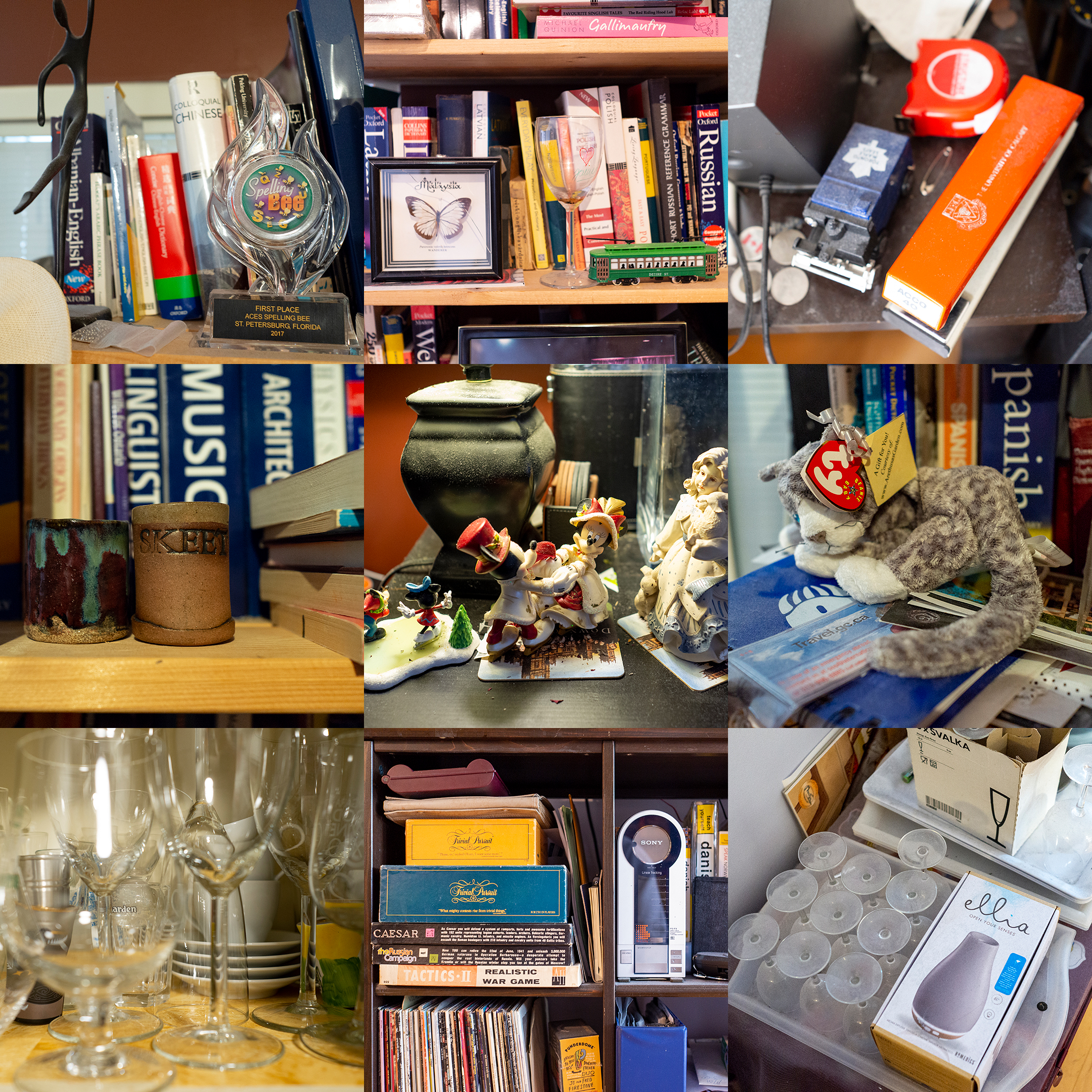
Propped up on bricks and in brackets, strewn on shelves, or locked away in boxes, the assorted flotsam and jetsam of life decorates – or clutters, depending on whom you ask – the home of anyone who’s lived long enough. Knick-knacks, widgets, tchotch, stuff, junk… bric-a-brac. A bricolage of half-forgotten fancies, lost moments, gifts, souvenirs, lapses of reason: the tritest detritus to treat us to. Old but not antique, antique but not vintage, vintage but not valuable, collected here and there, à bricq et à bracq.
And what does that mean, à bricq et à bracq? Oh, you know… willy-nilly, hither and thither, by hook and by crook. It’s just some bit of made-up fancy that came from somewhere and means something somehow. Seemed cute at the time, know what I mean? Anyway, stuff collected à bricq et à bracq (or, per Littré, de bric et de broc) is what came to be called in French bric-à-brac, and from that we get our English word, bric-a-brac, exactly the same except with the diacritical broken off (maybe it’s in a drawer somewhere) and said as English rather than as French.
This is all the stuff you’re supposed to KonMari out of your life: pick it up, peek for a spark of joy, and chuck it when the battery check of memory fails to give a faint glow. But is it KonMari or Kobayashi Maru? If you chuck it you have deleted a trace of your life, axing your tree at the roots, feeling an instant pang of regret at the inevitability of evanescence, but if you keep it you feel weighed down and trapped by it – and whoever lives with you will surely set phasers to “ablate.” It looks like a no-win: you realize that this is all the sorts of things that in the modern era we bury ourselves with, just as ancients would fill their tombs with bracelets and bangles and glimpses of golden glory. If you let it go, you lose immortality; if you keep it, you are always already in your self-made tomb.
But wait: reprogram it. If each one brings a spark of joy, then you have a constellation of memory and fascination brightening your space, and each star is a world of its own when you choose to visit it.
But look. I mean listen. I mean both. However imbricated with bric-a-brac our homes may be, like some Kubrickian back-lot prop shop or a cubist still-life by Braque, our language is doubly, triply, quadruply so. The imperial excursions and intercultural contacts that English has had have left it laden with lexis reflecting every encounter; you may have a drawer full of bottle openers, a cupboard full of shotglasses, a cabinet full of souvenir bells, but our language is the ultimate box of bric-a-brac; it has six or eight words for any of many things that could get away with just one. Ah, yes, they all have different tones, different memories, different practicalities, but… is it really so many little sparks of joy, or is it mostly just dust of especially large particle size?
Or does it matter? Our vocabulary, like the night sky, is infinitely capacious. It fills the rooms of our lives without overfilling our living room. (Ignore that stack of dictionaries and style guides behind my armchair.)
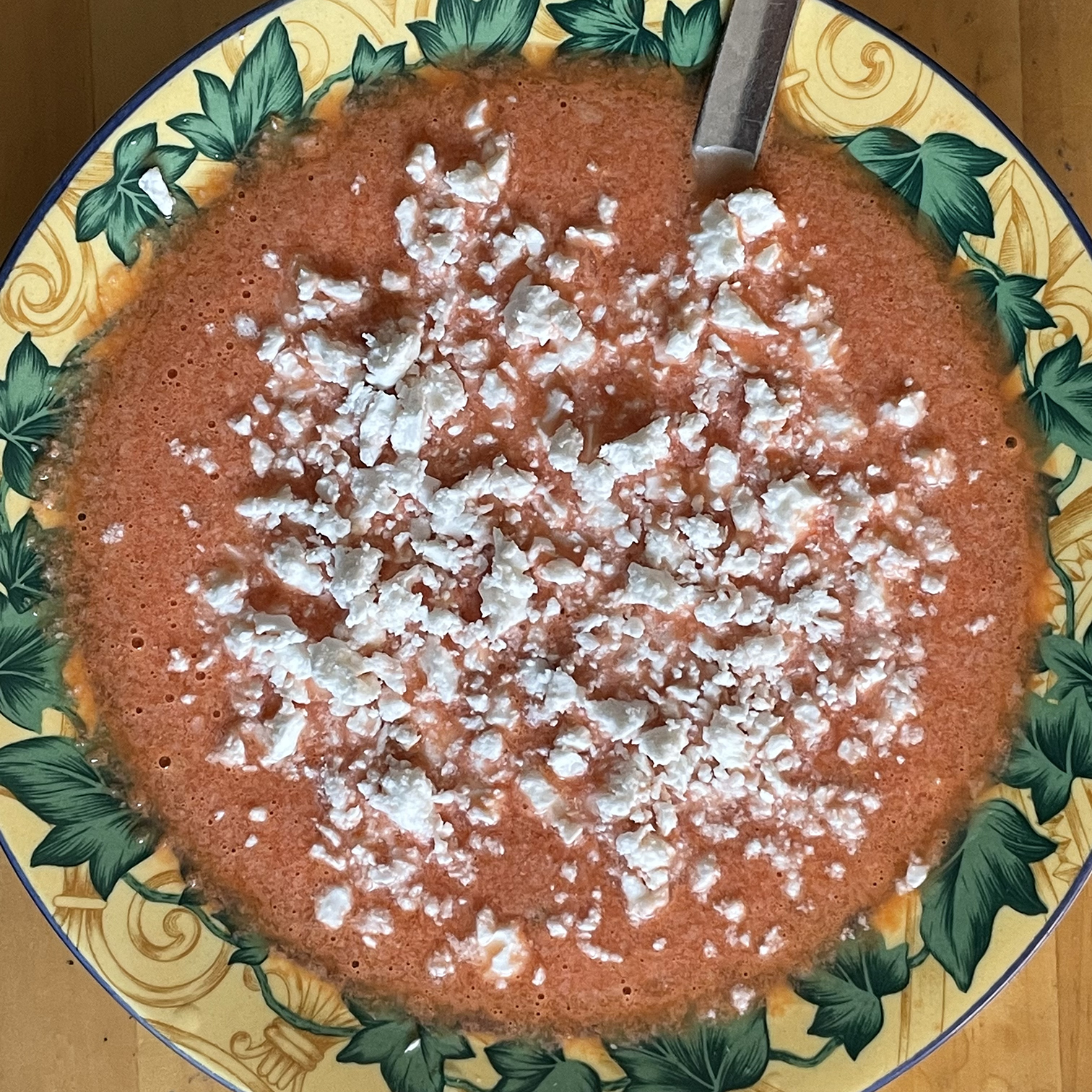
For supper tonight, Aina made some delicious gazpacho. It’s always been her dish to make – she’s the soup queen around here – so I’m not perfectly sure of the proportions, but the ingredients that go into the blender are:
bread
garlic (or garlic scapes)
olive oil
sherry (or Madeira – or sherry vinegar, but who has that)
salt (unless she doesn’t bother)
ice cubes
watermelon
And once it’s in the bowl, we crumble feta on top of it (which kind of obviates the salt). It’s delicious.
Yes? I see a hand in the back? Yes?
It’s not?
Are you sure?
Well, then, tell me what makes it not gazpacho.
Really. Is that so. Tomatoes.
Gazpacho, as I’m sure you know, is a very old Spanish recipe – in fact, an ancient one; it is thought to have been brought to Spain, in one form or another, by the Romans. Now, tell me: did they have tomatoes in Spain at that time?
Another hand back there? Yes?
Yes, that’s right. Tomatoes originated in the Americas. They’re popular in European cuisines now, but that’s comparatively recent. Tomatoes were first used in gazpacho in the 1800s. For all those centuries before that, gazpacho was made with many different ingredients – I’ll get to that in a minute – but not tomatoes. And they’re still not essential, though they are common.
Cuisine, folks, is like language. It’s produced by people in cultures constantly interacting and varying. Almost any recipe – and especially any traditional recipe – doesn’t really have a single source or a single correct original version. Ingredients are imported from other countries – do you know why the Spice Route was such a big thing for so many centuries? Have you looked at where the various containers in your kitchen are from? Hot peppers and potatoes, like tomatoes, came from the Americas, but they quickly became so popular in cuisines on the other side of the planet that they are now generally accepted as essential in “authentic” recipes.
Authentic, like original, pure, and any other word of that sort, when applied to cuisine – as to language – means just that the speaker wants to present one point in time and space as valid and all others as less valid: any history after the version the speaker considers correct is degradation, and any history before it doesn’t exist; any version from another place (or even another kind of person in the same place) is deviant. But the truth is that different people even in the same place do different things, because cooking uses available ingredients, techniques, and implements and follows individual tastes and whims. Of course people have their opinions – recipes such as chili and barbecue inspire very heated discussions – but they’re founded in taste and fantasy.
That doesn’t mean we can’t talk meaningfully about a particular named recipe – for instance, it would be obnoxious to put hot dogs in a blender with orange juice and call it gazpacho (or anything else, for that matter) – but we do best to be pragmatic and shy away from absolute pronouncements (except for the sake of trash talk, I guess, since cooking can be very competitive). And we should be wary of terms that imply some pure point of origin: most recipes, like most points of grammar and most words, trace back in their sources into the impenetrable mists of time and may well use elements originally from other places.
Take gazpacho, for instance. The word is of… uncertain origin. It may have come from Arabic. Or it may have come from Latin. The speculated etymons are such as may raise an eyebrow on a historical linguist. But the word is here now, and its spelling and pronunciation are established. (Well, you can argue about the different pronunciations of the z in different varieties of Spanish. I’m not here to do that.) And so, within very broad parameters, is what it names.
Gazpacho is a kind of soup; that much is a given. It’s usually – though not always! – served cold. It comes from an old recipe involving bread, garlic, vinegar, olive oil, salt, and water, and those ingredients are standard, though you can apparently get away with leaving out one or more of them if the soup is nonetheless sufficiently gazpacho-like. It has variations throughout Spain and, now, around the globe. It is now commonly, but by no means universally, made with tomatoes. Cucumbers, onions, and peppers are also common ingredients. It was traditionally made using a mortar and pestle, but food processors and blenders are popular today for reasons that should be obvious. It may be thick or it may be thin; you may even drink gazpacho from a glass, but you are unlikely to finish a bowl of gazpacho using just a fork. It may be garnished with boiled eggs, ham, almonds, or various other vegetables. (Or, you know, cheese, if you want.)
In other words, gazpacho is a general kind of idea, like garden salad (which we also had tonight), meatloaf (did not have), ice cream (soon to be served), beer (drinking now), pizza (had for lunch), chili (not today), lasagne (not lately), and really just about any well-established recipe of any real complexity from anywhere on the planet. You can have the same kind of fun arguing about edge cases of gazpacho (or chili, or lasagne, or…) as you can about edge cases of chairs, tables, cups, et cetera. The way your mom made a particular dish (if she did) is naturally important to you, but we don’t all have the same mom. Nobody requires you to like the way everyone else makes it. The number one rule with almost any food is “Enjoy it”; if you can’t follow the number one rule, try finding someone at your table who can and let them have yours.
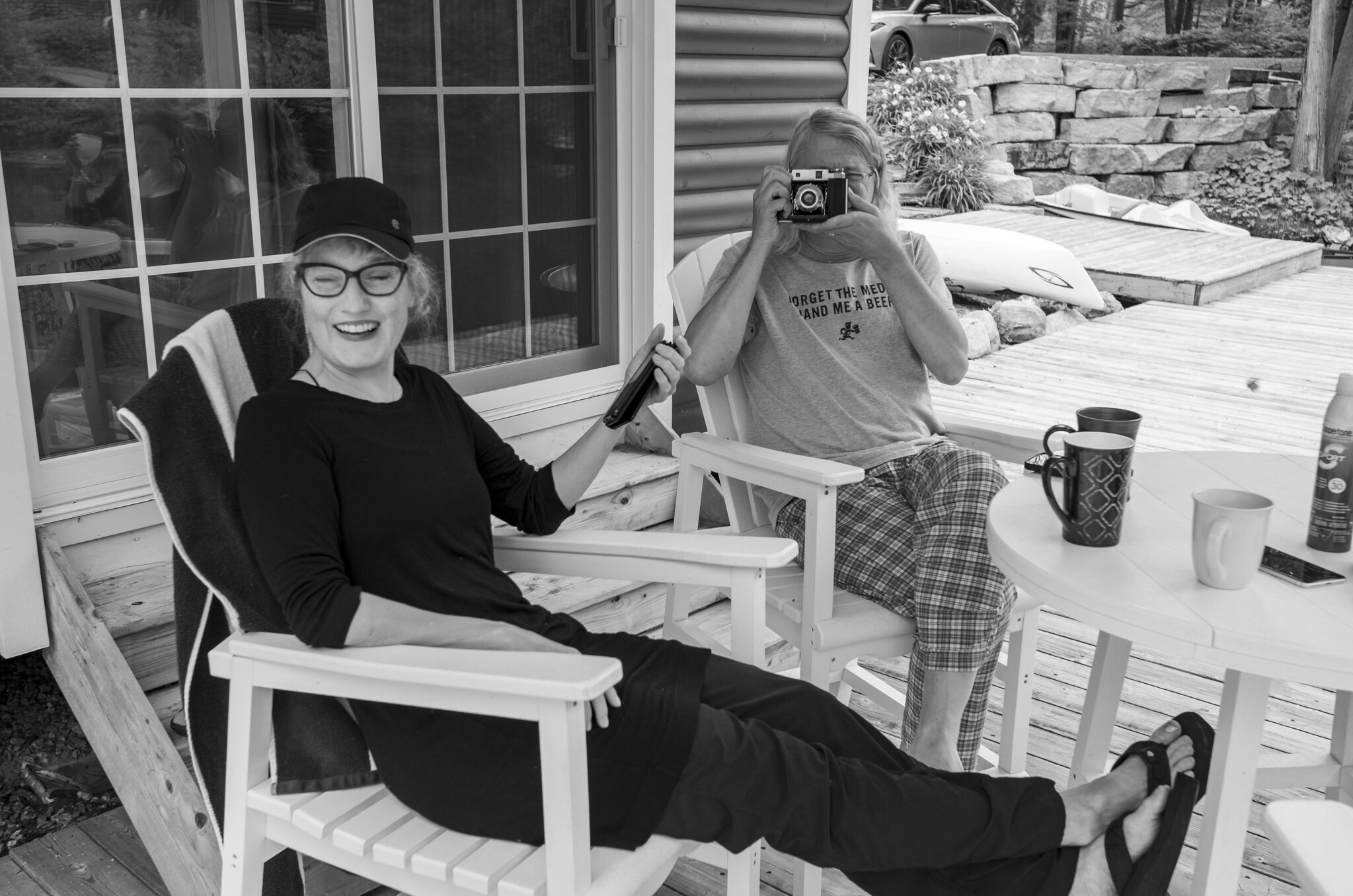
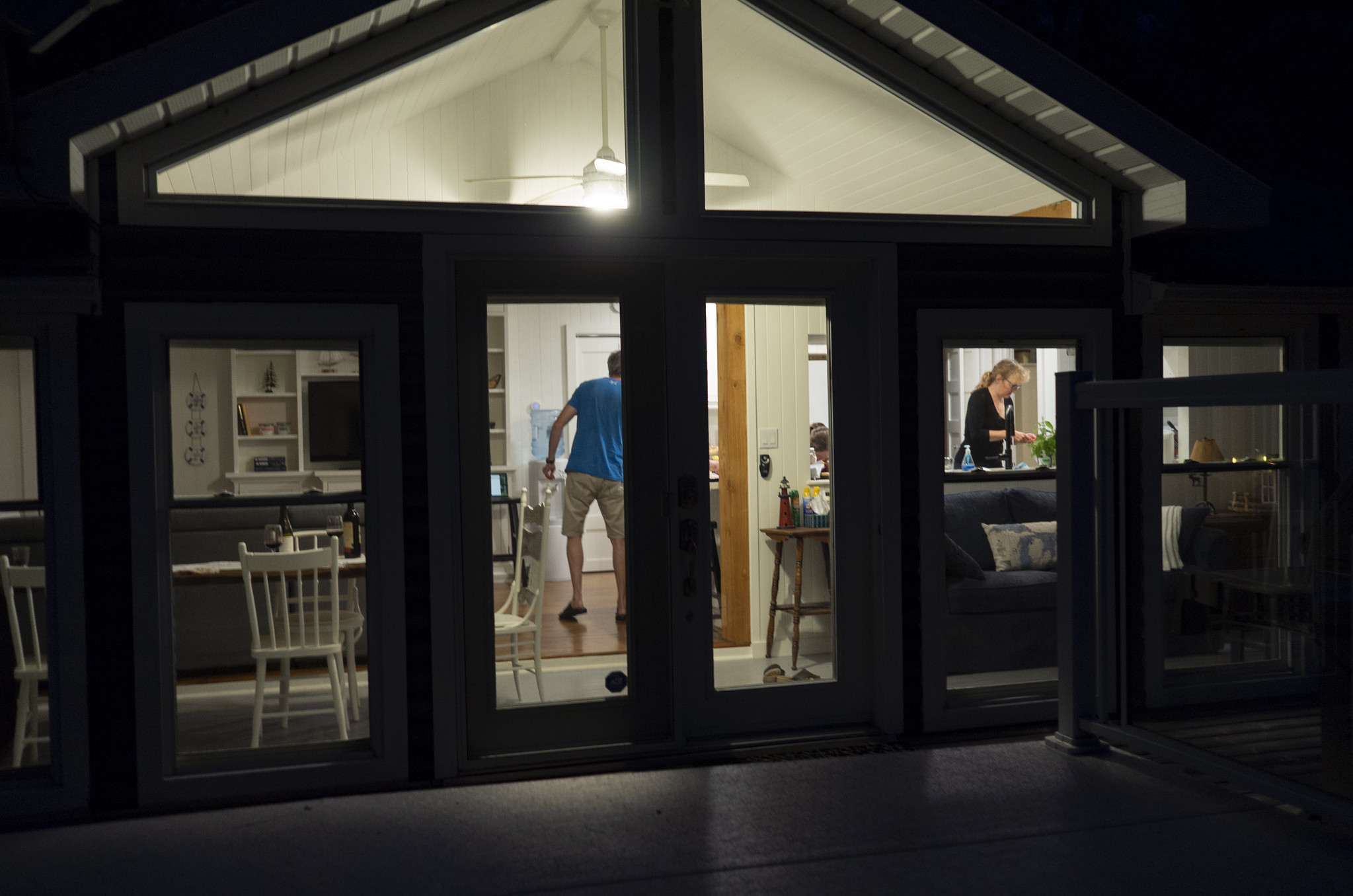
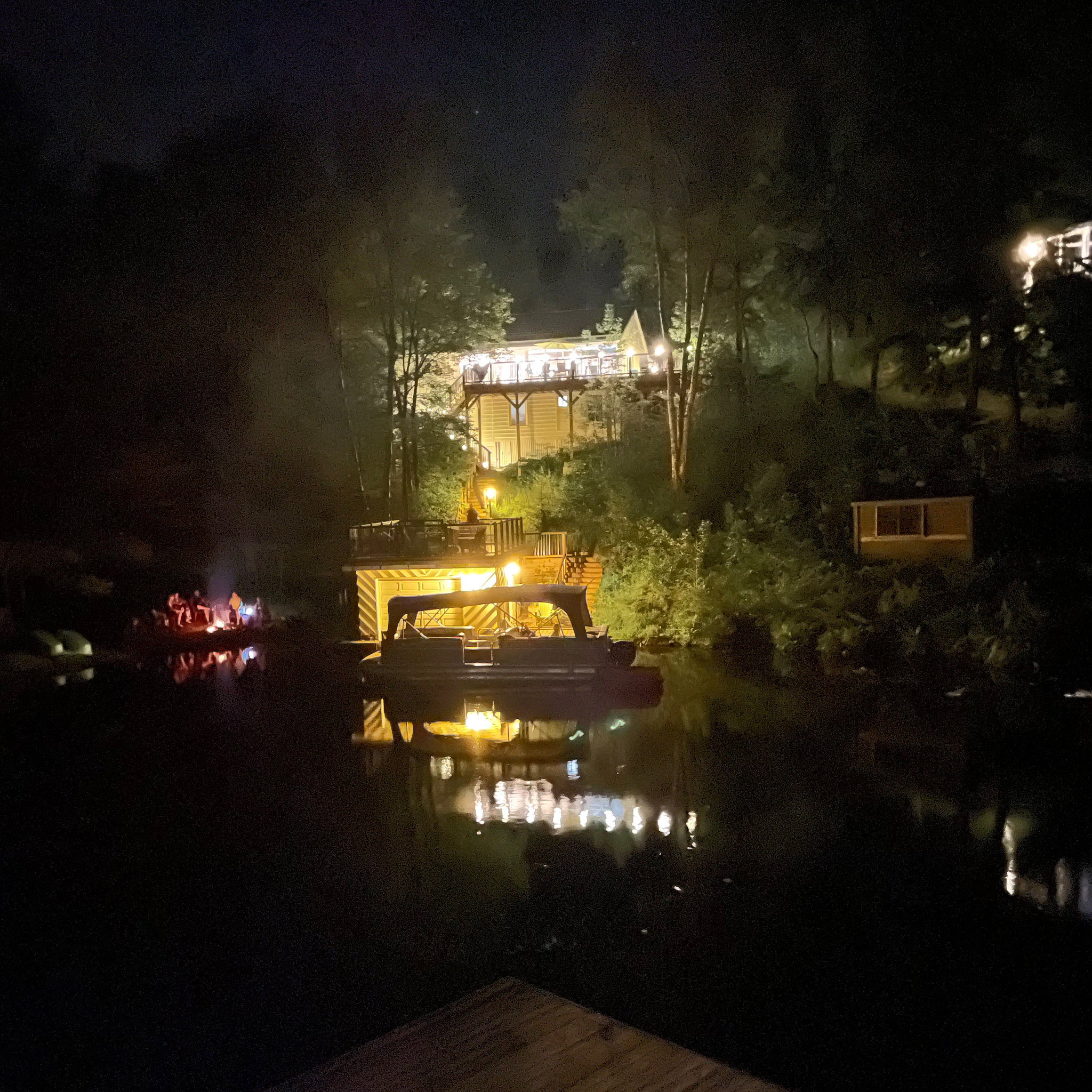
My wife and I took a little break this week: we joined a couple of friends up at a cottage they were renting.
The image you’ll have of that may vary quite a lot depending on where you’re from. In Ontario, though, and especially southern Ontario, that means we went to a country vacation house, likely on a lake (it was), with a certain rustic charm – though perhaps not all that rustic.
This is not a universal Canadian thing, though some people seem to think it is. I grew up in Alberta, and there was no idea of people having “a cottage” and “going up to the cottage” and so on (though some people might “go to the condo,” meaning a vacation property near a ski resort – or “to the chalet,” if they had even more money). No, to us in western Canada, cottage was (and I suspect still is) just a word for a little house, possibly (though not inevitably) in a rustic setting. Sure, some people might have a cottage as a second property, in the same way as some people might have a boat on some area lake or a Cessna at the local small airport. Nobody assumed it was a usual thing.
Not that having a cottage is a usual thing, even in Ontario, no matter how much some people seem to assume it is. Sure, there was a time when vacation cottages were within reach of ordinary working-class people. My wife’s family had one up near Lake Simcoe; it was a fairly simple, not-too-large place where they would spend a relaxing time doing fairly simple things not in the city. It didn’t even have a telephone. (It sounds like a couple of houses my family lived in when I was little. Only they weren’t vacation getaways. They were our homes!) But that was also a time when the standard guideline was that your car should cost a third of a year’s salary and your house should cost three years’ salary.
Anyway, cottages up in “cottage country” in Ontario almost never list for less than a million dollars now, no matter how small and basic they may be, and some are selling for more than ten million dollars. And while the standard image of a Muskoka cottage (Lake Muskoka is cottage central, though not the only place for them) is a single-storey woodsy place of less than a thousand square feet (a hundred square metres), many of them now are multi-storey showpieces, much more impressive than the average urban house.
In short, if you don’t already have a cottage in your family, and you don’t have access to several million dollars, you’re not going to own a cottage. You can still rent one if you can afford it – or you can stay in a swanky hotel somewhere nice for less. Nonetheless, especially since the pandemic hit, cottages have become very popular. Which has driven the prices even higher.
Depending on where you’re from, this all may sound familiar, or it may not. Russia famously has a cottage (dacha) culture – people who can afford it often have dachas out in some rustic location. Finland, Sweden, and Norway also something equivalent. So do some parts of the US. And, apparently, so does Hong Kong. In England, a rough equivalent would be bungalows, but there are also summer cottages. But of course there are cottages everywhere English is spoken; it’s just that in many of those places, they’re nothing more or other than little rustic houses. A poor working person might live in a cottage. But in Ontario? Nah, they’re for people with money now.
Where, by the way, does this word cottage come from? The -age gives a hint that it might be from French, and it sort of is; English got it from Anglo-Norman, which got it from Old Northern French cot or cote, also as in dovecote (you know, where you keep your doves – you do have doves, don’t you?). But that traces back to Proto-Germanic, and may be related to hut.
I know you’re wondering, so I’ll tell you: cottage cheese is so named because it’s a simple, inexpensive cheese originally made with left-over dairy. It’s curds and whey, originally for people whose incomes consign them to a humble existence. And of course now it’s often eaten by fancy people too.
No, we did not eat any cottage cheese at the cottage we went to this week. Lots of other kinds of cheese, though. And plenty of other good food, all of which we cooked ourselves.
This cottage wasn’t all that large: its main floor area and plan was similar to that of a house my family lived in when I was eight. The resemblance stopped there, however. The house we lived in didn’t have Scandinavian modern décor, or a basement, or a bunkhouse, or a large patio, or a dock on a bay. (But on the other hand, this cottage didn’t have an outhouse. Didn’t need one, either.)
Why are vacation cottages popular? I guess people like to be able to get away to a simpler kind of life. Just as long as it’s by choice. And maybe – at least for some – not all that simple, really, either, when you come down to it. But relaxing.
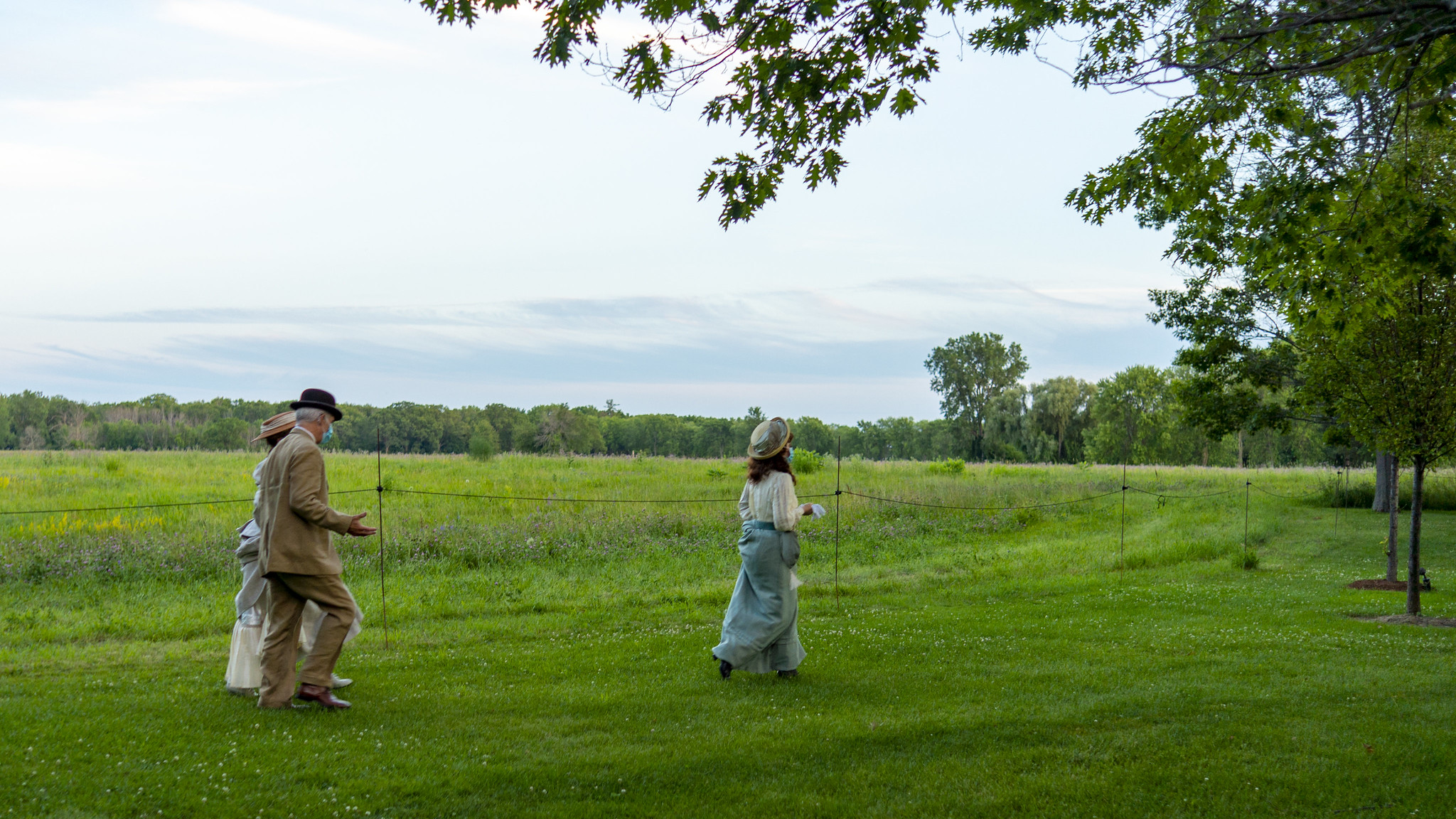
Yesterday, for the first time in 16 months, we saw a play. But this one had a fresh perspective: it was done al fresco.
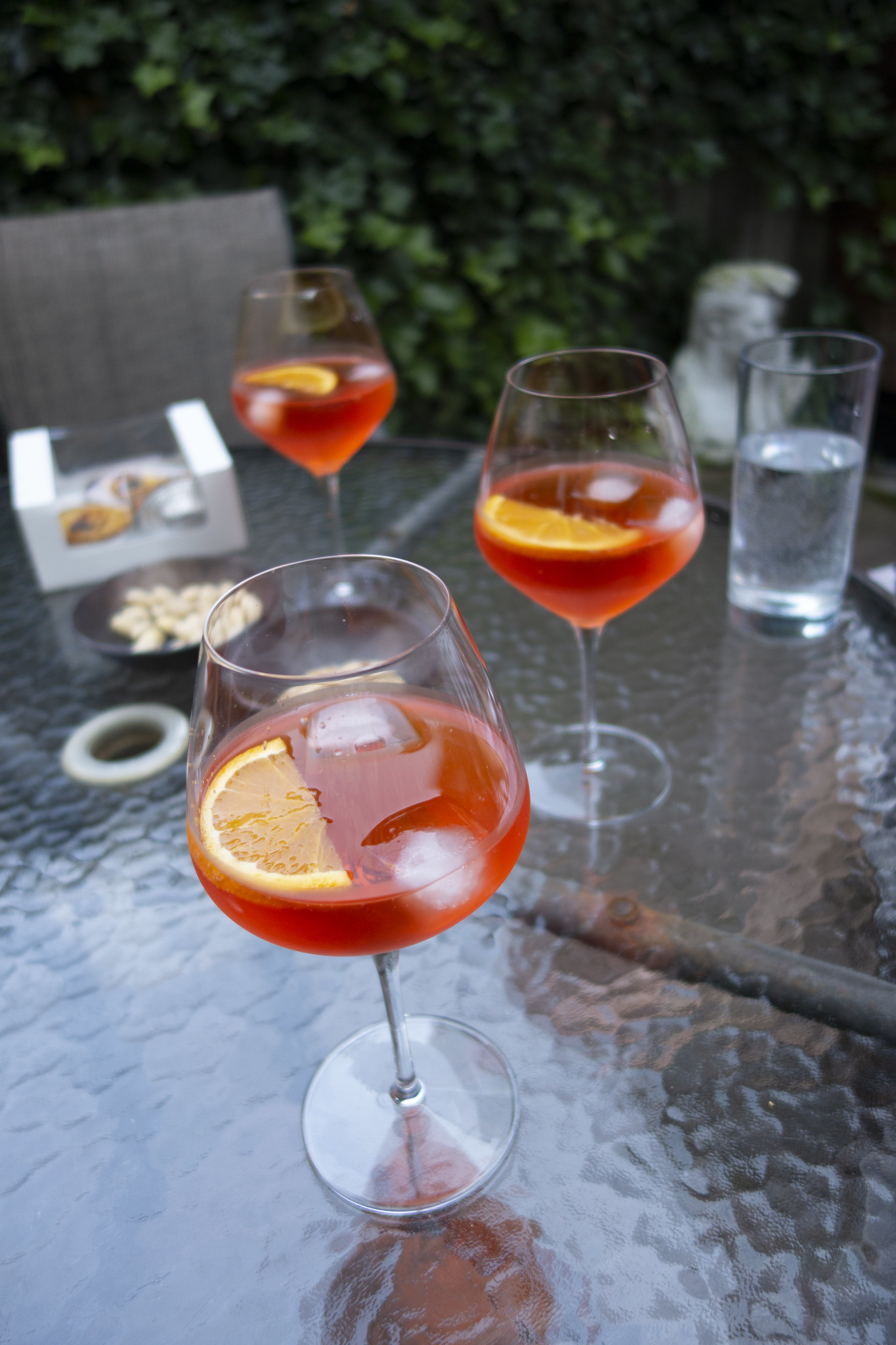
Ontario is still easing out of its Covid lockdown, so indoor theatre is out – and so (for a few days yet) is indoor dining. But it’s warm enough that we can do these usually indoor activities outdoors, in the warm summer air. Al fresco. So to speak.
Al fresco: in the fresh air, right? Fresh and clean and clear, constantly refreshed by currents and so relatively free of the accumulated exhalations of indoor atmosphere? Well, yes, but there’s fresh and then there’s fresh. And that’s the ironic part. Well, it’s one of two ironic parts.
Fresco, you see (also fresca in the feminine), is Italian for ‘fresh’ (as in ‘fresh plaster’ in the kind of mural called a fresco), but it generally carries a sense of ‘cool’. If you dine al fresco, it’s in the fresh air, yes, but in particular in the cool (or cooler) air. That doesn’t mean that al fresco dining in Italy (or elsewhere) is only said to be such when the outdoors is cooler than the indoors, but there is that tone to it.
And, indeed, if we had made the phrase in English, in the fresh (as in “We’re dining in the fresh today” – sounds entirely plausibly English, doesn’t it?), there would also be something of that sense, because even though we use fresh more to mean ‘not cooked’ and ‘not stale or rotten’, we are still aware of the ‘cool’ sense – “A bit fresh out today, isn’t it?” But we don’t put it that way because, for one thing, we got the phrase from Italian, and for another, we like the Italian sound of it. “Would you like to dine in the fresh?” sounds like PG Wodehouse or EM Forster; “Would you like to dine al fresco?” sounds… inviting, really.
That, however, is the second ironic part. Perhaps you have noticed that fresh and fresco seem like they could be related. They are, but not because fresh comes from fresco. No, both words trace back to Proto-Germanic *friskaz; Medieval Latin acquired it as friscus through contact in Lombardy. And *friskaz meant… ‘fresh’ and ‘unsalted’. In other words, fresh as in fresh water, and fresh as in unpreserved food. The ‘cool’ sense followed on thereafter.
All of that, following through to the present (including the borrowing of al fresco into English in the early 1700s), means that we can have go from an air conditioned house onto a patio to eat bacon and other cured and salted meats, as well as cheese and cooked foods, in warm (even very warm) air, and it will be dining al fresco.
We can also go see a performance of an old farce in warm air, likewise al fresco. But you know what? It was refreshing.
Quick: What’s the opposite of aimless? Is it aimy, aimish, aimly, aimsome, aimed, or aimful?
There’s a case to be made for each one, you know. Come, see.
You may be thinking, “Aimy? Oh, come on, that’s almost someone’s name.” Which it is, yes, but let’s be frank: it’s hardly the only English word that sounds like someone’s name. And tell me: What’s the opposite of rainless? Of iceless? Of snowless? Of dustless? Of dirtless? Of smokeless? Of leafless? Why, it’s rainy, icy, snowy, dusty, dirty, smoky, and leafy. Now, you may object that these are all things you encounter in nature, not abstract concepts, and you’re not wrong. But then there’s sleepless and sleepy and guiltless and guilty. They all have a sense of general dispersion of suffusion of the thing or quality, though, so aimy would mean something like ‘tending to have an aim; inclined to aim’.
Aimish has about the same problems. It looks like Amish, of course, though (unless you have an unusual way of saying Amish) it doesn’t sound like it. And it often connotes a certain general tendency; boyish, boorish, and brutish aren’t really opposites of boyless, boorless, and bruteless, though on the other hand Daneless could be an opposite of Danish. Still, while beamish might readily be said to be the opposite of beamless, aimish is among the less likely contenders for opposite of aimless.
OK, how about aimly? I don’t mean the adverbial form (“He raised the gun aimly”—actually, I don’t even fancy that). What is the opposite of godless? Why, godly, of course. We may think that lovely and homely are not opposites of loveless and homeless, but originally they pretty much were. But in general, -ly indicates tendency or likeness (it’s from the same root as like, in fact), so it’s not as strong an opposite as one might shoot for.
Well, then, aimsome has some aim, doesn’t it? Sure, sure, handsome is not the opposite of handless, but adventuresome opposes adventureless, and tiresome opposes tireless. Still, it’s not the most common formation for this kind of thing, and it generally expresses a tendency to causation – so what is aimsome is perhaps more likely to give aim to the aimless than to be itself the thing that is no longer aimless.
Aimed seems almost too easy. Obviously if a gun is aimed, it’s not aimless, right? But that opposes a very literal sense to a more figurative one. Besides, that’s not what I was aiming at. I mean the -ed that forms an adjective straight from a noun without passing through a verb in between. For instance, a person who is wearing a bowtie can be said to be bowtied, even though they were not tied in a bow, and one who is bright-eyed and bushy-tailed has not been the subject of bright-eyeing or bushy-tailing. And clearly if you are bowtied you are very much not bowtieless. (There is also a be- formation, as in bespectacled, but beaimed is just… no.) The only thing is, these all seem to imply a bestowal. You are aimed if you have been given an aim. Which is consistent with the usual sense of aimed, of course! But it’s not the best opposite of aimless; what we want is a word for a more self-motivated quality.
Which leads us to aimful. Full of aim. Just like beautiful, restful, joyful, and so on, all of which suitably oppose beautyless, restless, joyless, and so on. And guess what? Of all these words (leaving aside aimed), aimful is the one that has made it into the Oxford English Dictionary and Wiktionary. It’s been in use at least since the 1700s, and it still shows up from time to time. (Aimless, on the other hand, has been around at least since the 1500s. But I think it’s usual to be first aimless and then aimful, no?)
Notwithstanding all that, though, I must admit that my favourite of the bunch is aimy. I just think it’s more… amiable.
You may know that bibulousness is the state or quality of being bibulous, and bibulous (from Latin bibere) is ‘characterized by drinking’ – and by “drinking” we mean alcohol, generally. You may also know the Greek root biblio- relating to books, as in bibliophile, ‘book lover’. But did you know the word biblious or its derivative bibliousness?
Yes, that’s right. Biblious means ‘characterized by reading books’, and bibliousness is the state or quality of, well, being someone who reads (or, at the very least, acquires with the intention of reading, OK?) books, books, and more books.
And yes, I’m going to say that if you read books professionally (as I do – read them and edit them), that counts too. But there’s something special about having the printed volumes, isn’t there? Something about the feel, the look, the smell… you can just drink it in, so to speak. Or, um, so to read, anyway.
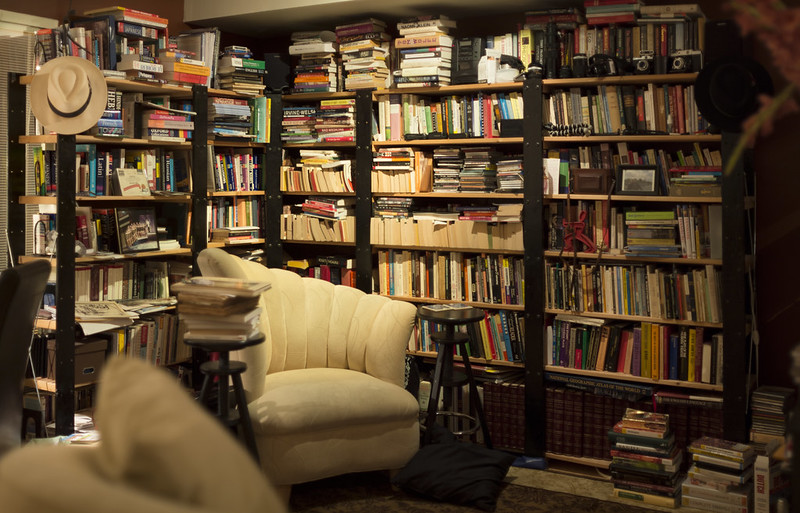
I am definitely a biblious person. I grew up in a house with about two thousand books (I counted), and here is a view of where I live now (I’m sitting in that chair as I write this):
I suspect that you, too, dear reader, are biblious. It seems likely that anyone who likes the taste of words also enjoys the taste (and presence) of books.
Bibliousness is a wonderful thing (at least I think so, and so does my wife), and it’s a wonderful word, and yet somehow, if you look in dictionaries or online, you won’t find it… until now. Yes, it’s a new old word, but it truly has always existed and was just waiting for its moment. What about bibliophile? That’s someone who loves books, That’s someone who loves books, but just as there’s a distinciton between, say, an oenophile and someone who’s bibulous, there’s a distinction between a bibliophile and someone who’s biblious.
And if you object to the mixing of Greek and Latin roots, well, macaroni to you. Go read a book.












 Sesquiotica