
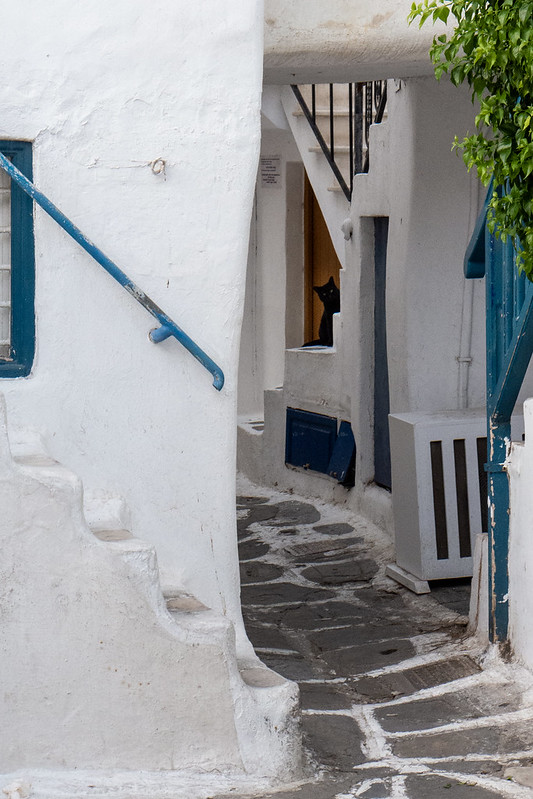
This is Mykonos.
The doorways, the stairways, the white paint solid on walls and patterned on the pavement but not matching the cement between paving stones. The cat, one of ever so many. The street that’s about a metre wide – yes, that’s a street, have a look at Google Maps: it’s a normal-sized street of reasonable importance in the town of Mykonos. Google tells me it’s Delou Street. I saw no street signs.
The town of Mykonos is all this, plus stores and restaurants and bars.
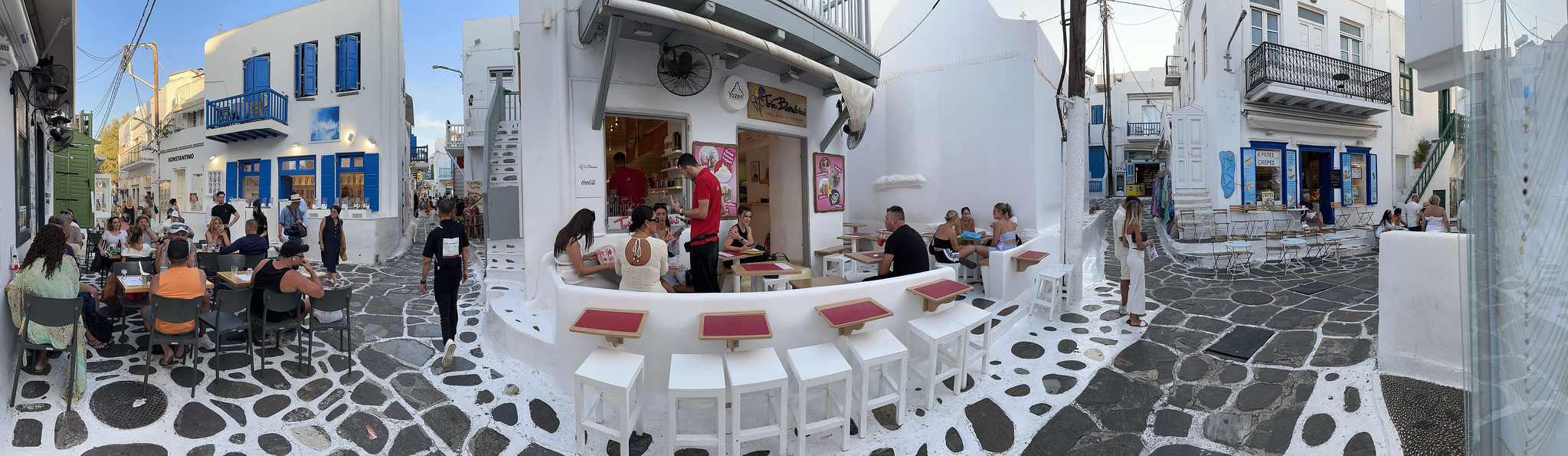
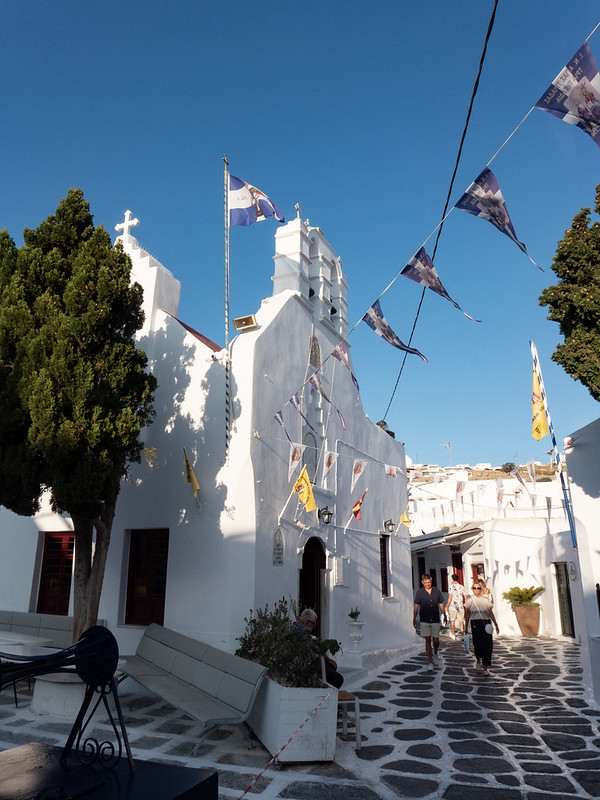
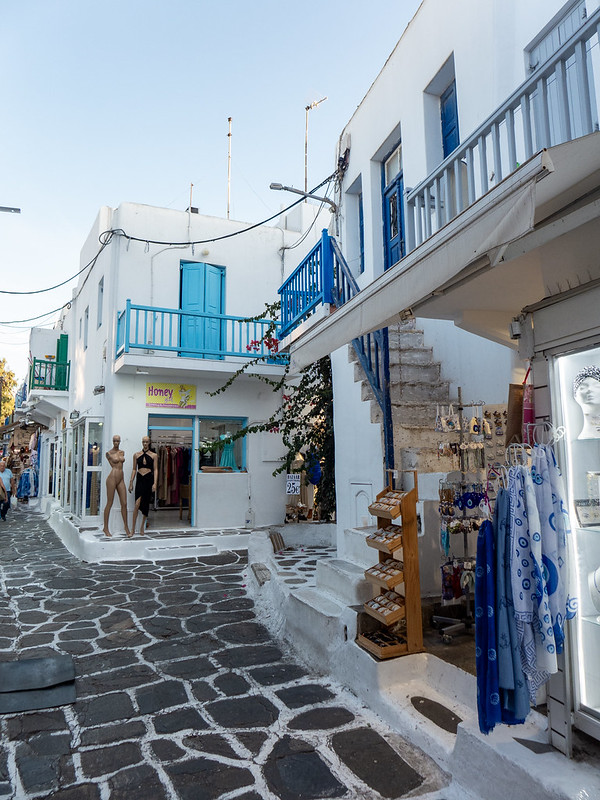
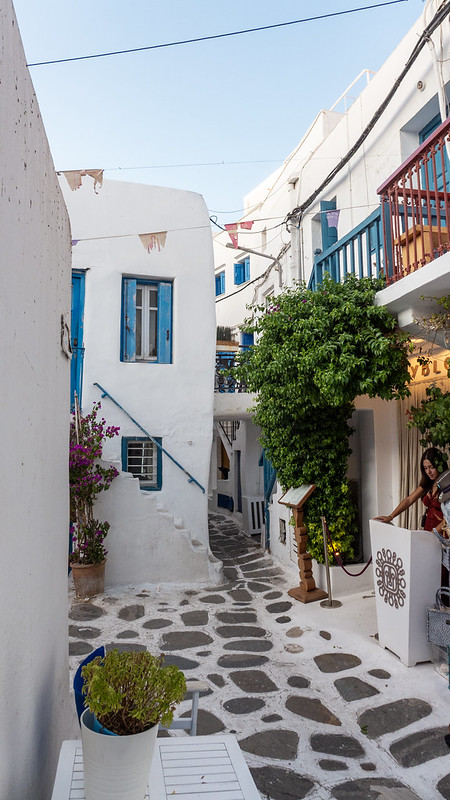
I didn’t have a clear expectation of what Mykonos would be like, but I assumed it would be like European seaside towns I’d been to before. It has a reputation for nightlife. I imagined a sort of small glitzy Barcelona, perhaps.
No.
When we stepped off the airplane in Mykonos an hour or so after sunset, it was my first foot on Greek tarmac. It was dark and warm and it was a small air terminal. We came out front and caught a minivan to the Fabrika bus terminal, at the south end of town, where the one in our group who had arrived earlier was waiting to meet the other four of us. She said we wouldn’t be able to get a taxi or minivan any closer than that.
Damn right we wouldn’t. Not without breaking the laws of physics, and several other things in the attempt.
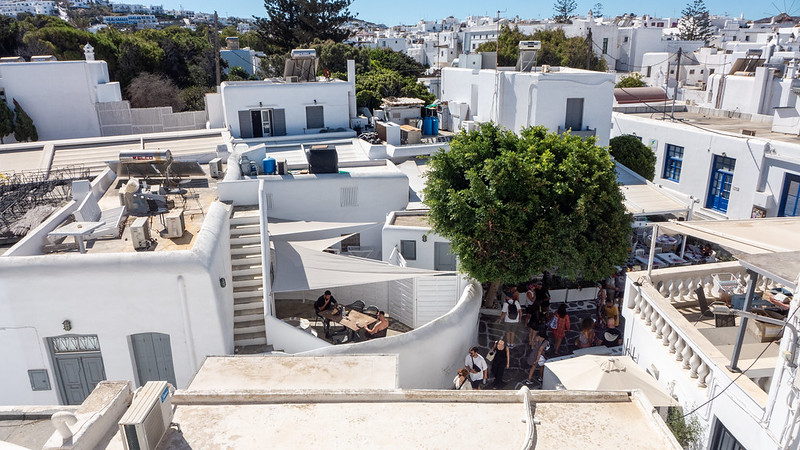
We dragged our bags and followed her down streets just wide enough for two people to pass on foot. Everything was open and busy. Stores in Mykonos mostly close at midnight during the warm season (and mostly don’t open in the cold half of the year). We took an anfractuous route that led us, after several minutes, to a narrow stairway up from a narrow lane. This was the view from the front door.
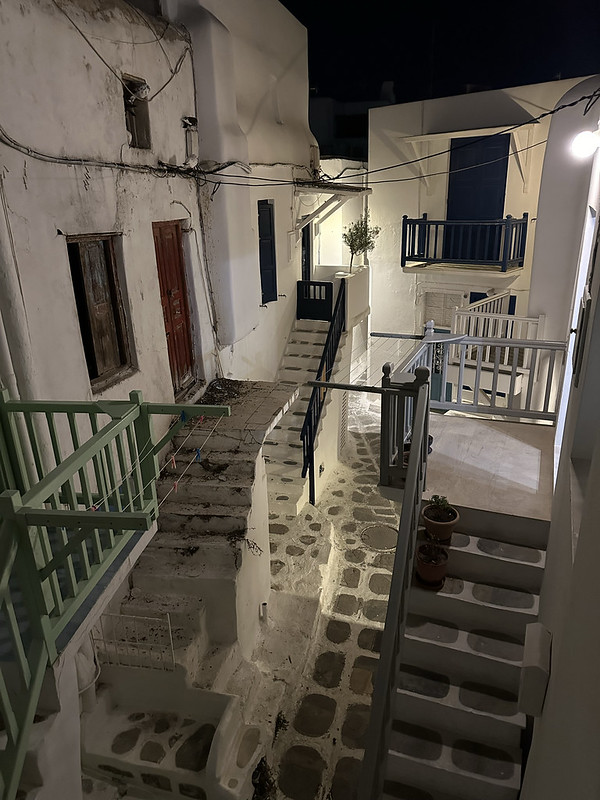
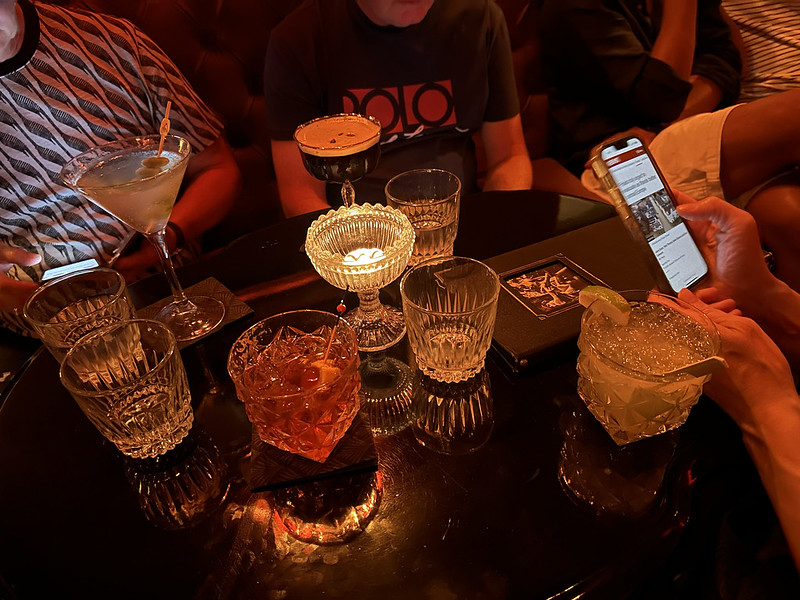
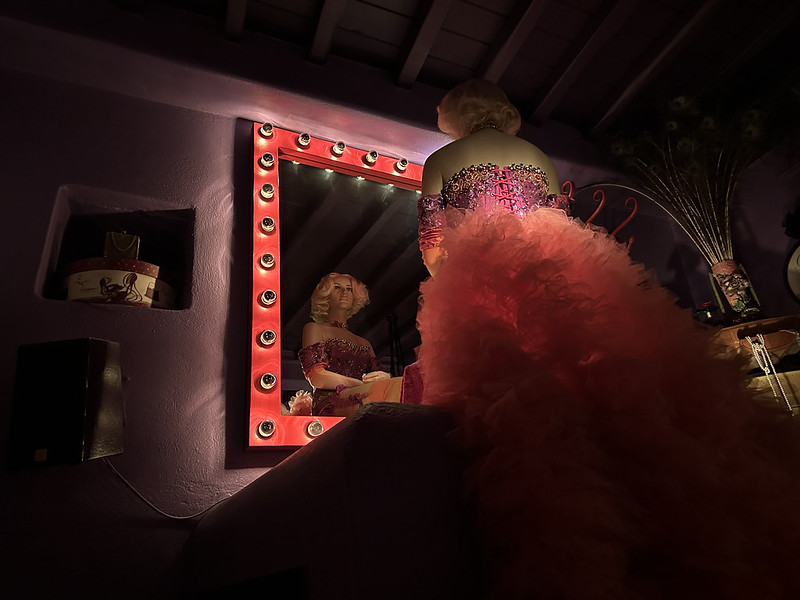
We were less than ten minutes’ walk from anywhere in town, and yet there was so much. Turn a corner and you find a bakery. Walk a little farther and the neighbourhood changes again. Go two very short blocks (scarcely farther than from one end to the other of the hallway in our condo building in Toronto) and you’re at a fabulous nightclub, with many others on offer.
And in the morning, you come out onto the rooftop deck and see this.
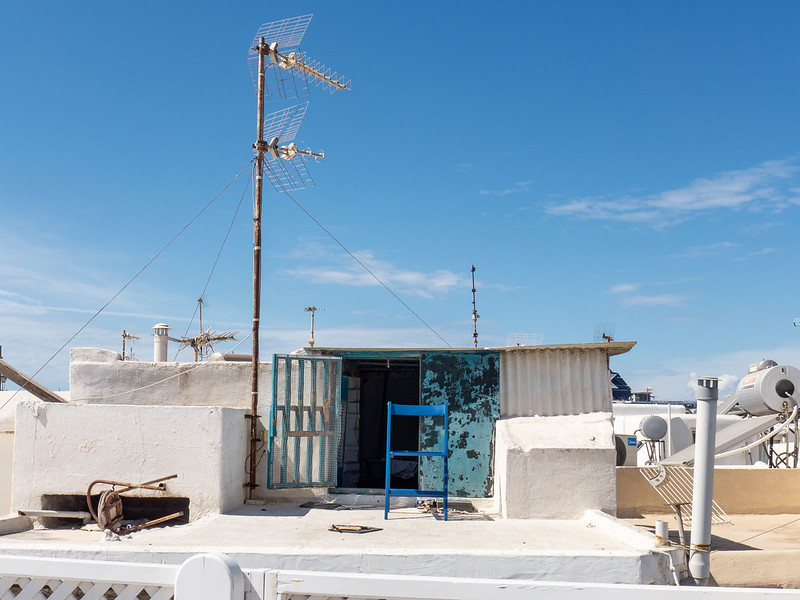
No, I had never been to another place like this.
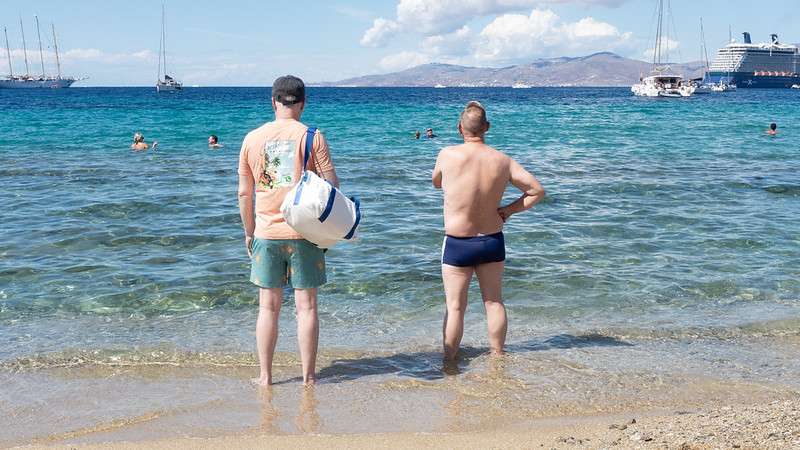
On our first day we walked to a nearby beach. The beaches in Mykonos do not load you up with sand in your shoes and clothes. It’s no miracle; their “sand” is small pebbles, too large to adhere. These pebbles have been wearing down for all of recorded human history, but they still have a ways to go.
The next day we took a bus to a beach on the other side of the island. It was crowded and we didn’t like it that much. We found a nice bar with a nice view and nice food and had a nice time.
I didn’t take pictures of the landscape as we went by on the bus because I couldn’t, really, but the roads are neither straight, nor flat, nor wide, and the landscape is hilly and full of rocks of many sizes – the large ones, according to myth, are the petrified corpses of the giants slain by Hercules – and there is not much that is green. It does not rain much on Mykonos, or, as far as I can tell, on any of the other Cyclades.
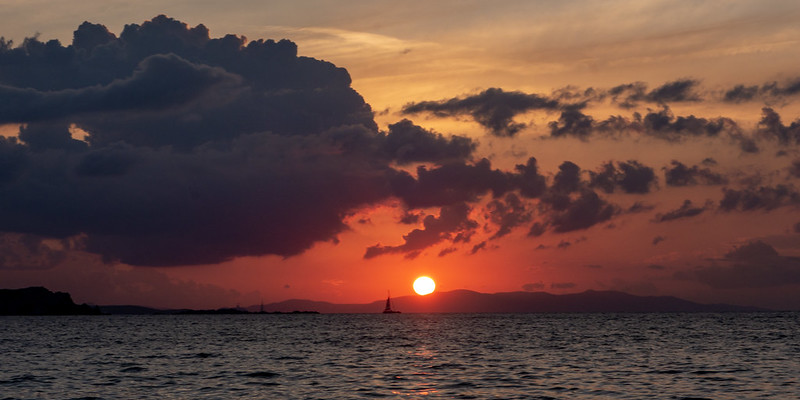
And then we went back to town and sat at a seaside restaurant and engaged in what is apparently the most popular tourist activity in the region: watching the sun set.
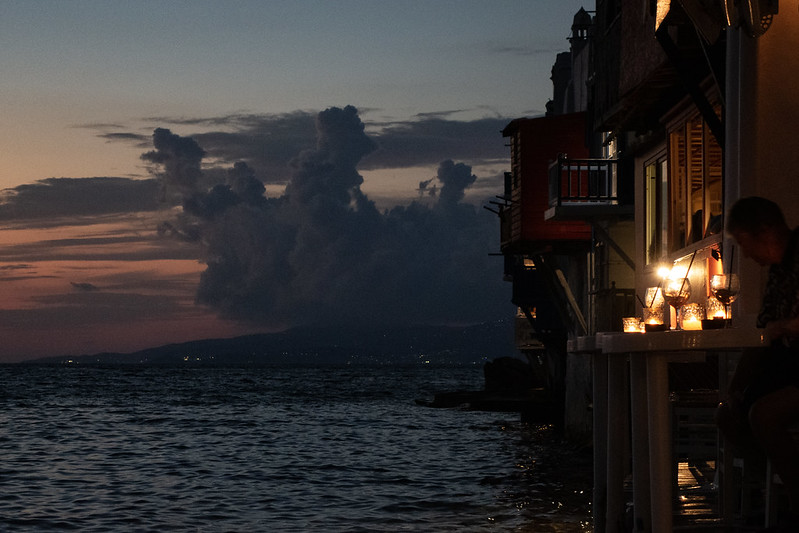
Mykonos does have luxury stores and nightclubs, as advertised. But they are all in this old condensed town. It is not like walking down a boulevard in Barcelona, or even an avenue in Verona. It’s small and cute and intense, almost Disney-like, but it’s not Mickey Mouse; it’s Mykonos.
During the day, if there are cruise ships in the harbour, the streets are clogged with impossible groups of people following sign-wielding tour guides. But after 4:00, they’re all back on their ships. And the nightlife people don’t come out until about 8:00. Which means you have four very peaceful hours when people are largely either napping or watching the sunset. Of course, you might be too.
What does Mykonos mean? The island is, according to myth, named after its first ruler, Μύκονος, who was the son or grandson of Apollo. His name means… nothing else that anyone knows. It’s pre-Greek. It came with the island, I guess. The island’s nickname is “Island of the Winds” – hence the iconic windmills.
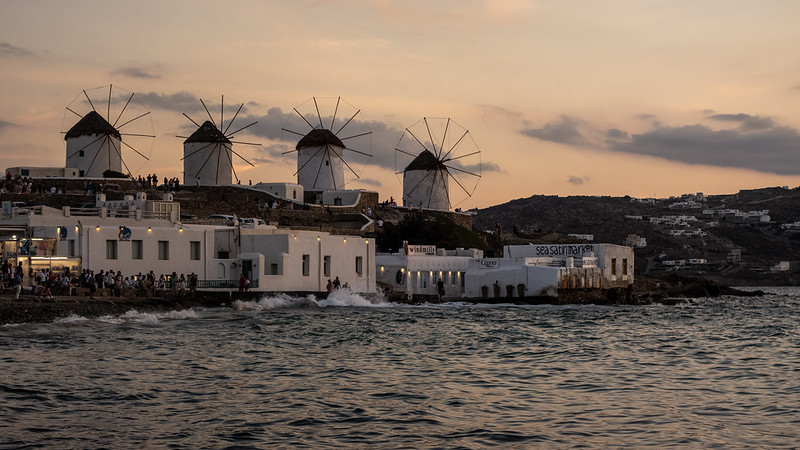
Mykonos has been inhabited for longer than people have been writing things down, but it used to be subsidiary to the nearby smaller island of Delos, which was an important site of trade and culture, in spite of having, really, no resources of its own. Now Delos is inhabited by 24 people and countless ghosts wandering among the myriad ancient ruins. But Mykonos is very much alive.
There’s much more to Mykonos than what I’ve shown you or what I’ve seen. This is just my cognizance of Mykonos, so far. Before I went, the name didn’t mean a whole lot to me. Now? It has gained considerable flavour.





 Sesquiotica