Category Archives: Uncategorized

quokka

What do you do if you’re in the rottenest place there is? A veritable rat’s nest? An isolated place, a real penal colony?

Smile. Because you can’t do anything else.

And eat a leaf.

You’re a quokka, after all.

A quoi? Que? Do I mean a duck, a quacker? No, and I don’t mean a quagga either. Quaggas are extinct and being phenotypically resurrected. But they’re also zebras. A quokka is not extinct, nor is it a zebra. It is a small marsupial, a fuzzy microkangaroo, a wanna-be wallaby. And it is, to all appearances, quite content. Laid-back, even. Have a look:

It is, at least to look at, the Arthur Weasley of the animal world (though it doesn’t look very weaselly). Nature, evolution, and human perceptual schemata have endowed it with a face of perpetual friendly amusement, and the beneficence of its environs and general lack of local predators have given it a gentle contentment (well, mostly gentle) and a fearless quest for food. It is the sort of animal that gets more or less the same cheery guitar-strumming soundtrack on quite a few of the videos about it you can find on YouTube.

Where does this word come from, this quokka, /kwɑ kə/, that is laid back in the mouth, the tongue touching only at the back, the vowels back and middle, with the lips only blowing a Marilyn kiss at the beginning? It’s from a local language, Nyungar: kwaka. It just happens to have been introduced to the English language at a time when /kw/ was spelled qu as a matter of course.

And where is this animal from? You know it’s a marsupial, so yes, it’s from Australia. But not all over. Just the western tip, near Perth. But especially on a little island that’s just 19 km off the West Australian coast, a ferry trip from Perth: Rottnest Island.

Rottnest? That doesn’t sound encouraging. You may be relieved to know that earlier forms were Rottenest… and Rotte Nest. Which makes it clear that it hadn’t to do with rottenness. No, it had to do with rats. At the very end of 1696, Willem de Vlamingh landed on the island. He found it lovely, fecund, temperate: “a paradise on earth.” So, naturally, he named it, in Dutch, Rat’s Nest. Why? Because of the quokkas. They’re all over the place (though especially so after dusk; when the earth casts its shadow to hide the overbearing sun, these happy lesser lights emerge).

De Vlamingh thought the quokkas were rats. Big hairy ones. But, I guess, very friendly ones that were prone to springing around. At any rate, they didn’t make him think poorly of the island.

And what do you do with a lovely little island like that? Hmm, how about put a penal colony on it? Or a reform school? Yes, in 1838, a penal colony for Aborigines was established there. And in 1881 a reform school for boys was built. Both were closed in the early years of the 1900s. But it was used for internment camps for enemy aliens during both World Wars, and there was a military base there too.

And all through that time the quokkas were there. And after the prisoners left and the prisons closed, the quokkas were still there. Now people come by boat to bike around, enjoy the scenery, and take selfies with the smiling little marsupials.

People who live in heavily touristed areas sometimes get sick of the tourists. The quokkas seem fine with tourists. How happy to be a quokka!

Laurie Anderson once sang, “Paradise is exactly like where you are right now, only much much better.” For quokkas, this seems not to be true. The second part isn’t, anyway; the first is right on. Their name could as well be taken from the French quoique, pronounced the same as quokka with a French accent, and meaning ‘although’. Quoique les prisonniers sont venus et partis, et les touristes venues, les quokkas sont heureux. Although the prisoners have come and gone, and the tourists have come, the quokkas are happy. Ils ne sont ni des rats ni des souris, mais ils sourient. They are neither rats nor mice, but they smile. Or at least they seem to our eyes to smile. They are none the less for all that; for all that, they are nonetheless. Quoique. Quokka.

Here’s a little more quokka video exploration for you, complete with cheery guitar music.

glimpse

Some lexemes excite scintillas of recollection, bright sparkling hints from the memory – a sight, a smell, a song, here and then gone, just a corner of an envelope of reality peeking into the picture. A glimpse. So for me with glimpse: it fades into this bit from Bowie and then fades out as quickly…

I still don’t know what I was waiting for
And my time was running wild
A million dead-end streets and
Every time I thought I’d got it made
It seemed the taste was not so sweet
So I turned myself to face me
But I never caught a glimpse
Of how the others must see the faker
I’m much too fast to take that test

Listen to the song if you want:

Caught a glimpse. There are things you have and things you take (like a break or a pee or a photograph, for example), but glimpses are caught, like fish and colds and figurative wind. Your eye is a net, an open hand, and it closes on that momentary lick of light. And then it changes.

This onset, /gl/, is like a night searchlight, or a diamond turning in the sun. Consider some of the words that start with it: glance, glare, glass, gleam, glisten, glitter, gloss, glow… although there are others that are less light-like (gladiator, glucose, gluteus), there is nearly a glut of the shining kind; it could almost merit a glyph of its own, just as /ks/ gets x. Could we write *ance, *are, *eam?

But, now, look at some of these other /gl/ words: they emit light rather than perceiving it. And yet glimpsing is something you do; you glimpse, you don’t see a glimpse.

Do you?

What else is catching with your eye than seeing?

Originally, glimpse is of a set with glimmer and glitter: first ‘shine quickly, faintly, intermittently’; then, from that, ‘come into view quickly, faintly, intermittently’. From that came the noun: first ‘quick shining, flash’; then ‘brief appearance, fast transit through the visual field’. Finally it turned around to the percipient: if you catch a glimpse, you glimpse, and your act of glimpsing is a glimpse. The seer and the seen are one. The shine of a dime as it flips through the air merges head and tail. If you catch a glimpse, but your catching of the glimpse is a glimpse, you are caught in the act by the act; your eye is the mirror of the mirror. You turn yourself to face you.

No, you turn and face the stranger, who is the you of an instant in the past – or the future. The essence of the glimpse is changes, fleeting imps of vision, much too fast to take that test. The eye that sees itself sees only its former self of the last instant, awaiting the reflection. Glimpses are caught like pictures are taken: frozen moments, permanent pasts, the marks left by evaporated reality. You still don’t know what you were waiting for, but it has already happened. Or is just about to

ajar

When is a door not a door? When it’s a jar. Ahahahahahaha

I presume you, like me, first heard that joke in your childhood. You probably also heard “You make a better door than a window,” meaning you can’t be seen through, so get out of the line of sight. You’re a closed door; open up.

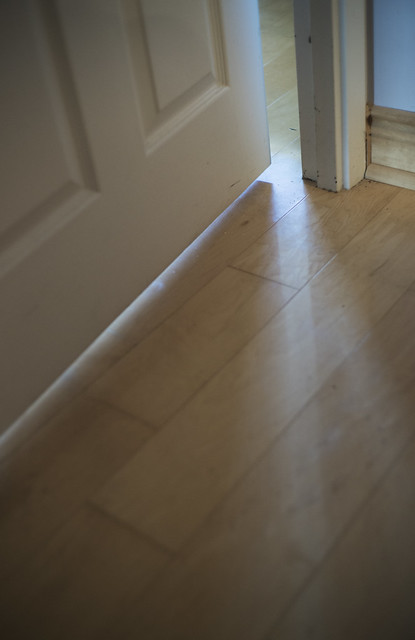
So is a door that’s ajar closed or open?

It’s a jarring question. If a door is ajar, you can’t necessarily just walk right in. But it’s not quite closing you out either. You don’t know if it’s meant to be open, or to be closed, or to be… neither. Just to leave a crack to let the light get through, or to allow a bit of fresh air. This door, this boundary, this limen, is in a liminal condition. It is not sealed, but it is not open enough for a person to pass through. It may or may not be open enough for a cat to pass through. The only way to know for sure is to ask Erwin Schrödinger to lend us his, and then observe.

But wait. Schrödinger’s cat is in a closed box, and its state becomes known when the box is opened. What if the box is ajar?

A jar, as we know, is a round container. Usually jars have lids that screw on. They turn, deturn, return. Is an incompletely screwed-on lid ajar?

Can a sliding door be ajar?

In my world, ajar is not a word for a sliding door. Ajar means the possibility of nudging and turning. Of jarring it open or closed. It is just that disturbance that would resolve it.

Is that what ajar comes from? There is a word ajar which means ‘to be in a jarring state’; it’s roughly synonymous with ‘awry’. But the ajar for doors is not that ajar. Its jar comes not from jar as in discord (“a jarring sound”); rather, it is a turn served on char, an old word which means ‘turning back, returning’. So. Returning to closed or to open?

According to the Oxford English Dictionary, on char is ‘on the turn, in the act of shutting’. Which would seem to answer the question of whether a door that is ajar is slightly open or slightly closed: by origin, it is pushed towards shut but not fully closed. Who, after all, would push a door just slightly open?

Who but a person who wanted to indicate that the door was openable, perhaps. Awaiting an arrival… or a return. Perhaps the person on the other side is listening to Steely Dan on their album Aja singing “Peg”: “It will come back to you…” (Steely Dan also sing “go back, Jack, and do it again,” but that’s on Pretzel Logic, and it seems to me that the logic of ajar is not so much of a pretzel as of a Möbius loop, the one side being in truth the same as the other.)

Or perhaps the person wants to come out but doesn’t want to. Or doesn’t want to but wants to. Or simply hasn’t gotten the momentum. Or wants to be neither in nor out. Or wants you to be neither in nor out.

Or is a cat, of course. In a perpetual state of uncertainty: in theory neither one nor the other; in reality oscillating and vacillating.

Does every door that opens eventually shut, and does every door that shuts eventually open? When you say “ajar,” your tongue swings shut onto the ridge behind your teeth, and then with a slight hesitation swings open again. Returning is the motion of the tao, and it seems to be the motion of the door. But returning to open or to closed? What is the destiny of the door, what is its assigned role? Open, shut, both, neither? Would Arjuna counsel it to be unajar? Is a door that is barely open or barely closed a real door? Or is it the only real door, the only door that, when you come to it, frames the decision as yours?

Books on linguistics for non-linguists

I recently asked Twitter for suggestions for introductory books on linguistics I could recommend to people who have no background in it and don’t want a full-on university text. Here’s what I got. If you have more suggestions, do add them in the comments!

Aitchison, Jean. Words in the Mind: An Introduction to the Mental Lexicon.

Crystal, David. What Is Linguistics?

Everett, Daniel. Language: The Cultural Tool.

Jackendoff, Ray. Patterns in the Mind: Language and Human Nature.

Matthews, Peter H. Linguistics: A Very Short Introduction.

Pinker, Steven. The Language Instinct and The Stuff of Thought.

Winkler, Elizabeth Grace. Understanding Language.

Vatikiotis-Bateson, Eric; Déchaine, Rose-Marie; and Burton, Strang. Linguistics for Dummies.

Yule, George. The Study of Language.

An online course was also recommended: Miracles of Human Language: An Introduction to Linguistics. Which reminded me that you can access MIT courseware online for free too (see Introduction to Linguistics, for example), but that is full-on university.

brevet

What’s one way to go up in the world? By brevet.

By what? Oh, didn’t you get the memo? Tsk. Don’t mispronounce it if you see it, and don’t misspell it if you hear it – darlings, that would simply be undone. And so would you. You no more say this word with a “silent t” than you do claret. There is a t in claret, and you declare it; so likewise here, you may want to spell it brevette, but you should drop the last te for the sake of brevet-ty. Sort of as was once done by some publications with cigaret.

There. You have your marching orders, in brief. The letters have dropped. Although, in fact, they were never there in the first place, those two French letters we would add as orthographic prophylaxis: te. The original French source is brevet, which they say just as you would expect the French to say it: /bʀɛ ve/. It comes from a diminutive form bref, ‘letter’ (as in a written document you send to someone). You could say it is a brief brief.

Very well, but what function does the brief brief serve? Tsk tsk. So many questions. Knowledge is its own reward. You have been elevated with this etymology and phonology. Why ask for more? Are you not riveted already? Do you not fear being reverted?

Very well. A brevet is an official letter (or, you know, note) conferring specific privileges; in its most common usage, it is a document giving a nominal rank to an officer without increasing his or her pay grade. It’s the military promotion equivalent of a morganatic marriage (where, sure, you can marry the king or queen, but you get no royal rank from it). You get the honour of officer but no more dough. It’s the opposite of the actor’s adage, “Don’t clap, just throw money.”

And it has a British pronunciation and an American one. The difference is the stress: Brits put it on the first syllable (as with claret); Americans put it on the second (as with Sucrets). Which makes it a particularly sneaky spelling-bee word.

And what do you get if you know how to spell it? Just that little bump in your intellectual stature that you get from knowing how to spell anything that not everyone knows. Knowledge is its own reward, right? Well, yeah, that and the social rank you can claim.

If and when you ever get to use it.

Why is English spelling so weird?

Here’s the PDF of the handout for my presentation at the 2016 ACES conference.

Here’s the PowerPoint I’m using for the presentation.

Here’s the text of the presentation (based strongly on an earlier version previously presented). It is keyed to the PowerPoint presentation with bracketed numbers (e.g., [3]) indicating slide transitions. It does not include ex tempore additions.

[sing] A-B-C, easy as 1-2-3…[/sing]

So… wait. What the heck is so easy about ABC, at least in English? Spelling in English is like one of those video games where, no matter how well you play, you will lose eventually. And how it got to be so is a long sordid tale of greed, laziness, and snobbery. Continue reading

kaggerleȝc

How perverse is it to taste a word that hasn’t been used in about 800 years and that includes a character that’s been out of use in English for half a millennium? That has two morphemes, one of which is not only no longer productive in English but is not even in use, and the other of which is obscure, untraced, and unseen eslewhere? How deliciously wanton is that?

Not half as deliciously wanton as including it in a modern dictionary.

Oh, but this is the Oxford English Dictionary, which is the most colossal lexicographic effort available in the English language. It is the output of senseless devotion, of a decades-long Bacchanale in the love-den of the language by the most unrestrained of word nerds. The life they led! And an unled life it was – they were not pulled around by others; they were drawn by their own fascination and linguistic concupiscence. They were esurient for words. When the objects are words through the ages, lust and gluttony, however untoward they may be, are not deadly sins but a waywardness that brings and preserves life in the language. They are prodigal in their promiscuity and promiscuous in their prodigality.

And so we have this word, sitting with the others in the Oxford English Dictionary, like an innocent in the crowd – an innocent wearing two large clogs and an enormous feather and nothing much else to speak of. Asked for its bona fides, its invitation, its affiliation, it has but two citations to show, both from the same book circa AD 1200, and not even spelled quite the same as it. Here’s one: “All þe flæshess kaggerrleȝȝc. & alle fule lusstess.” The usher squints at the cite, then at the word sitting there, and with a sigh hands back the credentials and moves on.

So what is it, kaggerleȝc? It’s pronounced like “cogger like” or “cogger lake” and is made of two bits, kagger and leȝc. The second bit is a suffix equivalent to modern ness; it was usually spelled laik but is seen in the Ormulum as leȝȝc. What is the Ormulum? It is a 12th-century work of Biblical exegesis, and it is a treasure for historical linguists because the author, rather than adhering to old standard spellings, developed his own phonetic spellings and wrote the work in strict meter, all for the purpose of ensuring priests’ ability to pronounce the vernacular appropriately. It thus helps us to know how English was pronounced at the time too.

The OED dropped the second ȝ, presumably because the Ormulum tended to double letters where they were normally singular. But it did not normalize the spelling to laik, perhaps because this word is a hapax legomenon (a one-off), and perhaps because at the time it was collected from the Ormulum its morphology was not understood.

And what is this great feather, this ȝ? It is yogh. It represented a voiced velar fricative. You know the Scottish or German ch as in ach? Just add some voice to that. But it could be weakened to a simple glide like “y.” It was eventually replaced with g and y and other respellings, but sometimes it was replaced with z because the cursive z looked a lot like it, and then that sometimes led to the pronunciation changing to “z.” Names that have this ȝ-to-z change include Mackenzie, Menzies (said “mingus”), and Dalziel (said “deal”). Such wayward carrying on!

And kagger? The context of the quote could help if you understand Middle English. The hints I’ve been carpet-bombing you with might also help. It meant ‘wanton’ – or anyway, that’s inferred; no one ever saw it by itself, only in these instances of kaggerleȝc. And kaggerleȝc means ‘wantonness’.

Wanton, by the way, is another word made of old bits that you can’t get in stores anymore. The wan is roughly equivalent to un as in undone. The ton is a past participle of tee, which means – meant, because who uses it now? – ‘draw, pull, lead’. So: Unled. Untoward. Froward (not forward).

And so this wanton use of dusty ancient lexis is a little self-referential note about the compilers’ wanton use of dusty ancient lexis. It’s like that old book on the shelf you have just because you have it. You keep it for special occasions, and then you pull it out and open it carefully and admire it, and wonder who first set eyes on it.

Phonological aspirations

Do you wish you could have an easier time with non-English sound distinctions? Do you have a sense there are sounds that sound the same to you but are heard as different in other languages? Give this a listen – it’s the podcast version of my article on subtle sounds English speakers have a hard time telling apart.

5 subtle sounds that English speakers have trouble catching

spirea

In front of the building in which I work is a well-tended bed of plants, nicely coiffed in its long box bordered with metal cladding. Some are prairie grasses. Others are hardy, enthusiastic eruptions of spearmint-like leaves with tiny flowers toned in that purple that theatre lighting technicians know as “surprise pink” (also, less officially, “FM pink,” and the FM does not stand for frequency modulation but is a reference to how attractive it makes the complexion). On my way in and out of the building, passing them at eye level as I walk on the small pavers before the boxes, I find them anodyne or at least analgesic, and in some ways positively inspiring. Such little pops of prettiness, purple spurs daring the suburban cityscape… no discarded coffee cup can conquer.

However, I suck at knowing plant names. Plants don’t care about their names, so why should I? I know them by sight. I know words well enough to know their limitations (a picture is not worth a thousand words; there is no exchange rate – besides, for any word in the language I could find a thousand pictures). But every so often I find that I want at least to know what people call something (see parthenocissus). And so I posted the photo above on Facebook and asked, and Jennifer McIntyre informed me that it is spirea – Japanese spirea, to be precise.

Spirea! Also spelled spiraea. Pronounced /spaɪˈriːə/, which is to say “spy rhea.” One may wonder if it is a synthesis of spy and diarrhea, but that would be spurious. A relation to spiral? Not spurious; they both trace back by way of Latin to Greek σπεῖρα speira ‘coil, twist’. But never mind this mortal coil. These flowers are more of a divine inspiration.

Inspiration? Such a word. Different people find different inspirations in different ways. When I want to write something, I go out looking for inspiration like harpoon-holding Ahab, ready to spear any spermaceti-filled cetacean but confident I will in the end master that one white whale. When I want to take pictures, I don’t expect inspiration at all; I am like a calf-roper, lasso at the ready. But when I want to seek a prophylaxis against improving my context, or simply want to dream about desiderata well beyond my means, then (as likewise for many on Pinterest, apparently) “inspiration” is the order of the day – pretty pictures and plans for things that would take too much effort to gain, but the having of the picture, the “inspiration,” gives me a momentary sensation of the goal, a little pipe dream… an opiate.

As, perhaps, are these flowers. I have said they are analgesic, even anodyne. Could they be narcotic? Likely not – they’re not poppies. But while they lack opium, they do have aspirin. In Canada Aspirin is still a trademark, but in the USA it lost that status during World War II because its owner was Bayer, a German company, and so they lower-case aspirin as the generic term, while in Canada the generic term is ASA, short for acetylsalicylic acid. But do you see a spir in aspirin? It is indeed the same as in spiraea, and the flower name is the source of the drug name. Spirea contain salicylates.

Not that I need to eat these flowers to cure headaches. Just the sight of them and their little purple spurts – first spheres, then spears – eases the blood, sweat, and tears. Sometimes it’s the small things that make the difference. And these spirea are small. Yet they can aspire to greatness.

anfractuous

white ash branches

Life’s paths are fantastical and fractious, following not what line some abstract geometer might limn but carving the segments and curves that present least resistance, most opportunity, or simply the most enticing caprice. We are lightning, that kiss of earth and heaven; we are rivers twisting and carving canyons and cataracts; we are tree branches, turning new ways with each season, trying twigs and tangles in different directions until we have extended ourselves in uncountable angles to gather sun and air. Wherever we are going, we will get there, because where we get is where we were going, but where we point at any point may not be the point at all.

Life is anfractuous.

And anfractuous is life. We start with this soft article an and then, like a snap of a twig, break off with frac; our tu spells “chew” and our ous spells “us.” Who has manufactured this? How does it turn? Is this u an n and this n a u? Is the sinuous s we see simply the broken back view of an a? The word curves and turns and will not take a straight path. It is anfractuous.

It comes from Latin, suitably modified. The an comes from a root meaning ‘about’ or ‘around’ and the fract from one meaning ‘break’ or ‘bend’ – fracture, fraction, infraction, and also frangible. The verb is frangere; its past tense is fractus. How do you get fractus from frangere? You start by saying the g as “g,” not “j.” Then you add the past-tense ending tus, and the t makes the g harden to c. Then all you need do is reduce the n to a nasalization and then to nothing. And how do you get that g to go from “g” to “j” as we say it today? Simply by saying it farther and farther forward in the mouth in anticipation of the e or i until it’s right at the ridge and it breaks away with a little affrication. You see, these strange transformations all take the path of least effort. They seem inevitable in hindsight. They got where they were going because where they got was where they were going.

So we take our paths, we grow out as branches and we become enlightninged, and perhaps our end is the light and perhaps our end is to light – on fire. We grow and grow old like the white ash trees, and perhaps we end as white ashes. But however we may break, we take leaf, and then we take leave, and it all comes around again, breaking and bending, beginning and ending and starting over.

There is one poem I can find that carries the word anfractuous. It also embodies it. It is by T.S. Eliot, who has been ashes long enough that I am safe to reproduce it here:

Sweeney Erect

                   And the trees about me,
Let them be dry and leafless; let the rocks
Groan with continual surges; and behind me,
Make all a desolation. Look, look, wenches!

Paint me a cavernous waste shore
Cast in the unstilled Cyclades,
Paint me the bold anfractuous rocks
Faced by the snarled and yelping seas.

Display me Aeolus above
Reviewing the insurgent gales
Which tangle Ariadne’s hair
And swell with haste the perjured sails.

Morning stirs the feet and hands
(Nausicaa and Polypheme),
Gesture of orang-outang
Rises from the sheets in steam.

This withered root of knots of hair
Slitted below and gashed with eyes,
This oval O cropped out with teeth:
The sickle motion from the thighs

Jackknifes upward at the knees
Then straightens out from heel to hip
Pushing the framework of the bed
And clawing at the pillow slip.

Sweeney addressed full length to shave
Broadbottomed, pink from nape to base,
Knows the female temperament
And wipes the suds around his face.

(The lengthened shadow of a man
Is history, said Emerson
Who had not seen the silhouette
Of Sweeney straddled in the sun).

Tests the razor on his leg
Waiting until the shriek subsides.
The epileptic on the bed
Curves backward, clutching at her sides.

The ladies of the corridor
Find themselves involved, disgraced,
Call witness to their principles
And deprecate the lack of taste

Observing that hysteria
Might easily be misunderstood;
Mrs. Turner intimates
It does the house no sort of good.

But Doris, towelled from the bath,
Enters padding on broad feet,
Bringing sal volatile
And a glass of brandy neat.