whorl

In the Art Gallery of Ontario, there is a staircase designed by Frank Gehry that swirls from the old lower parts to the new upper parts, ascending from floor 2 to floor 5. It is not merely spiral; it is a vortex of wood, an eccentric cycle, weaving through the air and through a glass ceiling too. You have a choice when going up from the merely modern to the very latest in the art world: you can take an elevator, rising straight and without view, as though the floors were swapped like cue cards behind the sliding doors, or you can climb step by step through the art whorl, seeing the building revolving as you exercise your prerogative and are in turn exercised.

The staircase suggests motion; it encourages motion; it sustains motion; and yet it is not motion. It is as unmoving as the people who stop on its steps for photographs. It is dynamic past and future, but still present. It whirled; it will whirl (or we will whirl while on it); but it is a whorl. It is whole, unbroken, containing an open hole.

Frank Gehry is famously fond of natural forms, and a whorl is natural enough, but it can also be artificial, whether artistic or not. There are many ways you may visualize a whirled piece. You may barely bend a forest’s worth of twigs to make a funnel to the sky, for instance.

You may curve strips of rolled steel into an abstraction of a whirlwind, a clone of a cyclone.

You may paint petals of fleering faces onto a wall, all encircling a void eye. Though your eye may avoid it, and your heart may reject it, it is an injection of art, nature denatured. 

All are in the world of the whorl: if it is in some kind of concentric circles or spirals, it is a whorl.

Is whorl, the word, a frozen whirl? A whirl that was? In a convoluted way, yes. It is not a past tense of whirl – we have never said “I whirl today, I whorl yesterday” – but it is evidently formed from a variant of whirl; in earlier times, there were words whorwil and wharwyl that seem to have been especially swingy forms of whirl. This makes more sense when you know that whirl comes from something like whirvelen, likely from Old English hweorflian, a frequentative of hweorfan ‘turn’ (with the same frequentative suffix as gives us settle from set and prickle from prick). And it is also related to whirr and wharve.

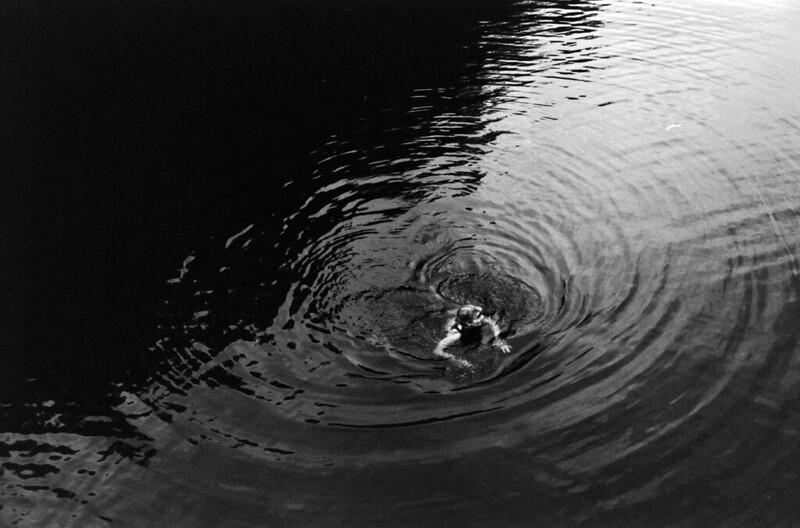
And so it has turned around and come around again, and now it is concentrated, fixed in ink and pixels. But nothing stays still forever; the nature of nature is cyclic, and any whorl, too, may flower and grow and fade.

Or it may even ripple away in moments, waving as it passes.

vista

This land is your land, this land is my land
From Bonavista to Vancouver Island
From the Arctic Circle to the Great Lake Waters
This land was made for you and me

If you’re not from Canada, you’re probably thinking those words aren’t quite right. But not only are they the words I learned as a kid, I was well into adulthood before I learned that there were American words that were different.

Huh.

The other thing that took me a long time to learn was exactly where Bonavista was. I mean, I could figure out it was on the opposite side of the country from Vancouver Island, but specifically where I wasn’t sure, and for some reason – mainly because the place just never came up outside of that song – I didn’t look it up.

Well, it’s in Newfoundland, on a peninsula about halfway between Twillingate and St. John’s. I still haven’t been to Bonavista. But I have seen many a good vista in Newfoundland. And I feel like doing one more word tasting on Newfoundland.

I’ll assume you can see that Bonavista means ‘good vista’ or ‘good view’ or ‘good sight’ – though, perhaps ironically, Bonavista is not named for the beautiful vistas you can see from it; it is named for being a beautiful sight itself, when seen from sea by an Italian explorer on an English ship in 1497. The story is that Giovanni Caboto (John Cabot, for Anglophiles), on at long last sighting land there, exclaimed “O buon vista!”

Yes, “buon”; bona is not standard Italian or Spanish or Portuguese – it’s Latin (and some regional varieties of Italian). But vista is not Latin; it’s Italian, and Spanish, and Portuguese, in all of which it means ‘sight’ or ‘view’, and in Italian it is also the feminine singular past participle of vedere, ‘see’. The Latin equivalent is visa, the feminine singular past participle of video, ‘I see’ (from which is also derived viso, ‘I behold’, which in turn gave the frequentative visito, which became English visit).

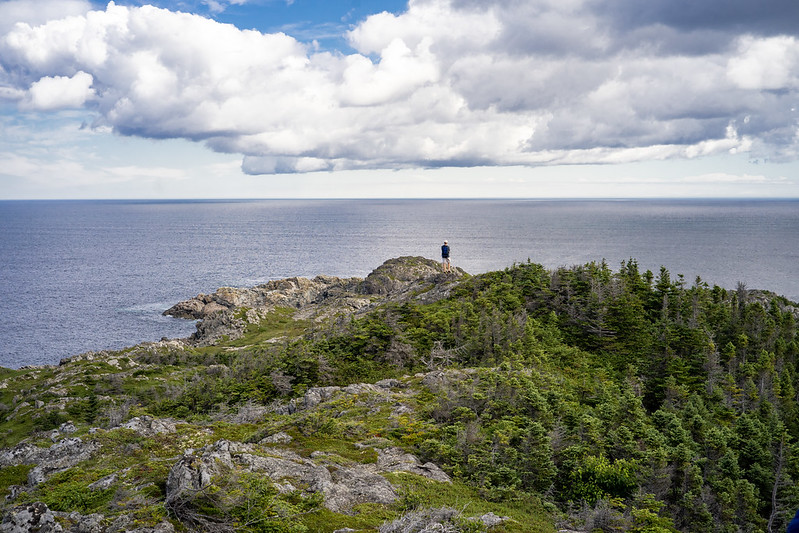
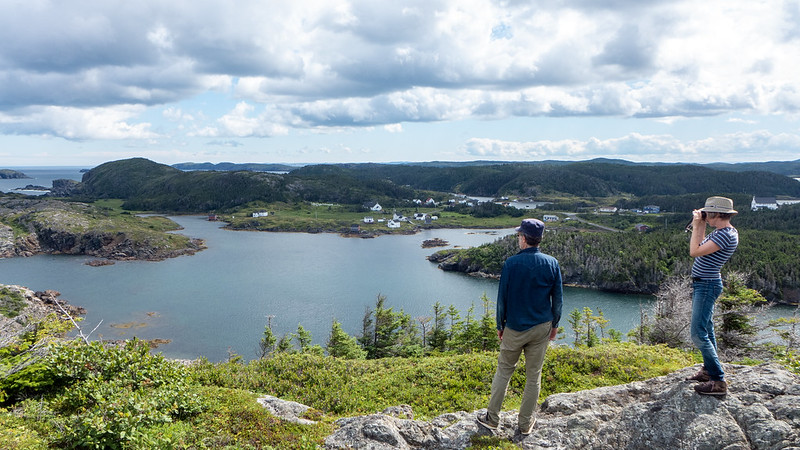
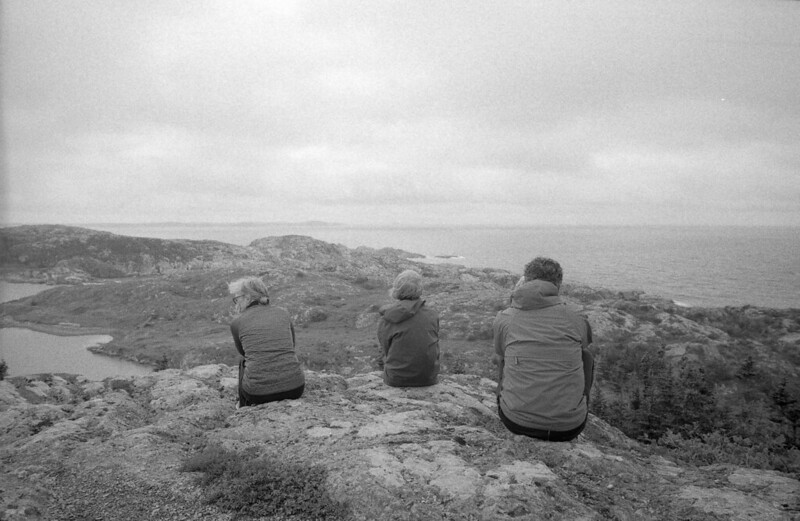
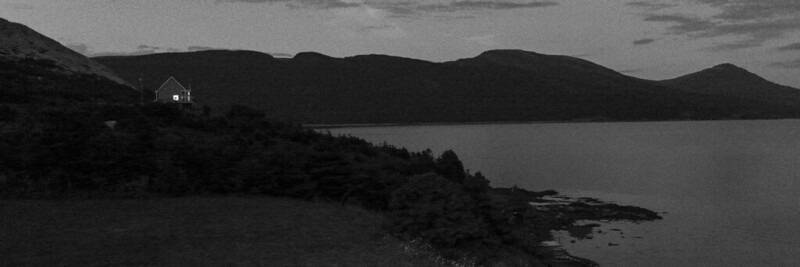
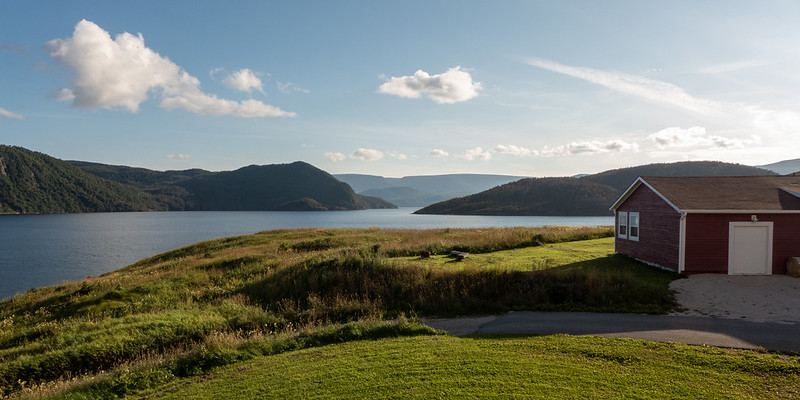
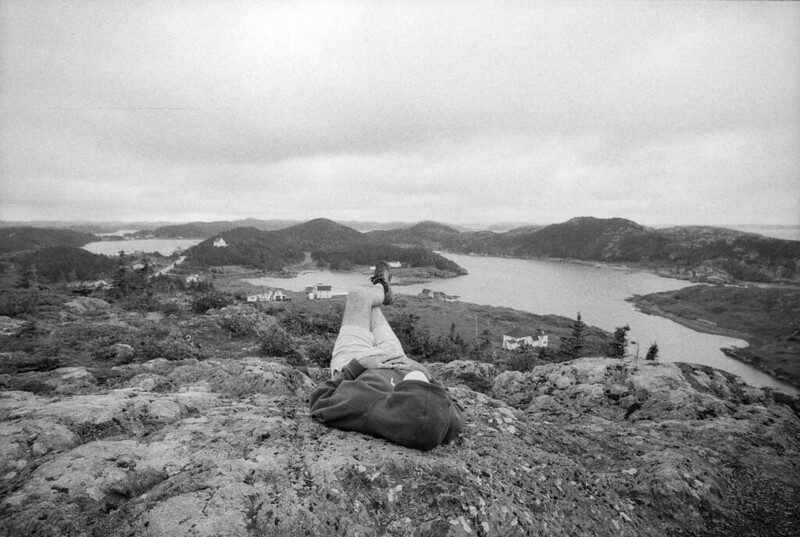
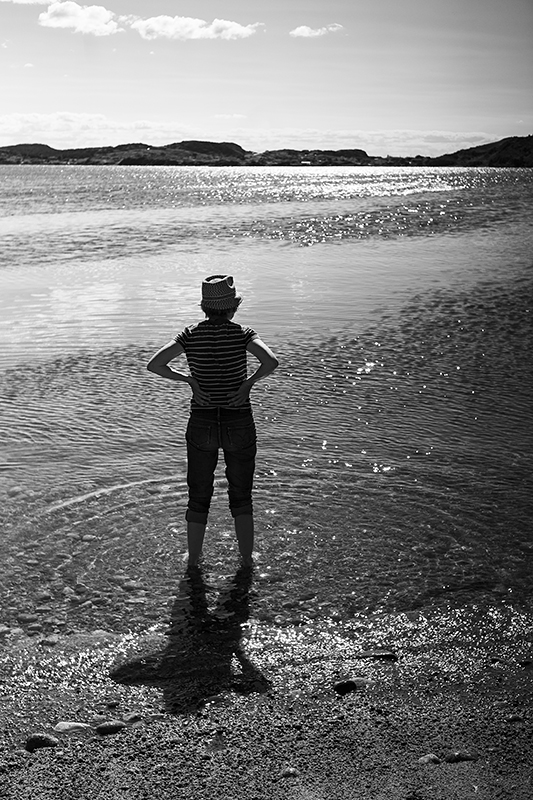
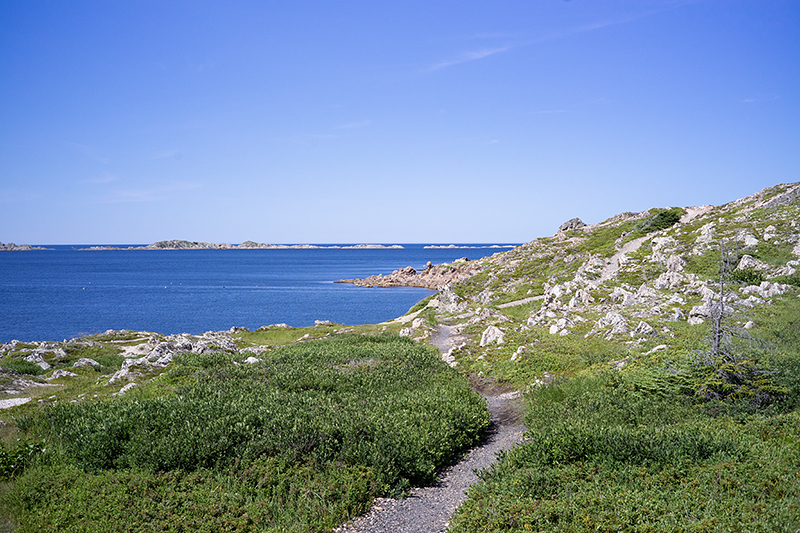
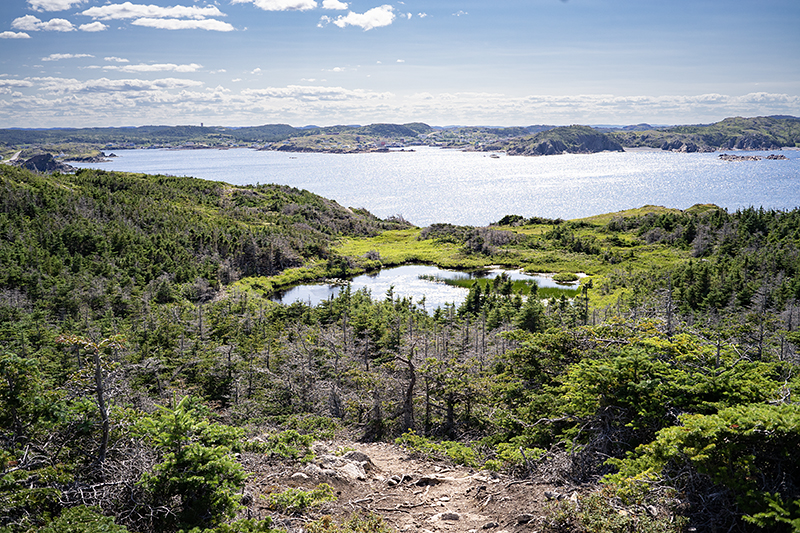
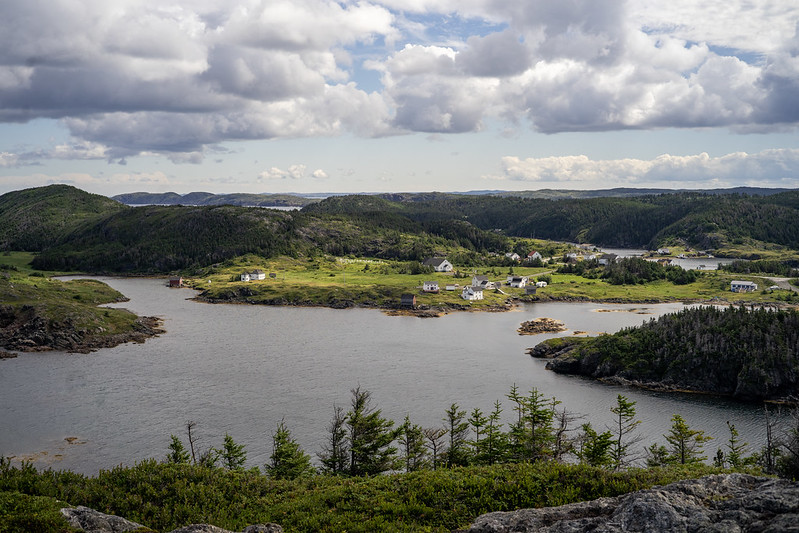
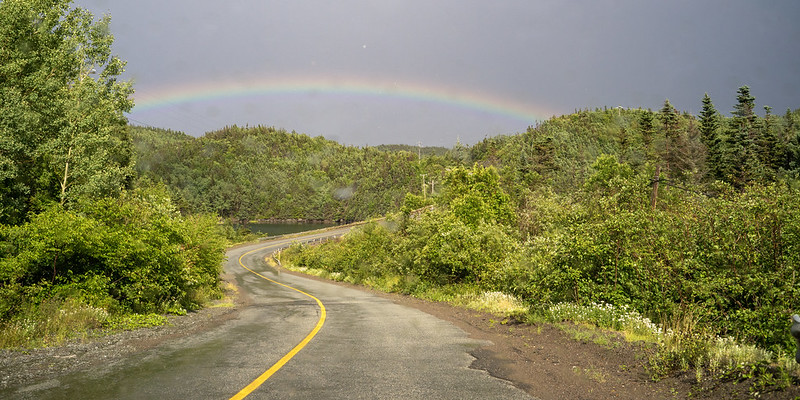
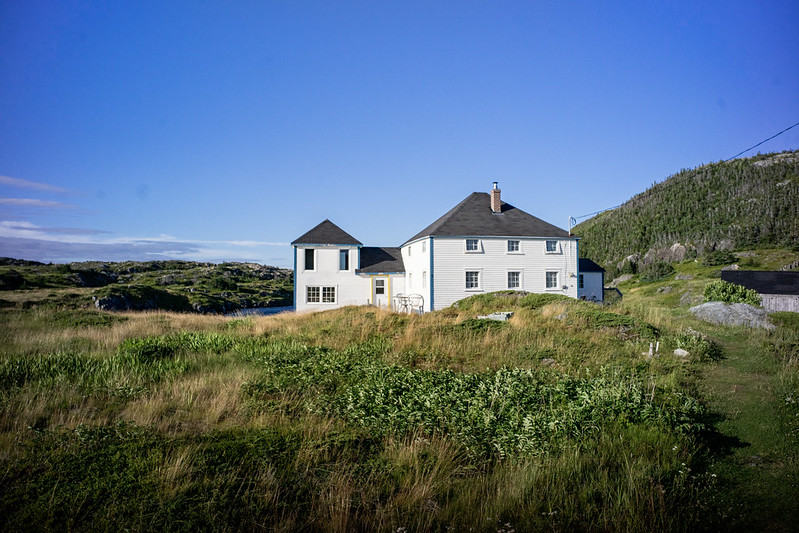
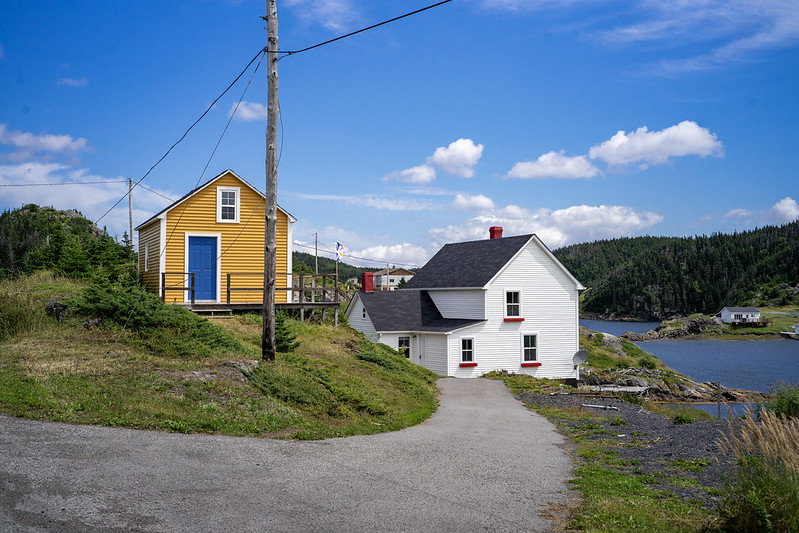
Well, in visiting Newfoundland, my wife and I (and our friends) have seen many sights and views, and good ones at that. There really is no substitute for climbing up on a rocky, mossy, juniper-covered hill and seeing the scene in person, in 360-degree Sensurround. You can watch all the video you want, but seeing just what others have recorded having seen is no substitute. 

And of course my photos don’t do it all justice either – but you can take the inspiration and go see it yourself when you have the chance, and if you’re in Canada (or any of several other countries) you won’t even need a visa (though you might want some kind of credit card). And once you have visited and seen these good vistas, they will stay with you as memories, and if you have taken pictures you can revisit them wistfully, at least by sight. The Newfoundland coast really is a good looking place.

capelin

Sea life is simple; it may be lived from first to last without benefit of doctor, cook, or chaplain. If you are a fish, you hatch and grow with no sense of parents, family, or obligations; you eat when you have the chance, you may be eaten when a larger sea-dweller has the chance, and, if you are allowed the fullness of time, you follow your instincts like a hormonal twenty-one-year-old heading to Woodstock or Coachella where, after a period of frenzy and (if fish can experience it) ecstasy, you are done and another generation is started. But mostly you eat and are eaten.

It’s a fish-eat-fish world in the briny ocean, and, off the shredded-rock coast of Newfoundland, the fish that is the foundation of this big blue Ponzi food pyramid is the capelin. The capelin is a silver spear-tip of a fish, a species of smelt no bigger than a basketball player’s finger, and it eats plankton, and everything else eats it: herring, cod, whales, and your friends who live on the Newfoundland shore.

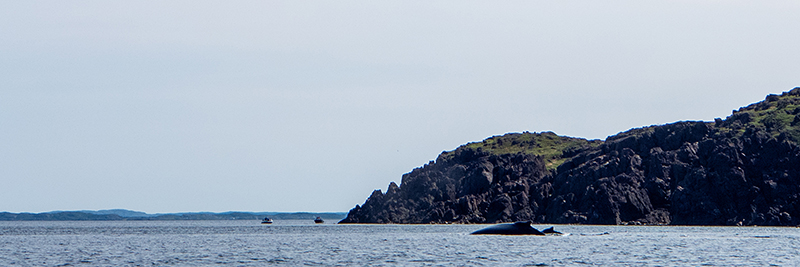
Your friends who live on the Newfoundland shore rely on the capelin, and not just or even mainly for frying and filleting and eating. The capelin feed the other food fish, after all, and fishers will use them as bait, but they are also where the entertainment happens. If you should go to the headland of some small local cape, or take a boat out along the coast, and look for whales, you will most readily find them where there are masses of capelin, because whales like to dine too. You won’t see much of the whales – the quick white plumes of their blowing, sometimes their fins, occasionally a tail – and you won’t see any of the capelin they eat, but you’ll know they’re there.

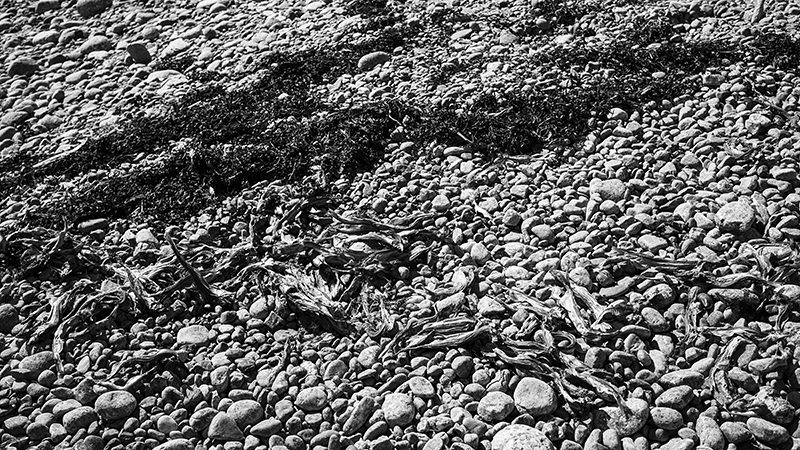
And if you visit a rocky beach, you may know even more directly that the capelin are there. If you go at the right time, in the height of summer, they will be rolling: the females will be laying their eggs and the males will be squeezing out clouds of milt (that’s what it’s called in this case, milt, but we both know what it is, come on) and they will all be hurling themselves up on the sandy pebbly shore like the front line at a pop music festival. 

There is a distinctive aroma coming from this occasion – I’m told; I haven’t smelt that smelt milt smell. People may arrive with nets and scoop up all the capelins they can to take back to their kitchens. Then the tide will draw back and the spawn will be incubating safely and the capelins, most of them, will lapse exhausted like partygoers by poolside, stranded, and simply dry and die and dry some more. And if you, a person, should come to the beach a while after this event, you ought to watch your step.

Their mating rites are their last rites, and all without benefit of chaplain. Except that’s not quite true. The littoral chaplet is their chapel and they are all their own chaplains, literally. By which I mean to say that capelin comes from French capelan, which comes from Italian cappellano, which comes from Latin cappellanus, which means – and is the origin of – chaplain. So capelin is simply chaplain with a sea-change (Littré tells me that capelan can mean both the little fish and a mean priest spoken of with contempt). And cappellanus in turn comes from cappella, ‘chapel’. (Cappella originally means ‘little cloak’ or ‘small cape’, as it happens.)

But many capelins end not in the chapel or rectory but in the refectory: via kitchen, to table. I, in Toronto, must walk two blocks to the market to get fish that has come more than a thousand kilometres, and must pay silver and gold at filet mignon prices for it, but my friend on the Newfoundland shoreline can, without walking much if any farther, bring back a bucketful of silver capelin that have been pulled directly from the sea, a grand travel distance measured in metres, and with nothing paid but effort and the usual expenses of a day.

And then she can batter and fry them in batches and we can plate and eat them a few at a time: silver and gold and free, fried hot and friable, to fillet with fork and knife – one whole fish history per serving, spawned, survived to full size, then eaten not among thousands by a whale but among dozens by a smaller mammal. The pinnacle of a capelin’s simple life. And then take another.

Twillingate

My friends and my wife and I went for an outing from Herring Neck on the rocky coastline of Newfoundland to nearby Twillingate. We walked up and around the lighthouse on North Twillingate Island. Then we took our packed lunch of runny cheese and large crackers and canned fish and hiked up and down and around and over, with a pause to eat, in the vicinity of French Beach on South Twillingate Island. 

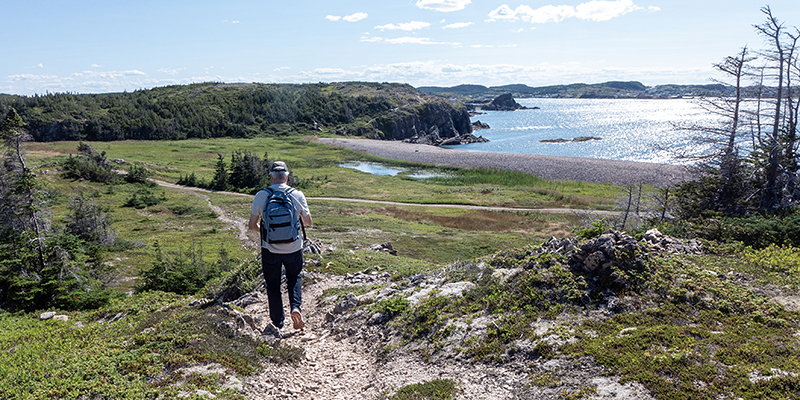
I adore hiking. I grew up hiking in the Rocky Mountains, and I happily scramble up Newfoundland’s rocky trails between evergreens and scrub brush and past little ponds and streams, and when I am high on a rocky promontory above the Atlantic it is just like being up in the Rockies, on Tunnel Mountain or Sulphur Mountain or the Little Beehive overlooking the Bow Valley, except that the valley has been filled with saltwater up to a couple hundred feet below where I stand. The ocean is a wide, deep valley, so wide I can’t see across it, but somewhere on the other side is a French beach on the mirroring coast of Brittany.

It is all strangely familiar and familiarly strange. When I look at the terrain around my feet I might be on the way to Skoki Lodge or Sentinel Pass or Lake Agnes: there is lichen on the rocks, and juniper, and spruce trees. But then we descend briskly and we are on French Beach with waves smoothing out endless pebbles, a sight seen in my life only on vacation.

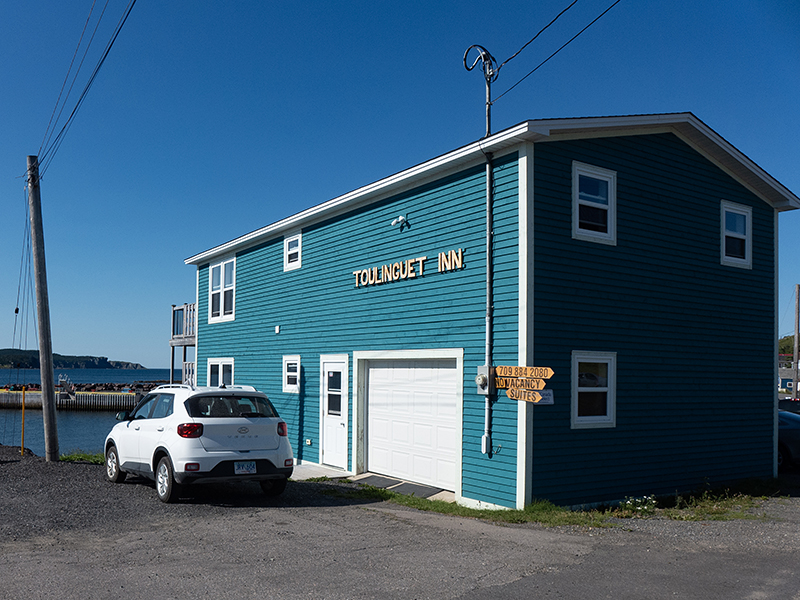
On the drive back through Twillingate we pass a two-storey box with teal siding and white doors and windows and the name TOULINGUET INN in hand-cut wooden letters. I ask Sarah what that word is. She says it’s the original name of Twillingate.

I had not, until that moment, considered that Twillingate might have come from anything but English. Yes, twilling (or twillin) is a bit mysterious, but more familiar than strange, and gate is, well, a gate. I was willing to take it at face value. But what was Toulinguet? Was it perhaps the name of a relative of Demasduwit or Shanawduthit, who were among the last of the Beothuk people, who were crowded from the coasts and squeezed to starvation by European incursions?

No, it is a word from the far coast of the Atlantic. The western tip of Brittany reaches towards America at Pointe du Toulinguet, a rocky promontory that, like North Twillingate Island, features a white lighthouse. The fishers from Europe saw this newfound headland and thought this strange land looked familiar, so they named it after what they knew – a mirror Toulinguet. And then when the area was settled by people from England, they made this slightly strange word more familiar: Twillingate.

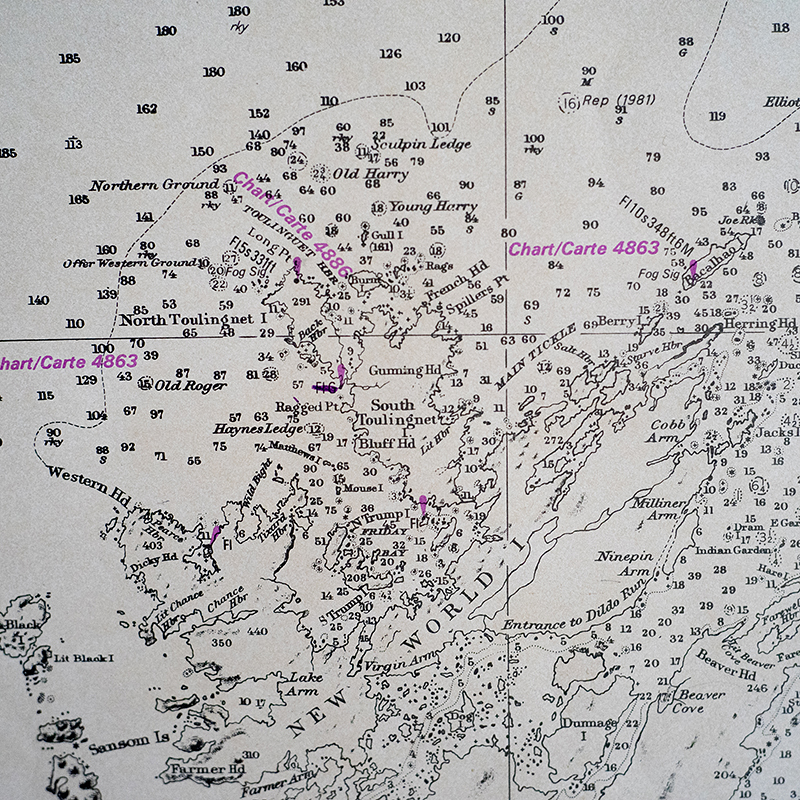
But Toulinguet survives; it has not been forgotten. Sometimes, though, it is made a bit more familiarly strange. A main road across South Twillingate Island, from the causeway from New World Island up to the town of Twillingate, is named Toulinquet Road, with a q before the u. And an old chart that is wallpapered in Sarah’s house makes the name of the islands Toulingnet, as though they went fishing for the name but netted something topsy-turvy, n for u.

But where did Toulinguet come from? It’s a French word, right? We can see that by the spelling. Well, yes, in the same way as we can see by the spelling that Twillingate is an English word. But each word is the meeting of two languages; with Toulinguet the other language is Breton, the Celtic language of Brittany. The Breton source, so I read, is toull inged, meaning ‘plover hole’, for a pierced rock there favoured by birds (though the usual Breton word for ‘plover’ is morlivid, and another source tells me inged means ‘petit chevalier’, the shorebird called lesser yellowlegs in English). 

That’s not what Pointe du Toulinguet is called in Breton now, though – it’s Beg ar Garreg Hir. I can tell you that begmeans ‘beak’ or ‘point’ or ‘promontory’ (I’m tempted to say it’s ‘cape’ in Breton and make some wordplay, but that’s a bit of a journey, like Cape Breton Island, which is the place in Nova Scotia where ferries leave for Newfoundland). I can tell you that hir means ‘long’. As best I can discover, garreg is a mutated form of karreg, which means ‘rock’; you’ll see its reflexes in Welsh carreg and Irish carraig. So it’s Long Rock Point, or Long Rocky Point. With a hole for lesser yellowlegs off its tip. And the mirroring lighthouse on North Twillingate Island is on Long Point, which is rocky.

But the trail doesn’t end in Brittany. You can keep going, north across the channel to Britain. There’s a reason that Brittany (Bretagne) seems onomastically similar to Great Britain (Grande-Bretagne), and it’s that when the Anglo-Saxons came to Britain and made much of it into England, Celtic-speaking people were crowded to the edges – Scotland, Wales, Cornwall – or all the way across the channel, where they set up a little Britain for themselves, a bit of the familiar in a strange – and at length not strange – land. 

And their strange name, toull inged, was made familiar by the local French: Toulinguet. And then that familiar name was applied to a strangely familiar place on the far side of the ocean. And then people from England – mostly from the southwest, Devon and Cornwall – came and saw that strange name and made it familiar, Twillingate. Such are the paths we take through willing gates and over the strange and familiar.

drong

The northern edge of Newfoundland, a frayed lace of rocks and water and durable vegetation, is not a place to seek a throng or a crowded street, yet you may find yourself with little lateral room to move. In an island community such as Herring Neck or Twillingate, the houses appear to have been cast like so many dice across the bumptious land, stopping near the water; wherever a cube has halted its tumble, at whatever distance and angle from others, a roof is dropped on and windows and doors added, and there you are. So there is ample space between them. And yet.

And yet a scrabbling landscape that fights every alteration except the slow erosions of plants and water is no graceful receiver of roadways. Even the roads you can actually drive on are no wider than a cod-based economy would allow for; they wind up and over and around the rocky landscape in routes that would be thrilling to drive in a Lamborghini for exactly twenty-three seconds, at which point the heaving pavement would abruptly rip its low-slung undercarriage right off. 

To reach my friend Sarah’s house at the end of a succession of ever-smaller islands connected by short causeways and bridges, we take a road that starts as two lanes, then loses its paint, then loses its width, then loses its pavement, then nearly loses its very self, so that the last few hundred metres is a one-person-wide path over rocks and grass between peat and boulders. Beyond the house it continues on, by a bog, between bushes, up over stones, less than a foot’s width at times between vegetation that will undo your laces, finally fading out where the head of the peninsula meets the sky and you can look out on the endless ways of waves and whales.

This is a place of folk ways and folkways, little paths of culture proudly maintained, traditions that have held on like lichen over the generations since they crossed the ocean, from – in the case of this particular area – Cornwall and Devon. Newfoundland does not have a distinct dialect or accent; it has many, as many varying dialects and accents as it has villages, or rather more than that, even. And along with that comes an assortment of words that dictionaries tend to think are obsolete or at least covered in library dust.

Which is how, as we drove through Twillingate on the way to its lighthouse, we passed a street with the sign PRIDE’S DRONG.

“Drong?!” I said.

Sarah explained that a drong is a narrow laneway. She referred me to the Dictionary of Newfoundland English. “I have a copy at home,” she told me.

“So do I,” I said.

“Of course,” she said.

I’m back in my home in the sky in Toronto now, and I have my copy of that essential book on the table next to me, and I can tell you that at “drong” it says “See DRUNG.”

And at “drung” it gives the definition “A narrow lane or passage between houses, fenced gardens, etc.” It notes its etymology as coming from the same Old English root as throng.

Now that I have internet access (on the sketchy margins of Newfoundland the sketchiest thing of all is cellular service, and don’t get your hopes up about wifi either), I can confirm that drong (or drung) is an ablaut form of dring, which is a Southwest England way to say thring, which means ‘squeeze’ or ‘press’ or ‘crowd’. It is from that ‘crowd’ (verb) sense that the noun throng developed.

But you won’t see a crowd on Pride’s Drong, and you won’t feel crowded there either. If you’ve been to England, you no doubt have seen many narrow passages between buildings and fences and so on, the slender walled ways that would make it a challenge to pass another person. You are crowded by humanity and its clamoring for simultaneous space and closeness in its building and dividing. But in Newfoundland, it’s not quite the same. When a way can barely let two people pass, it’s not walls but peat and granite and the threat of falling into one or off the other that keeps you in line, or it’s the thriving scrub brush that gives your bootlaces a gantlope. And when a lane is only wide enough for one car going one way, as on Pride’s Drong, well, it’s not that there’s not enough room for the road, it’s just that there’s not enough road on the room. 

I didn’t take a picture, but have a look at the Google Streetview. I won’t say that the road is narrow on a matter of principle, but it may be narrow due to lack of principle (financial) or lack of interest (not financial). Sometimes ways are tight when means are tight, and sometimes there’s just no need to insult the landscape, or to do wrong to a strong pride of place.

brave

What’s the line between brave and reckless? Between brave and foolhardy? Between brave and foolish? Between brave and careless? Between brave and depraved? At what point does a sincere “Bravo!” slope into a sarcastic “Bravo”? When does amazed “Wow!” slide over to scornful “Wow”? How many shades are there of “You have got to be kidding me” – and how many of them are one or another kind of “brave”? How do we distinguish between raw courage and mere brouhaha?

Of course the lines will be drawn differently by different people. Some people admire sports such as wingsuit flying and BASE jumping, and take the inevitable “in memoriam” rolls at the ends of videos of such sports as evidence of sheer valor; others find them to be the most senseless thrill seeking, and take the “in memoriam” rolls as proof. Some admire those who summit Everest, or K2, or Kangchenjunga, or Denali; others have little or nothing good to say about them. 

And some admire such feats but deny that they are brave, because they involve risk only for personal adventure and reward, and not for the sake of others. Bravery, in such a view, is heroism – and by “hero” meaning not someone who has endured hardship when they had no other real choice, but someone who could have had continued to live an easy and acceptable life but chose to face strain or danger for the sake of another (or others).

But then what of someone whose bravery involves hurting or killing others? Often acts of bravery are done by soldiers at war. Most people would agree that killing people who are shooting at you, especially if you’re doing it to help protect other soldiers on your side (or civilians), qualifies as brave; many people would also extend it to killing soldiers who are not at the moment shooting at you or others but would if given the chance, such as a tank or machine gun nest; many would also accept an attack on enemies by sneaking into their camp and killing them while they ate or even slept; but of those who found such acts brave, how many of them would see them as brave if done by someone they see as an enemy? Does the evaluation of individual bravery vary according to whether the army they’re a member of is defender or invader? If invader, does the motivation for the invasion matter? Or is all “bravery” that involves acts of war depraved? How about on the more individual level – if I say that I should “turn the other cheek” if attacked, does that also mean that I shouldn’t leap to the defense of others but rather tell them to turn the other cheek? 

These are endlessly fraught questions; there are no simple and absolute and undebatable answers, and the trend of thought has evolved over the centuries – when a word refers to something we value, its values will shift as our values do. But such is this word brave. It’s a word for someone who has drawn a line in a place we wouldn’t all draw it, and it’s a word for which we can’t all agree where to draw the line. So if it’s not clear or universally agreed what bravery is and where bravery comes from, should it be surprising that it’s not clear or universally agreed where the word brave comes from?

The immediate source is no problem: English got brave from French brave. And the evidence is straightforward that French got brave from Italian bravo – perhaps via Spanish bravo. As Littré points out, if the word were an older one that came into French directly from Latin, the typical development of form would have made it brou (haha, but the word does not exist). But then where does Italian bravo come from? 

Normally it would be easy: bravus. But such a word is unattested in Latin; we suppose it must have existed in Vulgar Latin, but Classical Latin doesn’t have it. It could have come from Proto-Germanic *hrawaz, ‘raw’, but there’s not much to support that origin. It might have come from a Gaulish word *bragos, which relates to boasting and showing off, but there’s not enough evidence to support a link there either. It might have come from Latin bravium, ‘prize, reward’, from Greek βραβεῖον (brabeîon), but there’s no evidence of development of the sense from one to another, and the phonological development is unlikely too (the stress in the Latin is on the i, for one thing).

So the most likely thing is that it comes from a fusion of the Latin words pravus and barbarus. You probably recognize barbarus; it’s the source of barbarian and barbaric and comes from Greek βάρβαρος ‘foreign’, which was made from an imitation of how foreign languages sounded to the Greeks: “bar-bar-bar,” like if in English we called people from other countries “blahblahs” or “yukkayukkas.” As to pravus, it meant ‘crooked, perverse, wicked, bad’ – and it’s the root of depraved (the de- does not signify negation – how wicked!).

So somehow ‘wicked’ and ‘barbaric’ got together and made a word that passed through ‘bold’ and into ‘valorous, heroic’ (and, as Wiktionary points out, in British English euphemistically to ‘foolish, unwise’) – and, in French, also ‘honest’ or ‘well dressed’ (a sense whilom seen in English), and in Italian (and also betimes in English) to ‘good, nice, clever, skilled’… and in modern Italian it no longer means ‘valiant’. O brave new word, that has such senses in it!

dastard

He was no standard bastard; he was a dastard. In a world where some go per ardua ad astra, he had neither ardua nor astra. His skullduggery was of the skulking and drugging kind, and though he thought himself a wizard, he was merely a coward, a laggard, an ill-starred sluggard. 

We will give him, at least, that he was no braggard – that would have meant owning up to his dastardly deeds, and he was too cowardly for that. He could only stab you in the back when his own back was turned – as though the b of bastard were facing away, d – and whether the ill deed was done or not, he could say no more than “drats.”

You may, perhaps, not have met the word dastard as such before. I think you’ll know the word dastardly, though it’s a bit antiquated now – it has the air of mustachioed villains and other pusillanimous vipers of the melodrama era. But just as cowardly is like a coward, dastardly is like a dastard; we have had dastardly since the mid-1500s and dastard since the mid-1400s. And while the -ard is on the model of coward, bastard, and wizard, all from French, dastard is like laggard, sluggard, and drunkard in having a Germanic root taking on the suffix to mean ‘one who does this dirty deed like a dirty bird’ (note, by the way, that words ending with ard that make it rhyme with “hard” or “bard” rather than “word” or “bird,” especially if they have any stress at all on the syllable, have nothing to do with all of this – so no diehard, no discard, et cetera).

And what is the Germanic root in this case? We’re not entirely sure, but evidence suggests that dast is from dased, which is none other than an old form of dazed, and meant ‘dull, inert, stupefied’. So originally a dastard was someone who shrunk from any deed of valor through the most elementary pusillanimity. In fact, it first referred to someone who was simply a dullard, and then over time it added the sense of villainy, of crimes not just of omission but of commission… but only in the most cowardly way. A snake. Or, perhaps, a poisonous turtle.

forepast

This forepast evening, as rain was not forecast, we determined to take a boat to the island with a submarine for repast. But just past four, when I had bought the sandwich, the sky became overcast and the clouds started to pour fast, forestopping our plans. What to do? It was too late to make pasta for supper. Fortunately, within a half hour the downpour had passed over and we met our prefixed plan – we were on the ferry and cast off superfast, and no sooner had we reached the beach than the submarine was within us. And so the forecast was forepast and the repast was forepast, and all was fair sport.

You probably don’t use the word forepast – frankly, I don’t know who does – but it’s in the Oxford English Dictionary and Merriam-Webster, both of them having it as an alternative spelling of forepassed, and neither of them calls it obsolete (though Wiktionary does). But it’s only current, it seems, as an adjective; you can’t use it adverbially (“what I had done forepast”) – not anymore, anyway – and there’s no established use of it as a noun at all: you can’t, alas, speak of “the forepast.”

Which, I suppose, is to be expected; we already have the past, and what need is an extra syllable before it? What, the past before the past? But forepast doesn’t mean that; it just means ‘that has passed before’ – a synonym is bygone, and while we can “let bygones be bygones,” we can’t “let gones be gones,” whereas we can “let the past be the past” and so have no need for the aforementioned fore. And, for that matter, Oxford says that forepast is now used “only of time”; you can speak of forepast days and forepast hours and the forepast evening. 

But you know what? Who even knows that? This word has been with us since the 1500s, if not longer, and it’s in Shakespeare and Spenser, but, though its sense and construction are perspicuous, good luck finding current uses of it except in books quoting or emulating works from a forepast time. So you might as well take it as a lexical snack – use it as no more than hors d’œuvres, and not for repast per se, and you can plate it as you will. Or, you know, eat it off paper wrapping on the beach.

litany

“We’ll have to start burning words,” she said, and cold steam curled up from her mouth as she spoke. She hugged her knees to her chest as she sat in front of the dark fireplace, where a pot of ice hung above a forlorn grate. Her hair blazed red but gave no heat.

He nodded sadly and turned to look up at the walls. The room was a moonlit panopticon of bookshelves, a circle of walls insulated by thousands of volumes, a vertical city of language, millions of lexemes waiting only for their chance to breathe life in a reader’s mind. So much potential, so much cold potential, but here were two still-warm bodies that soon would be cold and still if they could have no heat and drink no water. And then whose eyes and minds would give life to the words anyway?

He turned his onyx eyes back to her. “I have never lit any on fire. Which words must die, that the rest might yet live?”

She unfolded, stood, walked to a wall, brushed her fingertips along the spines huddled there. Pulled one volume out. “The ones that are already dead.” 

She turned and held the sacrificial victim solemnly before her: a dictionary of obsolete words. His mouth opened, but the small sound that came out fell as snow to the floor.

“They have had their life,” she said. “They’re gone. This is Lenin’s tomb, relics of the saints, a display of zombies. No one will use these words in earnest again. Let them rest in peace.” She walked over the fireplace, sat down, and laid the book down in front of her, spatchcocked on its spine. She gripped the back flyleaf in her hand, pulled it and peeled it away from the binding, creased it and set it in the grate.

He watched as she peeled the next page, creased it, and laid it in the grate. “They have never had a funeral,” he said. “They have never had a memorial.” She peeled another, creased it, laid it in the grate. He reached forward and picked it up and read from it. “Yekth. Yarringle. Yark.” He turned to her. “Let us sing a litany.”

She raised a thin red eyebrow. “A litany of sorrows, a litany of complaints?”

“A litany of saints. A long responsive prayer, an entreaty. A litany on fire. That these words may one last time illuminate us.”

“That they may keep us warm,” she said. “Give us the breath of life. Melt the ice and sustain us.”

“Let us remember what they meant to someone at some time.” He looked over his shoulder at the thousands of books full of frozen meaning, silent in the late night moonlight that leaked down through the cupola clerestory to land on his page. He turned to the fireplace again, cleared his throat, raised his head, and sang in the tones of the Great Litany: “May all the words lost to the worlds… light and enliven us.” He looked at the page. “Yark, that meant to prepare…”

She joined in: “…light and enliven us.”

“Yarringle, a yard-winder…”

 “…light and enliven us.” She peeled another page and laid it creased in the grate.

“Yekth, that was itchiness…” he sang.

“…light and enliven us.” She peeled another page. 

He laid the page he had been holding into the grate and, as she peeled one more page, took it from her and looked. “Wyndre, that meant to embellish…”

“…light and enliven us.” Another page.

“Winx, to bray like an ass…”

“…light and enliven us.” Another page.

“Vectigal, taxation…”

“…light and enliven us.” One more page. Two.

“Umthink, to ponder…”

“…light and enliven us,” she sang, but he had paused. He glanced back for a moment, as if the word might be in one of those volumes, hearing its end announced. Who would know what it meant? But she kept peeling, a page, a page, a page, each one slowly and solemnly but without stop. The paper was thick and would burn well, and there were many pages still to go. Soon there would be enough to start.

He turned back and took another page and looked at it and chanted: “Stelligerate, that was exalted to the heavens…”

“…light and enliven us.”

“Sprunt, that meant short and hard to bend…”

“Unlike that definition,” she offered, but he was singing “…light and enliven us.” He looked at her, and for a moment his eyes sucked in light, but then he smiled and chuckled once. “A last breath for it,” he said.

Another page. “Shindle, that meant to scratch…”

“…light and enliven us.”

Another. He looked over it for a moment. “Scrute, that was scrutinize…”

“…light and enliven us.”

The pages kept coming, and it was a decent size of pile now. She handed him another page and put her hand into her pocket and pulled out a box of matches. She took one out and scratched it against the emery on the side and it awoke into flame. “Scratch,” she said. “What was that word?”

He shook his head sadly. Too late. She touched the match to light the papers and they quickly came to life.

By the light of the growing fire he looked at the next page that she peeled. He gasped a little and darted his glance once more over his shoulder. Then he steamed a short breath of resignation and sang. “Philobiblist, that meant bibliophile…”

“…light and enliven us,” they sang together. He placed the page with its obsolete word for book-lover in the flames. The fire burned a short time, and then she peeled a few more pages. He took one. He read it, and his eyes lost focus and he gazed at the fire through it.

She took the page from him; he surrendered it lightly. She saw what he had seen, and she cleared her throat and sang: “Owsell, meaning unknown, origin unknown…”

“…light and enliven us,” he joined in with her. She fed the page into the fire. Oh well.

They warmed themselves for a few minutes, and he lifted the pot from its hook. A bit of the ice was melted. He offered it to her, she drank a little, then he drank a little and put it back. She peeled out a few more pages and looked at one. “Lutarious, living in mud,” she sang.

“…light and enliven us.” To the fire.

A pause, a page, a page. “Labant, that meant sliding…”

“…light and enliven us.”

A page, a page. “Kneck, the twisting of a running rope…”

“…light and enliven us.”

A page. “Kenodoxy, the study of vainglory…”

“…light and enliven us.” She placed the page in the fire; the oxygen combusted the oxy and, as they watched, the last letters to go into ashes were no.

The next: “Javel, that meant vagabond,” she sang, and “light and enliven us” they intoned together.

And so it went, by page, by quire, as the cold night drew on: 

“Gowl, weep with anger… light and enliven us.”

“Gorm, a gormless fool… light and enliven us.”

“Genge, that meant valid… light and enliven us.”

“Furchure, where the legs fork… light and enliven us.” 

“Fulculency, dreggy refuse… light and enliven us.”

“Fletiferous, causing weeping…” 

As he sang “light and enliven us” she looked at the glowing ashes of thousands of lost words, lost to all time, no one ever to utter or think them again, and she laid the page to add to the pyre and wept for a moment. He took the pot and served her water, and some for himself.

At the next time of peeling, she handed the page to him. He looked at it, and looked up at the clerestory, where the pre-dawn glow was starting to grow, and sang, “Fenester, that meant window…”

“…light and enliven us.” The word joined the flames, burnt down to nest, flew away.

There was not so much left now, of the book or of the night, and the ice was mostly water. But they kept on.

“Ewage, a waterway toll… light and enliven us.”

“Eslargish, extend the range or scope… light and enliven us.”

“Empyre, that meant worsen… light and enliven us.” The page ignited; the pyre became smoke and the em fluttered up in the flame.

“Catamidiate, put to open shame and punishment… light and enliven us.”

“Brattice, ventilation partition in a mineshaft… light and enliven us.”

Pages, pages, pages. At last they were almost through. She peeled one and handed it to him, and peeled the last few and fed them in, and then, after a moment’s hesitation, she lifted the book’s cover and set it at the side of the fire, so it might burn at its own rate without smothering it all.

He looked at the page he held, and as the first rays of the sunrise began to bless the cupola dome, he handed it to her with his thumb at one word. She read it, and then, in a quiet voice, intoned the last of their litany:

“Apricity, warmth of the sun in wintertime…”

“…light and enliven us,” he joined in.

She started to reach the page into the fire, but then she stopped. And then she drew it back, and folded it neatly, and folded it again, and one more time, and put it in her pocket, next to the matchbox.

The last black flakes of pages of lost words glowed in the grate with the little worms of fire, and the faint remaining heat rose to meet the resurgent apricity.

———

All of these words are ones I’ve written about here over the years, and yes, they’re all at least supposedly obsolete:

yark

yarringle

yekth

wyndre

winx

vectigal

umthink

stelligerate

sprunt

shindle

scrute

philobiblist

owsell

lutarious

labant

kneck

kenodoxy

javel

gowl

gorm

genge

furchure

fulculency

fletiferous

fenester

ewage

eslargish

empyre

catamidiate

brattice

apricity

flit

What flits?

Does a hippo flit?

Does a cow flit? Could a calf? 

How about a ship? Perhaps a little light boat? If it floats, can it flit? Flying fish flit, don’t they?

Our feathered friends, fleet of flight, flap their wings and flit. A hummingbird flits. A sparrow flutters and flits. A crow could flit, perhaps. But a raptor? Can a hawk, a goshawk, an osprey, an eagle flit?

Is there a filter for flitting? What is and isn’t fitting? If you can shoo it, can it flit? Can a cat flit? A rat?

Insects flit, sometimes. Bees may flit. Do butterflies flit, or are they too floppy and chaotic? Ticks never flit, but do mosquitos?

Can your fingers flit? Do they flit when you fillet a fish, or chiffonade a leaf of fresh basil? Do they flit over the keyboard when you type? Have your fingers flitted when they felt felt or fluffed a throw pillow?

Do your eyes flit? Does your glance? Your attention? Your little liquid flicking tongue, licking lips or enunciating lexical items?

The issue is this: formerly, many things flitted. And we flitted things, too. You could flit your boxes, your books, your friends, your cattle; it was nothing more than the act of moving from one place to another. And, intransitively, to make any shift was to flit: you could flit from where you sit, or flit to another home, another job, another life. To flee was to flit.

The trick is that flit is not like, say, flap or flip or flick; it didn’t come about from simple imitative sound symbolism. It traces back through Old Germanic roots and on to Proto-Indo-European and is related to fleet and float and flood and flow and even flutter, not to mention so many words in so many other languages. 

We do, it is true, see a certain similarity of sense in so many of the fl- words, and it’s unsurprising: once enough words with a certain sound gain a sense association, it’s more likely to be inferred with further words. And with flit, the quick sharp sound similar to flip and flick has also likely guided the narrowing of its usage. 

So where, four centuries ago, you could flit your cattle from one farm or field to another, now flitting is just for light, fleet things. A blue whale will never flit anymore, nor will a cruise ship or even, probably, a tour bus. But a motorcycle? Perhaps. A camera drone? Certainly. A clownfish? Why not. Any social butterfly or flibbertigibbet? You bet. You can flit through life, flit through time. But does time flit? Does life? How about the meanings of words?