knoll

Some things have clear definitions, or at least seem to. Linguists will point out that you can come up with a definition of chair that will match most but not all chairs and will exclude most but not all things that aren’t chairs, for instance, but you can’t come up with a definition that covers all chairs and no other things, partly because there will always be some edge cases that people will disagree about (you may find some such in art galleries), and partly because chairness is a matter of common functional knowledge rather than strict definition. And yet there is rarely any confusion about whether something is a chair. Most people would agree that chair is much less vague than, say, cup, let alone art

Contrast this with knoll.

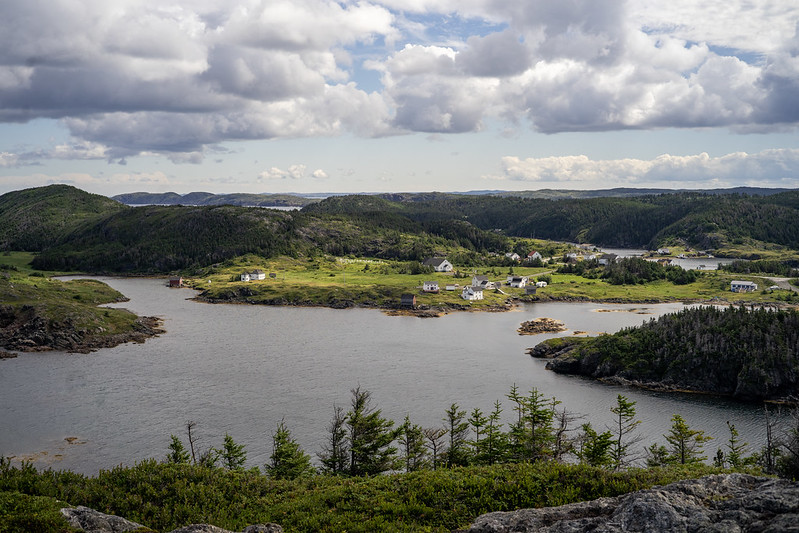
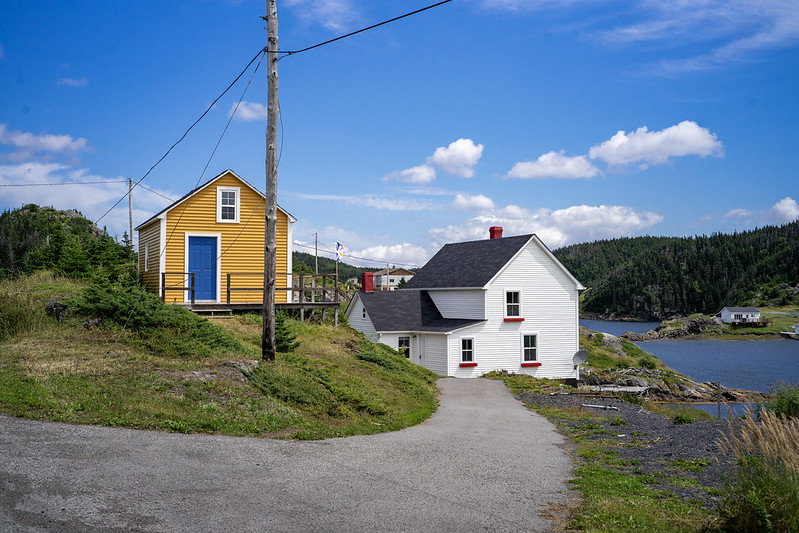
Now, you know what a knoll is, right? You’ve heard the term. You likely have this general image in your mind: a kind of rounded little hill, or something of that order – more than a mound, but much less than a mountain. You might in particular know the phrase grassy knoll. You might (probably not, but you could) even know that knoll comes from an old Germanic root that also descended to words in other languages for ‘lump’, ‘ball’, or ‘turnip’. So, though a knoll can’t roll, it’s rounded. But how big is it? And how big isn’t it? I was driving with my dad recently in the Okanagan region and he pointed at a long, rounded, grassy, lightly treed prominence in the middle of the valley and said, “Would you call that a knoll?” And I wasn’t sure whether or not I would.

Now, if we had been oceanographers, the question could have been resolved by checking some measurements, because in oceanography knoll means ‘rounded fully underwater hill with a prominence of less than 1000 metres’. They’ve set an in-group definition, as one does in the sciences. It’s the same kind of taxonomic imposition as one encounters when someone tells you that a strawberry is not a berry but a banana is: that’s true when you’re speaking in botanical terms, but it’s different from the common-knowledge usages that communicate to ordinary people in ordinary contexts. So the grassy knoll in Dealey Plaza, Dallas, does not at all meet the oceanographic definition of knoll, and yet.

And yet it also might not meet every ordinary speaker’s definition of a knoll either. It’s not pointy-topped, true, but it’s also barely prominent at all in its surroundings. It’s several times the height of a person, but less than the height of any of the trees on it. If you were to ask a person “Would you call that a knoll?” they wouldn’t necessarily say so. But it’s the term that Albert Merriman Smith used when describing the location in connection with the assassination of John F. Kennedy, and so it stuck. So we have an established and accepted precedent for calling a low rounded earth form with a prominence of less than ten metres a knoll, for what that’s worth. (Most people who have heard of the grassy knoll probably don’t have a clear picture in their minds of what it looks like. It’s smaller than I expected, I’ll tell you that.)

OK, so what’s the upper size limit of a knoll? How are we even supposed to know? Some people do seem to use the term loosely. In a recent Robb Report article quoted by Merriam-Webster, we see “Built over 25 years ago, the 50,000-square-foot domed dwelling is perched atop a 2,400-foot-high knoll, offering up 60 miles of sprawling coastal vistas.” I think that’s rather high for a knoll, and I have to wonder whether the author is the same kind of thesaurus-scraper who would say “we munched oatmeal” or “Chumbawamba crooned ‘Tubthumping.’” But it does convey the idea that the hill in question is rounded (at least I hope it is).

To help establish an upper limit for knollness, I’ve looked up a few things that have Knoll in their names. As you might expect, they’re more prominent than many knolls you might think of (because why would we have articles about insignificant knolls?). There’s Long Knoll (not to be confused with the former prime minister of Cambodia, Lon Nol), which is in Wiltshire, England, and has a prominence – in the topographic sense – of 171 metres. There’s Brent Knoll (which is probably also the name of one or more persons), in Somerset, England, a significant local land feature near the Bristol Channel with a prominence of 137 metres. There is The Knoll, on Ross Island, Antarctica, which rises 370 metres above the sea. There’s Cave Knoll, in Utah, which is more hard and lumpy looking and with pointy bits on top but has a prominence of just 95 metres. There’s Grindslow Knoll, in Derbyshire, which actually stands (or sits) a few hundred metres above its surrounds but has a high col connection to a neighbouring peak that makes its topographic prominence a mere 15 metres. And then there’s Bluff Knoll, in Western Australia. 

I think Bluff Knoll tests the limits of common knoll-edge. Or perhaps it’s just bluffing. It’s the highest peak in its range, has a prominence of 650 metres, and has cliff edges on one side of its summit – a questionable kind of knoll-edge, to my mind. Granted, much of its overall form is rolling and even grassy, but come on. I’ve seen smaller things called “mountains.” I feel that Governor James Stirling, who named it Bluff Knoll (and after whom the range it’s in has been named), was rather pushing it. It might be better to call it what it has been called for much longer by the people who were there long before Sterling showed up: Pualaar Miial, which means ‘great many-faced hill’. Which, incidentally, seems inconsistent with what I would think of as a knoll.

But then what do I knoll? I wasn’t even sure about that long hill in the Okanagan. Knowing what I knoll now, I would call it one. Or I might just call it a hill, albeit a little one. Anyway, “mountain” would be right out.

linchpin

Most people who use linchpin these days use it figuratively, to mean someone or something without which the wheels would come off the machine, so to speak. In a pinch, they’ll make it a cinch, even if it’s inch by inch. But what kind of thing might the linchpin of a word be?

Some people will say that it’s the spelling. Take linchpin for example: many people write it as lynchpin. Why? Not because we usually spell the sound that way; all the rhymes are spelled -inch. But there’s one word we have that’s spelled with a y, and it’s lynch, which, of course, is exactly the same sound as linch. The problem being that the verb lynch means ‘execute extrajudicially’ and most often refers to the hanging of black men by white mobs in the American South.

Which, I can assure you, has nothing to do with linchpin. The verb lynch comes from a surname, Lynch, which in England derived from a Kentish word meaning ‘hill’ but was also used as an Anglicized – and modified – form of Irish Loingsigh and related names, which originally named someone who had a fleet of ships. And since neither mob executions nor hills nor ships have anything to do with linchpins, it seems important not to misspell it, less there be a misconstrual.

But in truth, even people who spell it lynchpin don’t seem to consciously relate it to the mob hangings. I suppose they might, if asked about it, speculate that the thing it names was invented by someone named Lynch. But it wasn’t.

In fact, no one knows who invented the linchpin, because it’s been around since time immemorial – pretty much as long as there have been wheels mounted on axles. When you mount a wheel on an axle, you need to hold it in place so it doesn’t come off. And for that, people historically used what in Proto-Germanic was called *lunaz (the asterisk means we’ve reconstructed it from historical evidence), and in Old English was called lynis, and then in Middle English became lynce or lince: a pin inserted through the axle on the outside of the wheel. By Early Modern English, its spelling had settled on linch (and it’s safe to say that modern people who spell it with a y are unaware of its etymology), but by that time, it had come to be called a linchpin.

Which, given that linch refers to the pin, seems sort of like the number in PIN number or the tea (or chai) in chai tea or the free in free gift. But perhaps it’s more like the berry in cranberry: we could just call the thing a cran because there’s no other cran thing (leaving aside juice blends like cranapple), but somehow we have decided that we want to specify cranberry, just like you’ll sometimes see tuna fish – as though if we didn’t name the kind of thing it is, it would come off its axle and roll loose through the language. So we add the berry in cranberry and the pin in linchpin for a kind of security. 

In fact, for linchpin there is a case to be made for the clarification: the meaning of lynis and lynce and linch had, it appears, spread so that it could also refer to the whole axle. It’s like how originally tuxedo referred specifically to a kind of jacket without tails (named after the place it originated), and then the sense spread to the whole suit that included the jacket, and now the jacket itself is called a tuxedo jacket. So why not pin it down with the added specification? Meaning that the ostensibly redundant addition is the linchpin of the word.

And that should hold it – at least until such time as the figurative use becomes the primary one and any literal use is taken as a reference to the figurative sense, at which time we might yet hear “and this is the linchpin pin.” Or we might not – after all, wheels are usually held on by more than a pin these days.

boondoggle

A gravedigger, a squid-jigger, and Mick Jagger were smuggling boomerangs and goggles in a dune buggy, juggling the boombox and jiggling and wiggling and snuggling as it squiggled on the dunes. Hah! What a boondoggle!

Wait, what was a boondoggle?

The little braided ring holding Mick’s scarf on, of course.

Those who know the word boondoggle almost certainly know it as a word for a wasteful project, a government make-work or junket – a way to hornswoggle the taxpayer. This got its start with an article on the front page of the New York Times on April 4, 1935, with the headlines “$3,187,000 RELIEF IS SPENT TO TEACH JOBLESS TO PLAY; $19,658,512 VOTED FOR APRIL | ‘BOON DOGGLES’ MADE | Aldermen Find These Are Gadgets—Hear of Eurythmic Dances.” The article explains:

The Board of Estimate voted an April relief appropriation of $19,658,512 yesterday, following disclosures by the Aldermanic committee investigating relief that $3,187,000 a year was being spent on providing dancing lessons and other recreation for the unemployed.

In the course of the day the Aldermen learned that the making of “boon doggles” was being taught to relief recipients. “Boon doggles” is a colloquial term meaning gadgets. Eurythmic dancing was covered in another work project, and there was a staff at work teaching the unemployed hobbies, the testimony disclosed. . . . Lloyd Paul Stryker, counsel for the committee, characterized the research projects in one word—“bunk.”

Stryker, as it happens, was a well-known lawyer, and one who cut quite a figure. He seems to have been especially important in the spread of boondoggle for the “wasteful project” use. (Eurythmic dancing, by the way, is a kind of expressive movement invented by Rudolf Steiner in 1911; the 1980s musical duo named themselves after it.) Further down in the article, we read a bit more information on the subject given by the mayor of New York City at the time:

Commenting yesterday on the Aldermanic investigation headed by Mr. Deutsch, Mayor La Guardia said:

“Educated persons and college graduates must eat, and when these projects were established by the Federal Government, there was a real crisis, particularly among the college groups and so-called white collar classes. Many things were done to give these people work, and it is quite possible that people do not understand some of these projects set up to give college people relief.

“If any one responsible will say that college people and white collar workers should not be continued on relief, I will be ready to take that recommendation, if they will take the responsibility.

“If the law was changed to permit us to use white collar workers on necessary city work, we would be glad to use them. But the law prevents this. I see nothing to ridicule in giving relief to people who need it. College graduates are going to get the same consideration as others in need of employment.”

Well. It’s always the way: what government does to benefit one set of citizens will (rightly or wrongly) appear wasteful to at least some of those whom it does not directly benefit. I won’t go into the further details of the social circumstances and obvious class distinctions evinced in the article, but I do need to correct one misapprehension: “boon doggles” (boondoggles, as we spell them most typically) are not gadgets. They are braided lanyards and similar items braided of leather or fabric. As the New York Herald Tribune noted about a visit of the Prince of Wales in 1929 (six years earlier),

The Prince also wore around his scout hat a “boondoggle,” which is a bright leather braided lanyard worn much in the manner of the hat cord used by the United States Army.

Thanks to Michael Quinion, I learn of a mention in the British magazine Punch a week and a half later, where it says that boondoggle is

a word to conjure with, to roll around the tongue; an expressive word to set the fancy moving in strange and comforting channels; and it rhymes with “goggle,” “boggle,” and “woggle,” three of the most lighthearted words in the English language.

The word was originally coined out of thin air – but obviously on the basis of what sounded good to an English speaker – by one Robert H. Link. He at first used it to refer to something else (I don’t know what) but, as he was an Eagle Scout, he put it to use to refer to the braided lanyards and braided leather neckerchief slides and similar things that the scouts had. It was a word he made up for fun, and it has been a boon to many – the mind boggles.

Whereas what we more commonly call boondoggles now aren’t necessarily made up for fun – more often for profit. And they are less boon and more dog. They are most often wastefully expensive projects that add little to no value or are inferior to alternatives. It could be destroying a public good such as a park to put in a large, outrageously overpriced, comically badly designed, and quite inappropriately sited private enterprise that has no hope of succeeding, just because of some side benefit for the politicians pushing it through. It could be building a badly designed airport that takes far too long to put in and doesn’t function well – there are a few that are seen that way, although, I note, not the one named after Mayor La Guardia. It could be some other construction project or similar make-work that drains money needlessly into the pockets of a select few. 

All of these cases have two things in common, though: unlike the case cited in the 1935 New York Times, the people they benefit the most are people who already have plenty of money and means; and the people involved are no boy scouts.

Love, Desire, and Tension: Structural Editing of Nonfiction

Here’s the video of my presentation at the Editors Canada conference in Toronto, June 17, 2023. This is an updated version of the presentation of the same name I gave at the ACES conference in San Antonio in 2022.

nuptials

It’s June, the month commonly seen as most conducive to nuptials. (Also to nuptuals, but that’s just because so many of us are used to words like conceptual and actual that nuptial just seems like it’s too easy and must really be nuptual. It’s not.) Nuptials, as we know, is used as just a fancy way of saying weddings (or wedding – we seldom see nuptial as a singular noun, and not often as an adjective, either, though it has been an adjective longer than it’s been a noun). But, historically, it’s more one-sided than that.

As you probably know, weddings in our culture (as in many) have long been focused more on the bride than on the groom. Prospective brides will hear “It’s your day!” and “It’s the best day of your life!” and the wedding dress is typically a huge production. Prospective grooms will not hear all of the same things, and are expected to wear some variation on a standard suit – don’t try to pull attention. Because historically it just hasn’t been the same life-altering thing for the man. The woman was getting her whole new name, identity, and career! The man was “taking a wife.” There’s still some of this, though it has diminished a little with widespread acknowledgment that women are equal human beings and deserve to be treated as such. But back in Roman times, where this word comes from, well…

Well, it’s like this. If I pull my Pocket Oxford Latin Dictionary off the shelf and look up “marry vt” I get the following: “(of a priest) conubio iungo; (as the man) uxorem duco; (as the woman) viro nubo.” So while in English I can say “I wed Aina, Aina wed me, and Reverend Taul wed us” or “I married Aina, Aina married me, and Reverend Taul married us,” in Latin there are three different verbs. 

What the priest does is conubio iungo, which has the verb iungo (ancestor of English join) and the noun conubio (nominative conubium, often but less correctly seen as connubium), which is from con ‘with’ plus nubium, which is from nubo plus -ium

That nubo is the same verb that the woman uses, and it means “I wed” – but a man would not use that verb, and not just because viro nubo means ‘I wed a man’ (a thing that men were not supposed to do in Rome). The Latin noun conubium for ‘wedding’ is – like, say, adoption or victory – based on what one side of the action does. And the same goes for nuptial(s), which comes from Latin nuptialis ‘pertaining to marriage’, which is from nuptiæ ‘wedding’ (note that it’s a plural, like nuptials), which is from nupta ‘married’ or ‘married woman’, which is the past participle of nubo. It’s the occasion of her wedding. The other person getting married is there by implication, but mentioned? Nope.

Nubo also shows up in another word we know: nubile. You may know that as an adjective for an attractive young woman. Its Latin source, nubilis, literally means ‘marriageable’ – referring to a woman, not a man. You can see how it maps out the life course for a woman: “that young lady is very attractive, which I will express by saying she is fit for marrying.” Ripe like a peach, and ready for plucking, so to speak. And if she wanted other things? Pshaw.

And what does the man’s version mean, uxorem duco? Well, uxorem is the accusative case of uxor, which means ‘wife’ (you may know the adjective uxorious, meaning ‘very – perhaps too – devoted to one’s wife’; note that we lack a corresponding adjective in the other direction, because it has never been thought of as a fault for a woman to be extremely devoted to her husband). And duco? It has many meanings and many descendants – yes, including duke, but also deduct, conducive, production, ductile, and so many more. Its most basic meaning it ‘lead’ or ‘take’. From which you may deduce that uxorem duco translates pretty much exactly to I take a wife.

anise

Anise is very divisive. 

People are strongly divided over whether it’s delicious or nasty. 

They’re also divided over how to pronounce it.

Also, does it have anything to do with Jennifer Aniston?

Let’s start with a key thing: there’s more than one kind of anise. And there are things that are sometimes called anise that really aren’t: fennel, for one, and also star anise, which is not actually related, though it substitutes very nicely and cost-effectively for the original anise. And there are also things that anise tastes like, or that taste like anise, that aren’t anise and aren’t called anise – specifically, licorice (or liquorice, if you prefer). The connection between all of these is cloudy… but only if you mix it with water.

Oh, and there’s also dill. Dill comes into this, just sort of as a little inset. But that’s mainly because of the inscrutability of ancient Egyptians.

Let’s start with the flavour. All of the things that taste like anise, or like licorice, or like fennel, contain the molecule anethole, which really looks like an unpleasant kind of thing to call a chemist, doesn’t it? Anethole is also closely related to estragole, a molecule that gives flavour to tarragon and basil. Anethole is (or plants containing it are) very popular, as we all know, not just for its characteristic and sweet flavour but also because it’s an aid to digestion (and it reduces flatulence too, and not just by overpowering the smell). This made it popular for desserts and after-dinner drinks.

It also has a party trick. Anethole is highly soluble in ethanol (say “anethole in ethanol” five times… after drinking some ouzo or absinthe), but is only slightly soluble in water, so if you dilute a liquor that’s flavoured with it, it goes from clear to cloudy. Which is really cool to observe, and I remember observing it quite a few times one evening in my youth. (I also remember how wretched I felt the next day.) This is called the ouzo effect, but it also affects mastika, sambuca, absinthe, anisette, pastis, anis de chinchón, anís, anísado, Herbs de Majorca, rakı, arak, aguardiente, and Xtabentún. Oh, and I think – I think – Herbsaint.

And if you hate the taste of anise, you’re not going to like any of those – although the amount in, say, a Sazerac is so subtle you probably won’t pick it out. But the funny thing is, you can hate the taste of anethole and yet love the taste of dill. 

That’s funny just because anethole comes from the Greek word for ‘dill’.

Well. I’m being a bit puckish here. It’s more accurate to say that there has been some historical confusion between anise and dill. It’s not because they taste alike (goodness gracious, they truly do not), but it may be because the plants look similar (they do). The thing is just that there was this Egyptian plant called jnst, pronounced “inset” (see inset for hieroglyphics, courtesy of Wiktionary).

We’re not completely sure what it was, but it was an edible, possibly medicinal, plant with seeds – it could have been anise or dill; Egyptians had both. Anyway, the name made its way into Greek variously, notably as ἄνισον (ánison) and ἄνηθον (ánēthon). This resulted in the Latin words anethum, meaning both ‘anise’ and ‘dill’, and anisum, meaning just ‘anise’. Anethum developed over time into French aneth, Italian aneto, Portuguese aneto and endro, Spanish aneto and eneldo, and obsolete English anet, all meaning ‘dill’ (dill is from an old Germanic root that comes from an ultimately unknown source). And anisum developed into various versions of anis in quite a few languages, mostly spelled anis or anís.

OK, so how do you say anise? I’m not asking “how is it supposed to be said” – I’m about to tell you that. I’m asking how you say it.

Because the thing is, there are actually several ways that are all legitimate, established, accepted: “a knee’s,” “a niss,” “a niece,” “annus,” and “anniss.” Most people I know seem to prefer “a niece.” I, however, grew up saying “anniss,” like the first two syllables of Aniston.

Yes, I know, English got it from the French, so if you want to be true to that origin, you should say it “a niece.” But if we’re going to play that game, I’m going to start calling it “inset,” from the original origin, OK? So lay off. Anyway, I have one more inset to turn to, specifically that actress, Jennifer. 

Now, if you know English onomastics, you’ll recognize -ton as toponymic: the family is named after a place, the town (or anyway farmstead) belonging to Anis – well, really, belonging to Ann, probably, and not likely anything to do with anise. But there’s a Greek derivation that’s buried but that we’ll resurrect. 

As it happens, Greek for ‘resurrection’ is ἀνάστασις (anastasis). That gave rise to the name Ἀναστάσιος (Anastásios). And that in turn was made into the family name Αναστασάκης, typically rendered in the Latin alphabet as Anastassakis. One person who had that name was Yannis Anastassakis, who was an actor. He was noted for playing Victor Kiriakis on Days of Our Lives – but he did that under the Americanized name his father gave him when he was two: John Aniston. (It was a name that already existed, but usually spelled as Anniston; there are towns of that name in the US.) He, of course, passed that family name on to his daughter, Jennifer.

Sorry for clouding this with that side shot. I know that Jennifer Aniston is not to everyone’s taste. But neither is anise. So there. Take it as a digestif.

limerick

For better or verse, I’ll come clean:
To Limerick I’ve never been.
Nonetheless, I’ll take time
For eponymous rhyme,
Since I favour the smart (and obscene).

I’m not sure it’s such a great pity
To miss the place that named the ditty—
One that Angela’s Ashes
Left in tatters and slashes
And more recently’s been called “Stab City.”

Still, the town at the mouth of the Shannon
Has many a cultural fan in:
Stage, music, and art
And words all play their part—
But the link to the rhyme is not canon.

The birth of the form of the rhyme
Is lost in the deep mists of time,
But this much we know:
Two centuries ago
Some London wag published this crime:1

“There was a sick man of Tobago,
Liv’d long on rice-gruel and sago;
But at last, to his bliss,
The physician said this—
‘To a roast leg of mutton you may go.’”

Its catchy quick form was a lock
For light verse made to bruise, jape, or mock,
And you may with a smile
Recognize the same style
In “Hickory Dickory Dock.”2

Over time this verse form got around;
The American first that we’ve found
Was some twenty and four3
Dating to Civil War—
Here is one, just to show you the sound:

“There once was a Copperhead snake 
tried to Bite Uncle Sam by mistake;
But the Seven League Boot 
on old Uncle Sam’s foot
Soon crushed this pestiferous snake.”

Does that last rhyme make you say “Oh dear,
It’s the same word”? Well, friend, have no fear:
It was done just that way
For nonsense and for play
By the great English poet, Ed Lear:4

“There was an Old Man of Kilkenny,
Who never had more than a penny;
He spent all that money
In onions and honey,
That wayward Old Man of Kilkenny.”

Does that verse make you dizzy or sick?
Well, just wait, for it has one more trick:
Neither wag, Lear, nor Yankee
Named this verse hanky-panky
Anything, let alone “Limerick.”

The binding of place name to rhymes
Has trickled by nickels and dimes;
Our first attestation
Of association
Comes from Canada’s Maritimes:

The St. John (in Nouveau Brunswick)
Daily News5 filler wit did the trick
For better or worse
With this sad little verse,
Note, “Tune, wont you come to Limerick”:

“There was a young rustic named Mallory,
who drew but a very small salary.
When he went to the show,
his purse made him go
to a seat in the uppermost gallery.”

So a tune is the source of the title?
Play the tune6 and forestall your requital:
It’s a friggin’ slip jig,
So the rhythm’s too big,
So you may yet restrain your excital.

However, to go for the win,
Let “The Limerick Shanty”7 begin:
Verse stretches to tune
With additional boon
Of a chorus for all to join in.

And quickly you will realize
It’s a game made to extemporize;
Thus did Oxford scholars
Let steam out their collars
With verses more witty than wise.8

And if you’re still yearning to see
How that slip jig match-up came to be,
Well, as (clutching his head)
Von Sacher-Masoch said
Of his Venus in Furs, “Ah, beats me.”

But I will say that I have a hunch—
And I don’t think I’m just out to lunch—
Why the waggish young blokes
Used it for dirty jokes:
It’s the one, two—wait for it—three punch.

If you want to tell jokes that don’t suck,
It’s not just a matter of luck:
It requires exploitation
Of anticipation,
Without which they won’t give a darn.

1 The History of Sixteen Wonderful Old Women, published in 1821, quoted in “History of the Limerick,” by George N. Belknap, The Papers of the Bibliographical Society of America 75, no. 1 (First Quarter, 1981), pp. 1–32. If you want about as much scholarship on the topic as you can stand, that is the article for you. If you lack the patience for 32 pages, you may yet enjoy “There Once Was a Poem Called a Limerick,” by Matthew Wills, on JSTOR Daily, April 12, 2021.

2 First published in 1744.

3 Ye Book of Copperheads, published in Philadelphia in 1863, inveighing against “Copperhead Democrats,” who favoured peace with the South and opposed abolition of slavery. (If you click the link, be forewarned: some of the rhymes contain racial epithets.)

4 The Book of Nonsense, by Edward Lear, first published in 1846.

5 St. John Daily News, November 30, 1880, page 4, column 5, a couple of inches down.

6 “Won’t You Come to Limerick” is another name for “Will You Come Down to Limerick,” a slip jig in 9/8 time.

7 “The Limerick Shanty,” which uses the tune of “Won’t You Come to Limerick” plus a fitting of words with a bit of pause, with a set chorus involving elephants (for some reason) and each verse giving a chance to extemporize. The linked example has verses that, though they are not vulgar, are not all polite.

8 The Oxford and Cambridge Undergraduate’s Journal, November 20, 1879, notes a great moment at “school wines” (convivial events) “when every soul in the rooms has contributed his humble mite to that great resource of inventive talent—the Limerick rhymes.”

psammophile

The winning word for the 95th Scripps Spelling Bee, correctly spelled by eighth-grade student Dev Shah, was psammophile

The shifty nature of English spelling is such that more eighth-graders would probably, on hearing it, spell it samafile. But English spelling wants to hurt you and we all know it. If I said this word and then presented both spellings you would probably all assume that psammophile must be the correct one. For that matter, if I also presented tsambeauphiall quite a few people would likely go for that one, just because it’s even weirder. Once you have been to the beach of English spelling, where the tides of time batter against the lexical grains, you’re always going to have a bit of it in your shoes and a bit more in your shorts and plenty more on the floor of your home.

Not that beaches are bad. Many people like them. My wife loves being on the beach. Sand may be nature’s glitter bomb, but there is something so very relaxing about being on the soft sand on a warm sunny day by the lake or ocean (and, if you’re my wife, going swimming too). You could say she’s a psammophile.

Technically, psammophile refers specifically to plants and animals (and bugs too) that prefer to live in sand. But the roots are simple enough: ψάμμος psammos ‘sand’ (and, by the way, you can say the “p” in it if you really want, but for most of us it goes against the grain) and φίλος filos ‘beloved, loving’ (the ph is the standard Latin transliteration; apparently the Greek φ was in the earlier times more like “p” plus “h” and not the same as f, for which Latin of course had a letter). 

Another English word for the same, also confected from classical roots, is arenophile, using Latin arena ‘sand’ for the first part, but it has two issues: (1) it mixes Latin and Greek (not really illegal, let me tell you) and (2) arena has shifted meaning in English, so the word seems to refer to a space for engaging in certain kinds of sports and rock concerts.

There are a few other English words that also start with psamm-, such as psammology (study of sand), psammophobic (afraid of sand, or at least avoiding sand), psammoxenic (unable to survive in sand), psammon (the community of organisms living in sand, which by the way does not include salmon), and psammotherapy – which specifically intends therapy in sand baths, but when I see people stretched out on the beach, I am inclined to extend the meaning. 

But there are some other words I haven’t found in the dictionary but think are worth adding: psammba, a dance on the beach; psammple, just a little bit of the beach that somehow got into your luggage; and psammwich, which you will, alas, immediately know if you have ever taken a sandwich to the beach.

Acadia, Cajun

I mentioned in andouille that the sausage that’s a staple of Cajun cuisine came originally from Normandy and was also spread to Calabria by French nobles from Anjou. But the Cajuns themselves trace through many places in the New World, notably parts now named after Scotland and an English king with German roots but at the time named after a place in Greece, and ultimately came from France – but not Normandy or Anjou.

That “place in Greece” is Arcadia, in the heart of the Peloponnesian peninsula, and I’ve already written in detail about it. Arcadia became a byword for an idealized idyllic unspoiled wilderness with forests primeval. It was applied by Giovanni da Verrazzano to the Atlantic coast of North America north of Virginia (which would include not just Baltimore, New York City, and Boston but Cheesequake too). Eventually the name shifted farther up the coast and even inland, and – possibly under the influence of a Mi’kmaq word for ‘fertile land’ – dropped the r, to become the French colony of L’Acadie (or, sometimes, La Cadie), which was located primarily on the peninsula we today call Nova Scotia, spreading north into what is now New Brunswick.

The fact these provinces are now called Nova Scotia (“New Scotland”) and New Brunswick (in honour of King George III, who was also prince-elector of Brunswick-Lüneburg in Germany) gives a clue to how the Acadians became the Cajuns. 

The French settlers in Acadia arrived in the early 1600s from the area of Aquitaine, in southwest France; in that way they were different from other French settlers in New France, who largely came from Paris and the northwest. In the early 1700s, when England gained control of Acadia, the Acadian settlers were required to declare loyalty to the English crown, which, in general, they would not do (for reasons religious as well as political). And so most of them were forced out in what came to be known as the Grand Dérangement, or the Expulsion of the Acadians. 

This event was memorialized by Henry Wadsworth Longfellow in his epic poem Evangeline, A Tale of Acadia, which (ignoring the Mi’kmaq, who had been there before and were – and are – still there), draws again on the Arcadian mythos:

This is the forest primeval. The murmuring pines and the hemlocks,
Bearded with moss, and in garments green, indistinct in the twilight,
Stand like Druids of eld, with voices sad and prophetic,
Stand like harpers hoar, with beards that rest on their bosoms.
Loud from its rocky caverns, the deep-voiced neighboring ocean
Speaks, and in accents disconsolate answers the wail of the forest.

This is the forest primeval; but where are the hearts that beneath it
Leaped like the roe, when he hears in the woodland the voice of the huntsman?

This A(r)cadian ideal is also a key part of the national Canadian mythos – see the paintings of the Group of Seven, among other emblematic bits of Canadiana. But massive movements of people, often involuntary, have always been an important part of Canadian history.

The Acadians were first relocated to Maryland, New York, and New England – which you may remember were Verrazzano’s Arcadia, not that it matters – but subsequently they largely ended up deported to France. Some of them ultimately came back around to Canada, to Acadia, to rejoin the few who had escaped expulsion. But they didn’t return to the part they had left; they were forced farther north into New Brunswick, and that is where les Acadiens still have an important presence (Suzie LeBlanc has released two lovely albums of Acadien folk songs, just for example). The name Acadia has hung on in Nova Scotia as well: in the Annapolis Valley, for instance, one of the varieties of grapes the local wineries grow is called L’Acadie, and after a day of wine touring you can drive into Wolfville and have a look at Acadia University.

But in 1785 some of the Acadians in France chose instead to follow the lead of one Henri Peyroux de la Coudrenière, who had a financial interest in inducing them to resettle in a colony farther south in America, one that already had a significant French presence but had more recently been acquired by Spain: Louisiana. These Acadiens, who had – through dropping the a or rebracketing l’Acadie to la Cadie – become Cadiens, became known by their English-speaking neighbours (and by themselves as they spoke English) as Cajuns, through the same process by which Barbadians have come to be called Bajans and by which Canadian became, on the cover of Mark Orkin’s bestseller, Canajan, Eh?

And the area of Louisiana that is the Cajun heartland, about a third of the state on the south and southwest (and not actually including New Orleans), is these days called Acadiana – a name that it first got in the 1950s, drawing in part on Acadia Parish, which has had that name since 1886. Some things keep coming around.

andouille

New Orleans, as you may know, is famous not just for its drinks (such as the Sazerac) but also for its food. If you like Cajun cuisine, you’re in for a treat. If, on the other hand, you disdain shrimp, crawfish, shellfish, or other fish, and can’t be induced to eat andouille, well, your options are a bit fewer.

Andouille! Who among carnivores would not want an andouille? They’re so very delicious, both the large andouilles and their smaller unsmoked kin the andouillettes. And yet we do find some people who, though they may not dislike pigs, nonetheless hate their guts – and it’s the pigs’ guts that make these sausages. And even if you don’t mind what animal bits go into the sausages, the seasonings can be rather lively, and the garlic or peppers could be their undoing.

And do we even know how to say andouille, for that matter? There seems to be a dispute going on – do we have a resolution? Yes and no. The word, as you may have deduced, is from French, and in French it’s said as two syllables, /ɑ̃.duj/, something between “on dooey” and “on dwee” (allowing that the n is really just a nasalization of the vowel before). In England, you might hear it as “on doo we” (or “undo we”) but in America, including New Orleans, you’re more likely to hear “ann doo we” – like in “and do we know, or don’t we?” (You can hear my butcher in Toronto say it in my sausages pronunciation tip. As to andouillette, I think if you say “and do we yet” you’ll get away with it.)

But however a word or sausage may taste, it might be somewhat removed from what went into making it. In the case of andouille, which is produced by putting pigs’ guts inside pigs’ guts, the name comes from Medieval Latin inductilis, which comes from Latin induco, ‘I put in’ or ‘I overlay’ (or actually quite a few other related senses). That -duc- is the same one as in duct, conduct, produce, deduce, induce, introduce, education, and so many other words having originally to do with leading or putting. (Yes, it’s even related to duke.)

And if you think andouille is somewhat removed from induco, let me introduce you to another lovely bit of food and language: ’nduja, pronounced “’n’ do ya,” a Calabrian sausage. It’s very spicy, like Calabrese salami, but it’s spreadable – once you cut open the sausage, you get a thick textured paste. What’s happened to the ingredients of the sausage is about like what’s happened to the ingredients of the word, because ’nduja – like what it names – is derived from andouille. It was introduced to southern Italy by members of the French house of Anjou in the 1200s. 

But the sausage isn’t originally from Anjou. It’s from a bit farther north, in Normandy. In fact, its historical home is the town of Vire, which is also, indirectly and etymologically, the ancestral home of vaudeville. The sausages made it across the Atlantic and down to New Orleans thanks to people from southwest France who came to Canada and then were forced to move to Louisiana.

And if I’m dining on Cajun food with someone who doesn’t fancy it, I pronounce andouille as “And do we not want that? I’ll have yours, then.”