Just for reference

This article was originally published on BoldFace, the blog of Editors Toronto.

If you edit academic books or articles, you probably spend a lot of time tidying up references. Sometimes as much time as editing the entire rest of the text. First, you have to pick your style: Chicago (note or name-date), MLA, APA, or, in the sciences, AMA or Vancouver. Then, you have to make everything consistent with it, to the extent possible. On top of that, you may have to look up the sources to double-check them.

I’ve edited medical continuing-education presentations that had no bibliographies and would cite some sources as just, for instance, “Heinz & Wong 2013.” I would have to find the rest of the citation—and I would, nearly every time, with a single search. Which means that anyone else who wanted to know would also be able to find it as quickly. Our citation standards were developed before the wonderful world of high-powered search engines. If we can find the source from an incomplete or inaccurate citation, how much of this tidying up is necessary? Continue reading

surappointment

We went to the fancy outdoor food court in front of Union Station to have fancy hot dogs and watch a movie. We got there 45 minutes before movie time and all the seats were already taken. We bought our fancy hot dogs anyway and Aina’s burst hot liquid on her and scalded her and mine ejected its sauerkraut and mustard mid-bite. It was, we may say, a disappointment.

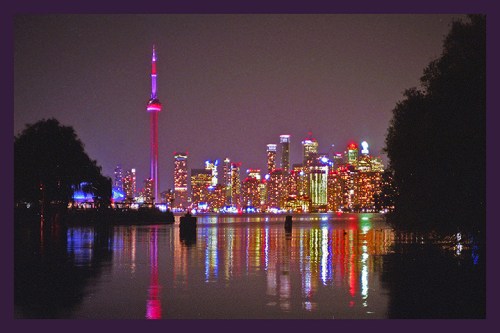
So, suddenly at liberty, we checked the ferry schedule. We made it on time to the next ferry to Ward’s Island, and an hour after our downtown disappointment we were on the beach on the island for the first time this summer. The water was flood-level high but the weather was beautiful and it wasn’t crowded. Aina frolicked in the waves and I stood and observed the deepening cyans and magentas of the hour before a summer sunset on the lake. And then we went to the cute café by the lawn bowling club and had refreshment as an exactly perfect summer evening wrapped itself around us like a friendly cat.

It was, we may say, a surappointment. Continue reading

One fewer thing to fuss about

Let us say, for the nonce, that the author of a book telling people how to improve their English has declared, “More is commonly used in speaking of numbers; I believe greater would do better. No greater than a hundred appears to me not only more elegant than No more than a hundred, but more strictly proper. More is best reserved for mass quantities.”

Well. We English speakers have a very problematic relationship with our language. If something seems natural, simple, clear, and obvious, and if it’s something we heard people do all the time, we are very eager to believe a rule telling us it’s wrong. We’re prone to rule-seeking behaviour because we’ve learned to be insecure about our grasp of English’s rules – they’re so capricious and inconsistent – and a new rule also gives us an additional sorting and tidying tool… and something to whack people on the head with to show our superiority, too.

So, if the book came out at the right time and found the right audience, we would soon have people insisting that cookbooks that say “More than 200 of the best high-fat recipes” should instead say “Greater than 200 of the best high-fat recipes,” and that when inviting friends over you should say “The greater, the merrier”; news articles would fussily put “Observers estimated there were greater than 5,000 people in attendance” and “He has lived in the city for greater than five years.”

Does this sound far-fetched? It’s so incredibly near-fetched, it’s fetched right off your page… more or less. Continue reading

What do we care about, really?

“Oh, please, stop. I can’t stand to hear that. It’s like chewing on tin foil. You have it all wrong. Really, I must insist. I care about good English.”

Behold one of the great socially countenanced forms of authoritarian aggression: brutishly objecting to someone else’s English usage. The sin may be a pronunciation that’s not “right,” or a transgression of one of the grade-school superstitions (“split infinitives,” ending sentences with prepositions, using the word ain’t), or a “wrong” meaning (decimate gets a lot of this), or – Heaven forfend – a misspelling. We treat a spelling error as sufficient to vitiate any argument, however well reasoned; we may even issue peremptory unsolicited corrections to slight variations from what we consider correct. Some people have gone so far as to vandalize public signage to change punctuation. And the self-justification is always on the order of “I care about good English.”

Spoiler: That is not why we are doing it. Continue reading

bdelygraphy

Ugh! What is this nasty, disgusting, loathsome word? How do you even say this? It starts with a and a bumping bellies in an apparent fight over which gets to attach to the rest. It’s like it was going to be bely and then the gave it the lie and gazumped the whole thing. And though the keeps the first position, we end up saying the – because, unlike Ancient Greeks (and many other people), we are constitutionally opposed to saying [bd] at the start of a syllable. Our tongues simply… abdicate. (That bd is across a syllable break, so it’s OK.) And then we have the echoing y’s like twin tornadoes or, perhaps, cesspits. And the like an upside-down y, and the to complete the set of blunt, grunting, burbling, gargling voiced stops. Why. Just why.

Would you like to know who’s responsible for this mess, where it came from and how it came to be on your screen squinting up at you like some kind of tangle of mudworms? Perhaps a nice hate-read? Continue reading

flexuous

Here’s a word that really flexes its sense. Flex what? U O U S – a set of curves countercurving, bending like barrels or ship bows, veering and careering like a river. It’s like a chart of a fluxus, deflecting and reflecting. Even your tongue, as it says it, rolls and laps like waves at the shore of your alveolar ridge. Continue reading

gazebo

What will please me more than gazing? Gazing at a lovely view, gazing at a lovely open structure with a lovely view, gazing at a lovely word for the lovely structure, gazing at a lovely etymology of the lovely word? Continue reading

nusquamation

Summer, at last, has arrived. In ecdysiastic frenzy the denizens of my city are reaching what’s left of the beach and commencing estivation. And whether or not a sunburn appeals to them, it will be time for desquamation: peeling and prying off the scales of winter sartorial defence, the scales of emotional self-protection, the scales of busy-ness with business, the scales on which we weigh our winter weight. The scales of home and job, too, for it is time for a vacation: to get up and go somewhere – anywhere but here.

Or, for some, it will be time for nusquamation: to go nowhere. Continue reading

Pronunciation tip: Einojuhani Rautavaara and Arvo Pärt

In my latest pronunciation tip I look at why we’re so needlessly skittish about Finnish and Estonian names, and I illustrate with the names of two composers (of the hear-them-on-CBC-radio variety). The scary long one isn’t the hard part.

phryganimous, garrigous

There are people who are like a tropical shower, sweeping through and drenching all around. If they are disposed to humour, you may even be literally showered by spray from their lips and perhaps by a splash from their glass. Some people find such social hydration refreshing. Some need it often; others can absorb it occasionally like succulents and then go without until the next party or conference. Some people find it altogether excessive and retreat to seek dryness before they drown.

Today’s words are for people exactly not like those passing showers. The people they describe are much better for those who require aridity. Continue reading