Tag Archives: poetry

gloom

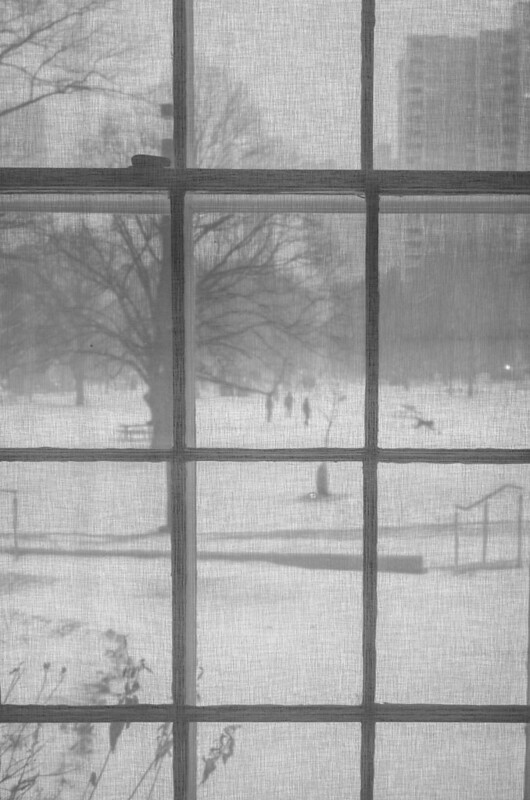
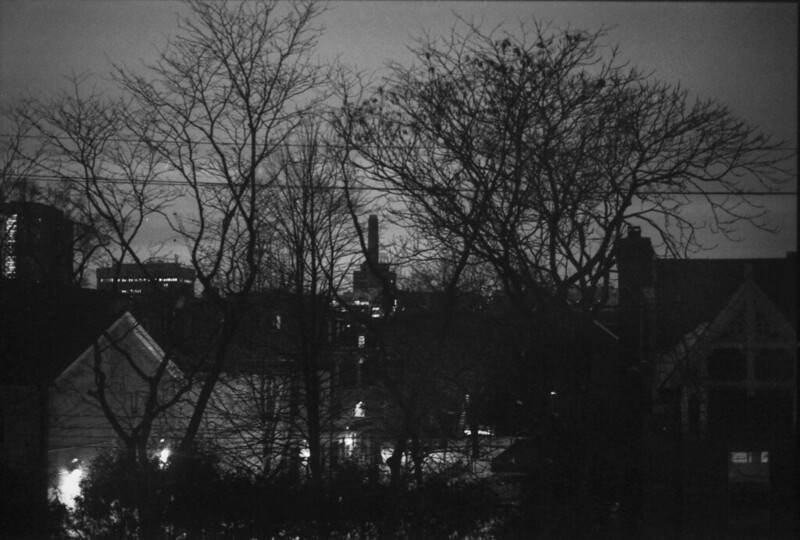
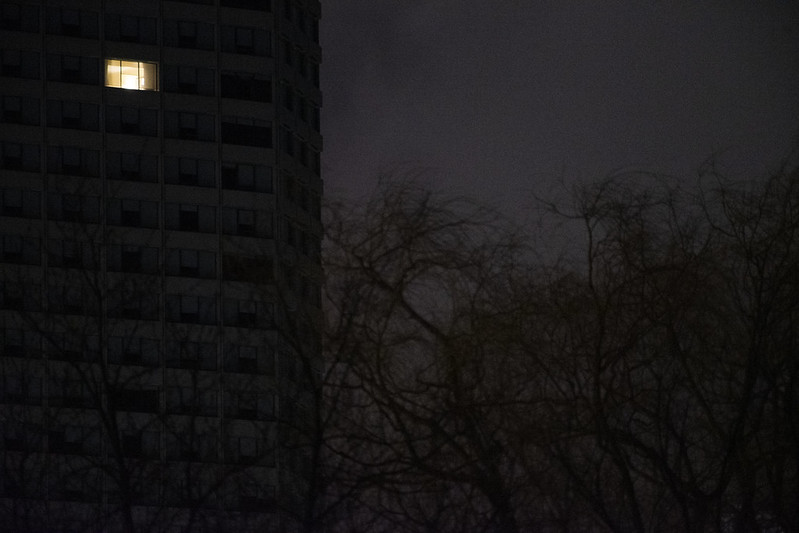
Do you have a dim view of gloom, or a gloomy view of dimness? Many people do; the gathering or already gathered dark is not everyone’s favourite. But I like the rise of the gloaming, the crepuscular turning from the sun, and the tenebrous hours that follow; it makes it so much easier to find the sources of light near you, and to delight in contrasts.

Gloom is a useful good old Anglo-Saxon word, descended from the Old English verb glumian ‘be gloomy’ – and yes, glum is related. But where glum is dull and dumpy, gloom looms and booms. It plays well for its sense: it has that gl- phonaestheme associated with visual things (more often gleaming and glittering, though), and it has several rhyme partners – the top three most used can all be found in George Santayana’s “Sonnet XXV”:

As in the midst of battle there is room
For thoughts of love, and in foul sin for mirth;
As gossips whisper of a trinket’s worth
Spied by the death-bed’s flickering candle-gloom;
As in the crevices of Caesar’s tomb
The sweet herbs flourish on a little earth:
So in this great disaster of our birth
We can be happy, and forget our doom.

Occasionally a few other rhymes show up:

O gardener of strange flowers, what bud, what bloom,
Hast thou found sown, what gathered in the gloom?
—Algernon Charles Swinburne, “Ave Atque Vale

At once a voice arose among
The bleak twigs overhead
In a full-hearted evensong
Of joy illimited;
An aged thrush, frail, gaunt, and small,
In blast-beruffled plume,
Had chosen thus to fling his soul
Upon the growing gloom.
—Thomas Hardy, “The Darkling Thrush

Splendidly lambent in the Gothic gloom,
And stamened with keen flamelets that illume
The pale high-altar.
—Edith Wharton, “Chartres

You can see how often it is used for contrast, juxtaposed with something bright or pretty. It’s sometimes paired with gleams, as for instance in Henry Wadsworth Longfellow’s “My Lost Youth”:

I remember the gleams and glooms that dart
Across the school-boy’s brain

And Algernon Charles Swinburne really goes to town in “Nephelidia”:

Gaunt as the ghastliest of glimpses that gleam through the gloom of the gloaming when ghosts go aghast?

But even without the rhymes, it seems to beg for something far less sombre to contrast with it:

In the gloom of the deepening night take up my heart and play with it as you list. Bind me close to you with nothing.
—Rabindranath Tagore, (“Keep me fully glad…”)

Into the gloom of the deep, dark night,
With panting breath and a startled scream;
Swift as a bird in sudden flight
Darts this creature of steel and steam.
—Ella Wheeler Wilcox, “The Engine

And, at last, it partakes in playtime, as with T.S. Eliot in “Whispers of Immortality”:

The sleek Brazilian jaguar
Does not in its arboreal gloom
Distil so rank a feline smell
As Grishkin in a drawing-room.

Gloom, we see, is not simply an absence of light; it is an invitation of light. You know that the gloom will at some time, in some way, be relieved, be it by candle, or lamp, or lambent moon, or the dawn’s early light. Or by simply making light, as Edna St. Vincent Millay found in “The Penitent,” which (by grace of the sunsetting of copyright) I will present in full:

I had a little Sorrow,
Born of a little Sin,
I found a room all damp with gloom
And shut us all within;
And, “Little Sorrow, weep,” said I,
“And, Little Sin, pray God to die,
And I upon the floor will lie
And think how bad I’ve been!”

Alas for pious planning—
It mattered not a whit!
As far as gloom went in that room,
The lamp might have been lit!
My Little Sorrow would not weep,
My Little Sin would go to sleep—
To save my soul I could not keep
My graceless mind on it!

So up I got in anger,
And took a book I had,
And put a ribbon on my hair
To please a passing lad.
And, “One thing there’s no getting by—
I’ve been a wicked girl,” said I;
“But if I can’t be sorry, why,
I might as well be glad!”
dreary

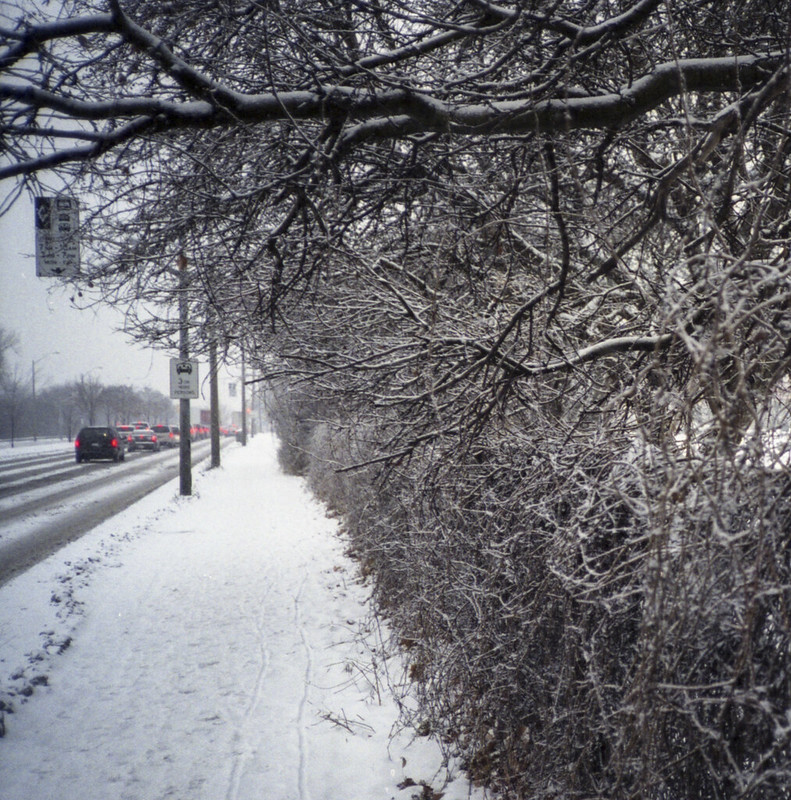
We are in the season of dreary weather now, and shall remain largely in it for some months. There will be breaks of sun, yes, and festive decorations for a time, but by and large it will be dreadfully bleary and drab and uncheery as we drudge, weary, through the grey rain and dull snow, longing even for the quick red break of a brake light.

Dreary is a word that seems well suited to its sense, and it is readily used as a clear brushstroke in poetry. It is a word of winter, often, and of wintry places:

Be left more desolate, more dreary cold
Than a forsaken bird’s-nest filled with snow
’Mid its own bush of leafless eglantine—
Speak, that my torturing doubts their end may know.
—William Wordsworth, “Why art thou silent! Is thy love a plant

Let the wind moan through the pine-trees
With a dreary, dirge-like whistle,
Sweep the dead leaves on its bosom,—
Moaning, sobbing through the branches,
Where the summer laughed so gayly.
—Harriet Beecher Stowe, “Below

All day the gusty north-wind bore
The loosening drift its breath before;
Low circling round its southern zone,
The sun through dazzling snow-mist shone.
No church-bell lent its Christian tone
To the savage air, no social smoke
Curled over woods of snow-hung oak.
A solitude made more intense
By dreary-voicëd elements,
The shrieking of the mindless wind,
The moaning tree-boughs swaying blind,
And on the glass the unmeaning beat
Of ghostly finger-tips of sleet.
—John Greenleaf Whittier, “Snow-Bound: A Winter Idyl

Ae dreary, windy, winter night,
The stars shot down wi’ sklentin light
—Robert Burns, “Address to the Devil

I’m on my way to Canada,
That cold and dreary land;
The dire effects of slavery,
I can no longer stand.
—Joshua McCarter Simpson, “Away to Canada

But it is perhaps even better known and loved in poetry for rhyming with weary:

He passes the fountain, the blasted pine-tree,
The footstep is lagging and weary;
Yet onward he goes, through the broad belt of light,
Toward the shade of the forest so dreary.
—Ethel Lynn Beers, “The Picket-Guard

She only said, “My life is dreary,
He cometh not,” she said;
She said, “I am aweary, aweary,
I would that I were dead!”
—Alfred, Lord Tennyson, “Mariana

“Your old earth,” they say, “is very dreary;”
“Our young feet,” they say, “are very weak!”
Few paces have we taken, yet are weary—
Our grave-rest is very far to seek!
—Elizabeth Barrett Browning, “The Cry of the Children

Of the mother I think, by her sick baby’s bed,
Away in her cabin as lonesome and dreary,
And little and low as the flax-breaker’s shed;
Of her patience so sweet, and her silence so weary,
With cries of the hungry wolf hid in the prairie.
—Alice Cary, “The Window Just Over the Street

But of thee it shall be said,
This dog watched beside a bed
Day and night unweary, —
Watched within a curtained room,
Where no sunbeam brake the gloom
Round the sick and dreary.
—Elizabeth Barrett Browning, “To Flush, My Dog

Glad from a world grown old and cold and weary;
Leave the sick hearts that honor could not move,
And half-men, and their dirty songs and dreary,
And all the little emptiness of love!
—Rupert Brooke, “Peace

Often footsore, never
Yet of the road I weary,
Though long and steep and dreary,
As it winds on for ever.
—Edward Thomas, “Roads

All the world is sad and dreary
Everywhere I roam.
O dear ones, how my heart grows weary,
Far from the old folks at home.
—Stephen Foster, “Old Folks at Home” (revised version)

Once upon a midnight dreary, while I pondered, weak and weary,
Over many a quaint and curious volume of forgotten lore
—Edgar Allan Poe, “The Raven

And sometimes we get both winter and weary:

Crying, my little one, footsore and weary?
Fall asleep, pretty one, warm on my shoulder:
I must tramp on through the winter night dreary,
While the snow falls on me colder and colder.
—Christina Rossetti, “Crying, my little one, footsore and weary

Thick throng the snow-flakes, the evening is dreary,
Glad rings the music in yonder gay hall;
On her who listens here, friendless and weary,
Heavier chill than the winter’s doth fall.
—Julia Ward Howe, “Lyrics of the Street

Dreary is, in fact, seldom rhymed with anything other than weary. Oddly (or not), no one seems to rhyme it with dearie or teary or even bleary, let alone query or cheery. But Longfellow did (a bit dodgily) rhyme it with Miserere:

Ah! what a sound will rise, how wild and dreary,
When the death-angel touches those swift keys!
What loud lament and dismal Miserere
Will mingle with their awful symphonies!
—Henry Wadsworth Longfellow, “The Arsenal at Springfield

But dreary was not always a word of dullness. Its sense of ‘dull, drab’ came from a sense of ‘doleful, melancholy, sad’, which descended from the Old English dreorig, which meant ‘grievous, horrid, gory, bloody, sad’ – senses that seem still to have been present in the mind of Edmund Spenser in 1590:

The messenger of death, the ghastly Owle
With drery shriekes did also her bewray
The Faerie-Queene, book 1, xxx

So fiersly, when these knights had breathed once,
They gan to fight returne, increasing more
Their puissant force, and cruell rage attonce.
With heaped strokes more hugely then before,
That with their drerie wounds and bloudy gore
They both deformed, scarsely could be known.
The Faerie-Queene, book 1, xlv

The Proto-Germanic origin of dreorig*dreuzagaz, meant ‘bloody’, too. But in its other modern Germanic descendants the redness has also receded, perhaps under the cross-influence of *drūsijaną (‘look down, mourn’): Dutch treurig means ‘sad, gloomy’ and German traurig is ‘sad, sorrowful’.

Still, a lingering spatter of bellicose blood may be discerned in a few places:

Many men mauled with bronze lance-heads,
Battle spoil, bearing yet dreary arms:
These many crowded about me,
With shouting, pallor upon me, cried to my men for more beasts
—Ezra Pound, “Three Cantos

Is it really there? You can hear it if you put your ear close, as to a seashell. Or perhaps you’re hearing only the roaring of a dull and dreary wind.

Well. Close the door, light the fire, let winter be wearisome beyond the window, and open a book of poetry. Life will never be fully dreary if one can always do verse.

hypaethral

Hypæthral, also spelled hypethral, pronounced with the stress on the second syllable, like “hi-pee-thral,” means ‘roofless; open to the sky; exposed to the heavens’ – and, in noun form, ‘someone who lives in the open air’. The hyp is the same as hypo, from Greek ὑπό meaning ‘below’ and related things (a hypodermic needle is one that goes below the skin; hypothermia is having below-normal body heat); the æthr is the same as the source of ether, Greek αἰθήρ ‘air’.

Here’s a poem.

hypæthral

The open sky is my anodyne, 
the aether is my ether.
In my box of clouds and leaves
and on my ground-grass bed,
I lie for staring stars to see,
no lid concealing me.
From the broad blue field of planes,
a glowing hole pours heat
in my box of clouds and leaves
for colder days to come.
In dark the shining needle points
expose worlds without end.
When the earth calls home its sweat,
It pelts me or I hide
to be asperged by gathering boughs.
And in the diamond times,
when soft is hard and dry is wet,
the human heat steams off
in my box of clouds and leaves
me spent and shivering.
I turn, and turn, and turn, and turn,
but never see me in
the mirror of eternity,
the stern and sheltering sky,
the mothering and murdering
anaesthetizing heaven.

sidewalk

Sidewalk. Just side and walk. A place to the side where you may walk. Something concrete to put your feet on, a safe lane whereon vehicles will not pass (you hope).

Streets didn’t use to have sidewalks. They were for walking on, and for riding horses on and pulling carriages on if you could make your way. Nobody went a whole lot faster than anyone else, generally. And much of the time it was all dirt and mud, and “mud” often meant what was left behind by the horses.

When it first appeared, in the 1600s, sidewalk meant a minor lane or path off to the side of a main one. We might call those alleys and side streets now. By the early 1700s it was also used to mean a raised pavement alongside the carriageway. And outside of North America, pavement is still the term commonly used for what Canadians and Americans call a sidewalk. But where I’m from, pavement is what’s on the streets – meaning where the cars drive, the asphalt – while the concrete on the sides is a sidewalk.

Which tells us that the foot-passers, the people walking and running and sometimes wheeling in wheelchairs and scooters, everyone who is not going forth clad in two or three tons of metal – a rigid, awkward mobility suit that takes up more than fifty times the space of the person in it (and most of the time it is just one person at a time) – is off to the side: peripheral, accessory, less important, less vital. 

In dense traffic, a city block can fit about 40 cars, which will typically hold about 50 people. The sidewalk can hold hundreds moving smoothly without collision. But our heavy expensive devices are our empires of the mind. No matter that every car must park sooner or later and the person inside go walking; no matter that streets were made for walking before they were given to cars. Walking is off to the side. It’s where you meet and pass people, where people ask you for money and directions, where you go into and out of stores, where you see the weather and the birds and the buildings close up and in detail. It’s where you truly encounter the concrete. But it’s off to the side now, and going-somewhere-else, insulated in a big expensive box, is the rule.

I’ve been thinking recently, for some reason, about a poem I wrote in 2007. It’s really why I decided to taste this word sidewalk today. Here it is.

A patch of sidewalk speaks

Well, I was
a rock, yes,
I did that thing
for a few million years.
It was fun, it had
a certain solidity,
and you know how
people think of rocks.
It was good.
But things change.
And I’m not willing
to say it was not
for the better, or it was
somehow not good;
I think I’ve been opened
to a whole new set 
of experiences:
soles, paws, 
tires, papers.
Where I was before,
those trees, that grass, 
the other rocks, 
they can be peaceful, 
but it loses its attraction.
Now every hour brings
thousands of new 
fascinations.
And I have new friends, 
we’re all in this together,
a lot of us who
did the rock thing back when
(though it doesn’t seem
so long ago, in
the grand scheme of things).
And I’m not kidding
myself, I won’t be
a rock again.
So I have to accept it.
But things change.
What’s not to like?

lutarious

From Latin lutarius, from lutum, ‘mud’. As the Oxford English Dictionary puts it, lutarious means “inhabiting mud.” Wiktionary (like others) expands the definition a bit: “of, pertaining to, or like, mud; living in mud.” But both agree the word is obsolete.

As though living in mud, being like mud, sheer muddiness of nature and dwelling, mind and body, were obsolete. As though the world were not a big ball of wet dirt.

Here’s a poem.

lutarious

I am lutarious, I
like fresh wet soil under my
fingernails, between my toes,
squishing in and out of my pores.

You like it clean and dry,
the dust, the rocks, blue sky,
hard, and whispering of death,
no muck, no suck, no breath.

You scorn my wormsome ways,
streambeds, puddles, bays,
ooze, nematodes, cnidaria,
as though you contained no bacteria.

But in a millennium or two,
when they find mummified you,
your face like a parchment scroll
unchanged and unread in your hole,

I’ll be dissolved, remixed,
reborn, remade, unfixed,
untraceable, fungible, teeming
with living and loving and dreaming.

exit

Exeō, exīs, exit, exīmus, exītis, exeunt: I go out, thou goest out, she or he or it goes out, we go out, you go out, they go out. From ex ‘out’ and  ‘I go’ et cetera. “Exit rex”: “The king goes out.” 

Technically, our English noun exit comes from the Latin noun exitus, and our verb exit comes in turn from our noun, so Latin exit went from being a verb to being a noun exitus, then went out into English and again became exit and then came back to being a verb.

Latin for ‘goes in’ is init, by the way. And Latin for ‘comes out’ is ēvenit, and Latin for ‘comes in’ is invenit.

Here’s a poem.

Exit

Let us go out
as the green of the leaves goes out
and the red and yellow come out
and the warm summer sun goes out
and the morning frosts come out

Let us go out in it
while the letters go out
and the news comes out
and summer fashions go out
and new books come out

Let us go out and invent events
and watch the people come out
and watch the money come in
until the word goes out
and the furniture goes in

Let us get up, get out, go out
once we’ve found something to go in
and someone to ask us to come in
and as the moon comes out we will go in
and find what flavours friendship comes in

And then we will at last go out
as the night comes in
and the moon comes out
and all wintering beasts go in
and one last light goes out.

selenotropic

This word seems so serene and tropical – and it is, in its way. It is from Classical Greek σελήνη seléné ‘moon’ (also the name of the moon goddess: Σελήνη) and τροπος tropos ‘turning’, and it means ‘turning to the moon’. It is used technically of plants that follow the cold mottled white orb of the night in its celestial transit, but all humans (and not just on tropical nights) – and especially all poets – do it too.

The noun from which selenotropic is derived, selenotropism, was confected by M.C. Musset in 1883 following an experiment (read his short summary) in which he raised plants in darkness and then exposed them to moonlight to see if they would follow it, and they did.

I’ve written a poem on this theme. While you read it, why not listen to Claude Débussy playing his own Clair de Lune, recorded on piano roll, inspired by Paul Verlaine’s poem of the same name?

You can read Verlaine’s poem in the description on the video, if you click through to YouTube. Here is mine:

selenotropic

Did you turn to the moon?

After sprouting in shadow,
after you grew in darkness,
grew slender, long, sun-starved,
grew leaves and tendrils knowing
no warmth, no joy, no mist,
no riot of birds, no bee-kiss,
nothing to trample or eat you,
nothing to touch or greet you,

after one warm hand took you,
after your captor exposed you,
exposed you to glass, to sky,
exposed you to whispers, to watching
your stems, your terminal buds,
your eyes, your fingers of blood
wanting the sun, the rain,
wanting the wings, the pain,

did you pull at your roots,
did you lean to see
what this lover was,
what this almost-light—
not sun, not day, not bulb,
not flame, not lightning flash—
wanted, running and sinking,
wanted behind the mountain?

Did you, in all your paleness,
did you, in never-green,
in your concavities,
in your internal cause,
know then that you were seen,
know then that you were named,
and glow with unowned light,
and grow, and shine, and fade?

Did you turn to the moon?

By Grand Central Station I sat down and wept

Here is another sentence tasting. This one is 4000 words long, but it is divided in ten parts.

I

Sentences do not pass through you like trains through a station. Ideas and words and strings of words come together in your mind, they have affairs, and they give birth to sentences through your tongue and your lips and your teeth and your fingertips.

Everything you hear is like something you’ve heard before. Every sentence you read reminds you of previous sentences and evokes feelings you had about those sentences. Sometimes the resemblance is weak and general, like a face in the crowd that is like other faces you’ve seen in other places. Sometimes the resemblance is strong and deliberate, calling forth all the memories you have of an old friend, or like someone you have not known but have long wanted to meet. Sometimes a sentence takes familiar bits and puts them together in a new way that is like someone you’ve never known before but suddenly feel like you have wanted to know all your life. And when you now meet, you are carried away, captured by the fame – no, you capture it and you carry it away. And make a new meaning.

And then life moves on. With or without you, it moves on. But you still are still pregnant with this sense. And you may dwell with it in palaces or in flophouses, on clean silk or on reeking cotton, or both by turns, but it is always yours, in paradise and in exile.

II

Have you ever read “By Grand Central Station I sat down and wept”?

Have you ever read By Grand Central Station I Sat Down and Wept? Continue reading

chirocracy

Today, another poem, a triolet. The word that inspires it, chirocracy, is from Greek χείρ kheir (cheir) ‘hand’ and κρατία kratia ‘power rule’; the chir is the same as in chiropractor, with a “hard” ch and an i like “eye,” but the stress is on the o as in democracy. It literally means ‘rule by hand’, but it doesn’t mean just any hand; it means strong-handed rule, rule by force. The sole citation in the Oxford English Dictionary is from a 1677 History of the Government of Venice, and it uses an older style of spelling: “It might rather have been called Chirocratie, all things being managed by Violence and Tumult.”

chirocracy
The strong hand breaks all that resists.
Force, might, and will soon overcome.

Your sticks and eggs and bricks and fists
the strong hand breaks. All that resists
is one smooth stone, which still persists
serenely as the grip grows numb.

The strong hand breaks. All that resists
force might—and will soon—overcome.

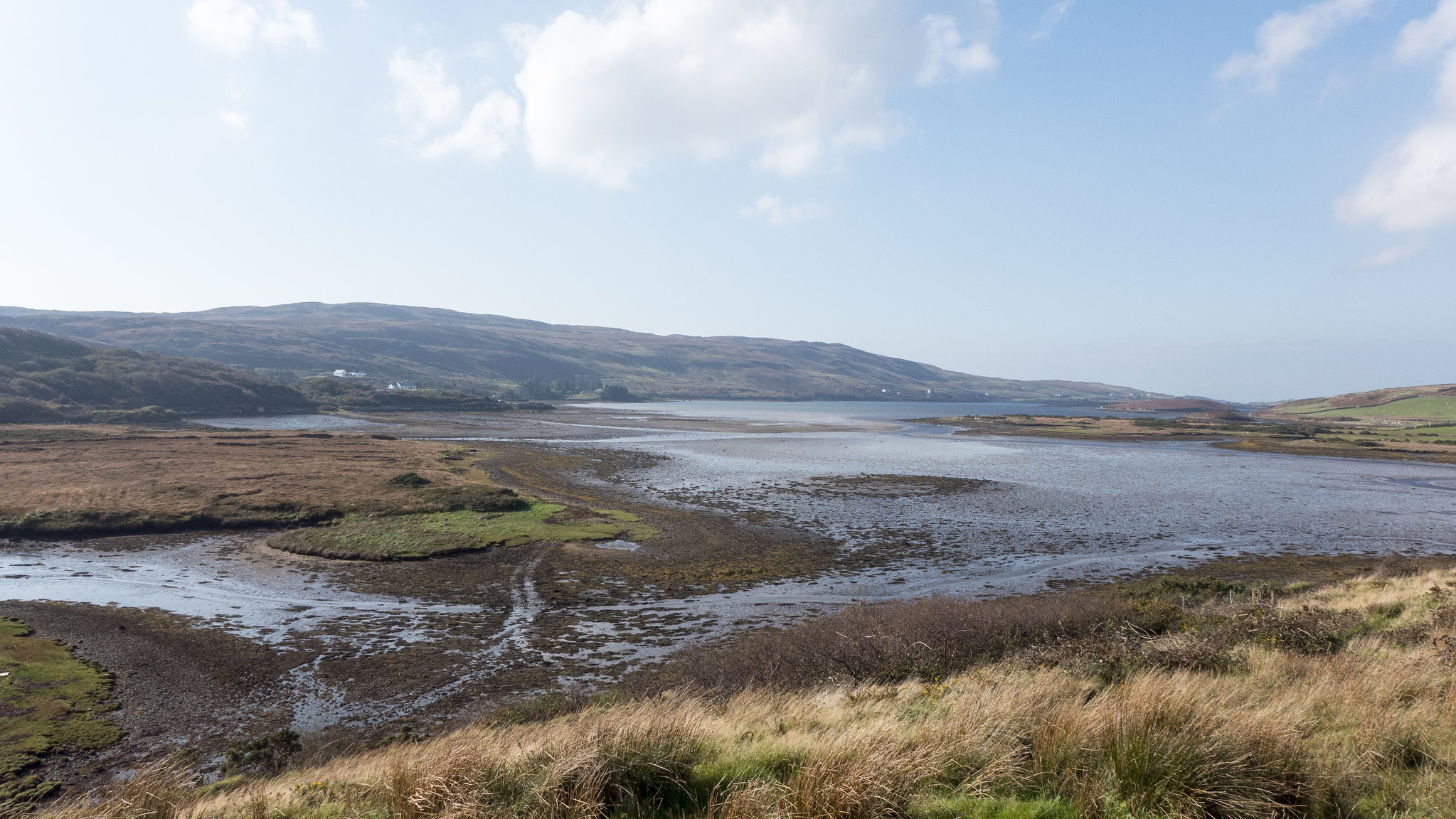
Tellus, telluric, tellurian

Tellus is a Roman goddess of the earth (yes, goddess in spite of being -us), and is earth personified, because earth is tellus. You may know our planet as terra, but that comes (it seems) from tersa tellus, ‘dry earth’ – yes, terra is not related to tellus but is from a word meaning ‘dry’. Tellus traces back to Proto-Indo-European *telh₂-, also source of Irish talamh (‘ground’) and Hindi तल tal (‘bottom, floor’). Adjectives relating to earth include tellurian and telluric; the element tellurium makes an ion, telluride, and from gold telluride we get the name of the Colorado town Telluride.

It deserves a poem.

Tell us, mother Tellus, come,
tell your rich telluric tale;
I’ll lay my ear upon your earth,
I’ll ground myself and I’ll be ground,
so I will understand your story
when I lie under your understorey.
Tell your intelligence, tellurian tellings
of talus and tells and tillings and deltas,
sediments, sentiments, humus and humours
and transhumant humans in tents and tenements,
and anthills, Antilles, and atolls, all told
with dust and mud and minds and mouths:
moors and mountains, tuff and tuffet,
repeated in peat and petroglyph.
Take me in your rootbound whole:
I will lie to find your truth,
for I have felt your fallow field,
I’ve been cradled in your rocks,
deposited in river banks,
turned a pirouette in your
terpsichorean petrichor.
Let me dig you, till you, Tellus,
till you take me as a seed
seen sown in sod to plan my root
so that leaves growing in relief
may let all nose all that transpires
in tellurian eternal turns.
Tellus mother, tell us, then
take our tales to you again.