Aina and I pulled out some old VHS tapes and have started digitizing them. I found two of me in my twenties performing in plays, for those who are curious and have some time to waste.
The first is a great British farce, One for the Pot. I’m the lead, playing three different characters. I was 21 years old. It was a community theatre production at the Walterdale Theatre in Edmonton. As I watch it now I can see plenty of things I should have done differently, but it was pretty funny nonetheless, and it had a good cast overall.
The second is a workshop performance of Othello adapted into Jingxi (Beijing Opera) style, not including the vocal technique – just aspects of the movement and plot devices. It was the output of a summer course at Tufts University in 1994, when I was 26. It was directed and taught by Fan Yisong and Sun Huizhou (William Sun), and it included Balinese performer I Nyoman Catra plus a few people who are now professors of theatre. I played Cassio. I don’t think I was very good, frankly (the Othello and Desdemona were much better). But it’s worth watching at least the beginning (after the introduction by Laurence Senelick) so you can see what I looked like when I was very skinny and had very long hair.
A plummet, as you may know, is a little bit of lead (hence the name: from plumb, from Latin plumbum ‘lead’, plus diminutive –et) used to weight a line for sounding depths or determining vertical. It is also a word for a stick of lead for writing with. We have had the noun since the 1300s. The verb plummet first (in the early 1600s) meant to use a plummet to sound the depth of water; more recently (from the mid-1800s) it has meant to fall precipitously – like a plummet being dropped, I guess. It has nothing to do with plums… except when they fall from the tree, of course.
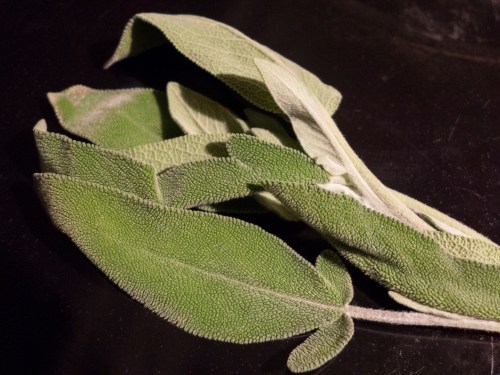
Salvia officinalis: kitchen sage. One of many kinds of sage (many kinds). A plant of purple whorl flowers and soft, textured, furry, spear-shaped leaves. An herb to help make you healthy and wise (wealthy is at your discretion). The ancients noted it for its many and varied medicinal effects and so named it from salvus, ‘whole, healthy’. Continue reading →
I don’t just mean its object, that butch tree, that brute tech, that better-than-catapult that can hurl large stones, small cars, and any old piano or organ through the countryside:
If we say writing is “artful,” or “artistic,” or “an art,” we mean that we appreciate it aesthetically and admire it for the skill it evinces. But if we say not “writing is an art” but “writing is art” – or “this text is a work of art” – we connect it to an identity that is simultaneously nebulous and overloaded. Continue reading →
Petroselinum crispum, an herb both savoury and ornamental, in some cuisines seen fit to be a principal ingredient, as in tabbouleh; in some to be a key seasoning, as in its role as a component of a bouquet garni and as one of the four axiomatic herbs of English folk-song; and in some to be a garnish appended to a plate of steak and tomato and returned to the kitchen most often uneaten, therefrom perhaps to be recirculated. Continue reading →
Some lovely day, seven hundred and thirty or more years ago, sweet and heart came together.
Both were words that had been in English since before English was English, with roots far, far back, and cousins from India to Iceland.
Sweet, a word everyone loves, had grown from a Proto-Indo-European root that also became Latin suavis ‘sweet, delicious’, now bequeathed to us as suave, and Greek ἡδύς (hédus) ‘pleasant’, now at our masquerade ball as part of hedonistic, along with a swath of other words meaning ‘sweet’: स्वादु (svādú), soave, süß, zoet, søt, sætur…
Heart, which beats blood but also pumps emotions, had a similar history at the heart of languages strung between Kangchenjunga and Snæfellsjökull, from हृद् (hṛ́d) through καρδία (kardia, whence cardiac) and Latin cor (whence courage) and cœur and serce (whence serduszka as in “Dwa Serduszka Cztery Oczy”) and Herz (even if your heart beats at less than 1 hertz, it is still dein ganzes Herz) and hart and hjarta…
As when two famous and glamorous people are in the same restaurant at the same time, it was inevitable that these two would soon enough spot each other and come together. And by 1290 they had, as swete heorte, which is how they looked when they were young and wild and free. For Chaucer, the happy couple were swete herte; for Shakespeare, sweet-heart. And for Dashiell Hammett, sweetheart.
Like any famous couple, they show up in many places, even where you don’t expect them. You can buy small sugar hearts called Sweethearts, each bearing a message (like a confectionary fortune cookie); you can make a sweetheart deal if you’re negotiating a contract. They also have their imitators, such as the band Streetheart. And of course “sweetness heart”:
But you want your true sweetheart, especially at Valentine’s (which, as a celebration of romance, is newer than this word, sweetheart). And you will want your sweetheart to let you call them sweetheart:
That was a hit in 1911, and it kept coming back…
Sweet and heart, together once and forever in English, though their cousins in other languages have never paired off in parallel.
Not all sweethearts are forever, though we can hope. But all sweethearts are like sugar in the spirit, a treat to enjoy, even if just for one day, as Charlotte Mew wrote a century ago:
Fin de Fête by Charlotte Mew
Sweetheart, for such a day
One mustn’t grudge the score;
Here, then, it’s all to pay,
It’s Good-night at the door.
Good-night and good dreams to you,—
Do you remember the picture-book thieves
Who left two children sleeping in a wood the long night through,
And how the birds came down and covered them with leaves?
So you and I should have slept,—But now,
Oh, what a lonely head!
With just the shadow of a waving bough
In the moonlight over your bed.
It’s a Barmecide feast, a Potemkin village. It’s like internecine, comprise, meretricious, or one of Benjamin Lee Whorf’s “empty” gasoline drums. If you go by what it looks like, even by what you’ve seen other people treat it as, you will end up in Fulsome Prison.







 Sesquiotica