Author Archives: sesquiotic

purparty

If I were not allergic to cats, there would be nearly nothing I would like better than a party of purrs: cats and kittens, calico and tortoiseshell, shorthair and shaggy, Siamese and Persian, piled and purring all over me, the very essence of happiness. I would not require all of this ecstasy for myself; I could share it equally with others and receive a purparty of a purr party.

Purparty need not be part and parcel of feline furr and fang. A collection of furniture, purple and arty, would serve as well. Or a pie. Or a proprietorship, or other things with less propriety. Most likely, though, it would be an estate. An estate due equally to several, and severally to equals: coparceners, which is to say co-inheritors. To each their purparty.

The pur is not the one in E pur si muove, ‘And yet it moves’, Galileo’s purported recantation of his recantation. Rather, it is the one in purport and purpose and purloin and purchase: all come from Middle French, which made it from Latin pro ‘for’. And the party is from Latin partita ‘divided’, which is also the source of the parce in coparcener and, of course, part and party. A purparty is a portion or share, especially an equal share in an estate.

And what kind of estate would that be? For me, a country pile. Pile of fur and ferns, that is. If I were living on great green grounds with lawns and trees and flowers, I would be sure to have lots of cats on it. If I had to share it, if I had but a purparty of it, I would make sure to have a room or two inside (OK, three: a library, a kitchen, and a bedroom – I could share the bathroom), and to have the lushest part of the outside – so long as it had cats that I could share part of a bench with.

red-eye

For the second time in three months I’ve flown home on a red-eye flight and gone to work. I do not recommend this. I managed to get possibly even 3 hours of sleep on the way, but that’s rather less than the recommended amount. Notwithstanding this, my eyes are not in fact red. I suppose they’re slightly bloodshot, but not badly (I could take a picture, but if I used flash I’d have another kind of red eye: that reflection off the retina). And they’re not red around the outside from rubbing, crying, or allergies either.

I could have used red-eyes to help myself get to sleep, I suppose. By which I mean a mixture of beer and tomato juice (this is apparently a Western Canadian thing, which is why it seems to me like everyone must know it). But I’d risk needing to get up halfway through the flight, which is not good for my sleep or for that of anyone between me and the aisle. On the other hand, I could use red-eye in the US sense, which is cheap whiskey; that would probably serve the turn a little better, as long as I didn’t overdo it.

I am less sure that I would be helped to sleep by anything else called a red-eye. That includes a kind of cicada, a kind of bird, and several kinds of fish. The bird is a songbird, so that wouldn’t help; the cicada is a cicada, and say no more. Please. The fish would be silent but, out of the tank, they could smell; I can’t say whether eating them (cooked) would aid sleep or not.

Well then. The other way about it is just to have some red-eye gravy afterwards. That’s ham gravy made with coffee. Yes, the bone in a ham can be like a red eye, but I do think it’s the coffee and associated sleep deprivation that gets it the name. The caffeine and protein (from the ham, which you are surely eating) ought to keep you going for a little while, anyway.

I hope I shall not have to muse on such things again soon. I have no love for red-eye flights. Which reminds me that for a long time, I thought Golden Earring’s song “Radar Love” was “Redeye Love.” “We have a thing that is called redeye love…” Well, why not? Love that keeps you up all night? Better that than jet noise, clinking ice cubes, loud conversations, and small children screaming.

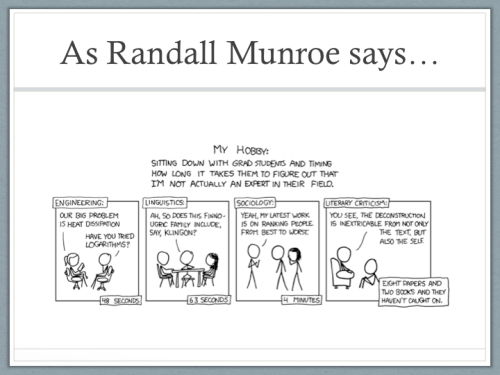
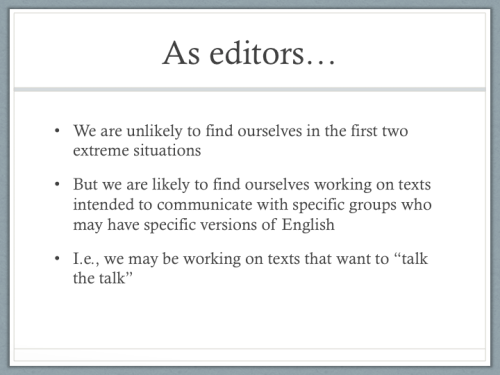
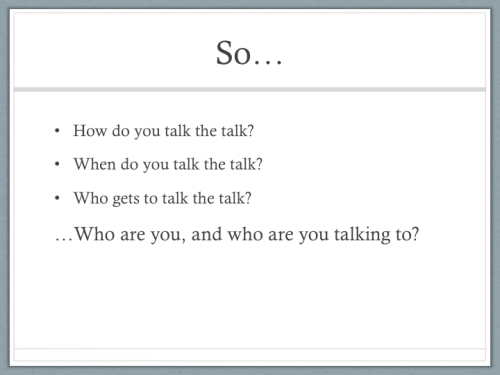
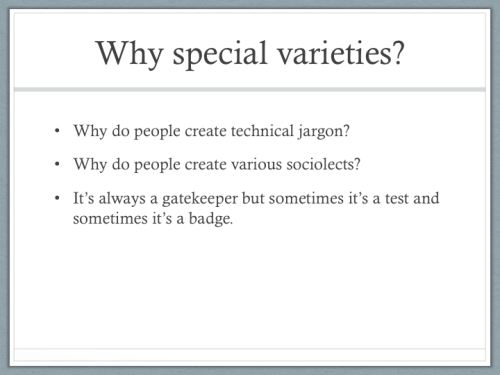
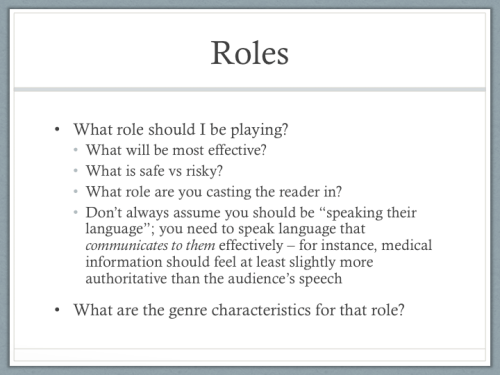
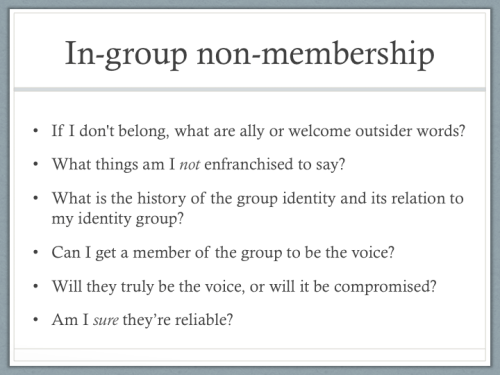
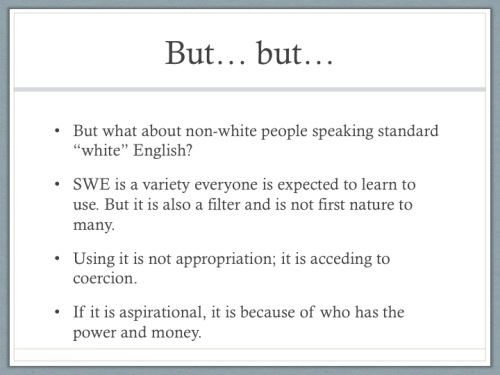
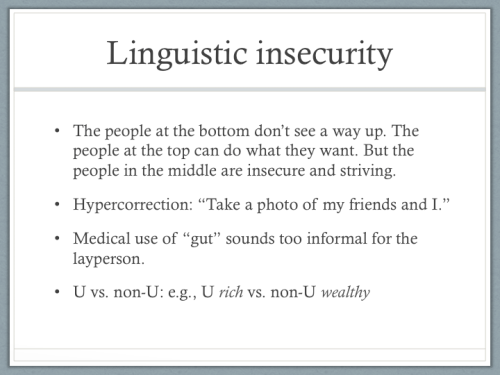
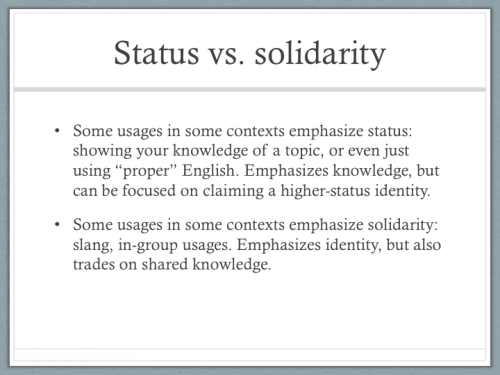
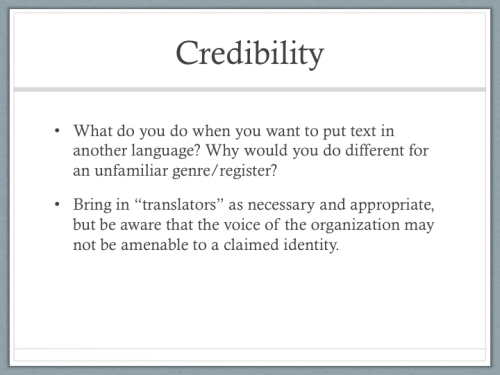
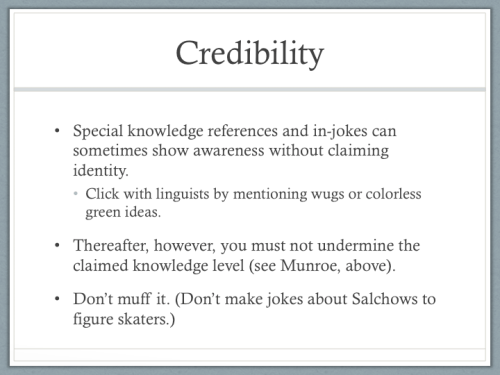
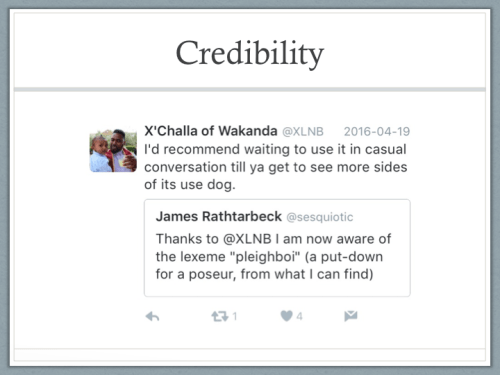
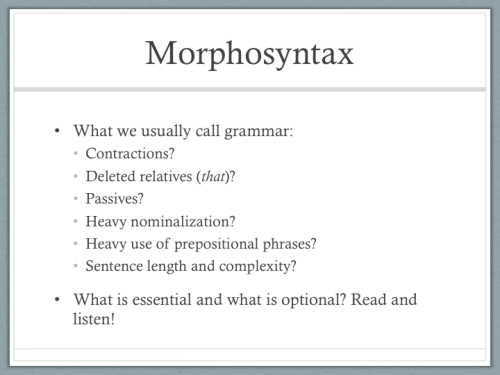
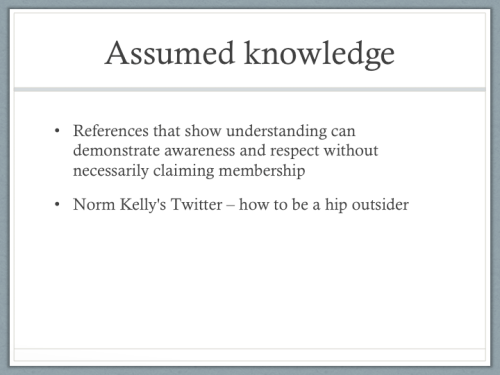
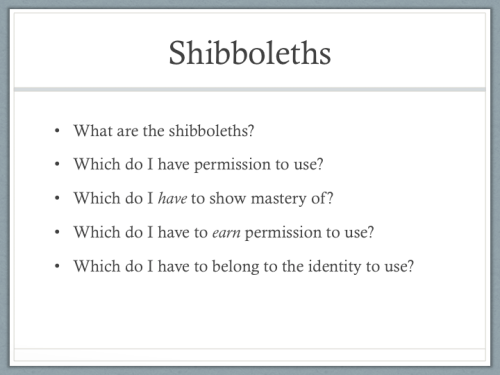
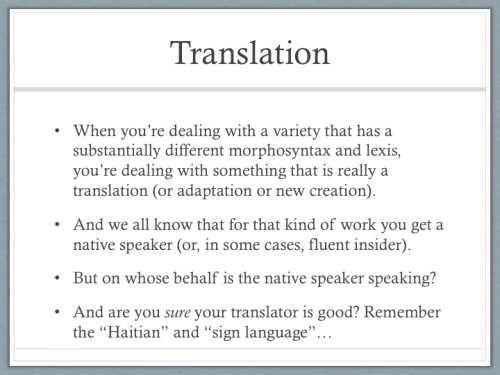
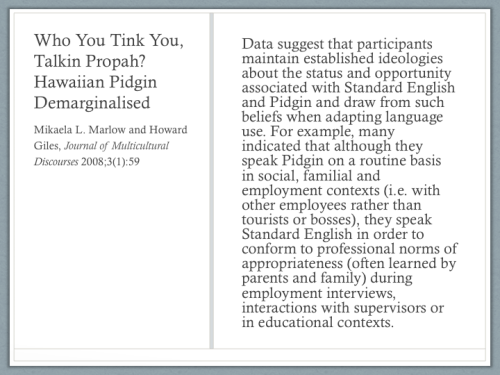
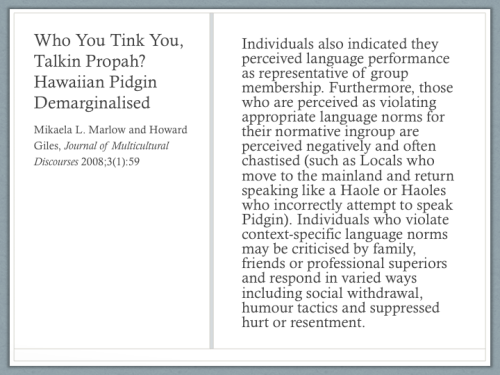
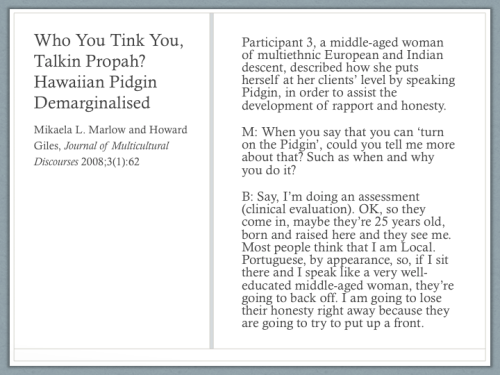
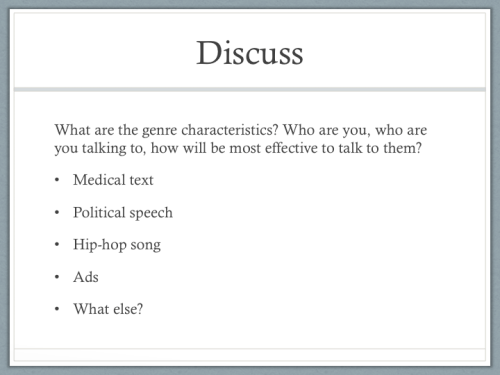
Who are you, and who are you talking to?

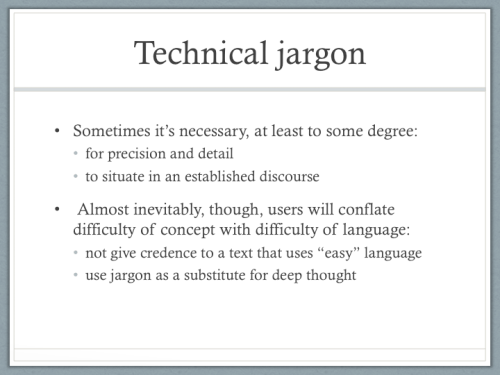
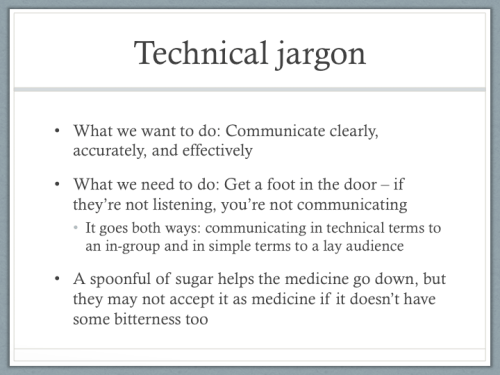
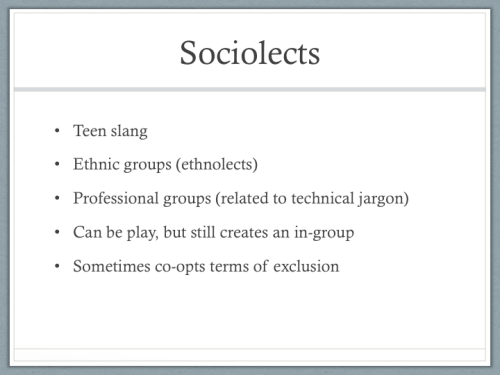
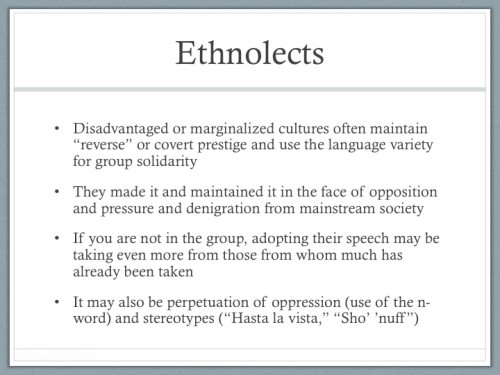
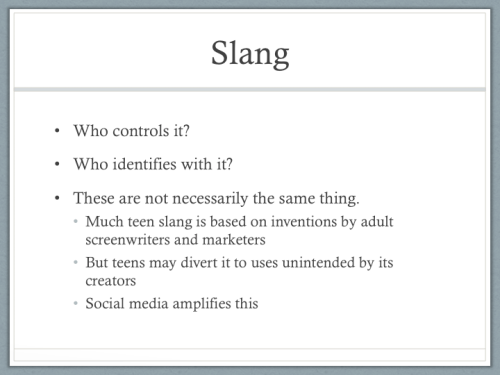
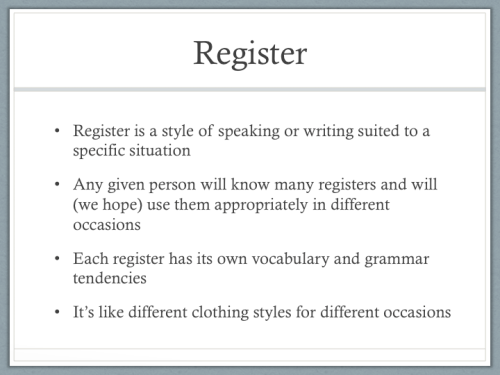
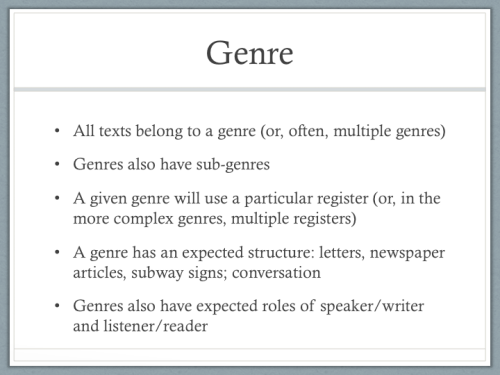
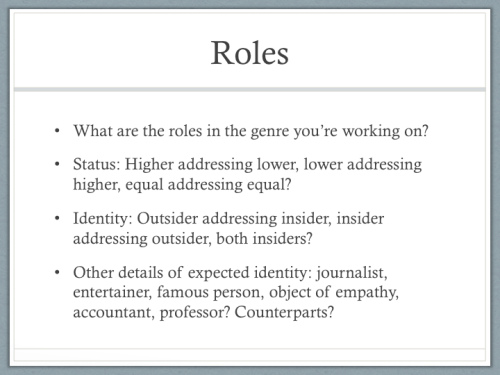
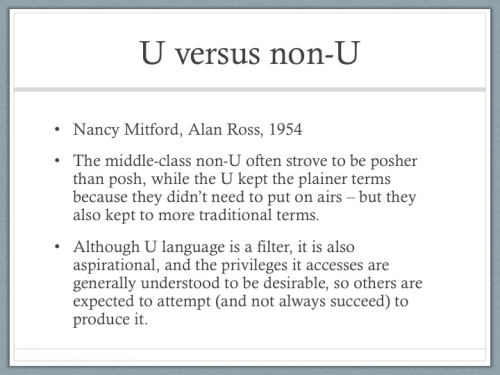
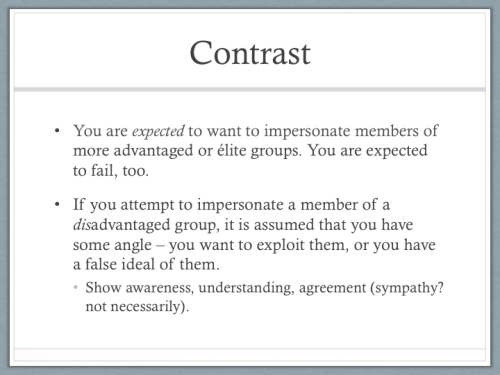
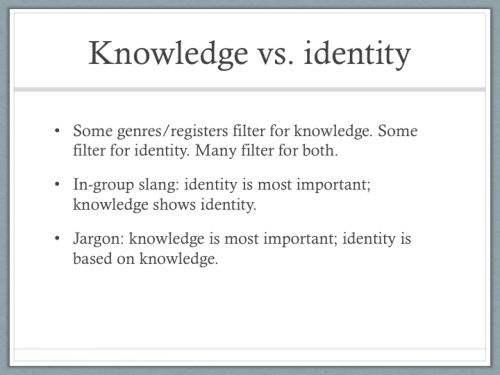
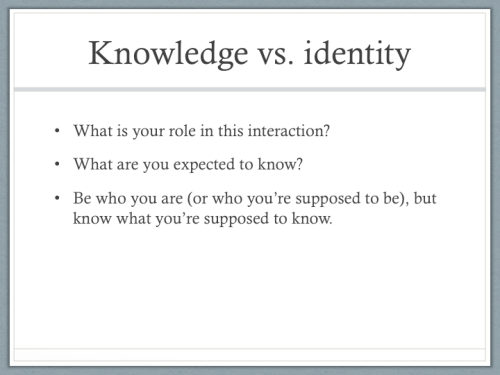
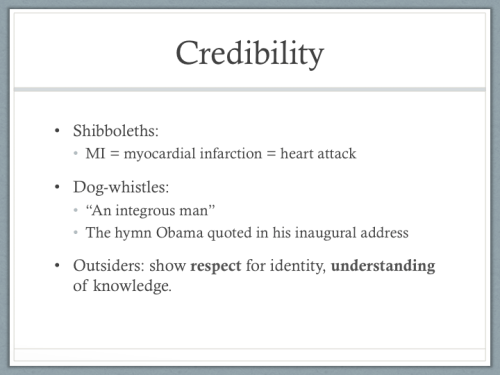
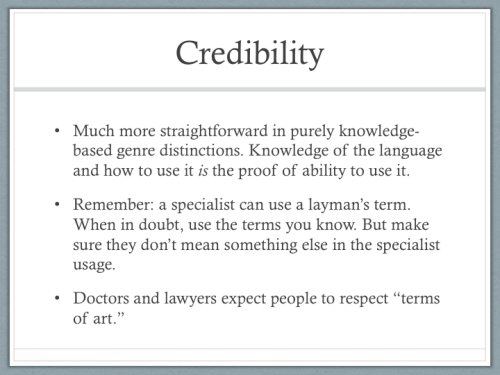
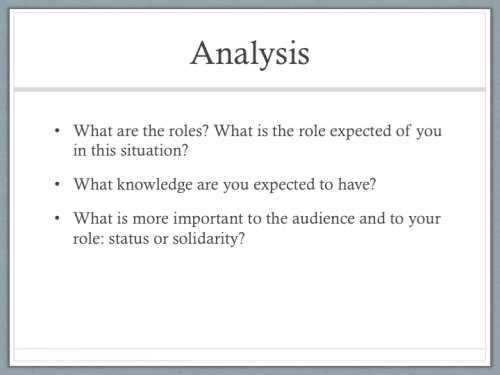
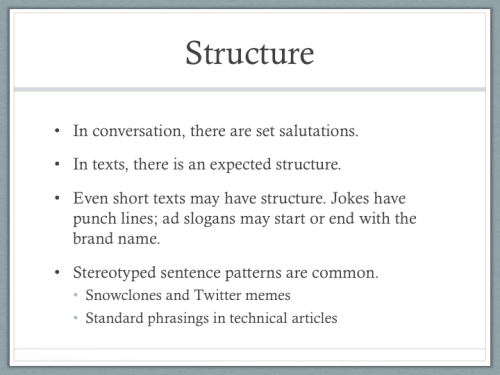
Here are the slides from my presentation at the 2016 Editors Canada conference. I didn’t have a separate script, and I neglected to record myself presenting, so this is what there is to give you, but it covers the points; my speaking was generally expansion on the points.

Here is the whole show, downloadable: harbeck_who_EAC_201606

Here are the slides, one by one.

Slide01

Slide02

Slide03

Slide04

Slide05

Slide06

Slide07

Slide08

Slide09

Slide10

Slide11

Slide12

Slide13

Slide14

Slide15

Slide16

Slide17

Slide18

Slide19

Slide20

Slide21

Slide22

Slide23

Slide24

Slide25

Slide26

Slide27

Slide28

Slide29

Slide30

Slide31

Slide32

Slide33

Slide34

Slide35

Slide36

Slide37

Slide38

Slide39

Slide40

Slide41

Slide42

Slide43

Slide44

Slide45

Slide46

caper

“I didn’t come here for the capers!”

Harry shouts this at Marianne in an alley on Pantelleria. Harry is Ralph Fiennes. Marianne is Tilda Swinton. Pantelleria is an Italian island between Sicily and Tunisia. The movie is A Bigger Splash, which Aina and I saw tonight.

He did come for the capers, though. And I think we all do, really.

True, we don’t all like the little green pickled flower bud, its name bequeathed by the Greeks as κάππαρις, taken to Latin as capparis, thence by English as caperes, which was finally taken as a plural and resingularized as caper. I do like these capers, and I think Harry does in the movie, too. They are a quite singular flavour in any dish, although you never have just one at a time. But Harry didn’t come for them.

And maybe we don’t all like the caper that is cut from capriole, a frolicsome leap as of a young goat – capriola in Italian, from capra ‘goat (feminine)’ – although I can’t see why people wouldn’t at least want to watch a good one, even if they weren’t up to doing any themselves.

But surely we all like the extended sense of that second caper: those caprices that cut us free for a spell from our usual rules. Who doesn’t like a diversion, a frisk, even a little risk? And yes, caprice is also a related word: it comes (via French) from Italian capriccio from capro ‘goat (masculine)’, because it jumps around as a goat does. Harry surely wanted that. Capers are had in the movie.

I won’t go into the plot of A Bigger Splash, in case you want to see it. I will tell you the title makes it seem giddy, when in fact its frolics are delivered in a more meditative pace, with close-ups and careful jumps and small things that season the dish with little bursts. I do regret, in a way, that it was not set on Capri. I won’t say it gets my goat, but it’s worth saying that Capri also probably gets its name from the Latin for ‘goat’. Does Ralph Fiennes play an old goat? He is perhaps more satyr than satire, but if you see the movie you will see him on full display in his prime.

As may we all be, in one way or another, and for as long as possible. When, in this movie, Tilda Swinton at 55 can cut a more striking physique than Dakota Johnson at 26, we must acknowledge that a capering career is likely to keep a person budding for a long time – as long, I suppose, as you don’t alternate between pickled and recuperating.

Isn’t it funny, by the way, that caprice, which often tends to be seen as more feminine, comes from the masculine goat, while caper, surely the more masculine-toned of the pair (schoolboy capers, anyone?), comes from the feminine? Language is capricious that way. It cuts such capers.

And I don’t mean it cuts flowers in the bud. A caper would grow, you know, into a Flinders rose, a floppy white blossom, and bear a berry too. As long as it is allowed to carry on. But they grow on bushes; you can have some of one and some of the other. Which is really the point of capers, isn’t it?

muesli

I don’t always eat cereal for breakfast, but when I do, I prefer muesli.

It was not always thus. I grew up eating sugarsplosions like most North American spawn do. “Healthy” meant corn flakes. But at some point we noticed a cereal our mother had bought called Alpen. It had an explanation on it that it had so much nutrition in it you didn’t need to eat as much. What that really meant was that it wasn’t fluffy flakes; it was rolled oats, nuts, dried fruit, and powdered milk, and it was dense and heavy. We liked it and came to eat it on occasion.

The box also told us it was a kind of thing called muesli. So when I next encountered muesli in other circumstances, I knew what it was. And when was that? When staying in a house of acquaintances in England, wherein the man of the house showed me the breakfast options and referred to their cereal as a “kind of moozly.” I know he knew how to spell it, but the point is that he didn’t say it /mɪwzli/ or /mjuzli/. I have yet to hear anyone else say it like that, but I suspect that’s because I don’t discuss breakfast with starchy Brits too much (they eat their toast cold, for heaven’s sake!).

I have subsequently encountered some version of it on the breakfast buffet in pretty much every European hotel I have ever stayed in (they usually don’t contain powdered milk, but they are served with milk and yogurt). I am sure to have some alongside the cold cuts and cheese. I can also buy quite a few brands of it in the grocery store now. I can also buy granola, but that has lots of extra sugar in it usually. I get enough sugar, thanks. Dried fruit has loads already.

You may look at muesli and think a couple of things: First, that it comes from German and that the ue is ü in the original; second, that it’s Swiss German, as evidenced by the li on the end (many Swiss German words end in i, and li is a suffix). And you’d be right about the second thing. But you’d be off about the first: the original is Müesli. It comes from Mus, ‘stewed fruit’. But its inventor originally just called the thing d’Spys, the Swiss German equivalent of High German die Speise, ‘the dish’.

Its inventor? Maximilian Bircher-Benner, a Swiss physician who believed in dietary treatments. He came up with this cereal around the year 1900, when was was around 33 years old. You may have seen the term Bircher muesli. This comes from Birchermüesli, which is the name it was given to succeed d’Spys – which they didn’t necessarily despise, but it was a bit general.

Bircher-Benner’s version had the oats soaked overnight. If you eat muesli now, you probably don’t soak it in advance. It also contained fresh fruit, as opposed to the dried fruit that fills it now. And he served it at the beginning of every meal, rather than as a breakfast.

But so what. I don’t care so much about when he served it, or how he served it, or what it was made with. I am not part of a Bircher-Benner worship cult. He had his ideas about nutrition and health, and they remain – as scientists put it – controversial. I like what his muesli has become; I eat it for what I get now, not what it was in some time past. Anyway, he didn’t invent it out of thin air; he and his wife were served something like it on a hike one time, so he “discovered” it… and of course took the credit for it from his own version.

Are you now expecting this to be be the part where I point out how much like language muesli is? How it’s made of various heterogeneous bits, not always the same from one to another? How what we have now may not be what it once was, but there’s no real reason to hew to the origins if we prefer what we have now? How even those origins are not the real origins, and the real origins are lost in decayed history? How we can’t even entirely agree what to call it and what the rules are? How we may enjoy it more when we travel?

Nah. I don’t need to say all that. You already figured it out. I was just going to mention that every single time I’ve typed muesli in writing this article, I’ve accidentally typed museli first. Which is because of typing habits, yes, of course. But also, I’d like to think, because language is my muse. Or one of them, anyway.

lanai, liana

Lana is out on the lanai with a nail to align the liana – she’s an anal one about keeping her lianas in line. Liane and Ilana, please enjoin her to be lenient lest she annihilate it!

A liana on a lanai? Such soft, tropical sounds, more vowels than consonants: a liquid l, a nasal n, a pair of a’s, and that mobile i. There is something almost Polynesian about it. Well, not almost: lanai is a word from Hawai‘ian. We use it for what they use it for: an open-sided roofed structure near a house. Somehow it seems more self-conscious than verandah and ever so much more elegant than porch.

Liana also has a warm-weather sound to it, something Italian or Spanish perhaps. In fact, it has been speculated (in the OED among other places) that its form in English may have come from a belief that it was a loan from Spanish. But we got it from French, in which it was (and is) liane, coming from lier ‘bind, tie’. And what is it? A climbing vine, a plant rooted in the soil but not rising on its own strength. Lianas wrap around trees and hang between them; they also climb walls and structures such as trellises, verandahs, and lanais.

Consider the kinds of names that have these sounds or similar ones in them: Lana, Ilana, Alina, Leanne, Elaine, Eileen, Ellen, Lannie, Anil, Anna Lee, Nell, Neal – all but Anil and Neal (also Neil and Niall) are names for women (though Lannie can be a man). We do tend to end women’s names with vowels, but beyond that, it seems the soft combination of /n/ and /l/ with these vowels (low central and high front – none of those dark heavy round back vowels) has something we tend to associate with femininity. We don’t go all in on it, but you can discern a leaning.

Not that lianas and lanais are leaning. A lanai should stand straight, even though it is a dependent structure; a liana depends on other things for structure, but it has different ways of clinging. They do, however, have a different feel from their associated terms verandah and vine. Those v’s are very vibrant, but they’re less loose. (They’re also less valuable: remember that V is 5 and L is 50.) The teeth bite on /v/; the tongue taps lightly on /l/ and /n/, the only difference being in how it lets air in on the sides with /l/ (like a lanai).

We don’t quite say lanai as a rearrangement of liana, but we do spell it that way. You couldn’t readily rearrange lianas to make a lanai, though: they’re not sturdy enough – in fact, unlike trees and shrubs, which have flexible younger parts and more rigid older parts, lianas are more flexible in the older parts. Which seems good to me: getting more flexible as you get older – and, in another way of looking at it, getting more open, like becoming a lanai – is a way to a happier life. It also helps you to recognize that you never truly stand alone.

ajar

When is a door not a door? When it’s a jar. Ahahahahahaha

I presume you, like me, first heard that joke in your childhood. You probably also heard “You make a better door than a window,” meaning you can’t be seen through, so get out of the line of sight. You’re a closed door; open up.

So is a door that’s ajar closed or open?

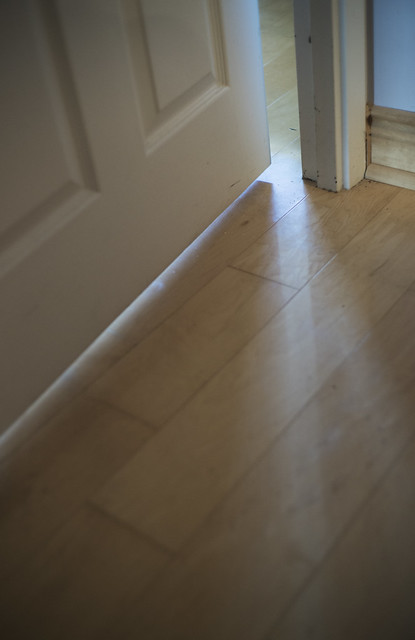
It’s a jarring question. If a door is ajar, you can’t necessarily just walk right in. But it’s not quite closing you out either. You don’t know if it’s meant to be open, or to be closed, or to be… neither. Just to leave a crack to let the light get through, or to allow a bit of fresh air. This door, this boundary, this limen, is in a liminal condition. It is not sealed, but it is not open enough for a person to pass through. It may or may not be open enough for a cat to pass through. The only way to know for sure is to ask Erwin Schrödinger to lend us his, and then observe.

But wait. Schrödinger’s cat is in a closed box, and its state becomes known when the box is opened. What if the box is ajar?

A jar, as we know, is a round container. Usually jars have lids that screw on. They turn, deturn, return. Is an incompletely screwed-on lid ajar?

Can a sliding door be ajar?

In my world, ajar is not a word for a sliding door. Ajar means the possibility of nudging and turning. Of jarring it open or closed. It is just that disturbance that would resolve it.

Is that what ajar comes from? There is a word ajar which means ‘to be in a jarring state’; it’s roughly synonymous with ‘awry’. But the ajar for doors is not that ajar. Its jar comes not from jar as in discord (“a jarring sound”); rather, it is a turn served on char, an old word which means ‘turning back, returning’. So. Returning to closed or to open?

According to the Oxford English Dictionary, on char is ‘on the turn, in the act of shutting’. Which would seem to answer the question of whether a door that is ajar is slightly open or slightly closed: by origin, it is pushed towards shut but not fully closed. Who, after all, would push a door just slightly open?

Who but a person who wanted to indicate that the door was openable, perhaps. Awaiting an arrival… or a return. Perhaps the person on the other side is listening to Steely Dan on their album Aja singing “Peg”: “It will come back to you…” (Steely Dan also sing “go back, Jack, and do it again,” but that’s on Pretzel Logic, and it seems to me that the logic of ajar is not so much of a pretzel as of a Möbius loop, the one side being in truth the same as the other.)

Or perhaps the person wants to come out but doesn’t want to. Or doesn’t want to but wants to. Or simply hasn’t gotten the momentum. Or wants to be neither in nor out. Or wants you to be neither in nor out.

Or is a cat, of course. In a perpetual state of uncertainty: in theory neither one nor the other; in reality oscillating and vacillating.

Does every door that opens eventually shut, and does every door that shuts eventually open? When you say “ajar,” your tongue swings shut onto the ridge behind your teeth, and then with a slight hesitation swings open again. Returning is the motion of the tao, and it seems to be the motion of the door. But returning to open or to closed? What is the destiny of the door, what is its assigned role? Open, shut, both, neither? Would Arjuna counsel it to be unajar? Is a door that is barely open or barely closed a real door? Or is it the only real door, the only door that, when you come to it, frames the decision as yours?

saturation

How much is too much? When can you hold no more, when are you sated, satisfied, saturated?

In chemistry, it’s not such a hard question. Any substance that can dissolve in another substance will have a saturation point for any given temperature, above which no more can be dissolved, and that’s that. When the weather person tells you the humidity, it’s always in percentages, and 100% would be full saturation: any more moisture entering the air would not be able to stay in it for even a moment; it would condense or precipitate. When air is colder, it can hold less moisture, so the relative humidity is higher on cold days even though it doesn’t feel all that humid.

In other things, however, it is a more flexible concept. We talk about media saturation, or about reaching a saturation point in our use of technology or any other thing we figure we could reach a maximum tolerable level of. We’re often wrong – we have yet (as a society) to reach a social-media saturation, for instance, or for that matter any kind of technology saturation – and even when we’re right, it’s very hard to judge, and it changes. When has everybody had enough of this or that famous person?

Socially, any given person may have a particular saturation point, too. I know that if I’m at a party, once it passes a certain number of people, I find myself becoming a wallflower or finding a less populated room. It’s paradoxical: in chemistry, the thing that there is too much of precipitates out; socially, by contrast, the person who gets too much precipitates out.

Saturation comes from Latin saturare, which comes from satur ‘full’, which is related to satis ‘enough’. So sate and satisfy really are related to saturate. There may be things you’re sure you just can’t get enough of, but you’re probably wrong – although you may never get enough of them to find out how much is too much. I once remarked to a roommate that there was no such thing as too much basil in a pasta sauce, and whaddya know, he proved me wrong. Oh boy did he put a lot of basil in that sauce. Wow.

I think the use of saturate in publishing and photography gives a nice illustration – literally. It referred originally to the purity of an ink – the more saturated, the less diluted with black or white (and the richer in the intended colour). In other words, more saturated colours are purer, more intense.

But what inks are you using? Today, when we do so much on screen, our “inks” are pixels of red, green, and blue. So saturation these days means how little mixing of other colours in with the colour at hand, and how bright that colour is too. While this is in one sense paradoxical (since saturation in chemistry is a question of increasing mixture), your eyes will tell you that this saturation is indeed saturation: an increasing intensity, like sugar in a beverage or humidity in the air.

When you adjust the saturation on an image in Adobe Photoshop, Lightroom, or Image Ready (or some non-Adobe product), you can go down to 0% or up to 100%. But that 100% isn’t truly the maximum. You can take the resulting image and increase the saturation even again. You could iterate this quite a few times to get a saturation that would be several hundred percent – chemically impossible, but this isn’t chemistry.

Here’s an old barn in Niagara-on-the-Lake, Ontario. This is the original, with no adjustment of the saturation.

If I reduce the saturation by 25%, you can see that the colours are less intense. They are, in fact, more evened out between the three colours that make up your screen. It may look a little “older,” because films of times past were not always quite so vivid, and because prints tend to lose their vividness over time.

Let me take it down 75% – that is, to just 25% of the original saturation.

It looks almost black and white, doesn’t it? You can barely discern the green of the grass. If you desaturate fully, you get a black-and-white image (there can be more to a good B&W conversion than that, but I don’t want to glaze your eyes here).

Now let’s increase the saturation. If I push the slider up to 100% increase, you can see that the grass and barn and everything are very vivid.

This is a popular thing to do these days. Look at your Facebook news feed and you’ll probably see some “amazing!” photos that have had the saturation cranked way up. It’s like adding sugar to a sauce. The focus groups love it. It just seems so… wow.

But why stop there? Do those colours look like pure red, green, or blue? I think not. Let’s add another 50% (which we do by taking the 100% saturated image and treating it as the base for increasing saturation).

That graffiti is beginning to be pretty colourful, isn’t it? But wait: what about that old wood? It still looks grey. We have already learned that grey is what you get when you desaturate. I bet that the grey of that barn is not perfectly balanced between red, green, and blue. If we crank up the saturation even more, whichever colour it tilts slightly towards will come out in full force. Here, let’s increase the saturation another 100% on top of the last image, to make it 300% from the original.

Whaddya think? LSD vision, pipe dream, nightmare, or “mind=blown” Instagram filter? You still see the darks and lights – relative lightness is a separate matter from saturation – so you can still see that it’s a barn. But all of a sudden it looks, um, tie-dyed or something.

Some people like to max their saturation. They go to impossibly packed bars, binge-watch TV shows, drink Red Bull iteratively. Others prefer a life less vivid (or “loud”), more austere. Do you think oversaturation is a problem? Do you want to find a solution? You may remember the old saying “If you’re not part of the solution, you’re part of the problem.” I prefer the chemists’ version: “If you’re not part of the solution, you’re part of the precipitate.” Consider that every oversaturation is just a solution that was taken too far. At which point something has to drop out. It may or may not be you.

laminate

Every surface, however numinously limned or lambently illuminated, is a limen, a veneer. The face of it is the phenomenon, and what lies behind it is no more real to the mind than a noumenon: its existence is more nominal than phenomenal. Light, sound, and our animal touch reflect off the first layer of atoms, while underneath is entombed the untameable atman.
Look at these lovely curves in this photo, sinuous, insinuating. The white wall is hard, textured but rectilinear; the stone arch is cold and durable. But the wood licks the light and shapes the shadows; it flows like water; it animates. And yet. What do you see? Surfaces, with joins. You don’t know what they are joined to beneath, but you must know that what is thinner bends easier. What veers is veneers: when it licks like “l” and is warm like “m,” its innate form is laminate. Thin cortices of wood applied to an unknown underneath.

What is this word, laminate? It comes from Latin lamina, ‘thin plate, scale, layer, or flake’ (thanks to the OED for that). It is animal backwards, as though we were looking at the obverse of an image painted on a film. The Latins had leaves, sure, but also metal pounded into peels, and woods shaved thin. So from that we laminate (verb) objects, and they are laminate (adjective) and are laminate (noun). The lovely outer layer is held on with glue; the laminate adheres to what inheres.

And so it is deception, unreal, just for show. Yes? We may think so. But it is real material, even if thin. And what you see on the outside is never quite like what lies within, no matter what the thing. For that matter, what you see on the outside is not what the outside is. You are using your eyes, after all, which sense reflected light in whatever colour and quantity it comes in, from whatever direction. The surface may look mottled and yet be smooth. We see layers through changes in intensity and colour, but that is all a phenomenon of the visual cortex – a bit of grey brain laminated on the white matter beneath.

What do you see when you look at the picture above? A sweeping staircase in front of an arch, perhaps. But if I were to remove the sweep from the photo, there would be no arch behind it; the photo is a flat arrangement of pixels. Flat? Not even that. It is all light shining from a single LCD layer on your screen. The reality you think you see has been eliminated, or at least minimalized to an illumination – a generation of waves to meet your retinas. And what is behind this laminate?

Books on linguistics for non-linguists

I recently asked Twitter for suggestions for introductory books on linguistics I could recommend to people who have no background in it and don’t want a full-on university text. Here’s what I got. If you have more suggestions, do add them in the comments!

Aitchison, Jean. Words in the Mind: An Introduction to the Mental Lexicon.

Crystal, David. What Is Linguistics?

Everett, Daniel. Language: The Cultural Tool.

Jackendoff, Ray. Patterns in the Mind: Language and Human Nature.

Matthews, Peter H. Linguistics: A Very Short Introduction.

Pinker, Steven. The Language Instinct and The Stuff of Thought.

Winkler, Elizabeth Grace. Understanding Language.

Vatikiotis-Bateson, Eric; Déchaine, Rose-Marie; and Burton, Strang. Linguistics for Dummies.

Yule, George. The Study of Language.

An online course was also recommended: Miracles of Human Language: An Introduction to Linguistics. Which reminded me that you can access MIT courseware online for free too (see Introduction to Linguistics, for example), but that is full-on university.